
If you are considering relocating to the Isle of Man, you may have come across references to an unusual income tax cap. It is often still described as the £200,000 cap, which is out of date — the figure has been £220,000 for a single person, and £440,000 for a jointly assessed couple, since 2025/26, and it remains so for 2026/27.
Check the year before you plan. Cap amounts, rates and allowances are set annually in the Isle of Man Budget. Always work from the official figure for the tax year in question rather than a number quoted in an older article.
The cap can be valuable if you are a high earner, but it is not an automatic exemption, a zero-tax arrangement, or a substitute for compliance. You must establish Isle of Man tax residency, understand how worldwide income is treated, make and have approved the relevant election, and continue meeting filing and payment deadlines.
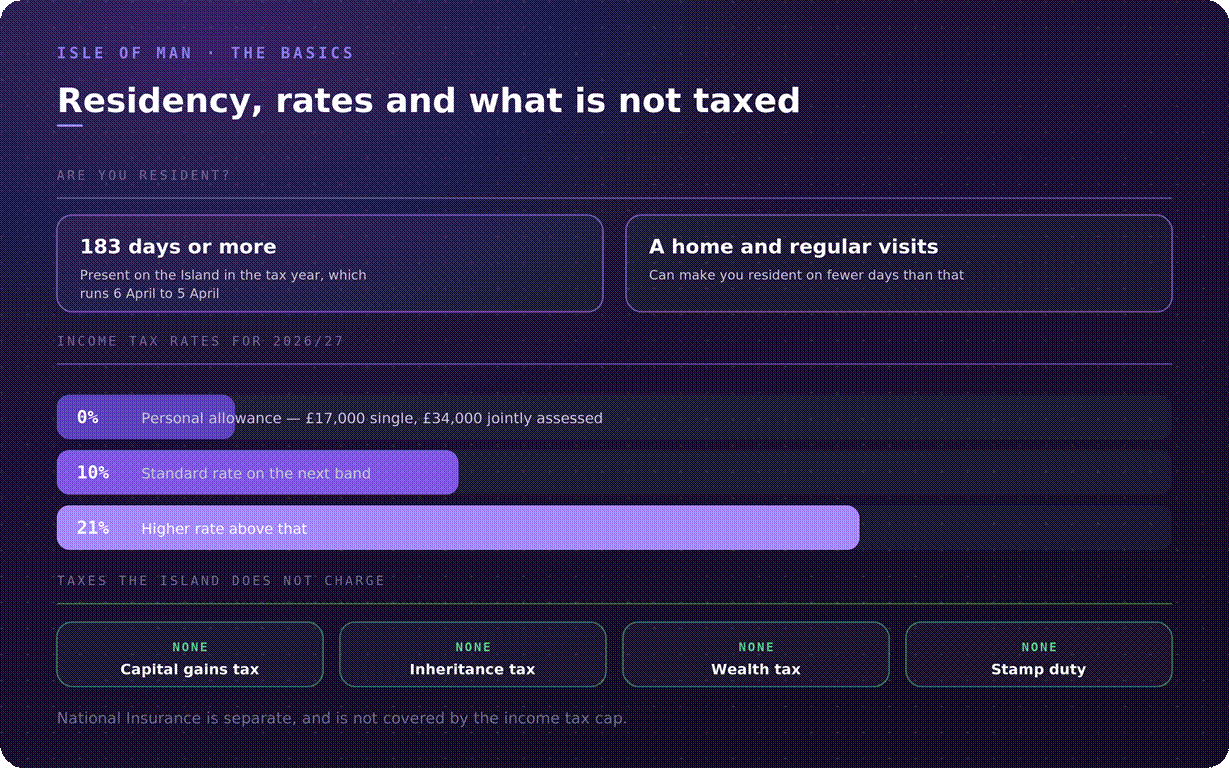
Residency, the rate structure, and the taxes the Island does not charge at all.
Who becomes tax resident?
Residency is the first issue to settle, because the Isle of Man uses a residence taxation model: residents may be taxed on worldwide income, while non-residents are generally taxed only on income arising from Isle of Man sources.
Broadly, you may become resident if you are present on the Island for 183 days or more in the tax year, or if you are present for more than 90 days in the current tax year and in each of the three preceding tax years. Keeping a home available for your use and visiting regularly can also make you resident on fewer days than a simple count would suggest.
The Isle of Man tax year runs from 6 April to 5 April, a UK-style feature that differs from the calendar-year system used in most countries.
❌ This is not the UK Statutory Residence Test. The Island operates its own residence framework. The two are not interchangeable, and satisfying one tells you nothing definitive about the other.
Residency example: Mark relocates to the Island
Mark moves to the Isle of Man in July and spends 200 days there during the relevant tax year. He rents a long-term home on the Island and carries out his consulting work from there.
He is likely to satisfy the day-count trigger. If he remains resident, the Island may assess his worldwide income — so he should not assume that only his Isle of Man client income is taxable. His foreign dividends, investment income, pension income and business profits may all need reviewing.
Mark should retain travel records, accommodation documents, employment or business records and evidence of his wider circumstances, in case his residency position is questioned.
Where you have recently left another country, also assess whether you remain tax resident there. Becoming resident on the Island does not automatically terminate tax residence elsewhere. Where two countries both treat you as resident, a double taxation agreement may determine treaty residence and allocate taxing rights. The Isle of Man has 24 such agreements — a modest network, so the relevant one must be reviewed against your actual facts.
How the cap works
A resident individual may elect to cap their total annual Isle of Man income tax liability at the set amount. Once the election is approved, your Manx income tax is limited to that figure even where your worldwide income would otherwise produce a larger bill.
Three features matter more than the headline number:
• The election must be approved by the Treasury — it is not a box you tick on a return;
• It is irrevocable and runs for either five or ten consecutive tax years, so it is a commitment rather than an annual choice; and
• It is open to new and existing residents alike, not only to new arrivals.
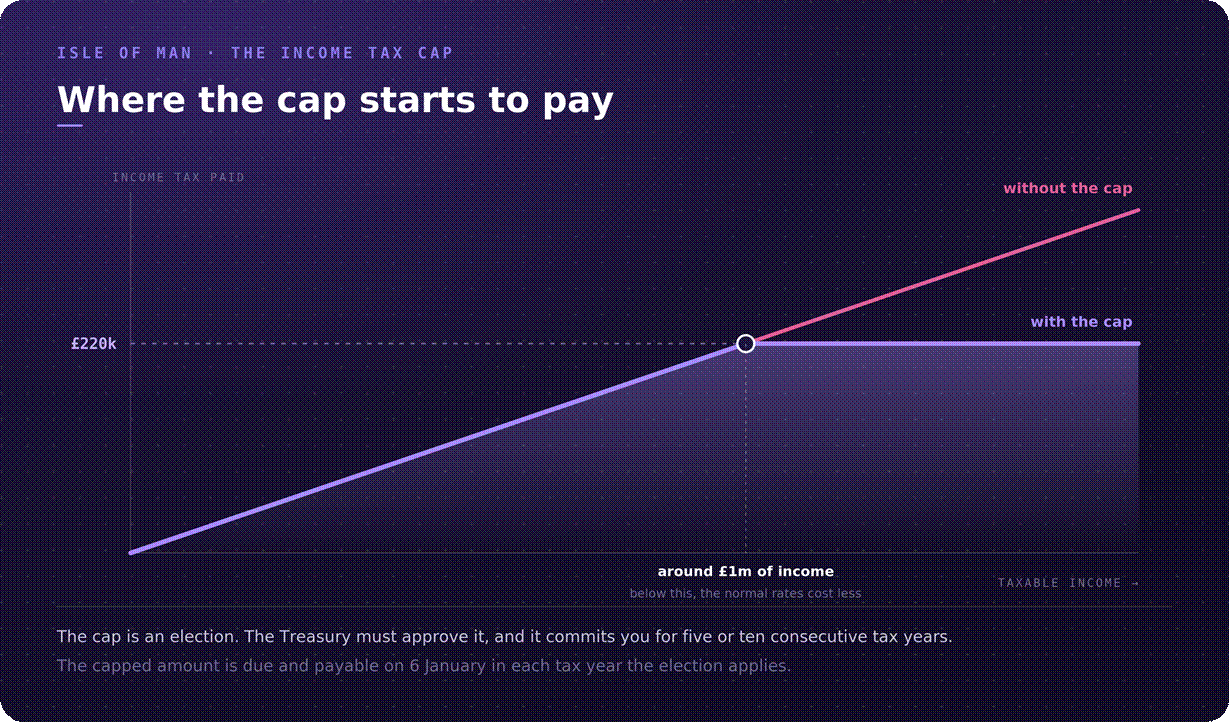
Below the crossover, the ordinary rates cost less than the cap.
Where the cap actually starts to help. Because it is a ceiling rather than a discount, it only benefits you once your ordinary liability would exceed it — broadly at income of around £1 million a year. Below that, the standard 10% and 21% rates produce a smaller bill, and electing would cost you money.
High-earner example: Felicity
Felicity relocates to the Island and expects substantial income from a technology business, an investment portfolio and international consultancy work. Her projected liability under the ordinary rules would exceed the cap.
She may benefit from electing, but she must first establish residency and comply with the election requirements. The cap can create real certainty when forecasting an annual tax cost, and may make the Island more attractive than a jurisdiction where liability rises without a ceiling.
She should model her position across the full election period rather than the first year alone, and confirm the commencement date, the conditions, and whether the cap amount may change during the term.
What the cap does not cover
Understand the limits before treating this as a complete strategy.
Does the cap cover it? | Position |
Isle of Man income tax | Yes — that is what the cap limits |
National Insurance | No — separate, and not covered |
Tax in your former country | No — it may still tax certain income |
Withholding at source abroad | No — source countries may still deduct |
Your company’s tax position | No — a separate question from your own |
The obligation to file a return | No — you still file and pay on time |
Treaty residence questions | No — those are decided under the relevant treaty |
If you are an employee working physically in another country, that country may claim taxing rights over the relevant workdays. If you run an online business, the country where you physically perform the work may become relevant depending on local law. And your former country may continue to tax specific categories of income — rental income from local property, employment income connected with local duties, or gains involving local assets.
Rates, allowances and what the Island does not charge
For 2026/27 the personal allowance is £17,000 for a single person and £34,000 for a jointly assessed couple, reduced by £1 for every £2 of income above £100,000 (or £200,000 jointly). Above the allowance, a standard rate of 10% applies to the next band, and a higher rate of 21% above that.
📈 A rate that has moved recently. The higher rate was 20% until 2023/24, rose to 22% in 2024/25, and was cut to 21% from 6 April 2025, where it remains. Older guidance quoting 20% or 22% is out of date.
The Island also charges no capital gains tax, no inheritance tax, no wealth tax and no stamp duty. National Insurance is a separate matter and is not covered by the income tax cap. A National Insurance holiday scheme has been available for certain new residents, offering a one-off refund subject to qualifying conditions — worth checking the current position if you are relocating for employment.
Compliance dates
Planning is worth little if returns and payments are late. The tax year ends on 5 April. The income tax return deadline is 6 October following the end of the tax year, and the payment deadline is 6 January following it. Where a cap election applies, the capped amount is due and payable on 6 January in each tax year the election runs.
Advance payments may also be required depending on your assessment, so review it carefully to see whether payments on account apply and how they will be credited.
Compliance example: Sarah
Sarah becomes Isle of Man tax resident and has employment income, foreign dividends and consulting income. She makes a cap election and assumes the capped amount means she need not file a detailed return.
That assumption is wrong. The cap limits the liability; it does not remove the obligation to submit a return. Sarah must file by 6 October after the 5 April year end, with payment generally due by 6 January. She should keep a schedule of income, tax deducted at source, currency conversions, deductible expenses and days spent in each country.
Is the cap right for you?
Start with a comparison rather than the headline figure. Ask yourself:
1. Will you become Isle of Man tax resident under the applicable rules?
2. Will you remain resident in another country?
3. What categories of worldwide income will you receive?
4. Would your ordinary liability actually exceed the cap?
5. What is the cap amount for the tax year in question?
6. Can you commit to five or ten consecutive years?
7. Will foreign countries continue to tax part of your income?
8. Will National Insurance or other charges apply?
9. Can you meet the 6 October filing and 6 January payment deadlines?
10. Have you taken advice from an Isle of Man and cross-border specialist?
Frequently asked questions
Is the cap £200,000 or £220,000?
£220,000 for a single person and £440,000 for a jointly assessed couple, for 2026/27. The £200,000 figure applied in earlier years up to 2024/25, which is why it still appears in older articles.
Is it a five-year arrangement?
Not only. The election runs for either five or ten consecutive tax years, it is irrevocable once approved, and it is open to existing residents as well as new arrivals — not just to people in their first five years on the Island.
At what income does the cap become worthwhile?
Broadly around £1 million a year, which is the point at which the ordinary 10% and 21% rates would produce a bill above the cap. Below that, electing would leave you paying more than you need to.
Does the cap mean I stop filing tax returns?
No. The cap limits what you pay, not what you report. The return is still due by 6 October following the 5 April year end, with payment by 6 January.
What is the higher rate of income tax?
21% for 2026/27, above a 10% standard-rate band and a £17,000 personal allowance for a single person. The rate was 20% until 2023/24 and 22% in 2024/25, so check the year of anything you read.
Does the cap cover National Insurance?
No. National Insurance sits outside the cap entirely and is charged separately. That is one of the most common misunderstandings about the regime.
Will my former country stop taxing me?
Not automatically. Becoming Isle of Man resident does not end tax residence elsewhere, and your former country may keep taxing local property income, locally performed employment duties or gains on local assets. Where both treat you as resident, the relevant treaty decides.
How many treaties does the Island have?
24 double taxation agreements — a modest network compared with larger jurisdictions. Check whether one exists with the countries your income comes from before assuming treaty protection applies.
Official sources and further reading
• Isle of Man Government income tax rates and allowances
• Isle of Man Government — income tax and National Insurance
Important information
This article is general information and does not constitute tax, legal, immigration or financial advice, and does not create a client relationship. Tax outcomes depend on travel history, income sources, treaty status and the law applying to the relevant year. Rates, thresholds and regimes change, and some measures described may be proposed rather than enacted; this article reflects our understanding as at the date of publication. Obtain advice from a suitably qualified professional before acting or refraining from action.
