
Liechtenstein does not tax investment income. It taxes a notional 4% return on your net wealth instead, and the income those assets actually produce is then left alone.
Liechtenstein has one of the most elegant personal tax structures in Europe, and it is almost never described accurately. The country levies a wealth tax — but not as a separate charge alongside income tax. Instead, net assets are multiplied by a notional yield of 4%, and that computed figure is added to taxable income and taxed with everything else.
The consequence is the part that matters. Income derived from assets already subject to that notional charge is not taxed again. Dividends, interest and domestic rental income are therefore not subject to income tax at the individual level, because the asset producing them has already been brought into the base through the 4% figure.
On top of that, Liechtenstein does not levy capital gains tax on individuals. Gains are tax free. Inheritance and gift tax were abolished in 2011 and do not exist.
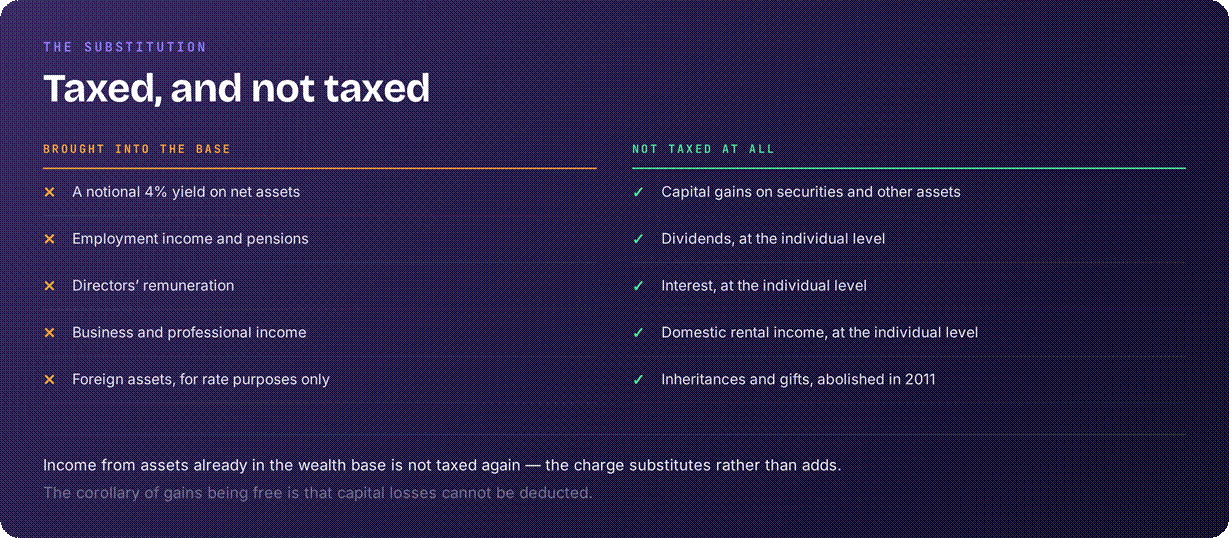
What the wealth charge replaces, and what it leaves alone.
Your residency status is the first step
An individual is subject to unlimited wealth and income tax in Liechtenstein if they have their residence or habitual abode in the country. Someone who takes up residence with the intention of staying permanently is treated as resident, and someone staying temporarily for more than six months is treated as resident as well.
Residents are taxed on worldwide income. Foreign real estate and permanent establishments located abroad are not subject to Liechtenstein tax, though they are taken into account in determining the applicable rate — exemption with progression.
Maintain accurate records of:
• The date you took up residence and whether the intention was permanent;
• Days present, against the six-month temporary threshold;
• A full inventory of movable and immovable assets at fair market value;
• Quoted securities, which are valued on the basis of the quoted price;
• Foreign real estate and permanent establishments, for the progression calculation; and
• Which commune you live in, since the surcharge varies.
The tax rates
Item | Position |
National income tax | Progressive from 1% to 8% |
Municipal surcharge | Set annually, between 150% and 250% of the national tax |
Combined top effective rate | Roughly 22% to 24%, depending on commune |
Wealth | A notional 4% yield added to taxable income |
Effective charge on capital | Roughly 0.06% to 0.9% a year |
Capital gains | Not taxed |
Inheritance and gift tax | Abolished in 2011 |
Corporate income tax | 12.5%, with a CHF 1,800 minimum |
Effective rates are low in practice. On a joint gross salary of CHF 200,000 a married couple faces an effective rate of around 6.5%, and a single taxpayer on the same figure around 10.1% — both after standard contributions and deductions, and on a communal surcharge of 160%.
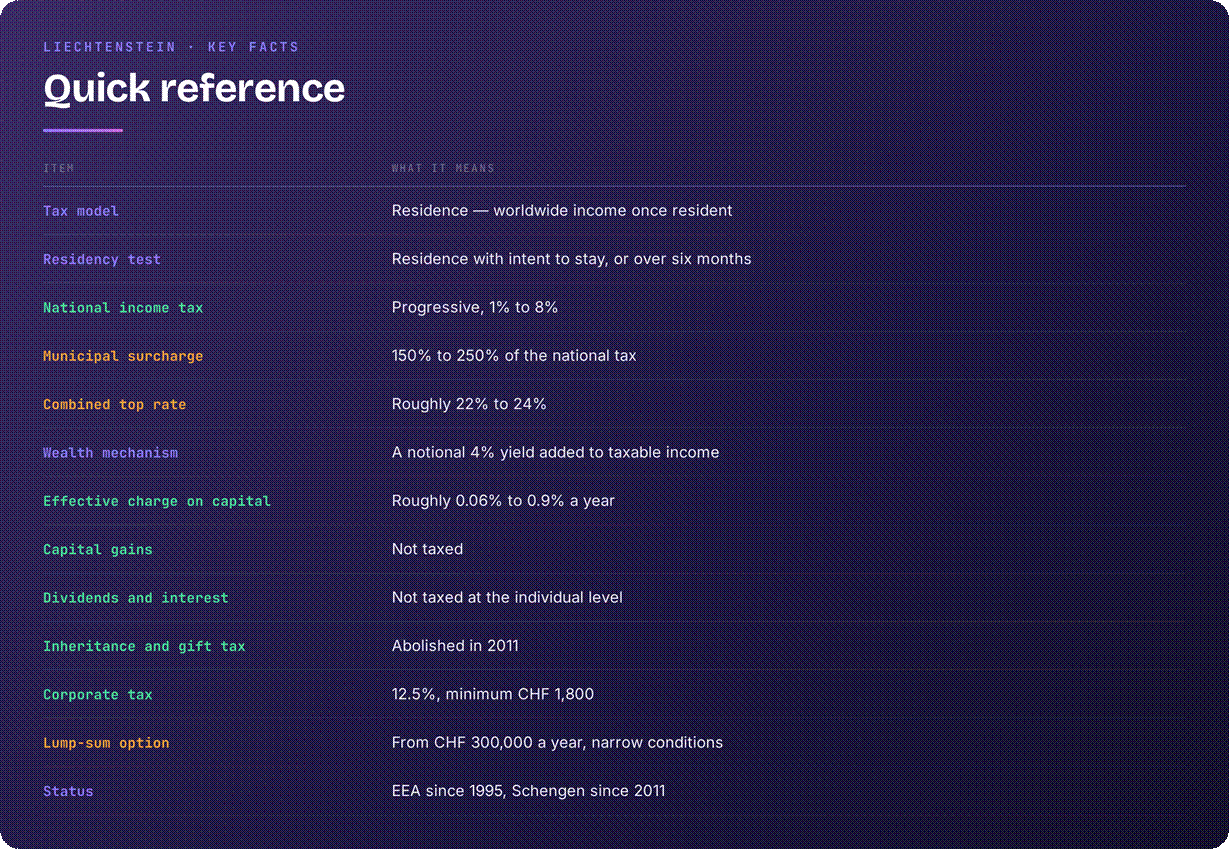
The Liechtenstein position at a glance.
What Liechtenstein does not tax
The absences are extensive and they interlock:
• No capital gains tax for individuals — gains are tax free, on securities and on other assets. The corollary is that capital losses cannot be deducted;
• No income tax on dividends at the individual level, because the underlying asset is already in the wealth base;
• No income tax on interest at the individual level, for the same reason;
• No income tax on domestic rental income at the individual level, again for the same reason;
• No inheritance tax and no gift tax, both abolished in 2011; and
• No Liechtenstein tax on foreign real estate or foreign permanent establishments, though they affect the rate.
One qualification worth stating. Capital gains and unrealised gains are not exempt where they relate to participations in foreign legal entities whose profit shares would themselves not be exempt from income tax. The exemption is broad but it is not unlimited.
The lump-sum option
For someone with substantial capital there is an alternative. Liechtenstein offers a flat tax based on expenditure, levied instead of income tax and wealth tax, calculated on worldwide living expenses at a rate of about 25%, with an annual minimum of CHF 300,000 locked in for five-year periods.
The conditions are specific: foreign citizenship, taking up residence or habitual residence for the first time or after at least ten years of absence, and no gainful activity in Liechtenstein.
The arithmetic only favours the lump sum at a high level of wealth. On the figures commonly cited it starts to make sense at taxable capital of roughly CHF 35 million and above; below that, ordinary taxation is usually cheaper. It is a regime for a narrow group and most arrivals are better off on the standard system.
What makes Liechtenstein attractive
For a portfolio holder the combination is hard to match in Europe:
• No capital gains tax on securities or other assets held by individuals;
• No individual income tax on dividends, interest or domestic rental income, because the wealth charge replaces it;
• An effective charge on capital of roughly 0.06% to 0.9% a year, well below a conventional wealth tax;
• No inheritance or gift tax of any kind since 2011;
• A combined top effective income tax rate of roughly 22% to 24%, well below neighbouring Austria and Germany;
• Corporate tax at 12.5%, among the lowest in Europe, with a private asset structure exemption available; and
• EEA membership since 1995 and Schengen since 2011, giving freedom of movement across Europe.
The honest qualifications are that the 4% notional yield applies whether or not your assets perform, that capital losses cannot be deducted, and that residence in Liechtenstein is genuinely difficult to obtain — there is no investment route of the kind offered elsewhere, so the tax position is only relevant to those who can actually establish residence.
Case study: Beatrix compares two systems
Beatrix holds a portfolio of CHF 8 million producing around CHF 240,000 a year in dividends and interest, plus a modest salary. In most European systems that investment income would be taxed as income, and any gains on disposal would be taxed again.
In Liechtenstein the portfolio is brought into the base at a notional 4% — CHF 320,000 — which is taxed with her other income. The actual dividends and interest are not taxed on top, and any gain on eventual disposal is not taxed at all.
The mechanism is doing something quite different from a wealth tax bolted onto an income tax. It is a substitute, not an addition, and for a portfolio producing a decent yield it is markedly cheaper than the conventional approach.
Filing and the compliance calendar
Income and wealth are assessed together in a single computation, which simplifies the annual exercise considerably. The notional yield rate is reviewed by the government every four years and has been unchanged since 2012. Employers withhold tax on wages monthly.
Prepare in good time:
• A complete asset inventory at fair market value;
• Quoted prices for listed securities at the valuation date;
• Details of foreign real estate and permanent establishments;
• Evidence of your commune of residence, for the surcharge;
• Documentation of any participation in foreign legal entities; and
• Records supporting deductible expenditures.
Model the notional yield, not the actual income
Consider:
• That the 4% applies whether or not your assets produce that return;
• That capital losses cannot be deducted, as the corollary of gains being free;
• Which commune you live in, since the surcharge ranges from 150% to 250%;
• Whether any participation in a foreign entity falls outside the exemption;
• Whether the lump-sum regime is realistic, given it suits capital above roughly CHF 35 million;
• That foreign real estate is exempt but affects your rate; and
• That establishing residence is the genuine constraint, not the tax.
Your Liechtenstein checklist
1. Inventory all movable and immovable assets at fair market value;
2. Value quoted securities on the basis of the quoted price;
3. Model the notional 4%, not the income your assets actually produce;
4. Check which commune you would live in, for the surcharge;
5. Note that capital losses cannot be deducted;
6. Identify foreign real estate, exempt but relevant to your rate;
7. Check any participation in a foreign legal entity against the exemption;
8. Assess the lump-sum regime only if capital is substantial;
9. Confirm you meet the six-month or permanent intention test; and
10. Establish whether residence is obtainable before planning around the tax.
Frequently asked questions
Does Liechtenstein have a wealth tax?
Yes, but not as a separate charge. Net assets are multiplied by a notional yield of 4% and that figure is added to taxable income, taxed alongside everything else. The effective charge on capital works out at roughly 0.06% to 0.9% a year.
Are dividends and interest taxed?
Not at the individual level. Income derived from assets already subject to the notional wealth charge is not taxed again, so dividends, interest and domestic rental income fall outside individual income tax.
Is there capital gains tax?
No. Liechtenstein does not levy capital gains tax on individuals and gains are tax free. The corollary is that capital losses cannot be deducted.
Is there inheritance tax?
No. Both inheritance tax and gift tax were abolished in 2011 and neither exists.
What are the income tax rates?
A national progressive rate from 1% to 8%, plus a municipal surcharge set annually between 150% and 250% of the national tax. The combined top effective rate comes to roughly 22% to 24% depending on the commune.
What is the lump-sum regime?
A flat tax on expenditure levied instead of income and wealth tax, calculated on worldwide living expenses at about 25%, with an annual minimum of CHF 300,000 locked for five-year periods. It requires foreign citizenship, first-time residence or ten years of absence, and no gainful activity in Liechtenstein.
Is the lump sum worth it?
Only at a high level of wealth. On commonly cited figures it starts to make sense at taxable capital of roughly CHF 35 million and above; below that, ordinary taxation is usually cheaper.
When am I tax resident?
If you take up residence with the intention of staying permanently, or stay temporarily for more than six months. Residents are taxed on worldwide income, though foreign real estate and foreign permanent establishments are exempt while still affecting the applicable rate.
Official sources and further reading
Important information
This article is general information and does not constitute tax, legal, immigration or financial advice, and does not create a client relationship. Tax outcomes depend on travel history, income sources, treaty status and the law applying to the relevant year. Rates, thresholds and regimes change, and some measures described may be proposed rather than enacted; this article reflects our understanding as at the date of publication. Obtain advice from a suitably qualified professional before acting or refraining from action.
