
Moving to Argentina can offer an attractive lifestyle, a lower cost base in some locations and an increasingly popular destination for remote workers, freelancers and digital nomads. Before you relocate, there are two practical questions to answer: where will you pay tax, and when will Argentina consider you a tax resident?
Argentina uses a residence-based tax model. Argentine tax residents are generally taxed on worldwide income, while non-residents are taxed only on Argentine-source income. That distinction is central, particularly if you earn income from foreign employers, clients, investments or property.
💡 A special regime may provide a significant planning opportunity: foreign income and gains can be exempt from Argentine tax during the first five years of residency, provided the relevant conditions are met. This is not an automatic exemption for everyone who moves to Argentina — your immigration status, residence position, income sources and supporting documentation all need to be reviewed.
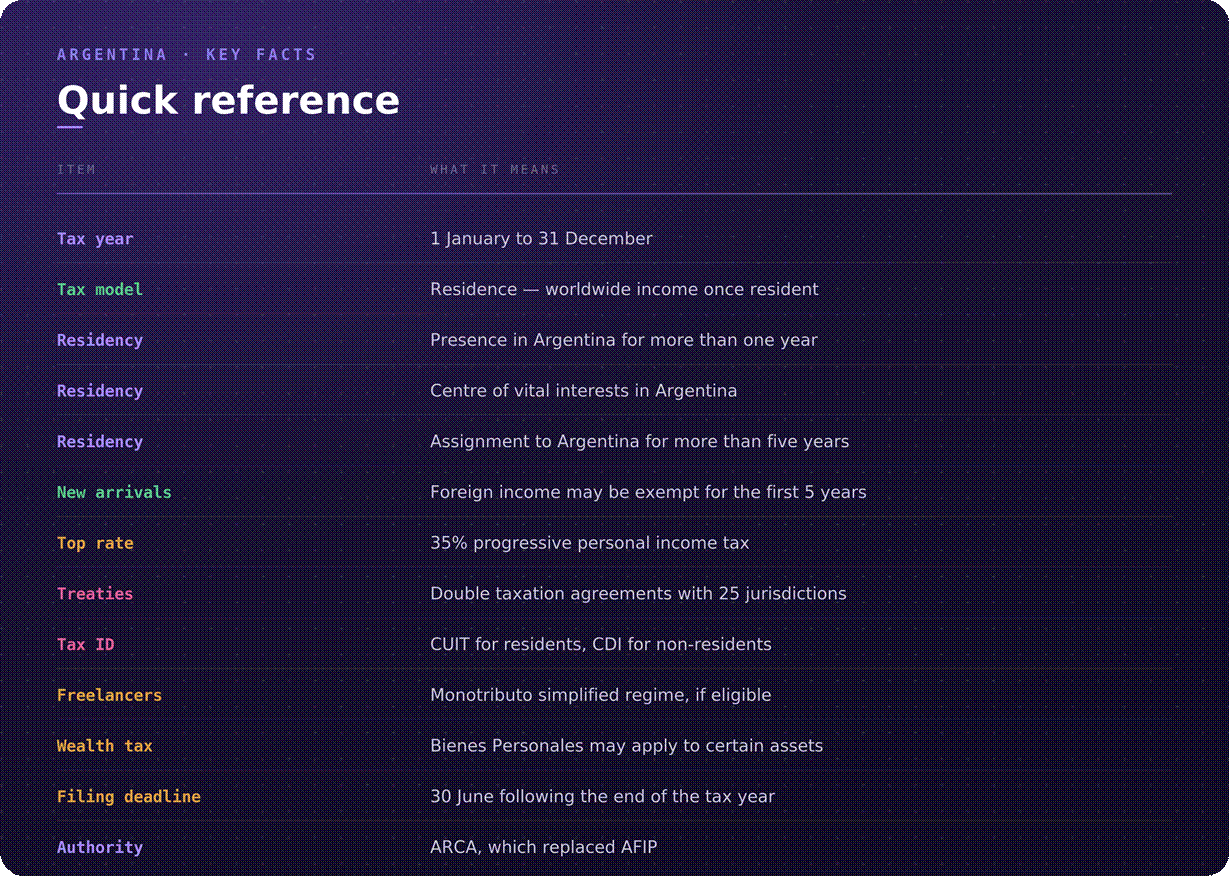
The Argentine position at a glance.
The basic rule: resident or non-resident
Your first step is to determine whether you are resident or non-resident for Argentine tax purposes. Argentina generally distinguishes between:
• Tax residents, who are taxed on worldwide income;
• Non-residents, who are taxed on Argentine-source income only; and
• Individuals covered by specific temporary or special regimes, whose treatment may differ from the standard rules.
If you are resident, income tax may apply to salary, freelance profits, business income, rental income, investment returns and gains arising both inside and outside Argentina.
If you remain non-resident, foreign-source income will generally fall outside Argentine income tax, although income connected with Argentina may still be taxable. Rent from an Argentine property, or payment for services provided to an Argentine customer, would each need separate analysis.
Argentina's progressive personal income tax rates reach a top rate of 35%. The rate that applies to you depends on the nature and amount of your taxable income, applicable deductions and the relevant tax year.
When do you become an Argentine tax resident?
Your residency is not determined by the permission stamped in your passport. Physical presence, nationality and personal circumstances may all be relevant. The principal triggers are:
Trigger | What it means |
Physical presence | You reside in Argentina for more than one year |
Argentine nationality | You are an Argentine national residing in Argentina |
Nationals overseas | You are an Argentine national living abroad for less than 13 months |
Vital interests | Your strongest personal or economic connections are in Argentina |
Long-term assignment | You are assigned to Argentina for more than five years |
⚠️ Watch out. The commonly discussed 183-day rule should be considered, but it is not a complete substitute for the wider Argentine analysis. Many international assessments use 183 days in a 12-month period as a practical indicator, yet Argentina looks at presence over a longer horizon and at where your interests sit.
Track every day spent in Argentina, including arrival and departure dates, and retain records of travel and accommodation. If you intend to spend most of the year in Argentina, take advice before arrival rather than waiting until the end of the tax year.
Case study: Mark's 183-day assumption
Mark plans to work remotely from Buenos Aires. He believes that spending fewer than 183 days in Argentina will automatically prevent tax residency.
That conclusion may be too simplistic. His planned stay, personal connections, accommodation and the length of his ongoing presence may all be relevant. If his arrangements indicate a longer-term move, a day count alone will not protect him.
Action point. Before moving, prepare a residence timeline showing your expected days in Argentina, the length of your intended stay, the location of your clients, and the country in which you currently claim tax residence.
The five-year foreign income exemption
The most important feature of the Argentine position for new arrivals is the special regime. Provided that you reside in Argentina for less than five years, foreign income and gains may be exempt from Argentine taxation during that period.
This may be particularly relevant if you receive:
• Salary from a foreign employer;
• Freelance income from overseas clients;
• Dividends from foreign companies;
• Interest from non-Argentine bank accounts;
• Rental income from overseas property;
• Capital gains on foreign investments; or
• Profits from an internationally operated business.
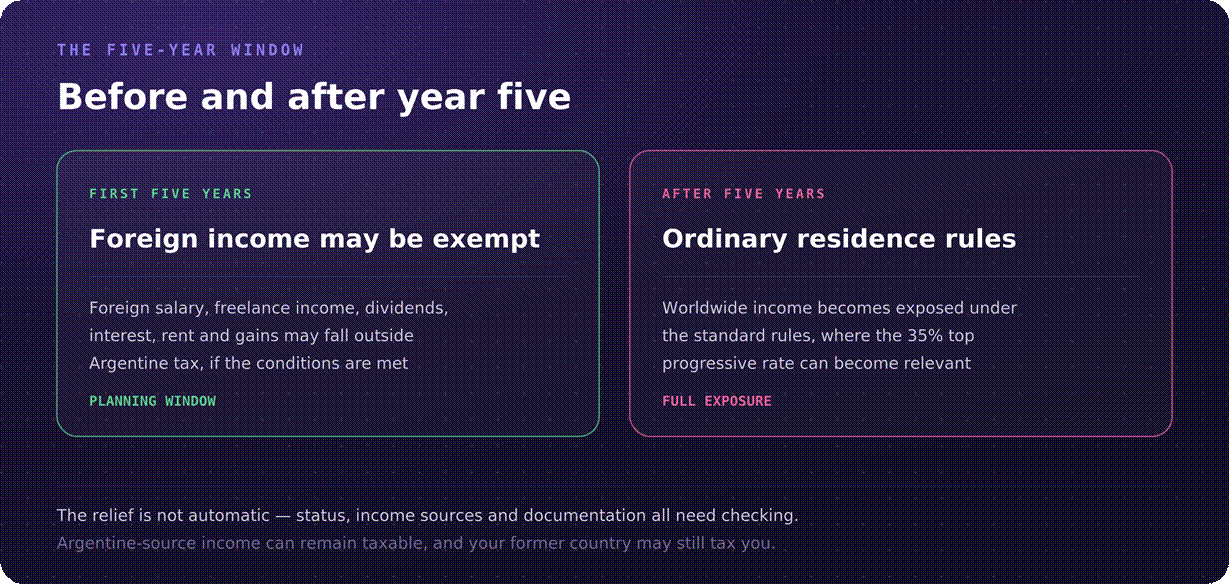
Treat the five years as a planning window, not a permanent exemption.
The exemption does not make income tax-free worldwide. Argentine-source income may remain taxable, your former country of residence may continue to impose tax, and treaty provisions, source rules and anti-avoidance principles may all affect the outcome.
Confirm whether the regime requires a formal application, registration or supporting evidence. Document when your Argentine residence began, where each item of income arose, and why the income should be treated as foreign-source.
Case study: Felicity's overseas consultancy
Felicity moves to Argentina while continuing to provide consulting services to clients in the United Kingdom, Canada and Australia. She has no Argentine clients and receives payment into a foreign bank account.
If she qualifies for the special regime, her foreign income and gains may be exempt from Argentine tax during the first five years. She will still need to consider:
• Whether her services are genuinely foreign-source;
• Whether she creates an Argentine business or permanent establishment;
• Whether her home countries continue to tax her;
• Whether she has Argentine reporting or registration obligations; and
• Whether her treatment changes after the five-year period.
The structure should be reviewed before the move takes place, not after.
What happens after five years?
Treat the five-year period as a planning window rather than a permanent exemption. Once the special treatment ends, Argentine tax residency will generally expose your worldwide income to the ordinary residence-based rules, and the 35% top progressive rate may become relevant.
Consider, in good time:
• Whether you will remain in Argentina beyond five years;
• Whether your employment or freelance structure will change;
• Whether foreign investments should be reorganised;
• Whether you will hold Argentine or overseas property;
• Whether a tax treaty can reduce double taxation; and
• Whether your former country will continue to regard you as resident.
Argentina currently has 25 double taxation agreements. A treaty may allocate taxing rights between Argentina and another country and provide relief where the same income is taxed twice. It does not necessarily make income tax-free, and it should not be relied upon without reviewing its specific provisions.
CUIT, CDI and ARCA registration
Your tax position and your administrative identity are separate questions. Even where an item of foreign income is exempt, you may still need to register or provide identification when opening accounts, invoicing or dealing with Argentine authorities.
CUIT for residents
A CUIT, or Código Único de Identificación Tributaria, is the tax identification number generally used by residents and businesses conducting taxable activities in Argentina. You may need one if you operate as a freelancer, register a business, submit tax declarations or undertake other formal economic activities.
CDI for non-residents
A CDI, or Código de Identificación, is generally used by individuals who are not Argentine residents but need an identification number for certain financial or tax-related purposes.
Often misread. Obtaining a CUIT, CDI or local bank account does not by itself determine your tax residence — though it may form part of the overall facts considered.
ARCA and Clave Fiscal
Argentina's tax authority is now known as ARCA, following the replacement of AFIP. You may need to register for Clave Fiscal, the online authentication system used to access tax services and complete certain administrative processes.
If you are preparing to move, check which identification number applies to you, whether you need Clave Fiscal access, whether your activity requires registration, whether electronic invoicing applies, and whether local filings or payments are due.
Monotributo for freelancers
If you work independently from Argentina, you may hear about Monotributo. This is a simplified regime for qualifying small taxpayers and certain freelancers, combining several charges into a single monthly payment.
Eligibility depends on turnover, activity, premises, expenditure and other statutory limits, and it is not a universal substitute for income tax registration. A freelancer serving overseas clients should first establish:
• Whether the activity is considered Argentine-source;
• Whether the five-year foreign income regime applies;
• Whether Monotributo is available for the activity;
• Whether local invoicing is required; and
• Whether foreign tax obligations continue.
Other taxes you should consider
Income tax is only one part of the picture. Depending on your assets, transactions and family circumstances, you may also encounter:
• Bienes Personales, Argentina's personal wealth tax, which may apply to the value of certain assets;
• Asset or capital gains taxes, including tax connected with property or share disposals;
• Death or inheritance taxes, depending on the jurisdiction and assets involved;
• Social taxes and contributions, particularly where you work locally or operate as an independent professional; and
• Indirect taxes, including taxes embedded in purchases and services.
The treatment of foreign assets becomes particularly important once you are resident. Keep a complete record of bank accounts, securities, property, cryptocurrency and other investments, together with acquisition dates and values.
Tax year and filing deadlines
Argentina's tax year runs from 1 January to 31 December, with 30 June following the end of the tax year as the filing and payment deadline. Advance payments may also be required toward future tax years, in addition to settling the current liability.
For example, if you are required to file for the year ending 31 December 2026, the relevant deadline will generally fall on 30 June 2027, subject to the applicable rules and any official extensions.
Prepare your records throughout the year rather than reconstructing them in June. Your file should include travel and presence records, foreign income statements, investment and bank statements, property records, currency conversion calculations, tax paid overseas, invoices and business expenses, and evidence supporting foreign-source treatment.
Final checklist before you move
1. Map your expected days in Argentina and assess the 183-day context alongside the wider residence rules;
2. Identify your likely tax residence for both Argentina and your departure country;
3. Review the five-year foreign income and gains exemption before receiving income after your move;
4. Separate Argentine-source and foreign-source income;
5. Determine whether you need a CUIT, CDI or Clave Fiscal;
6. Assess Monotributo if you will work independently;
7. Review Bienes Personales and other personal taxes;
8. Check whether a treaty applies between Argentina and your other relevant countries;
9. Record the start date of your Argentine residence; and
10. Plan for the 30 June filing deadline and possible advance payments.
Frequently asked questions
Is the five-year foreign income exemption automatic?
No. It depends on meeting the relevant conditions, and your residence position, income sources and documentation all matter. Treat it as a relief to be established and evidenced, not a default that applies simply because you arrived.
Does staying under 183 days keep me out of Argentine tax residence?
Not reliably. Argentina looks at presence over more than a year, at Argentine nationality, and at where your vital interests sit. A day count is useful evidence but it does not settle the question on its own.
What happens at the end of the five years?
Ordinary residence rules apply, which means your worldwide income becomes exposed and the 35% top progressive rate may become relevant. Decide well before that point whether you are staying, and whether your income structure needs to change.
Do I need a CUIT if my income is exempt?
Possibly. Tax liability and administrative identity are separate questions — you may still need an identification number to invoice, open accounts or deal with the authorities, even where the income itself falls outside the Argentine charge.
Can I just use Monotributo as a freelancer?
Only if you qualify. Eligibility depends on turnover, activity, premises and other statutory limits, and it is not a universal alternative to income tax registration. Establish first whether your work is Argentine-source at all.
Will Argentina tax my foreign property and investments?
Foreign income and gains may be exempt during the first five years, but Bienes Personales, the personal wealth tax, can apply to certain assets and follows its own rules. Keep full records of foreign holdings with acquisition dates and values from the outset.
When is the Argentine filing deadline?
The tax year runs to 31 December and the filing and payment deadline is 30 June following it. Advance payments toward the next year may also be required alongside settling the current liability.
Is ARCA the same as AFIP?
ARCA replaced AFIP as the Argentine tax authority. Older guidance and third-party articles still refer to AFIP, so check the date of anything you read, and expect to register for Clave Fiscal to access services online.
Official sources and further reading
• Income Tax Law (Ley de Impuesto a las Ganancias, texto ordenado 2019)
• ARCA, the Argentine tax and customs authority
Important information
This article is general information and does not constitute tax, legal, immigration or financial advice, and does not create a client relationship. Tax outcomes depend on travel history, income sources, treaty status and the law applying to the relevant year. Rates, thresholds and regimes change, and some measures described may be proposed rather than enacted; this article reflects our understanding as at the date of publication. Obtain advice from a suitably qualified professional before acting or refraining from action.
