
Gibraltar caps tax rather than exempting it. Two certificates do the work — one for individuals with capital, one for executives with skills — and the first is getting harder to obtain from 2026.
Gibraltar does not offer a zero rate. It offers ceilings. Two statutory certificates cap the amount of income tax an individual can pay in a year, and each is aimed at a different kind of person.
Category 2 status is for high net worth individuals. A certificate holder is taxed only on the first GBP 118,000 of assessable income, whatever their actual income, producing a maximum annual liability of GBP 42,380 and a minimum of GBP 37,000.
HEPSS — High Executive Possessing Specialist Skills — is for employed executives. Assessable income under the certificate is capped at GBP 160,000, taxed under the Gross Income Based System, giving an annual liability of GBP 39,940.
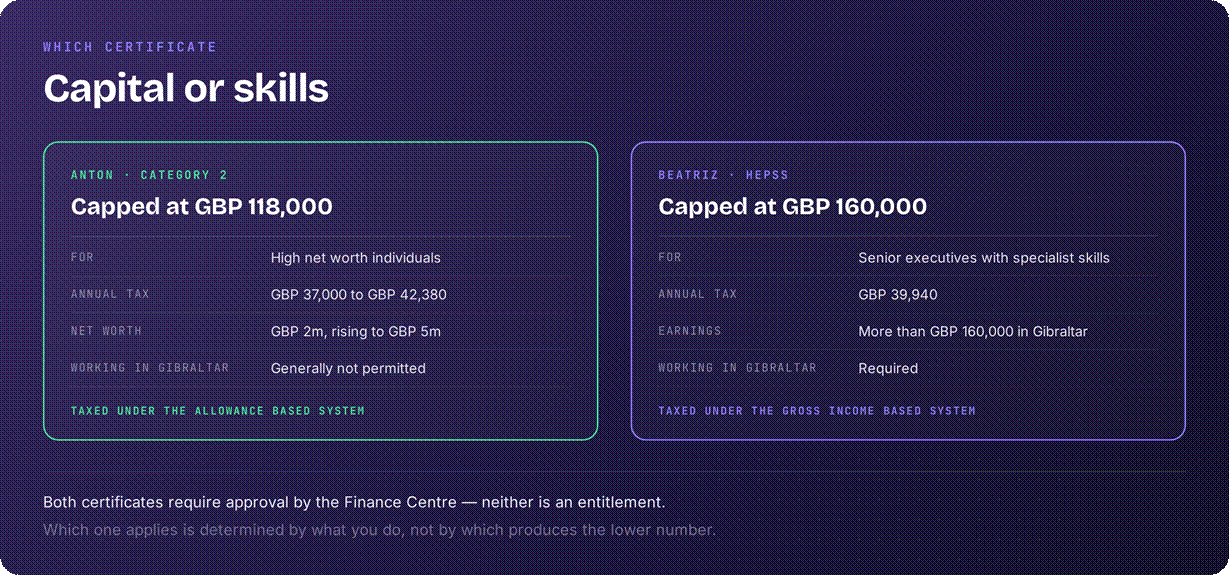
Two certificates, two entirely different candidates.
The two systems beneath the caps
Gibraltar runs two parallel income tax systems and a taxpayer is assessed under whichever produces the better result, unless a certificate dictates otherwise.
The Allowance Based System applies bands of 14% on the first GBP 4,000, 17% to GBP 16,000, and 39% above that, against a range of personal allowances — GBP 3,455 personal and spouse allowances, plus reliefs for children, nursery fees, house purchase and others. The Gross Income Based System applies lower rates to gross income with almost no allowances.
Category 2 individuals are taxed under the Allowance Based System but only on the capped amount. HEPSS holders are taxed under the Gross Income Based System on the capped amount.
Category 2 in detail
Requirement or feature | Position |
Assessable income cap | The first GBP 118,000 |
Maximum annual tax | GBP 42,380 |
Minimum annual tax | GBP 37,000 |
Minimum net worth | GBP 2 million, rising to GBP 5 million for new applicants |
Accommodation | Approved residential accommodation for exclusive use, all year |
Prior residence | Not resident in Gibraltar in the preceding five years |
Medical insurance | Private cover meeting minimum requirements |
Deposit | An amount equal to the maximum tax, refundable on relinquishing |
Trading in Gibraltar | Generally not permitted without prior agreement |
The cap does not extend to Gibraltar-source income of certain kinds. Income accrued in or derived from Gibraltar, including rental income from Gibraltar property, can fall outside the capped amount and be taxed in full — which matters for anyone intending to buy and let locally.
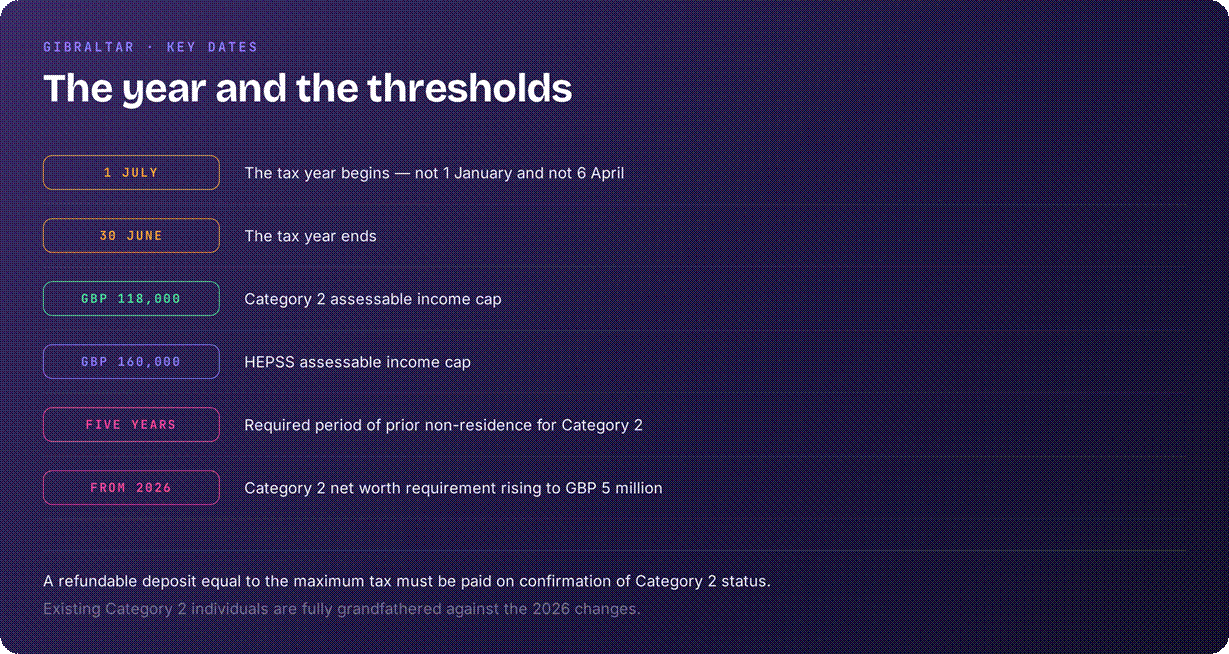
The dates and thresholds that govern the regimes.
HEPSS in detail
HEPSS is a different instrument for a different person. It requires employment in a high executive or senior management position in Gibraltar, skills not available locally that in the government’s opinion bring economic value, and earnings of more than GBP 160,000 a year from that Gibraltar employment.
Tax is charged on the capped GBP 160,000 under the Gross Income Based System, producing an annual liability of GBP 39,940, pro-rated in years of arrival and departure. Assessable income outside the certified post remains chargeable in full, with the capped amount taken into account in determining the applicable rate.
Applications for both certificates go to the Finance Centre and require approval. Neither is an entitlement.
What the 2026 changes do
In June 2026 the government announced changes to the Category 2 regime. The application fee rises to GBP 5,000 and the minimum net worth requirement rises to GBP 5 million for new applicants, with existing Category 2 individuals fully grandfathered.
The announcement also confirmed two points that were previously assumed rather than stated: Category 2 status carries no entitlement to publicly funded schooling or healthcare, and a person who does not maintain their Category 2 status has no right to remain resident in Gibraltar.
The changes take effect on amendment of the Qualifying (Category 2) Individuals Rules 2004. Anyone considering an application should establish whether they fall under the current or amended requirements.
Case study: two certificates, two people
Anton has substantial investment income and no intention of working. Category 2 caps his assessable income at GBP 118,000, so his annual bill sits between GBP 37,000 and GBP 42,380 regardless of what his portfolio produces. He cannot trade or take employment in Gibraltar without agreement.
Beatriz is being recruited as a chief technology officer on GBP 280,000. HEPSS caps her assessable income at GBP 160,000 under the Gross Income Based System, giving GBP 39,940 a year. She is employed, which Category 2 would not permit.
The numbers are close. The regimes are not interchangeable, and which one applies is determined by what you do rather than what you would prefer.
What Gibraltar does not tax
There is no capital gains tax, no inheritance tax, no wealth tax and no gift tax, and many categories of investment income are not taxed. Corporation tax is 15% from 1 July 2024, applying only to income accrued in or derived from Gibraltar.
Gibraltar has also implemented a 15% domestic minimum top-up tax and an income inclusion rule under the OECD framework, with its regime granted transitional qualified status. As elsewhere, those measures reach large corporate groups rather than individuals.
Filing and the compliance calendar
The Gibraltar tax year runs 1 July to 30 June, which misaligns with the calendar year and with the UK’s April year. Returns are generally due by 30 November following the year end, with employment income deducted at source through the PAYE system.
A certificate is a tax document and is separate from immigration status. Holding one does not, by itself, settle where you are resident for the purposes of another country’s rules.
Establish which certificate fits
Consider:
• Whether you intend to work in Gibraltar, since that rules out Category 2;
• Whether your net worth meets the current or amended threshold;
• Whether your employment would meet the HEPSS criteria and earnings level;
• What Gibraltar-source income would fall outside the cap;
• That the deposit equal to the maximum tax must be funded up front;
• How the 1 July to 30 June year interacts with your other countries; and
• Whether your former country accepts that you have left.
Your Gibraltar checklist
1. Decide whether you intend to work in Gibraltar, which rules out Category 2;
2. Check your net worth against the current and amended thresholds;
3. Establish whether a role would meet the HEPSS criteria;
4. Confirm five years of prior non-residence for Category 2;
5. Arrange approved accommodation for exclusive use all year;
6. Budget for the refundable deposit equal to the maximum tax;
7. Identify any Gibraltar-source income falling outside the cap;
8. Note that a certificate is not an immigration status;
9. Track the 1 July to 30 June tax year; and
10. Confirm your former country accepts that you have left.
Frequently asked questions
What is Category 2 status?
A regime under the Qualifying (Category 2) Individuals Rules 2004 capping assessable income at the first GBP 118,000, giving a maximum annual tax of GBP 42,380 and a minimum of GBP 37,000, for high net worth individuals.
What is changing in 2026?
The application fee rises to GBP 5,000 and the minimum net worth requirement rises to GBP 5 million for new applicants, with existing Category 2 individuals fully grandfathered. The changes take effect on amendment of the rules.
Can a Category 2 individual work in Gibraltar?
Generally not. A Category 2 individual cannot normally engage in a trade, business or employment in Gibraltar unless agreed in advance with the Finance Centre Director.
What is HEPSS?
High Executive Possessing Specialist Skills — a status for individuals employed in a senior position in Gibraltar, possessing skills not available locally, earning more than GBP 160,000. Assessable income is capped at GBP 160,000 under the Gross Income Based System, giving GBP 39,940 a year.
Which certificate should I apply for?
They are not interchangeable. Category 2 suits someone with capital who will not work in Gibraltar; HEPSS requires employment in a qualifying senior role. What you do determines which is available.
Is all my income covered by the cap?
No. Income accrued in or derived from Gibraltar, including rental income from Gibraltar property, can fall outside the capped amount and be taxed in full. That matters if you intend to buy and let locally.
What taxes does Gibraltar not levy?
There is no capital gains tax, inheritance tax, wealth tax or gift tax, and many categories of investment income are untaxed. Corporation tax is 15% from 1 July 2024 on Gibraltar-source income.
When does the Gibraltar tax year run?
1 July to 30 June, which misaligns with both the calendar year and the UK April year. Returns are generally due by 30 November following the year end.
Official sources and further reading
Important information
This article is general information and does not constitute tax, legal, immigration or financial advice, and does not create a client relationship. Tax outcomes depend on travel history, income sources, treaty status and the law applying to the relevant year. Rates, thresholds and regimes change, and some measures described may be proposed rather than enacted; this article reflects our understanding as at the date of publication. Obtain advice from a suitably qualified professional before acting or refraining from action.
