
The Bahamas imposes no income tax on anyone — residents, non-residents, employees or the self-employed. It also has no double taxation agreements at all, which is where the analysis actually gets interesting.
The Bahamas imposes no income tax, no capital gains tax, no wealth tax, no inheritance, gift or estate tax, and no withholding tax. Resident companies, partnerships, individuals and trusts, alongside non-residents and non-resident-controlled Bahamian entities, all sit outside the charge.
There is no domestic income tax residency test, because there is no income tax for it to serve. There is no annual return, no source analysis and no computation of any kind.
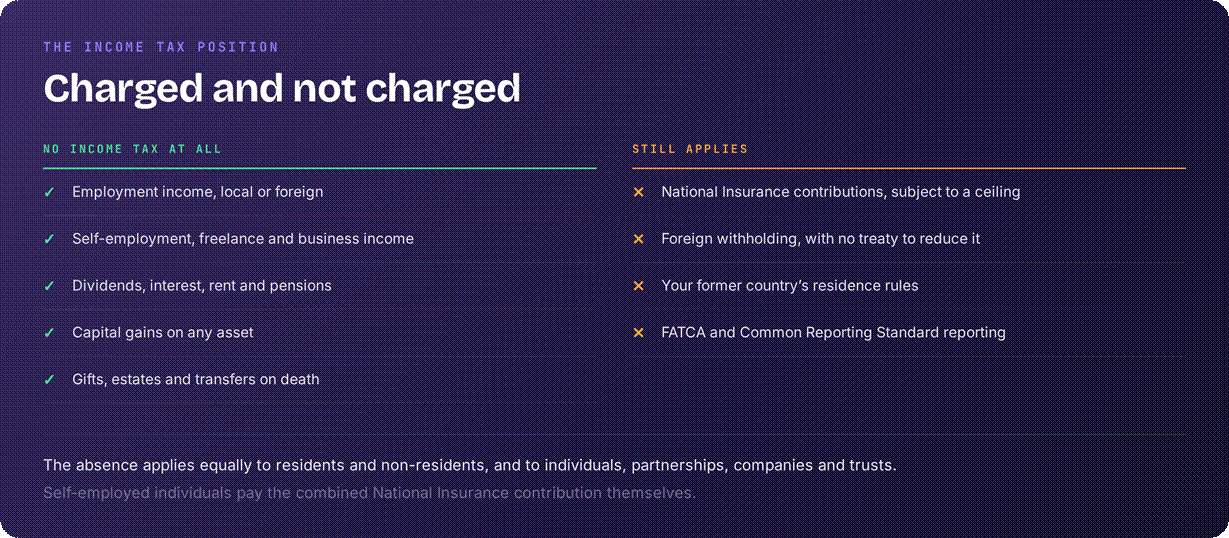
What the Bahamas charges on income, and what it does not.
What the absence covers
Every category of personal income falls outside the charge:
• Employment income, whether paid locally or from abroad;
• Self-employment, freelance and professional earnings;
• Business profits of an individual;
• Dividends, interest and investment distributions;
• Rental and pension income;
• Capital gains on any asset; and
• Foreign-source income of any kind.
There are no death duties, and the absence applies equally to residents and non-residents. Nobody is taxed on income in the Bahamas.
National insurance is the one deduction that applies
The National Insurance Board administers mandatory contributions from employed and self-employed individuals, subject to a wage ceiling. It is not an income tax, but it is the one recurring deduction an individual will meet, and it belongs in a net-pay calculation.
Employees contribute around 3.9% of earnings with employers contributing around 5.9%, both up to the applicable maximum. A self-employed individual pays the combined amount themselves, with published figures in the region of 8.8% to 9.8%. The exact rates and the ceiling should be confirmed with the National Insurance Board, since sources differ and the ceiling is revised.
One further point matters for anyone with a contribution record elsewhere. The Bahamas has not concluded any reciprocal social security agreements with other countries, so contributions made in the Bahamas do not aggregate with a foreign record, and vice versa.
The certificate of residence
Because there is no assessment and no return, the certificate of residence is the only document evidencing where you are. The Bahamas issues tax residency certificates, and the conditions are unusually specific.
A certificate is available to an individual who spends at least 90 days in the Bahamas, spends fewer than 184 days in any other single country, and purchases property valued in excess of USD 1.5 million.
Read those three conditions together, because they interact. The 90-day figure is low, which makes the certificate accessible to someone who is genuinely mobile. But the second condition requires that you are not heavily settled anywhere else, and the third imposes a substantial capital commitment. It is a route designed for a particular kind of person rather than a general entitlement.
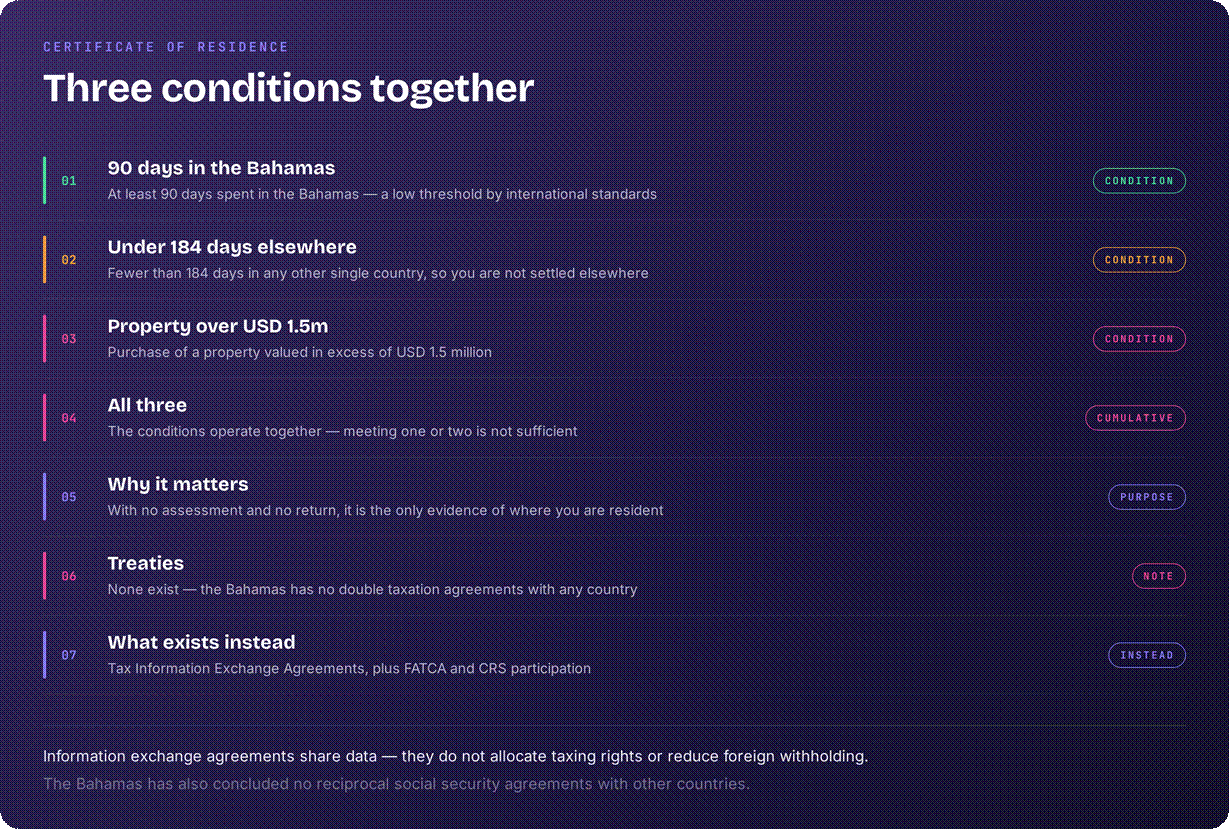
Every condition attaching to the certificate.
No double taxation agreements at all
This is where the analysis actually sits, and it is the part most often skipped.
Because the Bahamas levies no corporate or personal taxes, there are no double taxation treaties between the Bahamas and any other country. Not a small network — none.
What exists instead is a series of Tax Information Exchange Agreements, alongside participation in FATCA and the Common Reporting Standard. Those provide for the exchange of information foreseeably relevant to the administration and enforcement of the domestic laws of the parties. They share data. They do not allocate taxing rights, do not provide a residence tie-breaker, and do not reduce withholding at source.
The consequences for someone with income arising abroad are concrete:
• A source country may withhold on dividends at its full domestic rate;
• A foreign pension provider may apply withholding under its own rules;
• Interest and royalty income may be taxed before it reaches you;
• A former country may not accept that you have become resident elsewhere; and
• There is no Bahamian tax to credit against any of it, because none is charged.
Case study: Marcus and the income he cannot shelter
Marcus moves to Nassau and works remotely for clients abroad. His Bahamian income tax is nil on every category — employment, self-employment, investment returns and gains alike. Locally there is nothing to file.
He also holds a portfolio producing dividends from two foreign markets. Each source country applies withholding under its own domestic law. There is no treaty between the Bahamas and either of them to reduce those rates, and no Bahamian tax against which the withheld amounts could be credited.
His Bahamian position is as simple as a tax position can be. His overall position is decided almost entirely by the countries his income comes from, and the Bahamas offers no instrument to influence them. That is the correct way to think about a zero-tax jurisdiction with no treaty network.
What makes the Bahamas attractive
On income tax specifically, the case is about as clean as it gets:
• No income tax on any category, for residents or non-residents;
• No tax on self-employment, freelance or business income of an individual;
• No capital gains tax, wealth tax, inheritance tax, gift tax or estate duty;
• No withholding tax;
• No domestic income tax residency test, no annual return and no source analysis;
• A certificate of residence available on defined conditions; and
• A currency pegged to the US dollar.
The honest qualification is the treaty position. For someone whose income arises in the Bahamas, the zero is complete. For someone drawing foreign dividends, a foreign pension or royalties, the source country decides most of the outcome and there is no agreement to invoke.
Filing and the compliance calendar
There is nothing to file for income tax purposes — no return, no instalments and no registration. What replaces it is evidence, and for anyone with a continuing foreign connection that evidence is worth assembling deliberately.
Keep in good order:
• A schedule of every income stream by source country;
• Details of each employer, client, bank, investment and pension;
• Records of any withholding applied at source;
• Day-count records, for the 90-day and 184-day certificate conditions;
• A certificate of residence where you qualify for one;
• National Insurance contribution records; and
• Documentation for FATCA and Common Reporting Standard purposes.
Map the sources, not the rate
Consider:
• That no income tax applies to any category, including self-employment;
• That there is no domestic income tax residency test;
• That National Insurance is the one recurring deduction;
• That the Bahamas has no double taxation agreements whatsoever;
• That information exchange agreements are not treaties;
• That the certificate requires 90 days, under 184 elsewhere and property over USD 1.5 million; and
• That the countries your income comes from decide most of the outcome.
Your Bahamas checklist
1. Note that no income tax applies to any category of income;
2. Note that self-employment income is untaxed;
3. Expect no return, no instalments and no registration;
4. Budget National Insurance contributions in your net-pay figure;
5. Confirm the current rates and ceiling with the National Insurance Board;
6. Do not expect contributions to aggregate with a foreign record;
7. Map every income stream by source country;
8. Check withholding rates in each of those countries;
9. Do not expect a treaty to reduce them — there are none; and
10. Test all three certificate conditions before relying on one.
Frequently asked questions
Does the Bahamas tax income?
No. There is no income tax, capital gains tax, wealth tax, inheritance, gift or estate tax, or withholding tax. The absence applies to residents and non-residents, and to individuals, partnerships, companies and trusts alike.
Is self-employment income taxed?
No. A freelancer, consultant or independent professional pays no income tax on their earnings, and there is no percentage-of-turnover charge on individuals of the kind used in some other low-tax jurisdictions.
Is there a tax residency test?
Not for income tax purposes. Because there is no income tax, there is no domestic residency test, no annual return and no source analysis to perform.
What deductions actually apply?
National Insurance contributions, administered by the National Insurance Board and subject to a wage ceiling. Employees contribute around 3.9% and employers around 5.9%, while a self-employed individual pays the combined amount. Confirm current rates with the Board, as sources differ.
How do I get a certificate of residence?
Certificates are issued to individuals who spend at least 90 days in the Bahamas, spend fewer than 184 days in any other single country, and purchase a property valued in excess of USD 1.5 million. All three conditions operate together.
Does the Bahamas have double tax treaties?
No — none at all. Because it levies no corporate or personal taxes, there are no double taxation agreements between the Bahamas and any other country.
What about the exchange agreements?
The Bahamas maintains Tax Information Exchange Agreements and participates in FATCA and the Common Reporting Standard. Those provide for exchange of information relevant to enforcing the domestic laws of the parties. They do not allocate taxing rights, provide a tie-breaker, or reduce foreign withholding.
Who does the Bahamas suit best?
Someone whose income arises in the Bahamas, or from sources that do not withhold. For them the zero is complete. Someone drawing foreign dividends, a foreign pension or royalties will find the source country decides most of the outcome, with no agreement available to influence it.
Official sources and further reading
Important information
This article is general information and does not constitute tax, legal, immigration or financial advice, and does not create a client relationship. Tax outcomes depend on travel history, income sources, treaty status and the law applying to the relevant year. Rates, thresholds and regimes change, and some measures described may be proposed rather than enacted; this article reflects our understanding as at the date of publication. Obtain advice from a suitably qualified professional before acting or refraining from action.
