
Bermuda charges no personal income tax. It does charge a payroll tax with a graduated employee portion running to 12.5% deducted from your pay, on a rising scale, by income band.
The headline is accurate as far as it goes. Bermuda imposes no personal income tax, no capital gains tax and no withholding tax. There is no annual personal income tax return and no advance payments.
But Bermuda does levy a payroll tax, and the part of it that matters to an individual is not the employer’s. There is an employee portion, charged at graduated rates from 0.5% to 12.5% on a rising scale by income band, up to a cap of BMD 1,000,000 of remuneration per person per year.
A charge that rises with income, applies in bands, is withheld from pay and stops at a ceiling is an income tax in every respect except its name. Anyone comparing Bermuda against a taxable jurisdiction on the basis of "0%" is comparing the wrong number.
The detail that decides your actual position. The employer is legally liable for both portions, but has the option of deducting the employee portion in full or in part. Whether it comes out of your pay is therefore a matter for your contract and it is negotiable in a way an income tax never is.
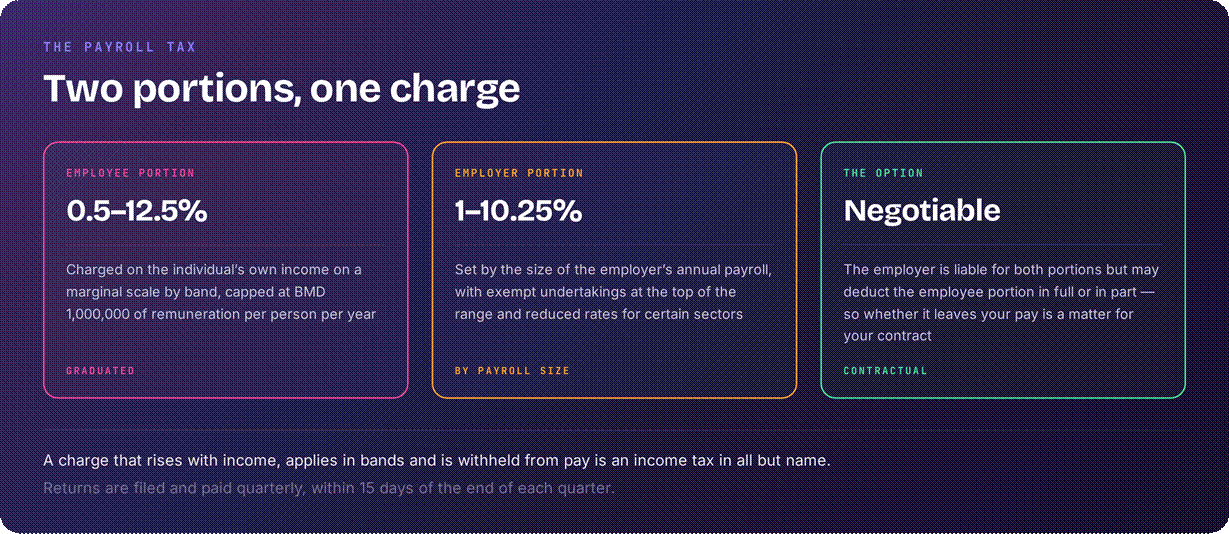
Where the employee portion bites, band by band.
How the payroll tax works
Payroll tax is levied on every employer and self-employed person, with two components calculated separately.
The employer portion is set by the size of the employer’s annual payroll, running from around 1% for payrolls below BMD 200,000 up to about 10% above BMD 1 million, with exempt undertakings — typically international businesses — at around 10.25%. Certain sectors, such as hotels and restaurants, have their own reduced rates.
The employee portion is set by the individual’s own income, on a marginal scale. The lowest rate applies to earnings up to around BMD 48,000, rising through successive bands, with the highest rate reaching 12.5%. No payroll tax is due on remuneration above BMD 1,000,000 per person per year.
The employer calculates the full employee portion regardless of whether it deducts it, and remains responsible for remitting both. Returns are filed and paid quarterly, within 15 days of the end of each quarter.
What else Bermuda charges
Charge | Position |
Personal income tax | None |
Capital gains tax | None |
Withholding tax | None |
Wealth, gift and inheritance tax | None |
Personal income tax return | None required |
Payroll tax, employee portion | Graduated, 0.5% to 12.5%, capped at BMD 1,000,000 |
Social insurance | A fixed weekly contribution, split with the employer |
Land tax | On developed land, by annual rental value |
Land tax is charged on the annual rental value of each valuation unit rather than on a capital figure, with private dwellings on a graduated scale and commercial and tourist property at their own rates. Customs import duties apply to almost all goods arriving on the island, most commonly at 25%. There is no VAT or sales tax.
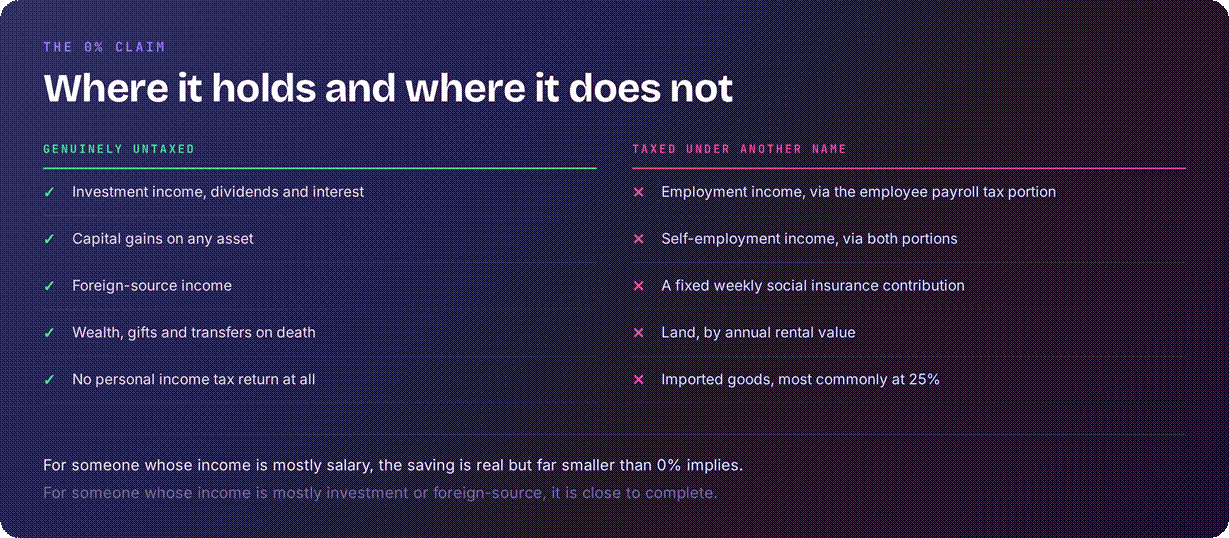
What the 0% claim covers, and what it does not.
Social insurance, and a refund worth knowing about
Social insurance is a fixed weekly contribution rather than a percentage of pay, split equally between employer and employee. Self-employed individuals pay both halves. Because it is a flat amount, it is proportionally heavier at lower incomes and negligible at higher ones.
One provision is genuinely valuable to an expatriate and rarely mentioned. An employee who pays into the system but does not qualify for a pension because of insufficient contributions may apply at age 65 for a refund of the total value of contributions made on their behalf including the employer’s portion as well as their own.
There is also a threshold worth knowing: non-residents working in Bermuda for less than 26 consecutive weeks are not required to pay social insurance contributions.
Case study: the number that actually matters
Two candidates compare offers. One is in a country with a 30% income tax; the other is in Bermuda, advertised at 0%.
The Bermuda offer carries an employee payroll tax portion deducted from pay at a marginal rate rising into double figures, plus a weekly social insurance contribution. The genuinely zero elements are capital gains, investment income, foreign income and the absence of a return.
So the honest comparison is: Bermuda taxes employment income through the payroll tax and nothing else at all. For someone whose income is mostly salary, the saving is real but far smaller than 0% implies. For someone whose income is mostly investment returns or foreign-source, it is close to complete.
What makes Bermuda attractive
Once the payroll tax is properly accounted for, the case is still strong — it is simply a different case:
• No tax whatsoever on investment income, dividends, interest or capital gains;
• No tax on foreign-source income;
• No wealth, gift or inheritance tax;
• No personal income tax return and no advance payments;
• Payroll tax capped at BMD 1,000,000 of remuneration, so very high earners face a declining effective rate;
• Social insurance as a fixed weekly amount, negligible at higher incomes, with a refund route at 65 for those who do not qualify for a pension; and
• The BMD pegged 1:1 to the US dollar, removing currency risk against dollar income.
The honest qualifications are that employment income is taxed at real rates under another name, that the employee portion is deductible from pay at the employer’s option and should be negotiated, and that Bermuda has only one double taxation agreement so income arising elsewhere may be withheld at source with no treaty relief available.
Filing and the compliance calendar
There is no personal income tax return. Payroll tax returns are filed and paid quarterly by the employer, within 15 days of each quarter end, with quarters beginning in January, April, July and October. Social insurance is remitted monthly by the employer.
Prepare in good time:
• Your employment contract, specifying whether the employee portion is deducted;
• Payslips showing payroll tax and social insurance withheld;
• Records of remuneration against the BMD 1,000,000 cap;
• Evidence of weeks worked, if under the 26-week social insurance threshold;
• Contribution records, for a potential refund at 65; and
• Filings made in any other country.
Negotiate the portion, not the rate
Consider:
• That the employee payroll tax portion is graduated and reaches 12.5%;
• That the employer may deduct it in full, in part, or not at all;
• That this is a contractual matter and is therefore negotiable;
• That payroll tax stops at BMD 1,000,000 of remuneration;
• That investment, foreign income and gains are genuinely untaxed;
• That social insurance is a fixed weekly amount, not a percentage; and
• That contributions may be refundable at 65 if no pension is earned.
Your Bermuda checklist
1. Model the employee payroll tax portion, not a 0% rate;
2. Check your contract for whether it is deducted from pay;
3. Negotiate that point — it is contractual, not statutory;
4. Note the cap at BMD 1,000,000 of remuneration;
5. Treat investment and foreign income as genuinely untaxed;
6. Budget the fixed weekly social insurance contribution;
7. Check the 26-week threshold if on a short assignment;
8. Keep contribution records for a possible refund at 65;
9. Factor land tax if you will own property; and
10. Allow for only one double taxation agreement.
Frequently asked questions
Does Bermuda really have no income tax?
It has no personal income tax, capital gains tax or withholding tax, and no personal return. But it levies a payroll tax with an employee portion charged at graduated rates from 0.5% to 12.5% on a rising scale by income band, which functions as an income tax on employment earnings.
Do I pay the employee portion?
That depends on your contract. The employer is legally liable for both portions but has the option of deducting the employee portion in full or in part. It is therefore negotiable in a way an income tax never is.
Is there a cap?
Yes. Payroll tax applies only up to BMD 1,000,000 of remuneration per person per year. Anything above that is exempt, so very high earners face a declining effective rate.
What is genuinely untaxed?
Investment income, dividends, interest, capital gains and foreign-source income — all completely. There is also no wealth, gift or inheritance tax and no personal income tax return.
How does social insurance work?
As a fixed weekly contribution split equally between employer and employee, rather than a percentage of pay. Self-employed individuals pay both halves. Non-residents working less than 26 consecutive weeks are not required to contribute.
Can I get social insurance contributions back?
Potentially. An employee who pays in but does not qualify for a pension through insufficient contributions may apply at age 65 for a refund of the total value of contributions made on their behalf — including the employer portion.
What about property and imports?
Land tax is charged on the annual rental value of developed land, with private dwellings on a graduated scale. Customs import duties apply to almost all goods arriving, most commonly at 25%. There is no VAT or sales tax.
What does the single treaty mean?
Bermuda has only one double taxation agreement, so income arising in other countries may be withheld at source with no treaty relief available, and there is no Bermudian income tax to credit against a foreign assessment.
Official sources and further reading
Important information
This article is general information and does not constitute tax, legal, immigration or financial advice, and does not create a client relationship. Tax outcomes depend on travel history, income sources, treaty status and the law applying to the relevant year. Rates, thresholds and regimes change, and some measures described may be proposed rather than enacted; this article reflects our understanding as at the date of publication. Obtain advice from a suitably qualified professional before acting or refraining from action.
