
Bolivia taxes individuals only on Bolivian-source income, regardless of nationality or residence. What it does charge runs at 13%, and a credit mechanism can reduce even that to nothing.
Bolivia taxes individuals only on their Bolivian-source income, regardless of their nationality or residence. Income arising from assets located or economically used within Bolivian territory, and from any activity carried out in the country, is Bolivian-source. No Bolivian taxes are imposed on foreign-source income earned by individuals — full stop.
That phrasing matters. This is not a remittance basis, not a transitional window and not an election. The scope of the charge simply does not extend to foreign income for anybody.
What Bolivia does charge is the RC-IVA — the Régimen Complementario al Impuesto al Valor Agregado — at a flat 13%. It is not a conventional income tax but a complementary regime, and its design is what makes the country unusual.
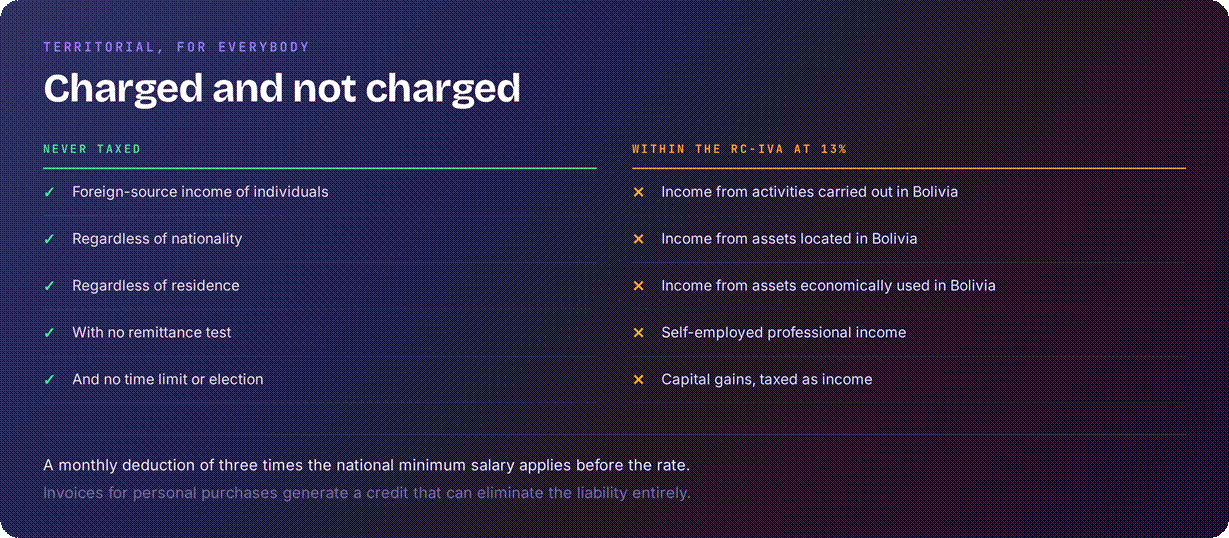
What falls inside the charge, and what never does.
Your residency status is the first step, except it barely matters
Bolivia is one of very few countries where the residence question is close to irrelevant for income tax purposes. Because the charge extends only to Bolivian-source income regardless of nationality or residence, being resident does not widen the base.
One administrative point does turn on status. A non-domiciled individual who receives Bolivian-source labour income paid by a non-resident entity — a foreign employer — is treated as a direct taxpayer of the RC-IVA and must declare and pay monthly, or on leaving the country, whichever comes first.
Maintain accurate records of:
• Where each activity is physically carried out, since that drives source;
• Where assets are located or economically used;
• Whether your employer is a Bolivian or a foreign entity;
• Monthly income against the minimum salary deduction;
• Invoices for personal purchases, which generate the credit; and
• Departure dates, if you are a non-domiciled direct taxpayer.
The tax rates
Item | Position |
Foreign-source income of individuals | Not taxed, for anybody |
RC-IVA on Bolivian-source income | 13% |
Monthly deduction | Three times the national minimum salary |
Credit from personal purchase invoices | Offsets the liability, and carries forward |
Capital gains | Taxed as income within the RC-IVA |
Foreign tax relief | None — and none needed, given territoriality |
Corporate income tax | 25% |
Tax period for individuals | The calendar quarter |
Self-employed professionals are within the RC-IVA, while income from other business activities falls under the separate corporate regime. The distinction between professional practice and trading activity therefore matters for which system applies to you.
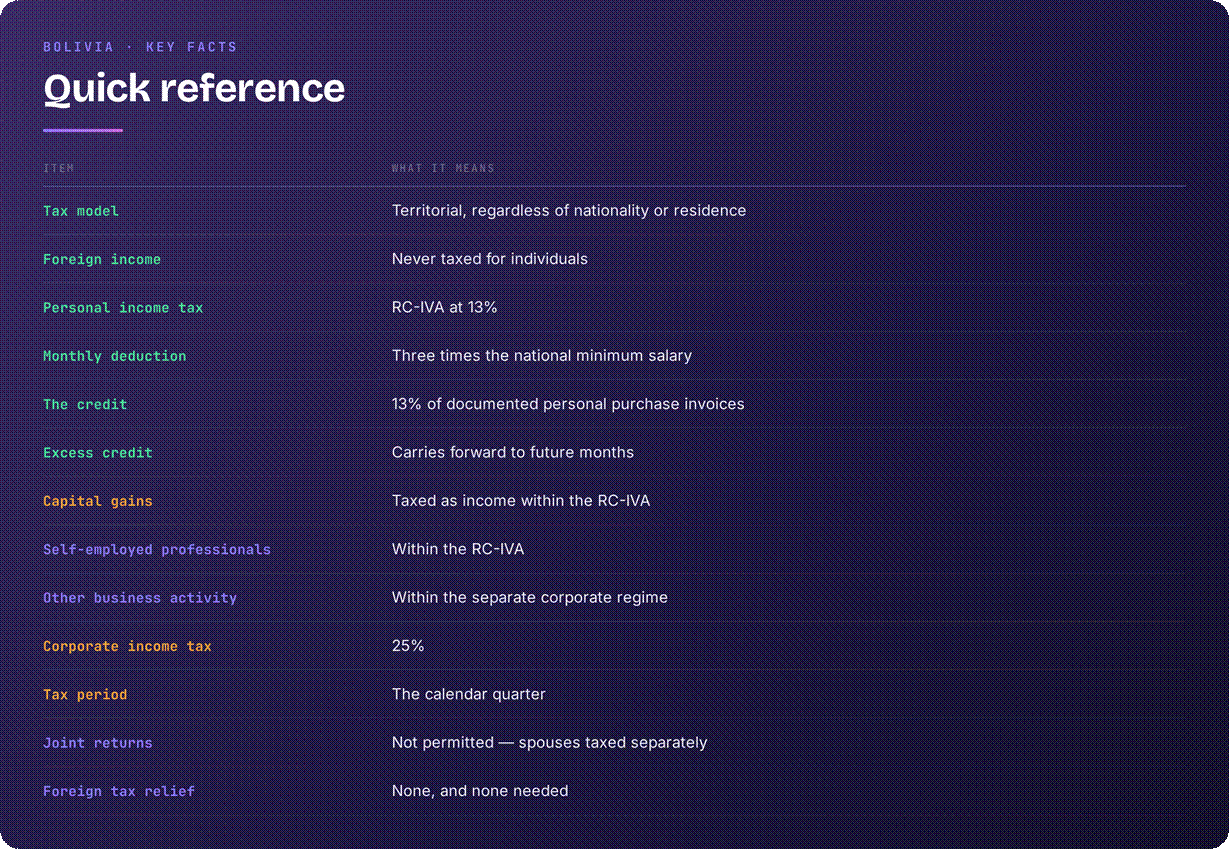
The Bolivian position at a glance.
How the offset works
This is the mechanism that makes Bolivia distinctive. An employee presents original fiscal invoices for personal purchases to their employer each month, and receives a credit equivalent to 13% of the value of those invoices, applied against their calculated RC-IVA liability.
The arithmetic is straightforward. Monthly taxable base, multiplied by 13%, less the credit from invoices, gives the amount actually payable. Where the credit exceeds the calculated tax, the excess can generally be carried forward to offset future months.
In practice, an employee who retains invoices for ordinary personal spending equivalent to their taxable base can eliminate the RC-IVA entirely. Many Bolivian employees have a very low or nil effective income tax as a result, and the burden that remains is the pension contribution rather than the tax.
What makes Bolivia attractive
The combination is unusual and, for the right person, very strong:
• Foreign income is never taxed, regardless of nationality or residence (no remittance test, no time limit, no election);
• A flat 13% on Bolivian-source income, with no brackets;
• A monthly deduction of three times the national minimum salary before any rate applies;
• A credit mechanism that can reduce the effective income tax to nothing for someone who retains their invoices;
• Excess credit carries forward to future months;
• No foreign tax relief needed, because there is no foreign income in the base; and
• A very low cost of living.
The honest qualifications are practical rather than fiscal. Bolivia is landlocked with limited international banking and correspondent relationships, there is no investment migration route, and local-source definitions need confirming for anyone doing consulting or professional work in-country — services physically performed in Bolivia are Bolivian-source however the client pays.
Case study: Carmen keeps her receipts
Carmen earns BOB 12,000 a month in Santa Cruz. Three times the national minimum salary comes off first, leaving a taxable base of roughly BOB 4,900, and 13% of that is around BOB 640.
She then presents fiscal invoices for personal spending — groceries, restaurants, utilities — of roughly BOB 4,900. The credit is 13% of that, around BOB 640, which offsets her liability in full. Her effective income tax for the month is nil.
Her foreign investment income, meanwhile, is outside the Bolivian charge entirely, as it would be for anybody. The system rewards record-keeping rather than structuring, which is an unusual thing to be able to say.
Filing and the compliance calendar
The tax period for individuals is the calendar quarter, ending 31 March, 30 June, 30 September and 31 December. Joint returns are not permitted and spouses are taxed separately. Employment income is taxed by withholding, with the employer operating the credit mechanism monthly.
Prepare in good time:
• Registration with the tax authority;
• A monthly routine for collecting and submitting fiscal invoices;
• Records establishing the source of each receipt;
• Evidence of where activities were physically carried out;
• Separate records for professional income and other business activity; and
• Monthly declarations, if you are a non-domiciled direct taxpayer.
Source and receipts are the whole exercise
Consider:
• That foreign income is outside the charge for everyone, resident or not;
• Where your activities are physically carried out, since that drives source;
• That services performed in Bolivia are Bolivian-source however the client pays;
• Whether you are within the RC-IVA or the separate business regime;
• That keeping invoices is worth real money each month;
• That excess credit carries forward rather than being lost; and
• The practical constraints of banking and connectivity alongside the tax.
Your Bolivia checklist
1. Establish where each activity is physically carried out;
2. Confirm the source of every receipt before assuming exemption;
3. Note that services performed in Bolivia are Bolivian-source;
4. Check whether you fall in the RC-IVA or the business regime;
5. Apply the three-times-minimum-salary deduction first;
6. Collect fiscal invoices for personal purchases every month;
7. Submit them to your employer to claim the credit;
8. Carry forward any excess credit rather than losing it;
9. File on the quarterly cycle, not annually; and
10. Declare monthly if paid by a foreign employer as a non-domiciled individual.
Frequently asked questions
Does Bolivia tax foreign income?
No. Bolivia taxes individuals only on Bolivian-source income, regardless of nationality or residence. No Bolivian taxes are imposed on foreign-source income earned by individuals, with no remittance test and no time limit.
Does residence make any difference?
Very little for income tax, because the charge extends only to Bolivian-source income for everybody. One administrative point differs: a non-domiciled individual paid Bolivian-source labour income by a foreign employer must declare and pay monthly or on leaving the country.
What is the RC-IVA?
The Régimen Complementario al Impuesto al Valor Agregado — a complementary regime rather than a conventional income tax, charged at a flat 13% on Bolivian-source income after allowable deductions.
How can the effective rate be zero?
Because documented fiscal invoices for personal purchases generate a credit of 13% of their value, applied against the calculated liability. Someone who retains invoices covering their taxable base can eliminate the charge entirely, and excess credit carries forward.
What deduction applies?
A monthly deduction equivalent to three times the national minimum salary comes off before the 13% is applied, which removes a substantial amount of income from the charge for everyone.
Are capital gains taxed?
Gains are taxed as income and fall within the RC-IVA. There is no separate capital gains schedule for individuals.
I work remotely from Bolivia for foreign clients. Am I taxed?
The source position needs establishing rather than assuming. Income from activities carried out within Bolivian territory is Bolivian-source, so services physically performed in the country can be within the charge however the client pays.
What is the tax period?
The calendar quarter, ending 31 March, 30 June, 30 September and 31 December. Joint returns are not permitted and spouses are taxed separately.
Official sources and further reading
Important information
This article is general information and does not constitute tax, legal, immigration or financial advice, and does not create a client relationship. Tax outcomes depend on travel history, income sources, treaty status and the law applying to the relevant year. Rates, thresholds and regimes change, and some measures described may be proposed rather than enacted; this article reflects our understanding as at the date of publication. Obtain advice from a suitably qualified professional before acting or refraining from action.
