
Seychelles runs a territorial system: personal tax reaches income sourced in Seychelles and leaves foreign income alone. Combined with no capital gains tax, no inheritance tax and a well-known offshore company regime, that makes it a familiar name in international planning.
Two details get much less attention than they deserve, and both matter more to an arriving expatriate than the headline.
Non-citizens do not get the tax-free band. Seychellois employees have a monthly zero-rated slice before tax begins. Foreign individuals do not. A non-citizen employed in Seychelles is taxed at 15% on emoluments from the first rupee. On a modest salary that is a meaningful difference, and it is rarely mentioned in comparisons.
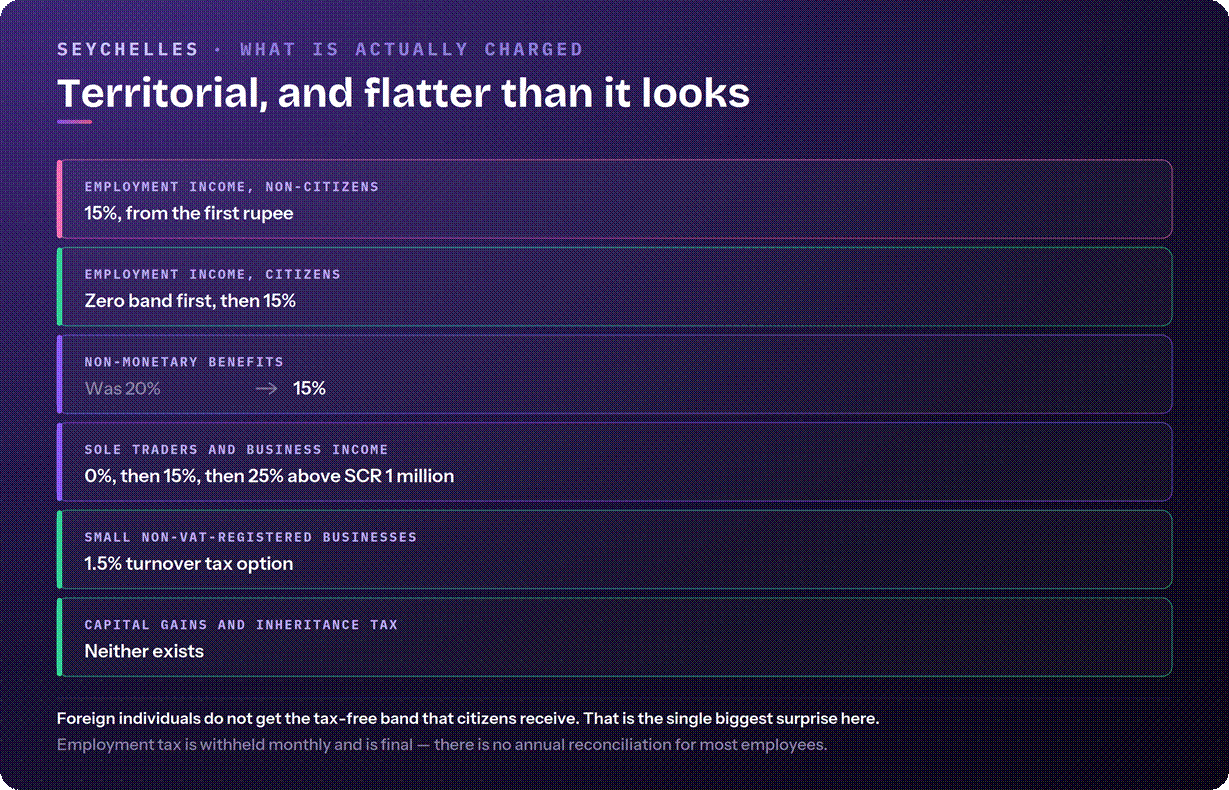
The charges that actually apply, and the band foreigners do not receive.
How individuals are taxed
Employment taxation sits under the Income and Non-Monetary Benefits Tax Act 2010. An employee is taxed at 15% on emoluments. The employer withholds at source and remits to the Seychelles Revenue Commission within 21 days of the end of the month, and the tax withheld is the final tax for most employees — there is no annual reconciliation to worry about.
Non-monetary benefits — accommodation, utilities, a car, meals, insurance — are taxed on the employer, calculated on the actual cost or taxable value. The rate was reduced from 20% to 15% with effect from the end of December 2022. Where the benefit is used in performing the duties of the employment, or where the employee pays towards it, the taxable value is reduced accordingly.
Business income follows a different scale. Sole traders and individual business taxpayers pay nothing on the first SCR 102,666, 15% up to SCR 1,000,000, and 25% above that. Small businesses not registered for VAT with turnover up to SCR 1,000,000 can instead elect a 1.5% turnover tax and step outside business tax altogether.
The territorial system, and how it narrowed
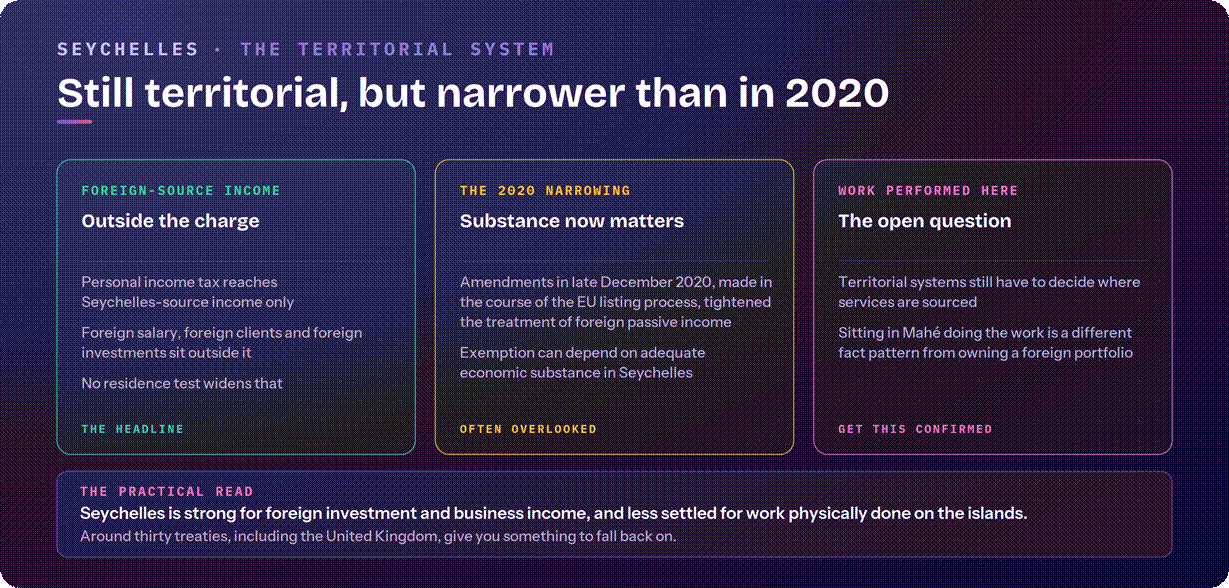
Still territorial — with a substance condition that did not exist before 2021.
The territorial principle is real: income sourced outside Seychelles is outside the personal charge. Foreign salary paid for work done abroad, foreign client fees, foreign investments and foreign property income sit outside it.
December 2020 changed the picture for passive income. Amendments made at the end of 2020, in the course of clearing the EU’s non-cooperative jurisdictions listing process, tightened the treatment of foreign-source passive income. Exemption can now depend on adequate economic substance in Seychelles, and foreign income from intellectual property is treated differently again. Anything written about Seychelles before 2021 describes a wider exemption than the one that exists now.
Companies follow the same logic. Profits earned through a permanent establishment abroad are not taxed in Seychelles, but profits from foreign activities that do not establish a presence abroad can be. An International Business Company deriving income entirely outside Seychelles and not dealing with residents remains outside the local charge, but the substance conditions attached to that treatment are stricter than they once were.
The open question for remote workers
Every territorial system eventually has to decide where a service is sourced, and that is where a remote worker sits. Owning a foreign share portfolio while living in Mahé is a straightforward case: the income arises abroad. Performing consultancy work from a desk in Mahé for a client in Frankfurt is not the same fact pattern.
Do not assume the answer from the general description. Seychelles is confidently described across the internet as taxing no foreign income at all, full stop. That is a good summary of the investment position and a much weaker one for services physically performed on the islands. If your income is earned by doing work while you are there, get the source position confirmed locally rather than inferring it.
Treaties and the wider position
Seychelles has around thirty double taxation agreements, including the United Kingdom, the United Arab Emirates, China, India, Mauritius and South Africa. Employment income articles generally allocate the charge to where the work is physically carried out, with relief provisions behind them — which is another reason the source question is worth settling properly.
One further development is worth noting. A Virtual Asset Service Providers Act took effect in September 2024, making licensing mandatory for that sector — relevant if your income arises from digital assets and you are considering whether it is Seychelles-source.
Your Seychelles checklist
• Separate investment income from income earned by doing work — they are not in the same position;
• If you will be employed locally, budget for 15% from the first rupee with no zero band;
• Check whether non-monetary benefits in your package create an employer charge;
• If self-employed, compare the business tax scale against the 1.5% turnover option;
• Disregard anything written about Seychelles before 2021 on foreign passive income;
• Test whether the substance conditions apply to your foreign passive income;
• Get the source position on services performed in Seychelles confirmed locally;
• Remember the employer, not the employee, bears the charge on non-monetary benefits;
• Check the treaty between Seychelles and your home country; and
• Note there is no capital gains tax and no inheritance tax, which may matter more than the rate.
Frequently asked questions
Does Seychelles tax foreign income?
Not in general. The personal charge reaches Seychelles-source income only. The important qualification is that amendments at the end of 2020 tightened the treatment of foreign-source passive income, where exemption can now depend on adequate economic substance.
Do foreigners get the tax-free band?
No. The monthly zero-rated slice applies to citizen employees. A non-citizen employed in Seychelles is taxed at 15% on emoluments from the first rupee.
How is employment income collected?
The employer withholds at 15% and remits to the Seychelles Revenue Commission within 21 days of the month end. For most employees the amount withheld is the final tax, so no annual return is required.
What about benefits like accommodation and a car?
Non-monetary benefits are taxed on the employer at 15%, reduced from 20% at the end of December 2022, calculated on actual cost or taxable value. The value is reduced where the benefit is used in performing the duties or where the employee contributes to it.
What are the rates for self-employed people?
Nothing on the first SCR 102,666, then 15% to SCR 1,000,000 and 25% above. Small businesses not registered for VAT with turnover up to SCR 1,000,000 can elect a 1.5% turnover tax instead.
Is there capital gains or inheritance tax?
Neither. There is no standalone capital gains tax and no inheritance tax, which for someone with an investment portfolio can outweigh the income tax rate entirely.
I work remotely from Seychelles for a foreign client. Is that foreign income?
That is the question to get answered locally. A foreign portfolio clearly produces foreign-source income. Services physically performed in Seychelles are a different fact pattern, and the confident general statements online do not settle it.
Is the 15% withholding really final?
For most employees, yes. The employer withholds and remits within 21 days of the month end, and that is the end of the matter — there is no annual return to file on employment income alone.
Official sources and further reading
• Seychelles Revenue Commission
• Seychelles Revenue Commission — income and non-monetary benefits tax
Important information
This article is general information and does not constitute tax, legal, immigration or financial advice, and does not create a client relationship. Tax outcomes depend on travel history, income sources, treaty status and the law applying to the relevant year. Rates, thresholds and regimes change, and some measures described may be proposed rather than enacted; this article reflects our understanding as at the date of publication. Obtain advice from a suitably qualified professional before acting or refraining from action.
