
Bosnia and Herzegovina charges a flat 10% on personal income throughout the country. Whether it charges you on a capital gain depends entirely on which of its two entities you live in.
Bosnia and Herzegovina is not one tax jurisdiction but three. The Federation of Bosnia and Herzegovina and Republika Srpska each have their own personal income tax law, and the Brčko District in the north belongs officially to both while being governed by neither.
On the headline rate they agree. Personal income tax is a flat 10% with no brackets, and corporate income tax is also 10%. Wage withholding generally operates as a final tax, so most employees have nothing further to compute.
On capital gains they do not agree, and the difference is stark. Capital gains are not taxable in the Federation. In Republika Srpska they are taxed at 13%, covering gains from the sale of immovable assets and from property, authorship, licence and franchise rights.
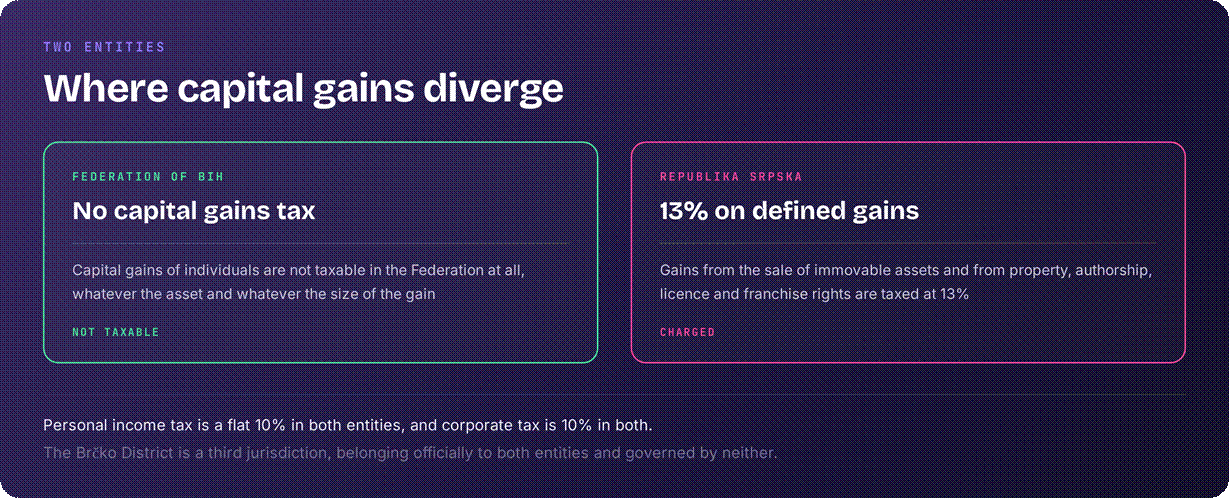
Same country, same rate, different answer on gains.
Your residency status is the first step
An individual is resident where either of the following applies:
• They spend more than 183 days in a calendar year in the Federation or in Republika Srpska; or
• They have a residence, or a business of vital interest, in the territory of Bosnia and Herzegovina.
Resident individuals pay tax on their worldwide income. Non-residents are taxed only on income sourced in Bosnia and Herzegovina.
That worldwide scope is worth stating plainly, because Bosnia is sometimes described as territorial. It is not for residents — the flat rate applies to income from all sources once you are resident.
Maintain accurate records of:
• Which entity you are resident in, since that decides the gains position;
• Days present in each calendar year;
• Whether you have a residence or business of vital interest in the country;
• Income by source, domestic and foreign;
• Asset acquisition and disposal records, particularly in Republika Srpska; and
• Any other country that may also treat you as resident.
The tax rates
Item | Position |
Personal income tax | 10% flat, both entities |
Wage withholding | Generally a final tax |
Capital gains, Federation | Not taxable |
Capital gains, Republika Srpska | 13% |
Interest received by individuals | Usually exempt |
Dividends received by individuals | Usually exempt |
Corporate income tax | 10% |
Corporate capital gains | Included in taxable income at 10% |
Republika Srpska charges gains on a defined list. The 13% applies to gains from the sale of immovable assets and from property rights, authorship rights, licence and franchise rights. Anyone holding those categories should establish their entity position before a disposal rather than afterwards.
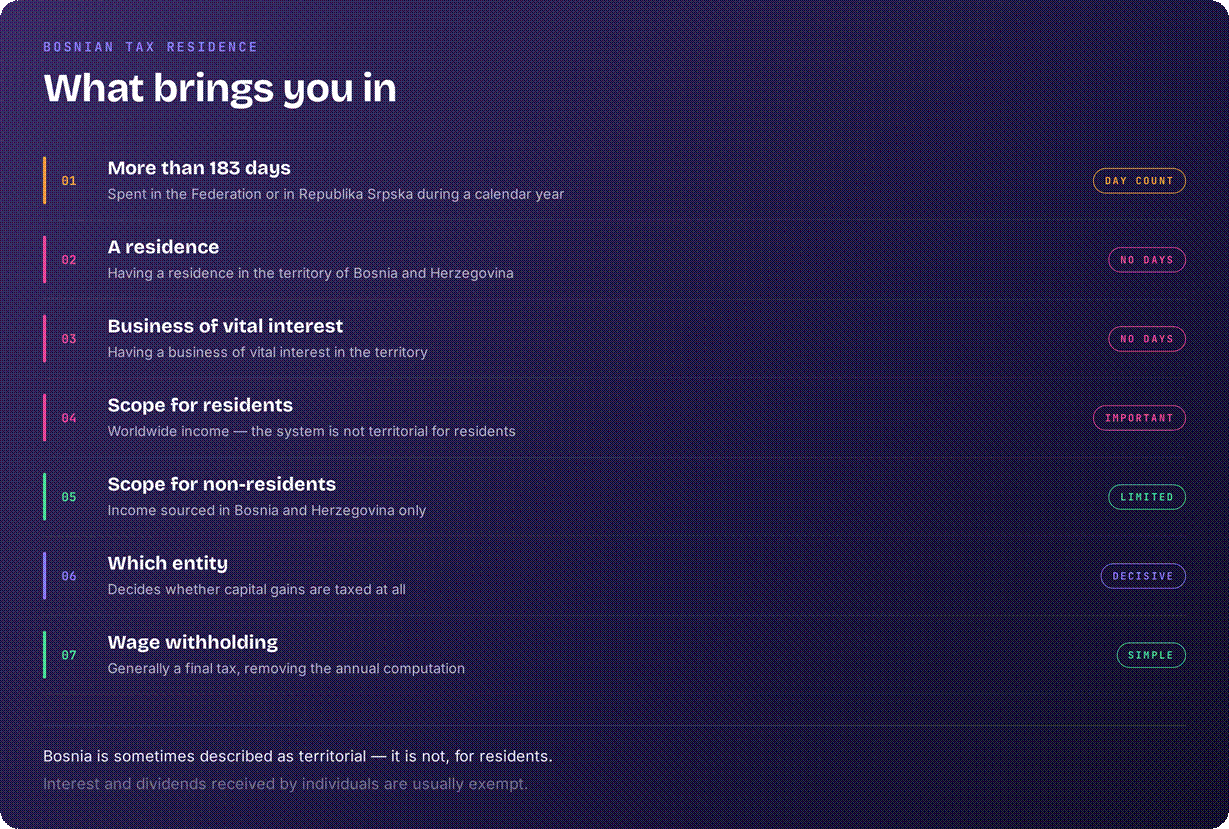
Two limbs into residence, and both are easy to meet.
What makes Bosnia attractive
The combination is stronger than the country’s profile suggests:
• A 10% flat rate with no brackets and no phase-outs, among the lowest in Europe;
• No capital gains tax at all for individuals in the Federation of Bosnia and Herzegovina;
• Interest and dividends usually exempt for individuals, so investment income is treated very lightly;
• Wage withholding as a final tax, which removes the annual computation for most employees;
• Residence at 183 days, with no investment, property purchase or capital requirement;
• A 10% corporate rate for anyone operating through a company; and
• A cost of living well below Western European levels.
The honest qualifications are that residents are taxed on worldwide income, so there is no shelter for foreign earnings, and that the three-jurisdiction structure means any general statement about "Bosnian tax" needs checking against the entity that actually applies to you.
Case study: Tarik and Ivana sell the same asset
Tarik lives in Sarajevo, in the Federation. Ivana lives in Banja Luka, in Republika Srpska. Both are Bosnian residents, both pay 10% flat on their income, and both hold an investment property acquired some years ago.
Tarik sells his and pays nothing on the gain — capital gains are not taxable in the Federation. Ivana sells hers and pays 13%, because immovable assets fall squarely within the Republika Srpska charge.
Same country, same rate on income, entirely different outcome on the gain. For anyone holding appreciating assets, the choice of entity is not a detail.
Filing and the compliance calendar
The tax year follows the calendar year in both entities. Because wage withholding is generally a final tax, employees with a single source of employment income often have no annual return to prepare. Individuals with other income sources file under the rules of the entity in which they are resident.
Prepare in good time:
• Registration with the tax authority of the relevant entity;
• Confirmation of which entity you are resident in;
• Day-count records for the calendar year;
• Payroll records and evidence of withholding applied;
• Records of foreign income, since residents are taxed worldwide; and
• Acquisition documentation for assets, if resident in Republika Srpska.
Choose the entity deliberately
Consider:
• Which entity you will be resident in, before anything else;
• Whether you hold assets that Republika Srpska would charge at 13%;
• That the Federation does not tax individual capital gains at all;
• That residents are taxed on worldwide income, not territorially;
• Whether interest and dividends fall within the usual exemptions;
• That wage withholding is generally final, simplifying compliance; and
• That the Brčko District is a third jurisdiction again.
Your Bosnia checklist
1. Establish which entity you will be resident in;
2. Check whether you hold assets Republika Srpska would charge;
3. Note that the Federation does not tax individual capital gains;
4. Count days against the 183-day calendar-year test;
5. Remember a residence alone can make you resident without a day count;
6. Treat the system as worldwide for residents, not territorial;
7. Confirm the usual exemptions for interest and dividends apply to you;
8. Keep acquisition records if resident in Republika Srpska;
9. Register with the tax authority of the relevant entity; and
10. Check the Brčko District position separately if relevant.
Frequently asked questions
What is the Bosnian income tax rate?
A flat 10% with no brackets, applying in both the Federation of Bosnia and Herzegovina and Republika Srpska. Corporate income tax is also 10%.
Are capital gains taxed?
It depends on the entity. Capital gains of individuals are not taxable in the Federation at all. In Republika Srpska they are taxed at 13%, covering gains from immovable assets and from property, authorship, licence and franchise rights.
Is Bosnia a territorial system?
Not for residents. Resident individuals pay tax on their worldwide income; non-residents are taxed only on income sourced in Bosnia and Herzegovina. Descriptions of Bosnia as territorial for residents are wrong.
How do I become tax resident?
By spending more than 183 days in a calendar year in the Federation or Republika Srpska, or by having a residence or a business of vital interest in the territory of Bosnia and Herzegovina.
How are interest and dividends taxed?
Interest and dividends received by individuals are usually exempt, which makes the treatment of investment income noticeably better than the flat 10% headline suggests.
Do I need to file a return?
Often not. Wage withholding generally operates as a final tax, so employees with a single source of employment income frequently have nothing further to compute. Other income sources are filed under the rules of the entity of residence.
Why does the entity matter so much?
Because the two entities legislate separately on personal income tax. They agree on the 10% rate but differ on capital gains, so the same disposal produces a different result depending on where in the country you live.
What about the Brčko District?
It is a third jurisdiction, created in 2000 from land belonging to both entities. It officially belongs to both and is governed by neither, functioning under a decentralised system of local government, so its position should be checked separately.
Official sources and further reading
• Indirect Taxation Authority of Bosnia and Herzegovina
Important information
This article is general information and does not constitute tax, legal, immigration or financial advice, and does not create a client relationship. Tax outcomes depend on travel history, income sources, treaty status and the law applying to the relevant year. Rates, thresholds and regimes change, and some measures described may be proposed rather than enacted; this article reflects our understanding as at the date of publication. Obtain advice from a suitably qualified professional before acting or refraining from action.
