
Most flat-tax countries tax investment income on a separate schedule. Turkmenistan does not. One rate of 10% covers employment, business, interest, royalties, property income and capital gains alike.
Turkmenistan operates the simplest personal tax structure I have come across. The general personal income tax rate is 10%, and it applies to employment income, business and professional income, interest, royalties, income from immovable property and capital gains — every category, one rate.
That is genuinely unusual. Most systems with a low flat rate on employment income still carve investment income onto a separate schedule, often at a different rate. Turkmenistan does not bother.
Collection is equally straightforward. Personal income tax is generally levied by withholding at source when payment is made by a withholding agent, resident legal entities, individual entrepreneurs, and permanent establishments of non-resident legal entities.
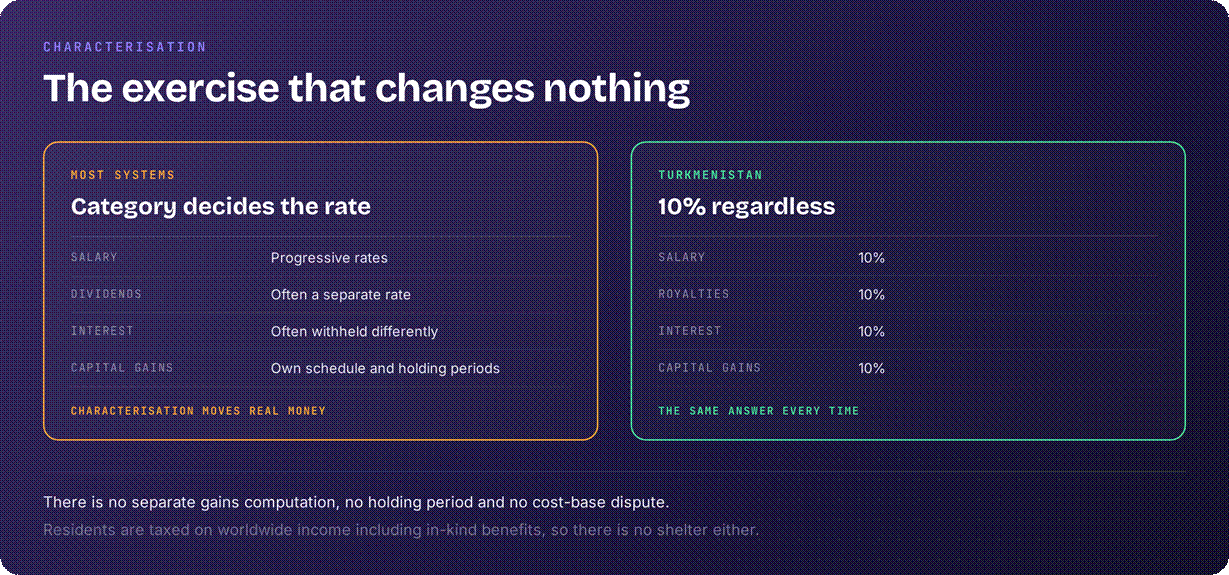
Same income, same rate, whatever the category.
Your residency status is the first step
Residents are generally taxed in Turkmenistan on their worldwide income, including in-kind benefits. Non-residents are taxed only on income derived from Turkmenistan sources — for example, from activities performed in Turkmenistan.
Because the rate is the same 10% either way, the residence question changes the scope rather than the cost. Someone with substantial foreign income is materially better off as a non-resident; someone earning locally is indifferent.
Maintain accurate records of:
• Days present in Turkmenistan during the tax year;
• Income by source, Turkmenistan and foreign;
• In-kind benefits received, including housing and relocation;
• Whether tax was withheld at source, and by whom;
• Business income, if you are an individual entrepreneur; and
• Any other country that may also treat you as resident.
The tax rates
Income | Rate |
Employment income | 10% |
Business and professional income | 10% |
Interest | 10% |
Royalties | 10% |
Income from immovable property | 10% |
Capital gains | 10% |
In-kind benefits for residents | Within the charge at 10% |
Non-residents | 10% on Turkmenistan-source income |
Individual entrepreneurs are the exception to withholding. The general rule that tax is withheld at source does not apply to their business income, which is instead brought in under a self-assessment procedure.
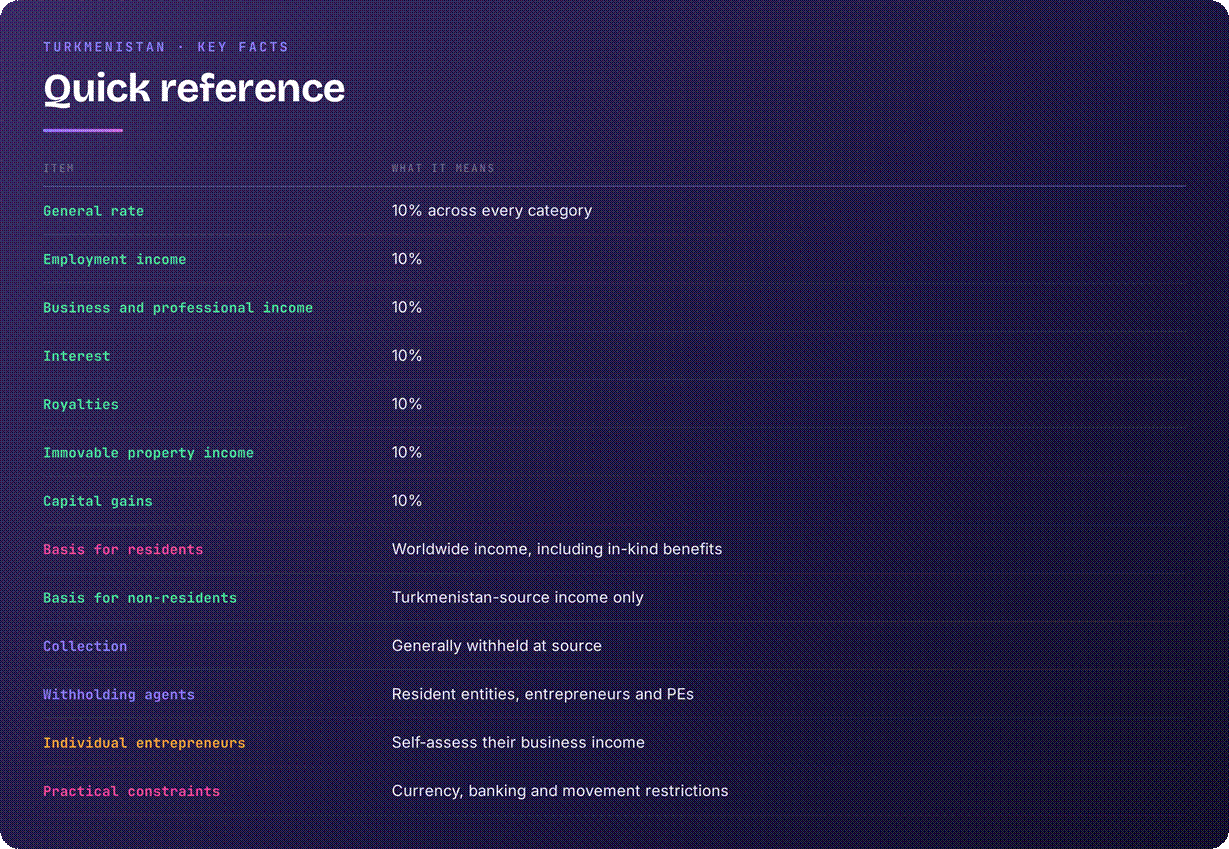
The Turkmen position at a glance.
What makes Turkmenistan attractive
The appeal is almost entirely about simplicity and rate:
• A 10% rate across every category of income, with no separate schedule for investment income;
• Capital gains at 10%, with no holding period, no cost-base dispute and no separate computation;
• Interest and royalties at 10%, rather than a higher withholding rate;
• Tax withheld at source for most people, so there is little to administer;
• Non-residents charged at the same 10%, with no penalty rate; and
• A structure so short that it can be described accurately in a sentence.
The honest qualifications are substantial and should not be skipped. Turkmenistan is one of the most closed economies in the world, with tight currency controls, very limited banking access for foreigners and severe restrictions on movement and communication. The tax position is excellent in isolation and close to irrelevant for most people because of everything around it.
Case study: the category that does not matter
In most countries, whether a receipt is salary, a dividend, interest or a capital gain changes the rate often substantially. Advisers spend real time on characterisation because the answer moves money.
In Turkmenistan it does not. Employment income is 10%. A capital gain is 10%. Royalty income is 10%. Rental income from property is 10%. The characterisation exercise that dominates planning elsewhere produces the same answer every time.
That is worth noting precisely because it is so rare. The trade-off is that the rate applies to worldwide income for residents, including benefits in kind, so there is no shelter to plan toward either.
Filing and the compliance calendar
Tax is generally withheld and remitted by withholding agents — resident legal entities, individual entrepreneurs and permanent establishments of non-resident legal entities — so an employee typically has nothing further to do. Individual entrepreneurs self-assess their business income.
Prepare in good time:
• Registration with the tax authority;
• Records of income by source;
• Documentation of in-kind benefits received;
• Evidence of tax withheld at source;
• Self-assessment records, if an individual entrepreneur; and
• Day-count records establishing your residence position.
Weigh the rate against the constraints
Consider:
• That the 10% applies to every category, including capital gains;
• That residents are taxed on worldwide income, with no territorial relief;
• That in-kind benefits are within the charge;
• That non-residents face the same rate on a narrower base;
• That withholding at source handles most compliance;
• That individual entrepreneurs self-assess instead; and
• The currency, banking and movement constraints alongside the tax.
Your Turkmenistan checklist
1. Note that 10% applies to every category, including gains;
2. Establish your residence position, since it changes the scope;
3. Record income by source, Turkmenistan and foreign;
4. Include in-kind benefits, which are within the charge;
5. Confirm whether tax was withheld at source;
6. Self-assess business income if an individual entrepreneur;
7. Keep day-count records for the tax year;
8. Do not expect a separate capital gains computation;
9. Assess currency and banking constraints before anything else; and
10. Weigh movement and communication restrictions realistically.
Frequently asked questions
What is the Turkmen income tax rate?
A general rate of 10%, applying to employment income, business and professional income, interest, royalties, income from immovable property and capital gains — every category at the same rate.
Are capital gains taxed separately?
No. Capital gains fall within the same 10% general rate, so there is no separate computation, no holding period and no cost-base schedule to work through.
Does Turkmenistan tax foreign income?
Residents are generally taxed on worldwide income, including in-kind benefits such as meals, housing and relocation. Non-residents are taxed only on income derived from Turkmenistan sources.
How is the tax collected?
Generally by withholding at source when payment is made by a withholding agent — resident legal entities, individual entrepreneurs and permanent establishments of non-resident legal entities.
Are there exceptions to withholding?
Yes. Withholding does not apply to the business income of individual entrepreneurs, who are required to apply a self-assessment procedure instead.
Do non-residents pay a higher rate?
No. Non-residents face the same 10%, applied to a narrower base of Turkmenistan-source income. There is no penalty rate for being outside the residence test.
Are benefits in kind taxed?
Yes, for residents. Worldwide income includes in-kind benefits such as meals, housing and relocation, so a package heavy on benefits is not sheltered.
What are the practical drawbacks?
Substantial. Turkmenistan is among the most closed economies in the world, with tight currency controls, very limited banking access for foreigners and severe restrictions on movement and communication. The tax position should be weighed against all of it.
Important information
This article is general information and does not constitute tax, legal, immigration or financial advice, and does not create a client relationship. Tax outcomes depend on travel history, income sources, treaty status and the law applying to the relevant year. Rates, thresholds and regimes change, and some measures described may be proposed rather than enacted; this article reflects our understanding as at the date of publication. Obtain advice from a suitably qualified professional before acting or refraining from action.
