
Timor-Leste taxes income at a maximum of 10%, and because the country is dollarised those thresholds are set in US dollars. There is no currency risk to model at all.
Timor-Leste has one of the lowest personal tax ceilings of any independent country: a top rate of 10%. Not a headline rate that climbs, not a rate reached after allowances — 10% is where the scale stops.
What makes it unusually easy to plan around is the currency. Timor-Leste is dollarised, so the thresholds are expressed in US dollars and carry no exchange risk for anyone earning or holding in dollars.
The system runs two charges in parallel. Income tax applies to taxable income other than employment, at 0% up to USD 6,000 and 10% above. Wage Income Tax applies to employment wages, at 0% up to USD 500 a year and 10% above.
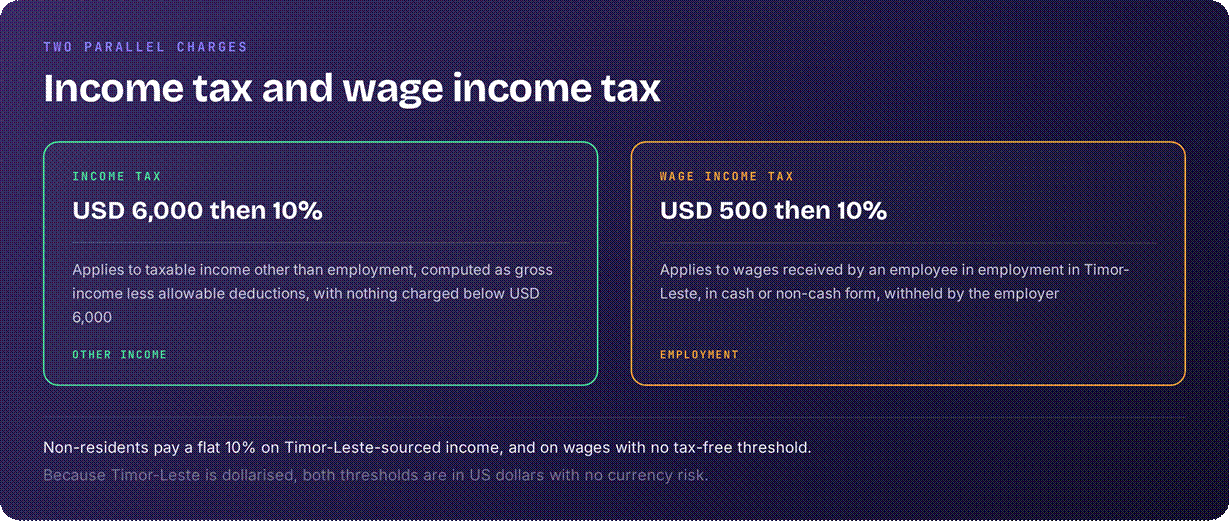
Two charges, one rate.
Your residency status is the first step
Timor-Leste residents are taxable on a worldwide income basis, while non-residents are taxable only on income sourced from Timor-Leste. Residents earning foreign-sourced income may receive a foreign tax credit.
Because residents and non-residents both face a 10% ceiling, the residence question matters less here than in most systems. What it changes is the scope — worldwide against Timor-Leste-source — and the availability of the exempt thresholds.
Maintain accurate records of:
• Where services are physically performed;
• Whether income is employment wages or other taxable income;
• Annual taxable income against the USD 6,000 threshold;
• Annual wages against the USD 500 threshold;
• Foreign income and foreign tax paid, for the credit; and
• Any other country that may also treat you as resident.
The tax rates
Item | Rate |
Income tax, up to USD 6,000 | 0% |
Income tax, above USD 6,000 | 10% |
Wage Income Tax, up to USD 500 a year | 0% |
Wage Income Tax, above USD 500 | 10% |
Non-resident individuals | 10% flat on Timor-Leste-sourced income |
Non-resident wages | 10% flat, with no tax-free threshold |
Basis for residents | Worldwide income, with a foreign tax credit |
Basis for non-residents | Timor-Leste-sourced income only |
Wages are taxable whether provided in cash or non-cash form, so benefits in kind are within the charge. Certain wages are exempt — those received for official duties exempt under the law, and wages of a foreign government employee received in that capacity where they are subject to income tax in that country.
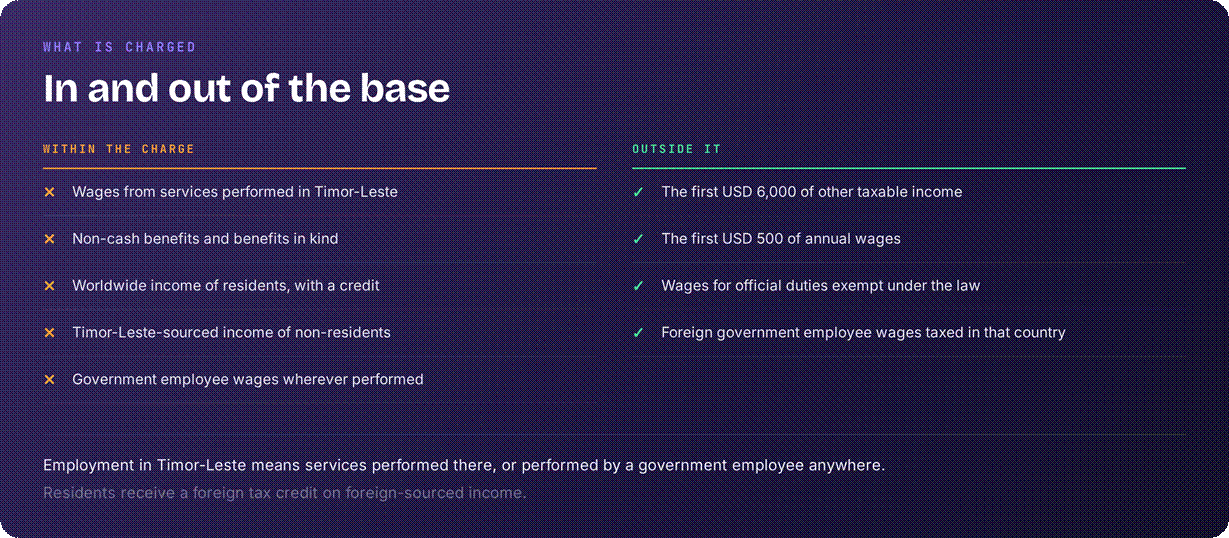
What falls in each basket.
What makes Timor-Leste attractive
The case is simple and unusually strong:
• A 10% top rate — the scale does not go higher, for residents or non-residents;
• Dollarisation, so thresholds are in US dollars and there is no currency risk to model;
• A USD 6,000 exempt threshold on income other than wages;
• A foreign tax credit for residents on foreign-sourced income;
• No penalty rate for non-residents — the flat 10% is the same rate residents face at the top;
• A short, legible structure with two charges and one rate; and
• A very low cost of living.
The honest qualifications are practical. Timor-Leste is a small economy with limited banking and connectivity infrastructure, its treaty network is minimal, and residents are taxed on worldwide income — so the 10% applies to foreign earnings too, subject to the credit.
Case study: Nuno compares two jurisdictions
Nuno earns the equivalent of USD 70,000 a year. In Timor-Leste his wage income tax is 10% on everything above USD 500 — roughly USD 6,950.
In most of the region the same income would face a progressive scale reaching 25% to 35%, producing a materially larger bill. And because Timor-Leste uses the US dollar, there is no exchange rate to watch between what he earns and what he owes.
The trade-off is everything other than the tax. The rate is excellent; the infrastructure, banking access and treaty protection are not, and those need weighing honestly.
Filing and the compliance calendar
Wage income tax is withheld by the employer on wages received by an employee in employment in Timor-Leste. Income tax applies to taxable income other than employment, computed as the difference between gross income and allowable deductions.
Prepare in good time:
• Registration with the tax authority;
• Records showing where services were performed;
• A clear split between wages and other taxable income;
• Foreign income records and evidence of foreign tax paid;
• Documentation of any exempt wages claimed; and
• Records of non-cash benefits, which are within the charge.
Weigh the rate against everything else
Consider:
• That the ceiling is 10% for residents and non-residents alike;
• That thresholds are in US dollars, with no currency risk;
• Which of the two charges applies to each income stream;
• That services performed in Timor-Leste are the test for employment;
• That residents are taxed on worldwide income, with a credit;
• That non-cash benefits are taxable wages; and
• The banking, connectivity and treaty constraints alongside the rate.
Your Timor Leste checklist
1. Split income between wages and other taxable income;
2. Apply the USD 500 threshold to wages and USD 6,000 to other income;
3. Record where each service was physically performed;
4. Include non-cash benefits, which are taxable wages;
5. Note that non-residents face the same 10%, without thresholds;
6. Claim the foreign tax credit on foreign-sourced income;
7. Check whether any wages fall within the statutory exemptions;
8. Note that dollarisation removes currency risk from planning;
9. Weigh banking and connectivity alongside the rate; and
10. Allow for a minimal treaty network.
Frequently asked questions
What is the top tax rate in Timor-Leste?
10%. That is the ceiling for both income tax and wage income tax, and it applies to residents and non-residents alike — there is no higher band and no penalty rate for non-residence.
Why does dollarisation matter?
Because Timor-Leste uses the US dollar, the thresholds are expressed in dollars. For anyone earning or holding in dollars there is no exchange rate between what they earn and what they owe, which removes a variable most low-tax jurisdictions carry.
What are the two charges?
Income tax applies to taxable income other than employment, at 0% up to USD 6,000 and 10% above. Wage Income Tax applies to employment wages, at 0% up to USD 500 a year and 10% above.
What counts as employment in Timor-Leste?
Services performed in Timor-Leste, or services performed by an employee of the government of Timor-Leste, irrespective of where those services take place.
Does Timor-Leste tax foreign income?
Residents are taxable on a worldwide basis, with a foreign tax credit available on foreign-sourced income. Non-residents are taxable only on income sourced from Timor-Leste.
Are benefits in kind taxed?
Yes. Wages are taxable whether provided in cash or non-cash form, so benefits in kind fall within the wage income tax charge.
Are any wages exempt?
Wages received for official duties that are exempt under the law, and wages of an employee who is a citizen of a foreign country received in their capacity as a government employee of that country, provided those wages are subject to income tax there.
What are the drawbacks?
Practical rather than fiscal. Timor-Leste is a small economy with limited banking and connectivity infrastructure and a minimal treaty network, so relief from a competing residence claim depends largely on domestic rules.
Official sources and further reading
Important information
This article is general information and does not constitute tax, legal, immigration or financial advice, and does not create a client relationship. Tax outcomes depend on travel history, income sources, treaty status and the law applying to the relevant year. Rates, thresholds and regimes change, and some measures described may be proposed rather than enacted; this article reflects our understanding as at the date of publication. Obtain advice from a suitably qualified professional before acting or refraining from action.
