
Moving to Brazil involves more than accommodation, visas and healthcare. You also need to establish how Brazil will classify you for personal tax purposes.
Where will you pay tax? Will Brazil tax income earned outside the country? When must you file? These questions matter particularly if you work remotely, run an online business, receive investment income or continue to earn salary from another country.
Brazil follows a residence taxation model: a Brazilian tax resident is generally taxed on worldwide income, while a non-resident is generally taxed only on Brazilian-source income. Accidentally becoming resident can significantly expand your reporting obligations, even though Brazil's top personal rate of 27.5% is relatively modest by international standards.
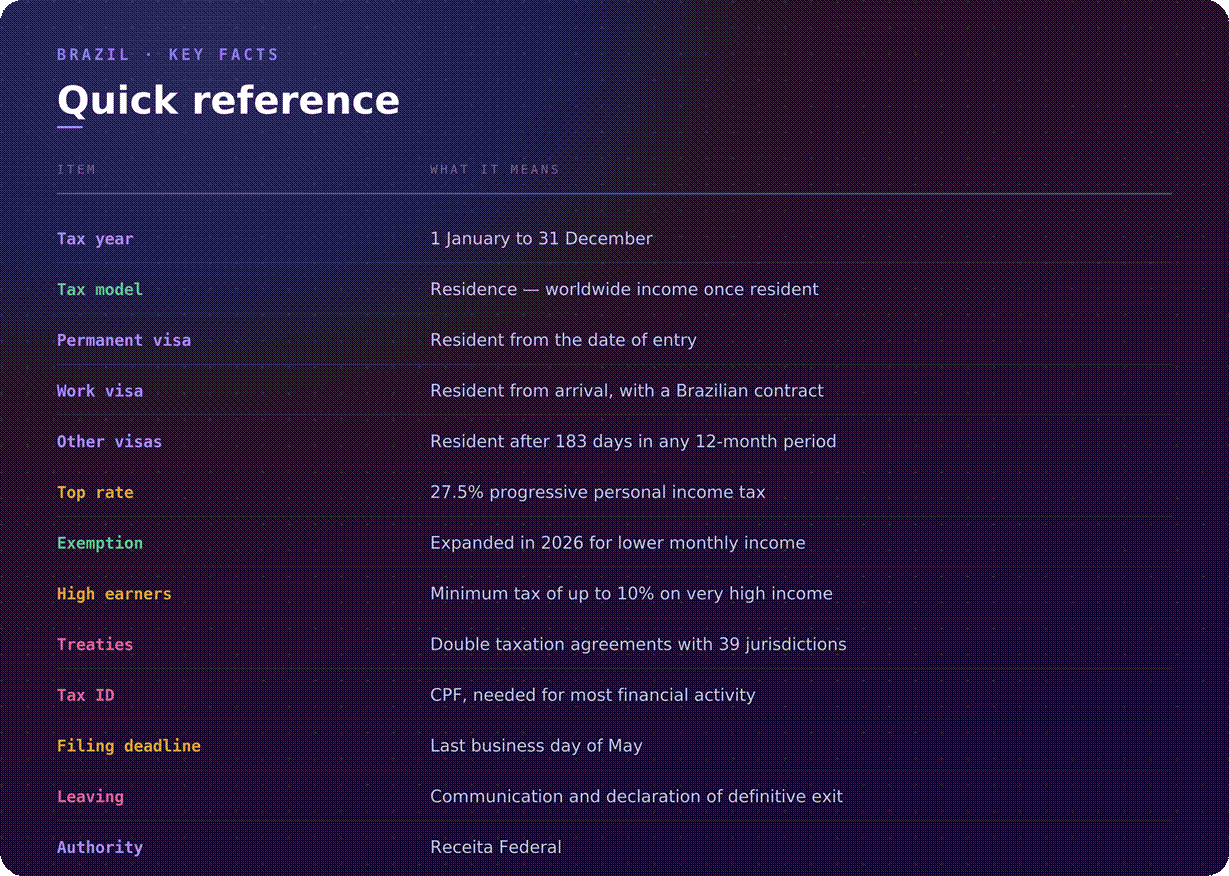
The Brazilian position at a glance.
Your visa and physical presence decide when residency begins
Residency determines whether Brazil can tax your worldwide income or only income connected with Brazil, and it is not based on a simple six-month rule. The outcome depends on your visa type, employment arrangements, permanent residence status and actual physical presence.
Your situation | When residency generally begins |
Permanent visa or residence | From the date of entry, or when the status takes effect |
Temporary work visa with a Brazilian contract | From the date of arrival |
Other temporary visas | After 183 days of presence in a 12-month period |
Certain regional nationals | Special rules may apply where residence or work is established |
⚠️ Watch out. The 183-day test is not permission to remain in Brazil for 182 days without further analysis. Your visa status and work arrangements may trigger residency far earlier — and immigration status and tax status, while related, are not the same thing.
Maintain a travel calendar showing every entry and exit date, and retain copies of visas, employment agreements, residence permits and relevant immigration records.
Case study: Mark arrives on a work assignment
Mark enters Brazil on a temporary work visa and signs an employment contract with a Brazilian company. He becomes tax resident from the date of arrival, rather than waiting until he has spent 183 days in the country.
Mark must therefore consider his worldwide income and reporting position from the start of his assignment. His employer's payroll arrangements may address some Brazilian obligations, but they do not resolve his position on foreign investments, rental income or overseas accounts.
Case study: Felicity works remotely without a Brazilian employer
Felicity enters Brazil on a temporary visa and continues working for a company established outside Brazil. She has no Brazilian employment contract.
If she spends 183 days in Brazil within a 12-month period, she may become resident under the physical presence rule. The fact that her employer is overseas does not, by itself, prevent Brazilian tax residency. She should monitor her days before reaching the threshold, while reviewing whether another country still treats her as resident.
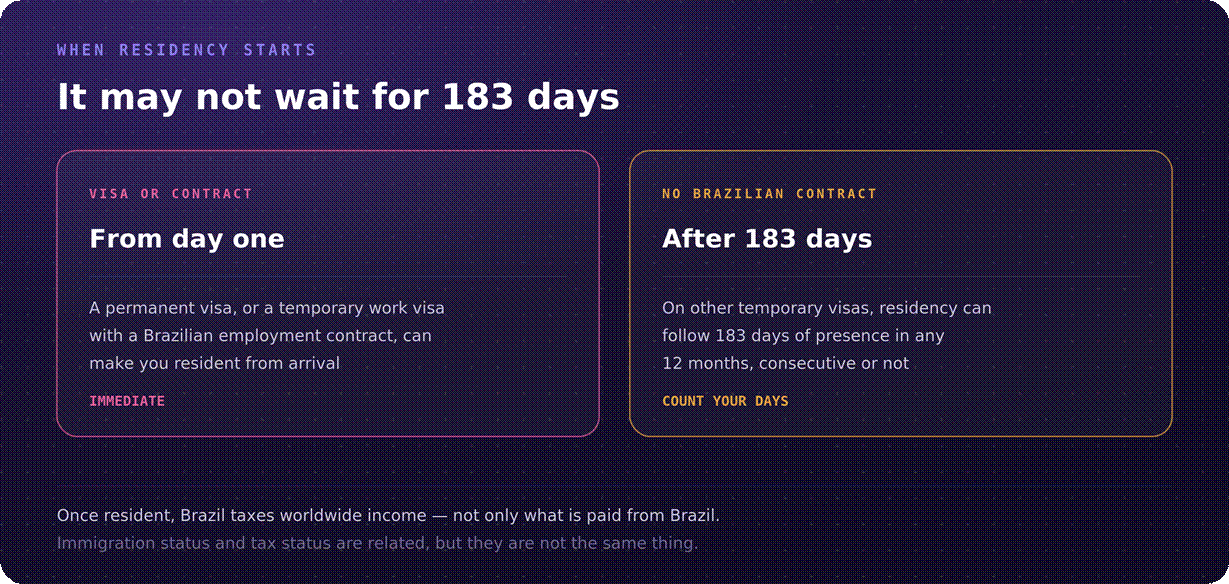
Which route applies to you decides whether you have months to plan, or none.
Residents are taxed on worldwide income
Once you become a Brazilian tax resident, Brazil generally taxes income from both Brazilian and foreign sources. This may include:
• Employment income and director remuneration;
• Freelance and self-employment income;
• Business and professional profits;
• Rental income;
• Interest and investment returns;
• Pensions and annuities;
• Dividends or distributions, depending on the applicable rules; and
• Capital gains and proceeds from the sale of assets.
The central point. Your income does not escape Brazilian tax simply because it is paid into a foreign bank account, earned from a foreign client, or paid by an employer outside Brazil.
Brazil's progressive rates reach a top rate of 27.5% for employment and self-employment income. The amount you actually pay depends on the type of income, deductions, exemptions, timing and the rules in force for the relevant year.
From 2026, the exemption threshold was expanded for lower monthly incomes, and a minimum effective tax of up to 10% applies to very high earners. Neither change alters the headline progressive table, but both affect what you actually pay, so check the position for the year you are filing.
The rate is only one part of the analysis. You also need to consider reporting requirements, currency conversion, documentation, foreign tax credits and the interaction between Brazilian rules and those of the country where your income originates.
Where two countries both claim you
If you remain tax resident in another country after becoming resident in Brazil, you may face overlapping claims. Brazil has 39 double taxation agreements, which may help allocate taxing rights or provide relief. A treaty does not automatically eliminate your filing obligations, though.
Identify the relevant agreement, determine your treaty residence where necessary, and assess whether foreign tax credits or other relief are available.
Your CPF is essential for practical administration
Your CPF, or Cadastro de Pessoas Físicas, is the Brazilian individual taxpayer identification number. It is not, by itself, proof that you are a Brazilian tax resident. It is determined by your visa, employment arrangements and physical presence.
It is nonetheless central to your practical affairs. You may need it to open a Brazilian bank account, enter into certain contracts, purchase property or register assets, access financial services, make investments, complete tax filings, and deal with Brazilian authorities and service providers.
Determine when and how you must obtain or regularise your CPF, and keep the associated information accurate, particularly if your address, immigration status or tax position changes.
The tax year follows the calendar year
Brazil uses a calendar-year tax period, running from 1 January to 31 December.
If you are required to file an individual income tax return, the annual filing window generally runs from March to the last business day of May following the end of the tax year. Income earned during one calendar year is therefore reported during the following filing cycle. Always confirm the exact date published for the relevant year, because the authorities do adjust administrative dates.
Brazil does not generally require advance personal income tax payments, but that does not mean every form of income is reported only once a year. Withholding and monthly collection mechanisms can apply depending on how income is received, who pays it and whether specific rules apply.
What should you prepare before filing?
Organise your records throughout the year rather than reconstructing your position shortly before the deadline. Your preparation should cover:
• Residency evidence such as arrival and departure dates, visa category, residence permit and employment status;
• Income records such as payslips, contracts, invoices, dividend statements, pension documents, rental records and investment statements;
• Foreign income details such as currency, payment date, payer, nature of the income and any foreign tax withheld;
• Asset and liability information such as bank accounts, securities, property, business interests and loans;
• CPF information, consistent across your financial and tax records; and
• Treaty and foreign tax evidence such as certificates and payment records, if you intend to claim relief.
Case study: Sarah, a freelance designer
Sarah moves to Brazil while continuing to invoice clients in the United Kingdom, Canada and Australia. Once she becomes Brazilian tax resident, she cannot assume that only invoices paid by Brazilian clients are relevant.
She should review the treatment of her worldwide freelance income, retain supporting records and establish whether any foreign tax relief may apply. Done properly, this becomes a reliable annual process rather than treating each international payment as a separate emergency.
What happens when you leave Brazil?
Leaving does not automatically end your Brazilian tax residency. If you leave permanently, or a temporary absence continues for the relevant period, you may need to formalise your departure.
Brazil operates a Communication of Definitive Departure, which is a separate step from the final tax return. You may need to:
• Submit the communication of definitive departure;
• Submit the final departure tax return;
• Report income and assets up to the relevant departure date;
• Pay any tax due; and
• Update the treatment of later Brazilian-source income.
⚠️ The expensive mistake. If you do not complete the departure process, you may remain treated as resident for a period after leaving, which means continued worldwide reporting obligations on income that has nothing to do with Brazil.
Take these steps before departure, or promptly afterwards, particularly if you will retain Brazilian property, investments, bank accounts or business interests.
Your action plan
1. Identify the visa or residence category you will use;
2. Confirm whether a Brazilian employment contract will apply;
3. Calculate your projected days of presence over a rolling 12-month period;
4. Obtain or regularise your CPF;
5. List your worldwide income and assets;
6. Check whether your home country will continue to treat you as resident;
7. Review the relevant double taxation agreements;
8. Create a document-retention system;
9. Diarise the annual filing deadline; and
10. Take advice before transferring assets or changing your residence status.
Frequently asked questions
Can I stay 182 days and avoid Brazilian tax residency?
Not necessarily. The 183-day rule only applies where you hold a temporary visa without a Brazilian employment contract. A permanent visa, or a work visa with a local contract, can make you resident from the day you arrive.
My employer is overseas. Does that keep me out of the Brazilian net?
No. Where your employer is based does not prevent Brazilian tax residency. If you meet a residency trigger, Brazil looks at your worldwide income regardless of who pays you or where the money lands.
Is the top rate really 27.5%?
That is the top rate of the progressive table for employment and self-employment income. From 2026 the exemption threshold was widened at the lower end, and a minimum effective tax of up to 10% applies to very high earners, so your effective position depends on your income level and type.
Does having a CPF make me tax resident?
No. A CPF is an identification number, not a residency status. Residency turns on your visa, employment arrangements and physical presence, though you will likely need a CPF to function financially in Brazil either way.
When is the filing deadline?
The tax year runs to 31 December and the annual return is generally filed by the last business day of May. Check the exact date published for your filing year, because the window is set administratively and has shifted in recent years.
What if I leave Brazil without filing a departure declaration?
You may continue to be treated as a Brazilian tax resident for a period after leaving, with worldwide reporting obligations attached. The communication of definitive departure and the final departure return are what formally end that status.
Will a treaty stop me being taxed twice?
It may allocate taxing rights or provide credit for foreign tax, but it does not remove filing obligations and does not apply automatically. You need to identify the specific agreement and establish your treaty residence.
Do I pay tax monthly or once a year?
Brazil does not generally require advance payments of personal income tax, but withholding and monthly collection can apply depending on the income and who pays it. The annual return then reconciles the position.
Official sources and further reading
• Receita Federal, the Brazilian federal revenue service
• Receita Federal guidance on individual income tax
Important information
This article is general information and does not constitute tax, legal, immigration or financial advice, and does not create a client relationship. Tax outcomes depend on travel history, income sources, treaty status and the law applying to the relevant year. Rates, thresholds and regimes change, and some measures described may be proposed rather than enacted; this article reflects our understanding as at the date of publication. Obtain advice from a suitably qualified professional before acting or refraining from action.
