
Monaco has not taxed personal income since 1869. One nationality is carved out of that by treaty, and it is the nationality of the country the Principality is surrounded by.
Monaco abolished personal income tax by Sovereign Ordinance in 1869, when the gaming concession made taxing residents unnecessary. It has never brought it back. A Monaco resident pays nothing on salary, nothing on investment income and nothing on capital gains, and there is no wealth tax, no annual property tax and no council tax.
There is one exception, and it is written into a treaty rather than domestic law. Under the Franco-Monegasque Convention of 1963, French nationals who settled in Monaco after 13 October 1957 remain liable to French income tax on their worldwide income, as though they still lived in France.
Only those who had already completed five years of continuous residence in the Principality by October 1962 fall outside it. For everyone else holding French nationality, Monaco offers a place to live rather than a tax position.
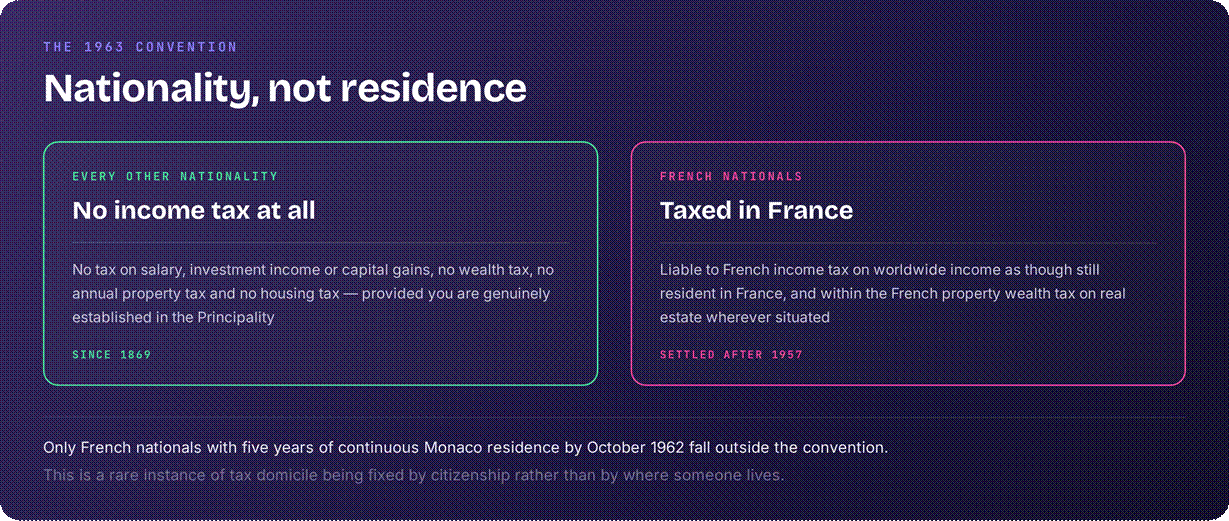
One treaty decides who benefits and who does not.
What Monaco charges an individual
Item | Position |
Personal income tax | None, other than for French nationals under the 1963 convention |
Capital gains tax | None |
Wealth tax | None |
Annual property and housing tax | None |
Inheritance and gift tax | Only on assets situated in Monaco |
Direct line and spouses | 0% |
Business profits tax | 25%, where more than 25% of turnover arises outside Monaco |
Inheritance and gift tax is situs-based, not residence-based. It applies to property located in Monaco regardless of the domicile, residence or nationality of the deceased or the donor. Rates run from 0% in the direct line and between spouses, through 8% between siblings and 10% between uncles, aunts, nephews and nieces, to 16% between unrelated persons.
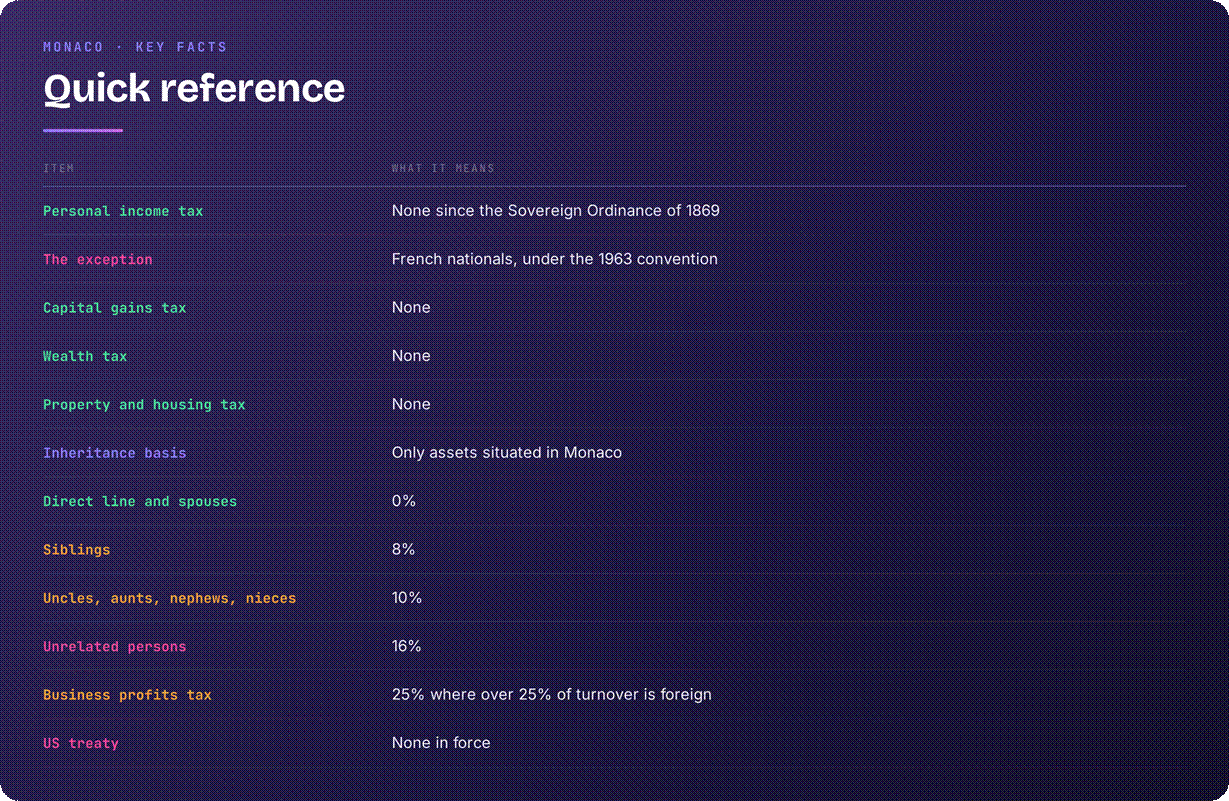
The Monegasque position at a glance.
The French exception, in detail
The 1963 convention fixes tax domicile by citizenship rather than by residence, which is a rare arrangement anywhere in Europe. A French national who moved to Monaco after the cut-off is fully liable in France even where they work exclusively in Monaco and every euro of their income comes from a Monaco employment.
The reach extends beyond income tax. French nationals resident in Monaco also fall within the French impôt sur la fortune immobilière, the property wealth tax, and must declare real estate located in France and abroad under French rules.
The practical consequence is that Monaco appeals first and foremost to non-French nationals. Anyone holding French citizenship, including dual nationals, needs French advice before treating a Monaco move as a tax decision at all.
What "genuinely established" means
The Monegasque government is unusually direct on this point: the absence of income tax applies only to activities carried out and persons genuinely established in the Principality, and it does not affect the rules applied by other states.
That second clause is the one that matters. Monaco not taxing you says nothing about whether your former country has released you. Someone who keeps a home, a family and a working life elsewhere while holding a Monaco address is exposed to a residence challenge in that other country, and Monaco offers no protection against it.
Case study: Claire and Thomas move together
Claire is Belgian and Thomas is French. They move to Monaco in the same month, into the same apartment, on similar incomes from similar sources.
Claire pays no income tax anywhere on that income, provided Belgium accepts she has left. Thomas remains a French tax resident under the 1963 convention and pays French income tax on his worldwide income, plus French property wealth tax on real estate wherever it is situated.
Nothing about their circumstances differs except their passports. It is the clearest example anywhere in Europe of nationality rather than residence deciding a tax outcome.
Business activity
The only significant direct tax in the Principality is the business profits tax, charged at 25% on businesses carrying on an industrial or commercial activity that generate more than 25% of their turnover outside Monaco. Income from intellectual property and royalties is also brought within it.
For an individual, that means the structuring question is where the business sits rather than where the person lives. Monaco works as a residence jurisdiction; it is considerably less useful as a company jurisdiction.
Filing and the compliance calendar
There is no personal income tax return in Monaco for anyone other than French nationals, who file in France under French rules and to French deadlines.
Residence is the whole question
Consider:
• Whether you hold French nationality, including as a dual national;
• Whether your former country will accept that you have left;
• Whether your presence in Monaco is genuine rather than nominal;
• Where any real estate is situated, for inheritance and gift purposes;
• Whether a business would fall within the 25% turnover test;
• Whether a citizenship-based system reaches you regardless.
Your Monaco checklist
1. Establish whether you hold French nationality, including dual nationality;
2. Take French advice before treating a Monaco move as a tax decision;
3. Confirm your former country accepts that you have left;
4. Ensure your presence in Monaco is genuine rather than nominal;
5. Identify where any real estate is situated for inheritance purposes;
6. Note that inheritance tax follows situs, not residence;
7. Check whether a business would meet the 25% foreign turnover test;
8. Remember there is no US tax treaty with Monaco; and
9. Keep evidence supporting genuine establishment in the Principality.
Frequently asked questions
Does Monaco have an income tax?
Not for individuals, and it has not since 1869. The single exception is French nationals, who are covered by the Franco-Monegasque Convention of 1963 and remain liable to French income tax on worldwide income.
Which French nationals are affected?
Those who settled in Monaco after 13 October 1957. Only French nationals who had already completed five years of continuous residence in the Principality by October 1962 fall outside the convention.
Does it matter that I work exclusively in Monaco?
Not for a French national. The convention fixes liability by citizenship, so a French national working solely in Monaco for a Monaco employer is still fully liable to French tax on worldwide income.
Is there inheritance tax?
Yes, but only on assets situated in Monaco, regardless of the domicile, residence or nationality of the deceased or donor. Rates run from 0% in the direct line and between spouses to 16% between unrelated persons.
Is there a wealth tax?
No. Monaco levies no wealth tax, no annual property tax and no housing tax. French nationals resident in Monaco are, however, within the French property wealth tax under the 1963 convention.
Official sources and further reading
• Monaco Government public service portal
Important information
This article is general information and does not constitute tax, legal, immigration or financial advice, and does not create a client relationship. Tax outcomes depend on travel history, income sources, treaty status and the law applying to the relevant year. Rates, thresholds and regimes change, and some measures described may be proposed rather than enacted; this article reflects our understanding as at the date of publication. Obtain advice from a suitably qualified professional before acting or refraining from action.
