
Rwanda runs one of the simplest income tax systems in East Africa — a short set of PAYE bands and four clearly stated routes into residence. The simplicity is the selling point, and it is genuine.
Rwanda taxes on residence. A resident individual pays income tax on all income earned, from domestic and foreign sources. A non-resident pays only on income with a source in Rwanda. The system is administered by the Rwanda Revenue Authority.
The rate structure is deliberately short. Employment income is taxed through PAYE on a small number of monthly bands, with a tax-free threshold that was doubled in 2023 from RWF 30,000 to RWF 60,000 a month — a substantial widening of the exempt base.
Rwanda has spent a decade building a reputation for administrative efficiency, and the tax system reflects that. PAYE is remitted monthly, filing is electronic, and the rules are stated in a form that does not require interpretation to apply.
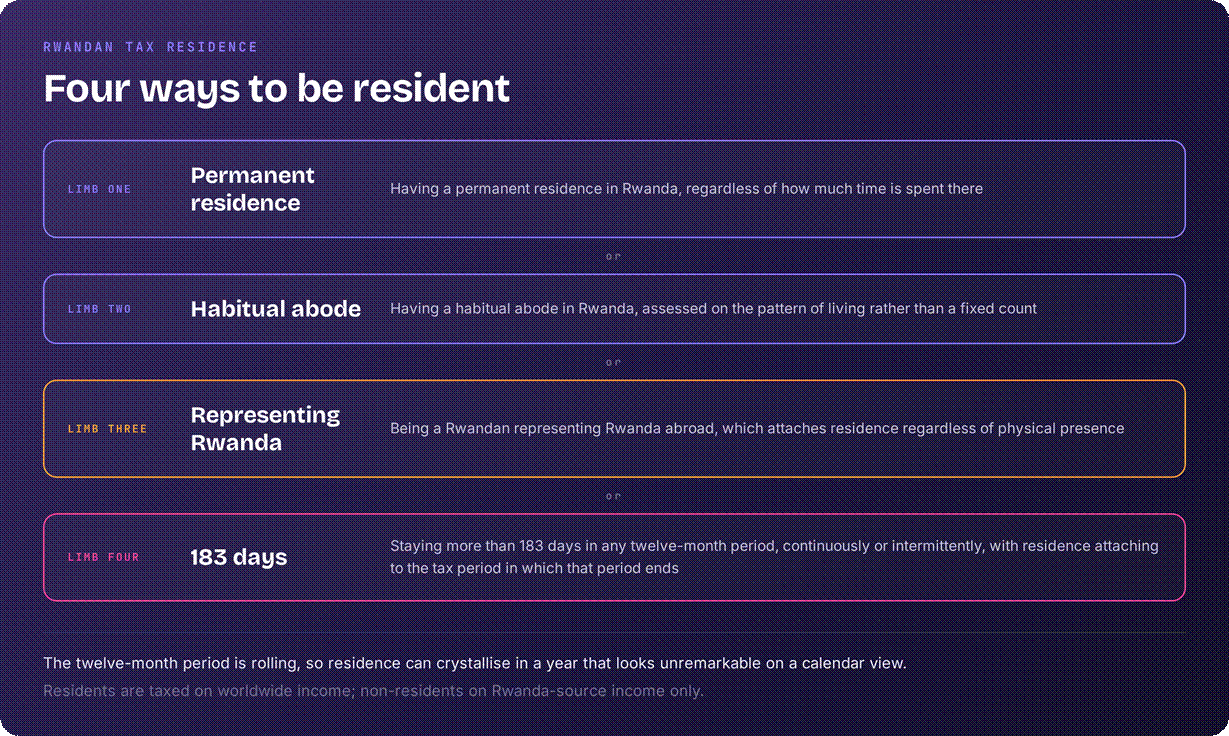
Four routes into residence, and only one counts days.
Your residency status is the first step
An individual is treated as resident in Rwanda for tax purposes if they:
• Have a permanent residence in Rwanda;
• Have a habitual abode in Rwanda;
• Are a Rwandan representing Rwanda abroad; or
• Stay in Rwanda for more than 183 days in any twelve-month period, continuously or intermittently, in which case they are resident for the tax period in which that twelve-month period ends.
Maintain accurate records of:
• Days present across rolling twelve-month periods;
• Which tax period each twelve-month period ends in;
• Whether any Rwandan accommodation constitutes a permanent residence;
• Where your habitual abode is;
• Employment income by source; and
• Any other country that may also treat you as resident.
The tax rates
PAYE applies to employment income on monthly bands, with the exempt threshold at RWF 60,000 a month following the 2023 reform. The structure above that threshold was revised as part of the same reform and is applied on a phased basis, so the current bands should be confirmed against the Revenue Authority for the month in question.
Item | Position |
Tax-free threshold | RWF 60,000 a month, doubled in 2023 |
Top PAYE rate | 30% |
Basis for residents | Worldwide income |
Basis for non-residents | Rwanda-source income only |
Non-resident employment income | Same PAYE rates, not a special flat rate |
Dividends, interest and royalties | 15% withholding |
Capital gains on shares | 5% |
Corporate income tax | 30% |
Residents and non-residents face the same rates. What differs is the scope — worldwide for one, Rwanda-source for the other. That is unusual among Rwanda’s neighbours, several of which apply a separate flat rate to non-resident employment income.
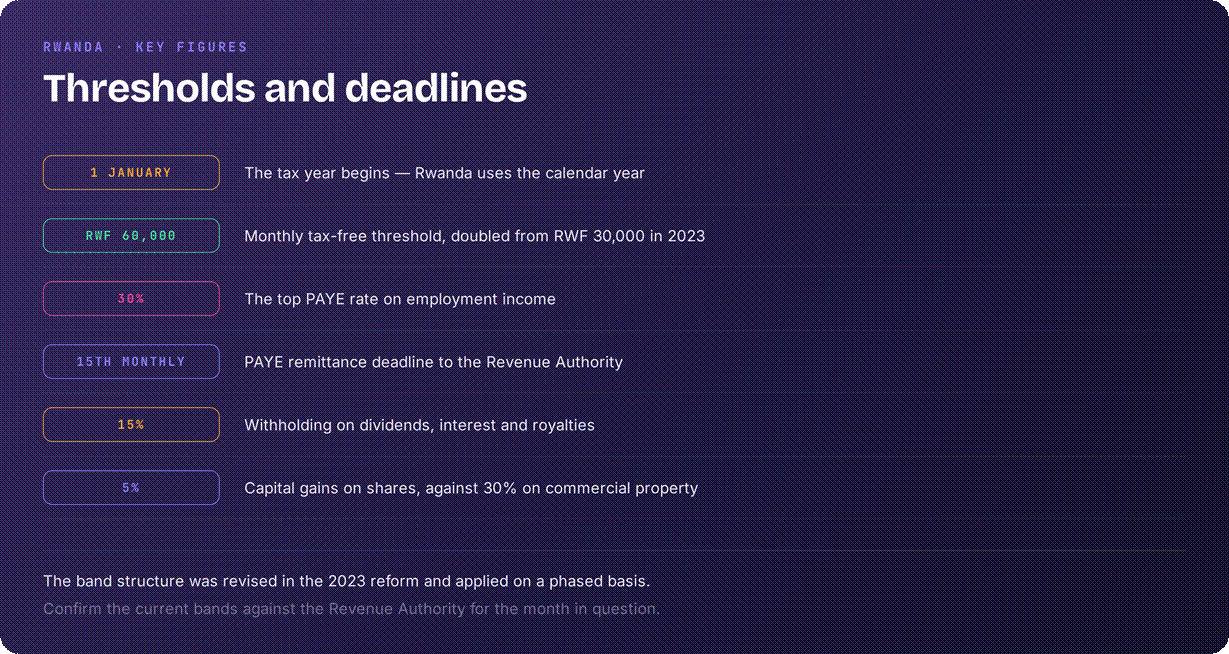
The dates and thresholds that govern the position.
Investment income and gains
Dividends, interest and royalties attract 15% withholding. Capital gains on the direct or indirect sale or transfer of shares or debentures are taxed at 5%, with exemptions for units in collective investment schemes, shares sold on the capital market, and gains arising from company restructuring for the transferring company.
Gains on the sale of commercial immovable property are taxed at 30%, which is a materially different treatment from the 5% on shares and is worth establishing before any disposal.
Pension deduction
Contributions to a qualified pension fund are deductible, subject to a limit of the lower of 10% of employment income or RWF 1.2 million a year. For a higher earner that cap binds quickly, so the relief is more useful at middle income levels than at the top.
Case study: Aline crosses in a quiet year
Aline arrives in Kigali in August for a regional role. By the end of December she has spent around 140 days in Rwanda — comfortably under 183 in that calendar year.
By the following March her rolling twelve-month count passes 183 days. Because residence attaches to the tax period in which the twelve-month period ends, she becomes resident for that second period, and her worldwide income enters the Rwandan charge for it.
Counting by calendar year would have given her the wrong answer in both years. The rolling basis is the point, and it needs tracking from the first arrival rather than reconstructed afterwards.
Filing and the compliance calendar
The Rwandan tax year follows the calendar year. PAYE is withheld monthly by the employer and remitted to the Revenue Authority by the 15th of the following month, through the electronic services portal.
Prepare in good time:
• A taxpayer identification number and e-services access;
• Day-count records on a rolling twelve-month basis;
• PAYE records from any Rwandan employer;
• Records of foreign income, where you are resident;
• Documentation of pension contributions against the cap; and
• Acquisition records for shares or property, for gains purposes.
Track the rolling period
Consider:
• When your rolling twelve-month count will pass 183 days;
• Which tax period that twelve-month period ends in;
• Whether any accommodation amounts to a permanent residence;
• That residents and non-residents face the same rates, but different scope;
• That the 15% is a withholding rate, not a non-resident income tax rate;
• Whether a disposal is of shares at 5% or property at 30%; and
• Whether your former country accepts that you have left.
Your Rwanda checklist
1. Track days on a rolling twelve-month basis, not by calendar year;
2. Identify which tax period each twelve-month period ends in;
3. Check whether any accommodation is a permanent residence;
4. Confirm the current PAYE bands against the Revenue Authority;
5. Remember the tax-free threshold is RWF 60,000 a month;
6. Do not treat 15% as a non-resident income tax rate;
7. Distinguish share disposals at 5% from property at 30%;
8. Check pension contributions against the deduction cap;
9. Ensure PAYE is remitted by the 15th each month; and
10. Confirm your former country accepts that you have left.
Frequently asked questions
When am I Rwandan tax resident?
If you have a permanent residence or habitual abode in Rwanda, are a Rwandan representing Rwanda abroad, or stay more than 183 days in any twelve-month period. In the last case residence attaches to the tax period in which the twelve-month period ends.
Do non-residents pay a flat 15%?
No, and this is a common error. Non-residents pay the same progressive PAYE rates on Rwanda-source employment income. The 15% figure is the withholding rate on dividends, interest and royalties, which is a different thing.
What is the tax-free threshold?
RWF 60,000 a month, doubled from RWF 30,000 in the 2023 reform. That was a substantial widening of the exempt base and it removed many lower earners from the charge entirely.
What is the top rate?
30% on employment income. The band structure between the threshold and the top rate was revised in the 2023 reform and applied on a phased basis, so current bands should be confirmed against the Revenue Authority.
How are capital gains taxed?
Gains on the direct or indirect sale of shares or debentures are taxed at 5%, with exemptions for collective investment scheme units, shares sold on the capital market and certain restructurings. Gains on commercial immovable property are taxed at 30%.
Is there relief for pension contributions?
Yes, subject to a limit of the lower of 10% of employment income or RWF 1.2 million a year. The cap binds quickly for higher earners, so the relief is most useful at middle income levels.
Does Rwanda tax my foreign income?
If you are resident, yes — residents pay income tax on all income earned from domestic and foreign sources. Non-residents pay only on income with a Rwandan source.
How is PAYE administered?
Employers withhold monthly and remit to the Rwanda Revenue Authority by the 15th of the following month, through the electronic services portal. The system is administered electronically end to end.
Official sources and further reading
Important information
This article is general information and does not constitute tax, legal, immigration or financial advice, and does not create a client relationship. Tax outcomes depend on travel history, income sources, treaty status and the law applying to the relevant year. Rates, thresholds and regimes change, and some measures described may be proposed rather than enacted; this article reflects our understanding as at the date of publication. Obtain advice from a suitably qualified professional before acting or refraining from action.
