
Tunisia expanded its income tax scale from five bands to eight and raised the top rate from 35% to 40% — the first meaningful change to the structure since 2017.
The Loi de Finances 2025 made two changes to the Tunisian income tax scale at once. It took the barème from five tranches to eight, and it raised the top marginal rate from 35% to 40%, applying from TND 70,000.01 and above.
Both are significant, and the second is the headline. A 35% ceiling had stood since 2005. The move to 40% is the first increase in the top rate in two decades.
The history matters for context. In 2017 the scale was adjusted to five tranches, keeping the 35% top rate but bringing the threshold at which it applied down from TND 80,000 to TND 50,000 — a change that came after nearly twenty years without adjustment.
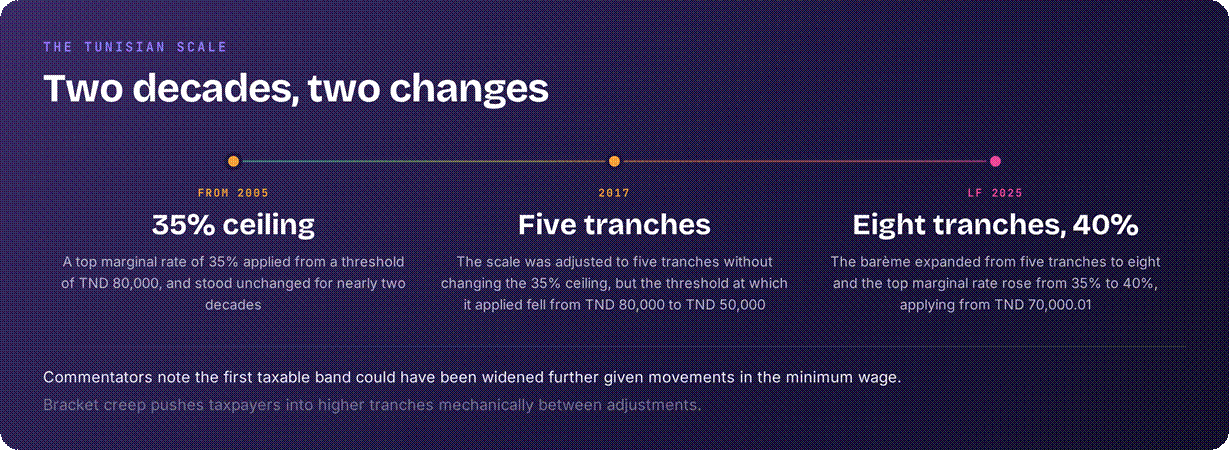
How the scale has changed, and when.
Bracket creep is a live issue
The same commentary raises a problem that applies with particular force in Tunisia: *bracket creep, or glissement fiscal* — the phenomenon by which inflation mechanically pushes taxpayers into higher tax brackets even where their real income has not risen.
The reason it bites here is the long gaps between adjustments. A scale left unchanged from 2017 to 2025, in a period of meaningful inflation, moves taxpayers upward through the bands without any legislative decision to tax them more.
For anyone planning a multi-year stay in Tunisia, that is worth building into the model rather than assuming the current thresholds will hold in real terms.
Maintain accurate records of:
• Which year’s scale applies to the period you are computing;
• Annual net taxable income against the band thresholds;
• Social contributions deducted before the scale is applied;
• Whether the 40% band has been reached;
• Any subsequent finance law adjusting the thresholds; and
• The effect of inflation on your position across years.
The tax rates
Item | Position |
Structure before 2025 | Five tranches |
Structure from 2025 | Eight tranches |
Top rate before 2025 | 35% |
Top rate from 2025 | 40% |
Applying from | TND 70,000.01 and above |
Previous 35% threshold, from 2017 | TND 50,000 |
Threshold before 2017 | TND 80,000 |
Corporate income tax | 20% |
Confirm the full eight-band thresholds with the Ministère des Finances before computing a figure. The top rate and the threshold at which it applies are established; the intermediate band boundaries should be verified against the current text rather than taken from secondary summaries.
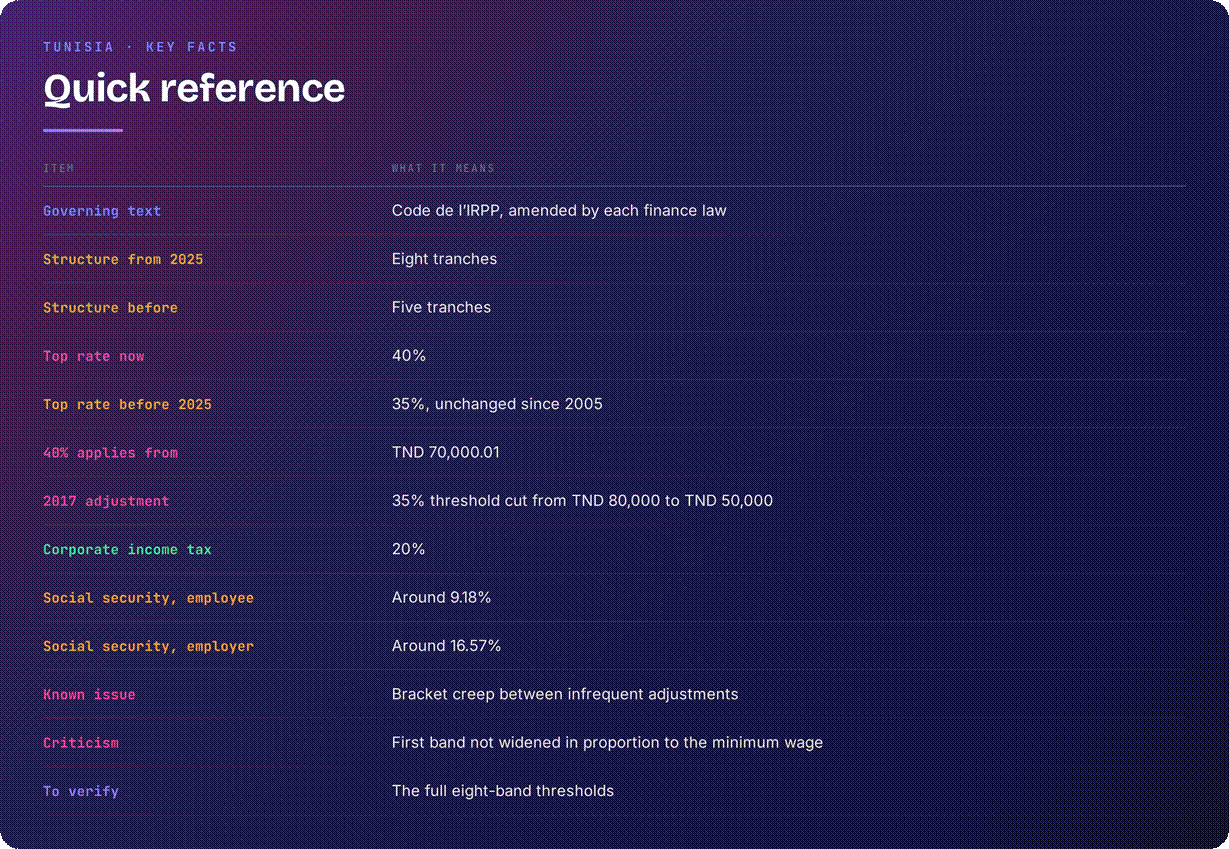
The Tunisian position at a glance.
What makes Tunisia workable
The position has genuine strengths despite the rate rise:
• An eight-band structure, which is more finely graduated than the five it replaced and smooths the progression;
• The 40% rate engaging only above TND 70,000, so it reaches the top of the scale rather than the middle;
• Corporate income tax at 20%, moderate by regional standards;
• Social contributions of around 9.18% for the employee and 16.57% for the employer;
• Proximity and strong connectivity to Europe, with a developed professional services sector; and
• A cost of living well below European levels.
The honest qualifications are that the top rate rose in 2025 after twenty years of stability, that the first band was not widened proportionately, and that bracket creep has a material effect given how infrequently the scale is adjusted.
Case study: two decades of one rate
A 35% ceiling stood from 2005 to 2025. During that period the threshold at which it applied moved down — from TND 80,000 to TND 50,000 in the 2017 adjustment — which increased the number of people reaching it without any change to the rate itself.
The 2025 reform then added three bands and lifted the ceiling to 40% from TND 70,000. The effect at the very top is a clear increase. The effect in the middle depends on where the new intermediate bands fall.
The lesson for planning is that in Tunisia the thresholds move more often than the rates, and they do not always move in the taxpayer’s favour. A model built on the current figures should assume they will shift.
Filing and the compliance calendar
The scale is set out in the Code de l’IRPP and amended by each year’s finance law. Because the structure changed in 2025, the year being computed determines which version applies, and that distinction matters more than usual at present.
Prepare in good time:
• Registration with the tax administration;
• Confirmation of which year’s scale governs your period;
• The full eight-band thresholds from the current text;
• Records of social contributions deducted;
• Annual net taxable income calculations; and
• A note of any finance law adjusting the scale.
Model the thresholds, not just the rate
Consider:
• That the scale moved from five bands to eight in 2025;
• That the top rate rose from 35% to 40% at the same time;
• That 40% applies from TND 70,000.01;
• That the 35% ceiling had stood since 2005;
• That the 2017 adjustment lowered its threshold from TND 80,000 to TND 50,000;
• That bracket creep operates between adjustments; and
• That the first band was not widened in proportion.
Your Tunisia checklist
1. Confirm which year’s scale applies to your period;
2. Note the move from five bands to eight in 2025;
3. Note the top rate rose from 35% to 40%;
4. Apply 40% only above TND 70,000.01;
5. Obtain the full eight-band thresholds from the current text;
6. Deduct social contributions before applying the scale;
7. Build bracket creep into any multi-year model;
8. Do not assume thresholds hold in real terms;
9. Check each finance law for adjustments; and
10. Note corporate tax sits at 20%.
Frequently asked questions
What changed in Tunisia in 2025?
The Loi de Finances 2025 took the income tax scale from five tranches to eight and raised the top marginal rate from 35% to 40%, applying from TND 70,000.01 and above.
How long had the 35% rate stood?
Since 2005 — nearly two decades. The 2025 increase is the first change to the top marginal rate in that period.
What happened in 2017?
The scale was adjusted to five tranches without changing the 35% top rate, but the threshold at which it applied fell from TND 80,000 to TND 50,000, which brought more taxpayers into the top band.
What is bracket creep and why does it matter here?
It is the phenomenon by which inflation mechanically pushes taxpayers into higher tax brackets even where real income has not risen. It matters in Tunisia because the scale is adjusted infrequently, so the effect accumulates between reforms.
Was the reform criticised?
Yes. Commentators noted that given movements in the minimum wage, a more substantial widening of the first taxable band could have been considered to ease pressure on low-income workers. The reform added bands at the top without doing much at the bottom.
What is the corporate rate?
20%, which is moderate by regional standards.
What social contributions apply?
Around 9.18% from the employee and 16.57% from the employer.
What should I verify before computing a figure?
The full eight-band thresholds from the current text of the Code de l’IRPP. The top rate and its threshold are established, but the intermediate band boundaries should be confirmed rather than taken from secondary summaries.
Official sources and further reading
Important information
This article is general information and does not constitute tax, legal, immigration or financial advice, and does not create a client relationship. Tax outcomes depend on travel history, income sources, treaty status and the law applying to the relevant year. Rates, thresholds and regimes change, and some measures described may be proposed rather than enacted; this article reflects our understanding as at the date of publication. Obtain advice from a suitably qualified professional before acting or refraining from action.
