
Ghana taxes residents on worldwide income through seven bands reaching 35%. It also exempts the employment income of a resident who works abroad for more than 183 days, which is a genuine relief few people know about.
Ghana taxes on residence. A resident individual is charged on income from employment, business or investment wherever in the world it arises, and a non-resident only on income derived in Ghana. The system sits under the Income Tax Act 2015 (Act 896), administered by the Ghana Revenue Authority.
What makes Ghana more interesting than the headline suggests is a specific exemption. Employment income of a resident individual who exercises that employment outside Ghana is exempt, where the individual is present outside Ghana for more than 183 days and is employed by a non-resident employer, or in defined circumstances by a resident one.
That provision matters a great deal for the Ghanaian diaspora and for anyone who is Ghana-resident but works overseas. It is a carve-out from worldwide taxation that operates at the level of the income rather than the person.
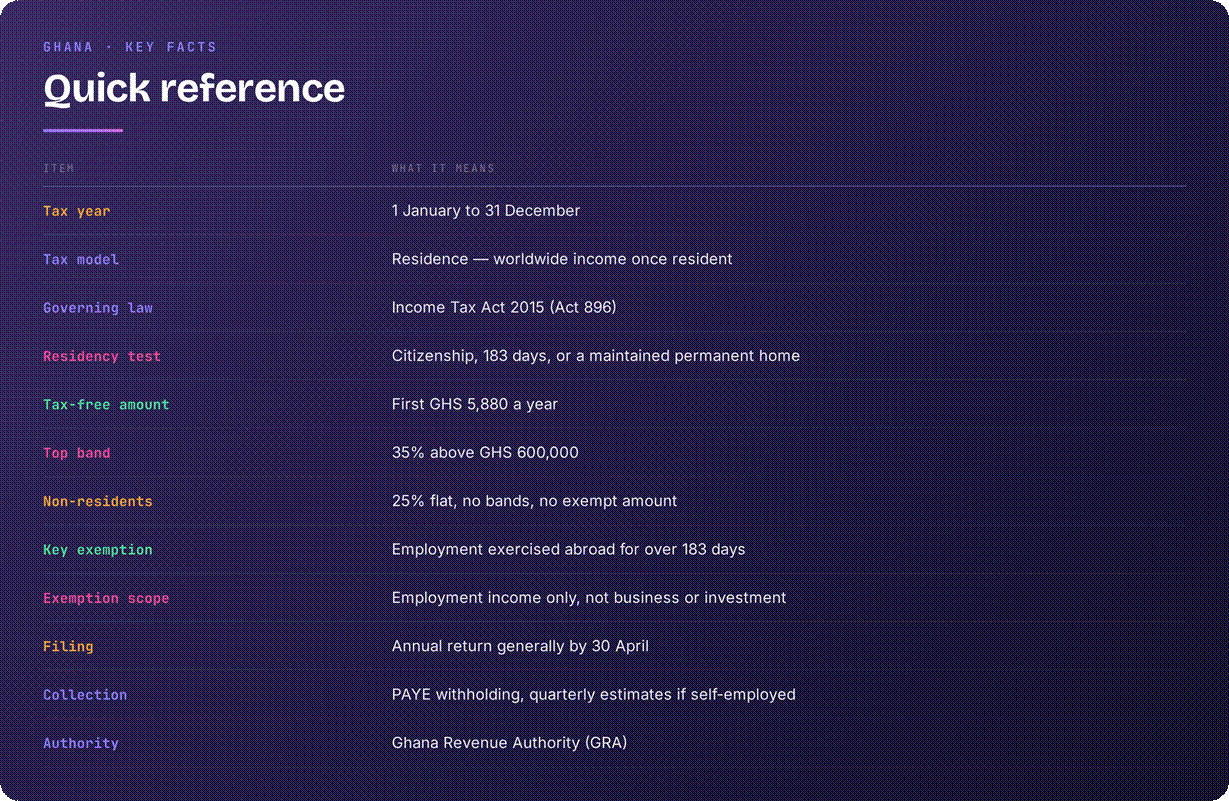
The Ghanaian position at a glance.
Your residency status is the first step
An individual is resident in Ghana for a year of assessment if they are:
• A Ghanaian citizen, other than one who has a permanent home outside Ghana and lives there for the whole year;
• Present in Ghana for an aggregate of 183 days or more in any twelve-month period that commences or ends during the year;
• A government employee or official posted abroad during the year; or
• A citizen temporarily absent from Ghana for not more than 365 continuous days, where they maintain a permanent home in Ghana.
The citizenship limb is the one to read carefully. A Ghanaian citizen is presumptively resident, and escaping that requires both a permanent home outside Ghana and living there for the whole year — a higher bar than a simple day count.
Maintain accurate records of:
• Days present in Ghana across rolling twelve-month periods;
• Days present outside Ghana, for the employment exemption;
• Whether a permanent home is maintained in Ghana;
• Whether your employer is resident or non-resident;
• Where employment duties are physically exercised; and
• Any other country that may also treat you as resident.
The tax rates
Chargeable income (GHS) | Rate |
First 5,880 | 0% |
Next 1,320 | 5% |
Next 1,560 | 10% |
Next 38,000 | 17.5% |
Next 192,000 | 25% |
Next 366,240 | 30% |
Exceeding 600,000 | 35% |
Non-residents | 25% flat, no bands and no exempt amount |
The 35% band was introduced in 2023 and applies above GHS 600,000 a year. Bands are adjusted periodically rather than annually, so figures should be confirmed against the Revenue Authority for the year in question — several published guides still show a structure that ends at 30%.
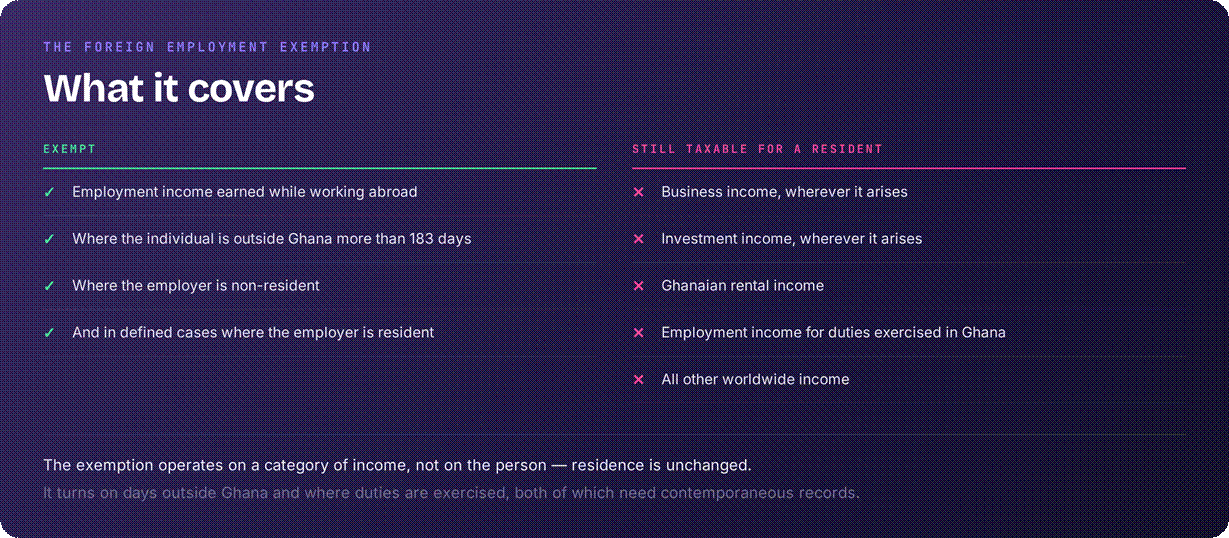
What the exemption reaches, and what it leaves behind.
The foreign employment exemption
This is the provision worth understanding properly. Employment income of a resident individual is exempt where that individual exercises the employment outside Ghana and is present outside Ghana for more than 183 days.
It does not remove Ghanaian residence, and it does not exempt other categories of income. Business income and investment income of a resident remain within the worldwide charge. What it exempts is the employment income earned while working abroad.
For a Ghanaian professional taking a posting overseas while retaining a home and family in Accra — a common pattern — this is the difference between a full Ghanaian charge on that salary and none at all. It turns on days outside the country and on where the duties are exercised, both of which need recording contemporaneously.
Case study: Kwame keeps his home in Accra
Kwame is a Ghanaian citizen who takes a two-year engineering posting in the Gulf. His wife and children remain in Accra, and he keeps the family house.
On the citizenship and permanent home limbs he remains Ghana-resident, so his worldwide income is prima facie within the Ghanaian charge. But he exercises his employment outside Ghana and is present outside Ghana for well over 183 days, so his employment income is exempt.
What is not exempt is his Ghanaian rental income, or any investment income. The relief is category-specific, and treating it as a general escape from Ghanaian tax would be a mistake.
Non-residence, and why it is not always better
Non-residents pay a flat 25% on Ghana-source income with no graduated bands and no tax-free amount. A resident on a modest Ghanaian salary pays nothing on the first GHS 5,880 and 5%, 10% and 17.5% on the bands above it — a materially lower effective rate.
The comparison only favours non-residence at higher income levels, and even then it has to be set against the worldwide scope that comes with residence. It is worth running rather than assuming.
Filing and the compliance calendar
The Ghanaian tax year follows the calendar year. Employment income is withheld at source under PAYE; self-employed individuals make quarterly estimated payments and file an annual return. The annual return is generally due by 30 April of the following year, filed electronically through the Revenue Authority’s system.
A Tax Identification Number is required, and a Tax Clearance Certificate is needed for a range of transactions. Prepare in good time:
• A TIN and access to the electronic filing system;
• PAYE records from any Ghanaian employer;
• Day counts inside and outside Ghana;
• Employment contracts showing where duties are exercised;
• Records of foreign income and any foreign tax paid; and
• Documentation supporting the foreign employment exemption.
Establish the category before the rate
Consider:
• Whether Ghanaian citizenship makes you presumptively resident;
• Whether you maintain a permanent home in Ghana;
• Whether your employment is exercised inside or outside Ghana;
• Whether you will be outside Ghana for more than 183 days;
• That the exemption covers employment income only;
• Whether the 25% non-resident flat rate would actually be better; and
Your Ghana checklist
1. Check whether Ghanaian citizenship makes you presumptively resident;
2. Establish whether a permanent home is maintained in Ghana;
3. Count days outside Ghana, not only days inside it;
4. Record where employment duties are physically exercised;
5. Confirm whether your employer is resident or non-resident;
6. Remember the exemption covers employment income only;
7. Separate business and investment income, which stay in charge;
8. Compare the resident bands against the 25% non-resident flat rate;
9. Obtain a TIN and electronic filing access; and
10. Diarise the 30 April filing deadline.
Frequently asked questions
Does Ghana tax worldwide income?
For residents, yes — income from employment, business or investment wherever it arises. Non-residents are taxed only on income derived in Ghana.
What is the foreign employment exemption?
Employment income of a resident individual is exempt where the employment is exercised outside Ghana and the individual is present outside Ghana for more than 183 days, subject to conditions about the employer. It is a relief on that category of income, not on residence.
Does the exemption cover all my foreign income?
No. It covers employment income earned while working abroad. Business income and investment income of a resident remain within the worldwide charge regardless of where they arise.
Am I resident if I am a Ghanaian citizen living abroad?
Presumptively yes. A Ghanaian citizen is resident unless they have a permanent home outside Ghana and live there for the whole year, which is a higher bar than a day count.
What are the tax rates?
Seven bands for residents: nil on the first GHS 5,880, then 5%, 10%, 17.5%, 25% and 30%, reaching 35% above GHS 600,000. Non-residents pay a flat 25% on Ghana-source income.
Is it better to be non-resident?
Not necessarily. Non-residents pay 25% flat with no bands and no tax-free amount, so someone with a modest Ghanaian income is usually better off resident. The comparison only shifts at higher income levels.
When do I file?
The tax year follows the calendar year and the annual return is generally due by 30 April of the following year. Employment income is withheld under PAYE; self-employed individuals also make quarterly estimated payments.
Official sources and further reading
Important information
This article is general information and does not constitute tax, legal, immigration or financial advice, and does not create a client relationship. Tax outcomes depend on travel history, income sources, treaty status and the law applying to the relevant year. Rates, thresholds and regimes change, and some measures described may be proposed rather than enacted; this article reflects our understanding as at the date of publication. Obtain advice from a suitably qualified professional before acting or refraining from action.
