
Brunei Darussalam is the least discussed of the genuinely zero-tax jurisdictions, and on the numbers it is among the most complete. There is no personal income tax — on residents or non-residents, on any category of income. There is no capital gains tax. There is no inheritance, estate, gift or wealth tax. There is no VAT. And there is no annual return for individuals to file.
Even among zero-tax countries, that list is unusual. Most jurisdictions that charge no income tax still reach you through a consumption tax, a payroll charge or property duties. Brunei largely does not, because hydrocarbon revenue funds the state instead.
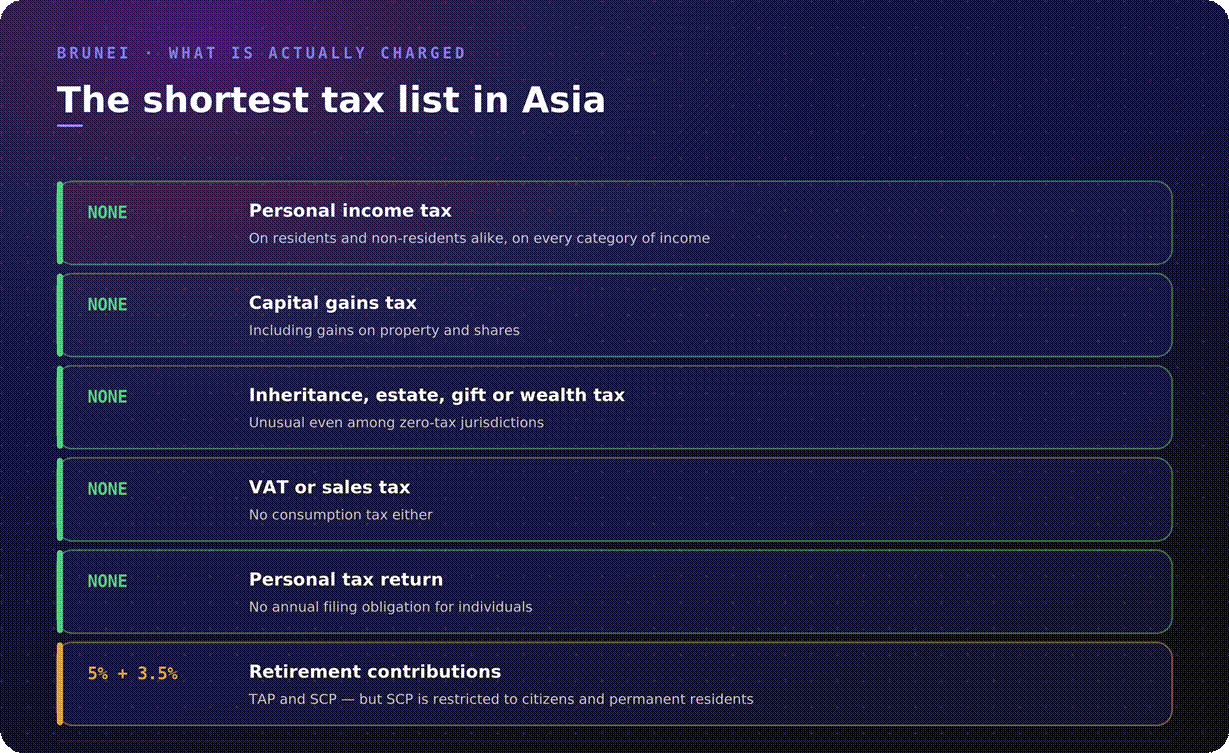
The complete list of what an individual pays.
What is genuinely untaxed
The position is as simple as it sounds. Salary, self-employment income, investment income, pensions, dividends, interest and capital gains are all outside the personal tax net, and your nationality and residence status make no difference to that.
Charge | Position for an individual in Brunei |
Personal income tax | None, for residents and non-residents alike |
Capital gains tax | None |
Inheritance, estate and gift tax | None |
Wealth tax | None |
VAT or sales tax | None |
Personal tax return | No annual filing obligation |
TAP retirement contributions | 5% employer and employee |
What does come out of pay is retirement provision rather than tax. The Employees Trust Fund, TAP, takes 5% from employer and employee with no earnings floor or ceiling. The Supplemental Contributory Pension, SCP, takes a further 3.5% from the employer within a monthly minimum and cap.
How the zero is actually achieved
This is the detail worth understanding, because it is not what most summaries suggest.
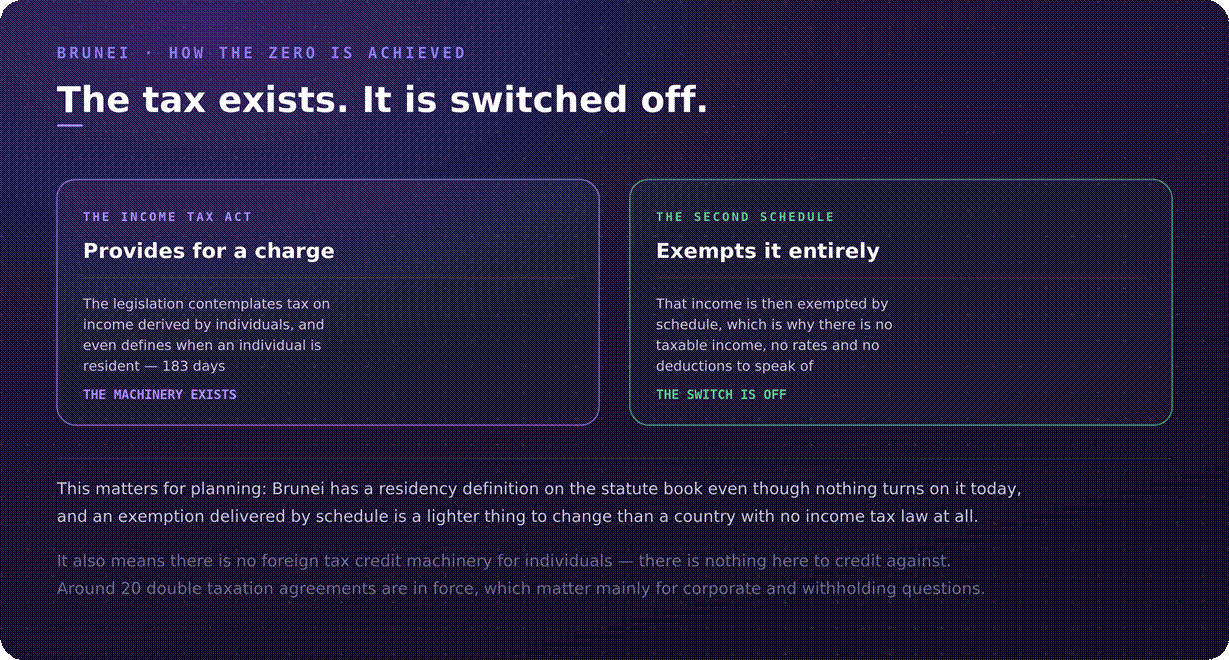
Not the absence of a law, the presence of an exemption.
Brunei has an Income Tax Act that contemplates taxing income derived by individuals. It even defines when an individual is resident: broadly, residing in Brunei and being physically present, or exercising an employment there, for 183 days or more in the preceding year of assessment.
That income is then exempted under the second schedule to the Act. The result is that there is no taxable income, no rate scale and no deductions, but the machinery exists on the statute book.
Two practical consequences. First, a residency definition exists even though nothing currently turns on it, which occasionally matters when another country asks you to evidence your status. Second, because individuals have no Brunei liability, there is no foreign tax credit mechanism for them and nothing here to credit foreign tax against.
What is taxed
Companies are a different matter. Corporate income tax is charged at 18.5% on a threshold basis, with companies below a revenue floor exempt, and petroleum operations taxed at a far higher rate under production sharing arrangements. That hydrocarbon revenue is what makes the personal position sustainable.
A company is resident where it is managed and controlled in Brunei, and is taxed on income accruing in or derived from Brunei, or received in Brunei from outside it.
One charge does touch individuals: remuneration paid to a non-resident company director attracts a 10% withholding. If you sit on a Brunei board without living there, that is the one line to check.
Treaties, and why they matter less here
Brunei has around twenty double taxation agreements in force, concentrated on ASEAN and major trading partners. For an individual resident in Brunei they do comparatively little work, because Brunei is not asserting a taxing right that needs relieving.
Where they earn their keep is in the other direction. Reducing withholding in the country your income comes from, and providing the framework for establishing residence when another authority questions it. The definitive list is maintained by the Ministry of Finance and Economy, and is worth using in preference to third-party compilations.
The question that actually decides your position
Brunei answers only the Brunei question. A zero rate here does nothing about the country you left. Many countries tax residents on worldwide income and retain taxing rights after departure where you keep a home, family, business interests or other substantial connections. If you are a citizen of a country that taxes on citizenship rather than residence, Brunei changes nothing at all about your filing position.
Before relocating, review your departure-year return, whether you genuinely cease to be resident where you are now, your domicile or permanent-home status, where your spouse or dependants will be, where your main economic interests sit, pension and investment income, foreign asset reporting, and any applicable treaty.
The practical constraint
The harder question about Brunei is usually not tax but access. Work authorisation is employer-sponsored and tightly controlled, and there is no remote-worker or investment-based route of the kind found in the Gulf or the Caribbean.
In practice that means Brunei suits people who have a reason to be there — an employer, a role, a family connection — rather than people optimising for a tax rate in the abstract. The tax position is excellent; the route in is narrow.
Your checklist
1. Confirm your route in (employment sponsorship is the realistic path);
2. Confirm whether you cease to be tax resident where you live now, and when;
3. Check whether your nationality brings citizenship-based filing obligations;
4. Identify any withholding in the countries your income comes from;
5. Check whether a treaty exists with those countries, using the official list;
6. Keep evidence of residence in case another authority queries it; and
7. Take advice in your departure country, which is where the work usually is.
Frequently asked questions
Is there really no income tax in Brunei?
Correct, for individuals. There is no personal income tax on any category of income, for residents or non-residents, and no annual return to file. Companies are taxed separately at 18.5%, with petroleum operations far higher.
Are capital gains taxed?
No. Brunei does not tax capital gains, including on property and shares. There is also no inheritance, estate, gift or wealth tax, which is unusual even among zero-tax jurisdictions.
Is there VAT?
No. Brunei does not operate a value added tax or general sales tax, so the consumption-tax substitute used by most zero-income-tax countries is absent here too.
What comes out of my salary then?
Retirement contributions rather than tax. TAP takes 5% from employer and employee. SCP takes 3.5% from the employer but is restricted to citizens and permanent residents, so most expatriates on employment passes fall outside it.
Does Brunei have a tax residency test?
It does — broadly 183 days of presence or exercising employment there — even though no personal tax currently turns on it. That definition can still matter when another country asks you to evidence where you are resident.
Can I get a foreign tax credit in Brunei?
Not as an individual. Because you have no Brunei liability, there is nothing for foreign tax to be credited against. Relief has to come from the other country, or from a treaty.
Can I move to Brunei simply to use the zero-tax position?
Not readily. Work authorisation is employer-sponsored and tightly controlled, and there is no remote-worker or investment-based route. Access, not tax, is the real constraint.
Will my home country still tax me?
Possibly. Brunei charges nothing, but that says nothing about whether you have genuinely ceased to be resident where you came from, or whether your nationality brings worldwide filing obligations regardless.
Official sources and further reading
Important information
This article is general information and does not constitute tax, legal, immigration or financial advice, and does not create a client relationship. Tax outcomes depend on travel history, income sources, treaty status and the law applying to the relevant year. Rates, thresholds and regimes change, and some measures described may be proposed rather than enacted; this article reflects our understanding as at the date of publication. Obtain advice from a suitably qualified professional before acting or refraining from action.
