
Cambodia announced a capital gains tax in 2020 and postponed it five times. It took effect on 1 January 2026, and a good deal of published guidance still describes the country as having none.
Cambodia taxes resident individuals on worldwide salary income and non-residents at a flat 20% on Cambodia-source income. Employment income runs through five monthly bands topping out at 20%, and a foreign tax credit is available to residents for tax already paid abroad.
The rates are low by regional standards. The first KHR 1,500,000 a month is untaxed, and the 20% top band only engages above KHR 12,500,000 well above what most professionals in Phnom Penh earn.
What changed at the start of 2026 is capital gains. A 20% capital gains tax was first announced under Prakas 346 in 2020 with effect from July that year. It was postponed to 2021, then 2022, then 2024, then re-legislated under Prakas 496 of 18 July 2025 for a September 2025 start, postponed again by Notification 34236 of 30 October 2025, and finally implemented from 1 January 2026.
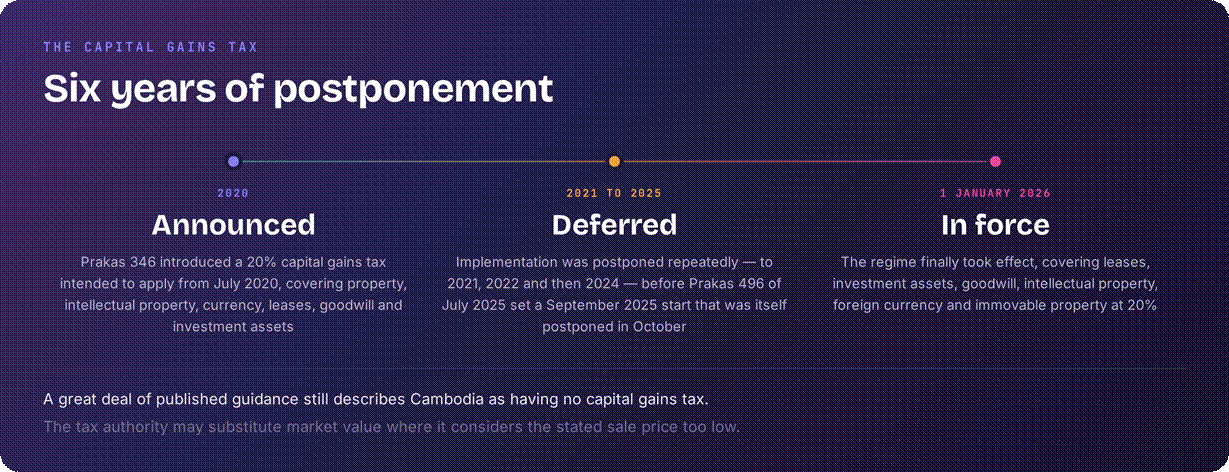
Announced in 2020, deferred five times, in force from 2026.
Your residency status is the first step
An individual is resident in Cambodia if they are domiciled there, have their principal place of abode in Cambodia, or are present for more than 182 days in any twelve-month period ending in the current tax year.
The 182-day figure is a genuine difference rather than a rounding. Someone managing a stay against a 183-day rule learned elsewhere has one day less of margin than they think, and the twelve-month period is rolling rather than aligned to the calendar year.
Residents are taxed on worldwide salary income irrespective of where it is paid. Non-residents are taxed only on Cambodia-source income, at a flat 20%.
Maintain accurate records of:
• Days present across rolling twelve-month periods, against 182 rather than 183;
• Whether your principal place of abode is in Cambodia;
• Salary income by source and where it is paid;
• Foreign tax paid, for the credit available to residents;
• Acquisition dates and costs for assets within the capital gains regime; and
• Any other country that may also treat you as resident.
The tax rates
Monthly taxable income (KHR) | Rate |
Up to 1,500,000 | 0% |
1,500,001 to 2,000,000 | 5% |
2,000,001 to 8,500,000 | 10% |
8,500,001 to 12,500,000 | 15% |
Over 12,500,000 | 20% |
Non-residents | 20% flat on Cambodia-source income |
Capital gains | 20%, in force from 1 January 2026 |
Foreign tax credit | Available to residents |
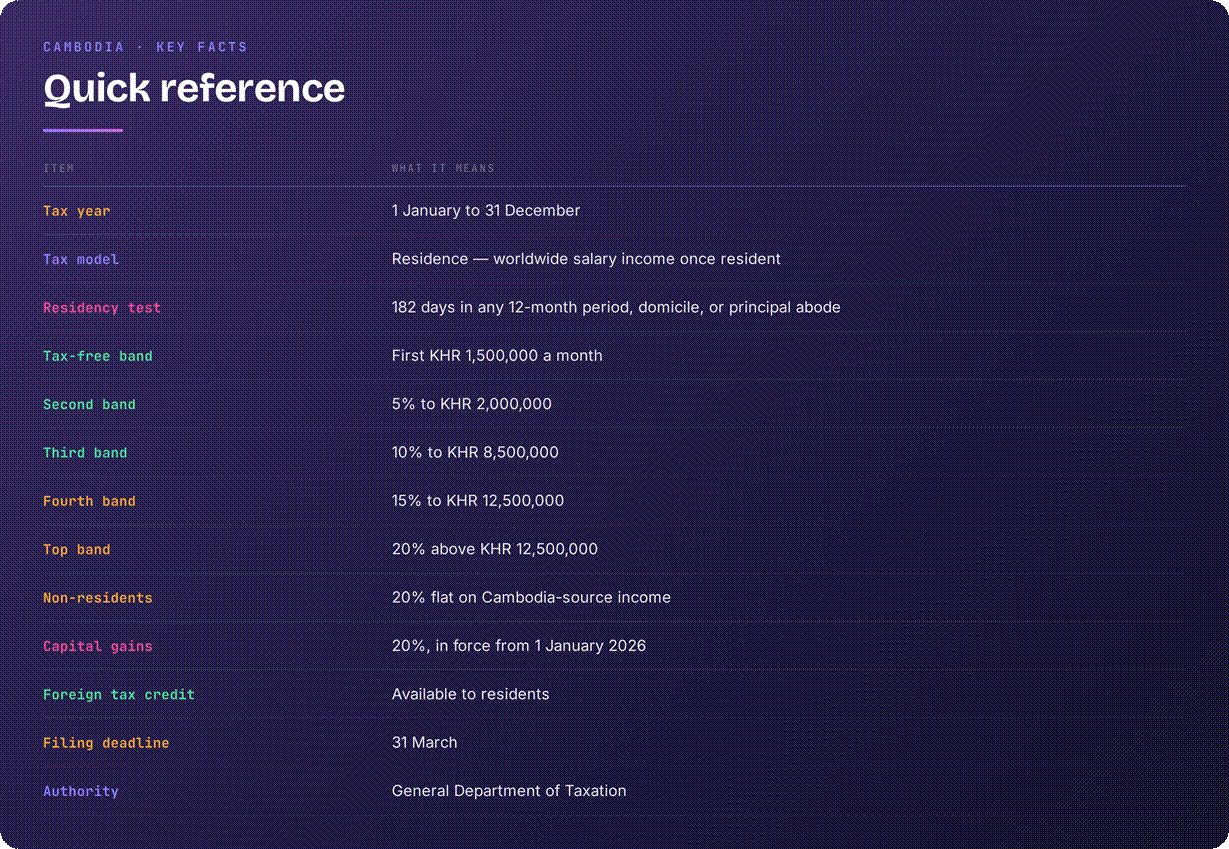
The monthly bands, and where the top rate begins.
The capital gains tax in detail
The regime applies at 20% and covers a deliberately broad range of assets:
• Immovable property;
• Leases;
• Investment assets;
• Intellectual property;
• Business goodwill; and
• Foreign currency.
The gain is calculated as the difference between the proceeds of sale or transfer and deductible expenses, and the tax authority reserves the right to substitute market value where it considers the stated price too low. Returns and payment are due within a defined period after the gain is realised.
Exemptions are narrow. They cover assets of state institutions, foreign embassies and international organisations, and certain categories of immovable property, but the regime was explicitly designed with broad application.
What makes Cambodia attractive
Even with the capital gains tax now in force, several features stand up well:
• A 20% top rate on salary, low for the region and reached only above a substantial monthly threshold;
• The first KHR 1,500,000 a month entirely untaxed;
• A foreign tax credit for residents, which removes double taxation on income already taxed abroad;
• Non-residents pay nothing where there is no Cambodia-source income;
• A residence threshold of 182 days with no minimum investment, property purchase or capital requirement;
• Qualified Investment Project status offering tax holidays of three to nine years for qualifying ventures; and
• A straightforward annual cycle, with the calendar year as the tax year and a March filing deadline.
The honest qualifications are that the treaty network is small — around a dozen agreements — so relief from double taxation often depends on the domestic credit rather than on a treaty, and the capital gains regime is new enough that practice is still settling.
Case study: Sophea sells in January
Sophea has held a Phnom Penh apartment since 2019 and plans to sell. For most of that period Cambodia had announced a capital gains tax but never brought it into force, and her adviser told her in 2023 that it had been postponed again.
She sells in early 2026. The regime took effect on 1 January of that year, so the disposal falls squarely within it at 20%, and she has a filing and payment obligation she had not planned for.
Nothing about her asset or her intention changed. A rule that had been announced and deferred five times simply arrived, and guidance written during the deferral period is now actively misleading.
Filing and the compliance calendar
The Cambodian tax year follows the calendar year, and the annual return is generally due by 31 March. Employment income is withheld monthly by the employer through the tax on salary, and the General Department of Taxation administers the system.
Prepare in good time:
• A taxpayer registration and filing access;
• Day-count records on a rolling twelve-month basis;
• Monthly salary records and withholding statements;
• Evidence of foreign tax paid, for the credit;
• Acquisition documentation for any asset within the gains regime; and
• A capital gains return where a disposal has occurred.
Check the date on any guidance you read
Consider:
• That the residence threshold is 182 days, not 183;
• That the twelve-month period is rolling rather than calendar;
• That capital gains are now taxable, whatever older guidance says;
• Which of your assets fall within the six categories covered;
• Whether a disposal could sensibly have been completed before 2026;
• Whether Qualified Investment Project status is available to a venture; and
• That the treaty network is small, so the domestic credit often does the work.
Your Cambodia checklist
1. Count days against 182, not the 183 used elsewhere;
2. Track the rolling twelve-month period rather than the calendar year;
3. Establish whether your principal place of abode is in Cambodia;
4. Discard any guidance saying Cambodia has no capital gains tax;
5. Identify which assets fall within the six covered categories;
6. Keep acquisition documentation and cost records;
7. File and pay within the period after a gain is realised;
8. Claim the foreign tax credit on income already taxed abroad;
9. Check whether Qualified Investment Project status applies to a venture; and
10. Diarise the 31 March annual filing deadline.
Frequently asked questions
Does Cambodia have a capital gains tax?
Yes, since 1 January 2026. A 20% regime covering leases, investment assets, goodwill, intellectual property, foreign currency and immovable property finally took effect after being announced in 2020 and postponed five times.
Why do so many guides say there is no capital gains tax?
Because the tax was announced in 2020 and deferred repeatedly — to 2021, 2022, 2024 and then through 2025. Material written during the deferral period described the position accurately at the time and is now out of date.
What are the income tax rates?
Five monthly bands: nil up to KHR 1,500,000, then 5% to KHR 2,000,000, 10% to KHR 8,500,000, 15% to KHR 12,500,000 and 20% above that. Non-residents pay a flat 20% on Cambodia-source income.
When am I Cambodian tax resident?
If you are domiciled in Cambodia, have your principal place of abode there, or are present for more than 182 days in any twelve-month period ending in the current tax year. Note that it is 182 days, not 183.
Does Cambodia tax my foreign income?
Residents are taxed on worldwide salary income irrespective of where it is paid, with a foreign tax credit available for tax already paid abroad. Non-residents are taxed only on Cambodia-source income.
What if I have no Cambodia-source income?
A non-resident with no Cambodia-source income pays nothing. That depends on staying below the 182-day threshold and on the work not being treated as Cambodia-source, which needs establishing rather than assuming.
How is the capital gain calculated?
As the difference between the proceeds of sale or transfer and deductible expenses. The tax authority reserves the right to substitute market value where it considers the stated price to be below it.
Are there exemptions?
Narrow ones — assets of state institutions, foreign embassies and international organisations, and certain categories of immovable property. The regime was designed with broad application and few carve-outs.
Official sources and further reading
• General Department of Taxation, Cambodia
Important information
This article is general information and does not constitute tax, legal, immigration or financial advice, and does not create a client relationship. Tax outcomes depend on travel history, income sources, treaty status and the law applying to the relevant year. Rates, thresholds and regimes change, and some measures described may be proposed rather than enacted; this article reflects our understanding as at the date of publication. Obtain advice from a suitably qualified professional before acting or refraining from action.
