
Cape Verde introduced a remote-working status in December 2020 as a deliberate pivot away from pure tourism. The tax treatment attached to it is clear and, on its own terms, works well: foreign employment and self-employment income is not taxed here while the status holds.
The complication is arithmetic, not policy. The status is capped at twelve months. Cape Verdean tax residency begins above 183 days in a calendar year and has no cap at all. Depending on when you arrive, a full twelve-month stay crosses that line — and the status is not the only thing the tax authority looks at.
This guide covers what the exemption reaches, how residency is actually determined, what changes if you cross into it, the IRPS system underneath, and the treaty gap that makes Cape Verde a poor fit for some income profiles.
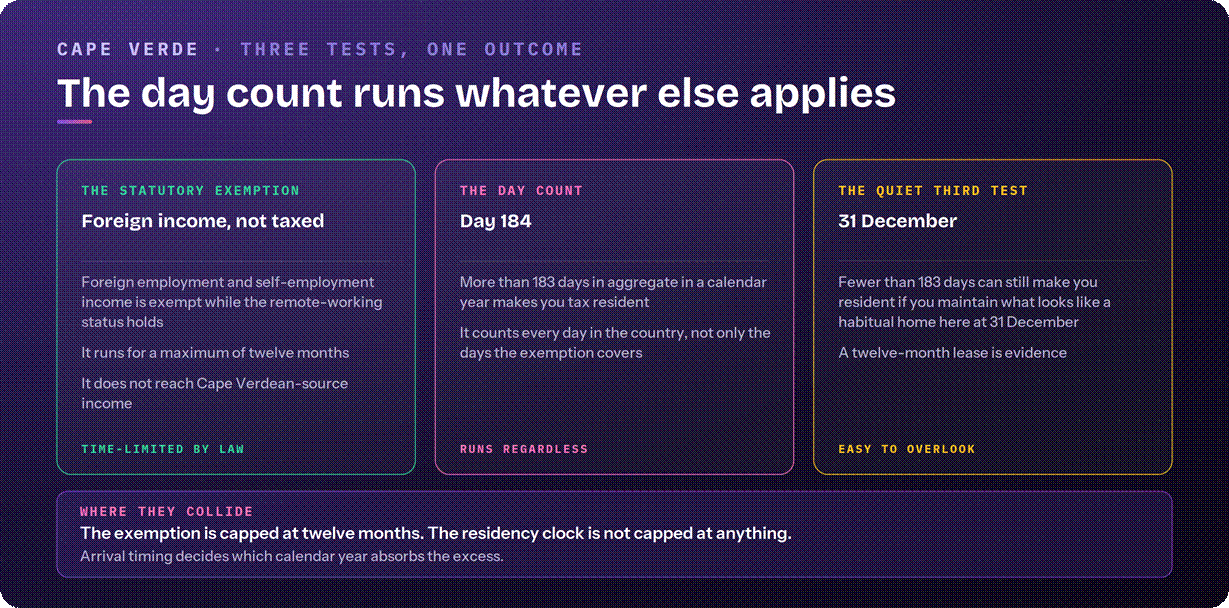
Two clocks, running at different speeds, with a third test at the year end.
What the exemption reaches
The relief is defined by source and capped by time. Foreign employment income and foreign self-employment income are not taxed in Cape Verde while the remote-working status holds, and the status runs for six months, renewable once for a further six.
⚠️ The exemption is real, and it is narrow. It does not extend to Cape Verdean-source income, and it does not extend past twelve months. Nothing about it changes the residency tests that run alongside it — those are a separate question, answered by the day count and by where your home is at the year end.
That makes the exit the part worth planning, rather than the entry. Twelve months is long enough to cross 183 days in at least one calendar year, and once the relief lapses there is nothing behind it: Cape Verde taxes residents on worldwide income with no remittance basis, no impatriate regime and no transitional window.
How Cape Verde decides residency
There are two tests, and the second is the one people miss.
The first is the day count. Spend more than 183 days in aggregate in Cape Verde during a calendar year and you are treated as tax resident. The days need not be consecutive, and they are counted across the whole year rather than only the period the exemption covers.
The second applies even if you stay under 183 days. If you maintain a dwelling in Cape Verde in circumstances suggesting it is your habitual residence, assessed by reference to 31 December in a given year, you can be treated as resident anyway. A twelve-month lease on an apartment in Sal or Praia is exactly the kind of fact that test is designed to pick up.
Arrival timing changes the answer. A twelve-month stay beginning in January crosses 183 days within the first calendar year. The same stay beginning in August splits roughly 150 days into one year and 215 into the next — crossing the line in the second year rather than the first. Neither is inherently better, but the difference is material and it is decided before you book anything.
What changes if you become resident
Cape Verdean tax residents are subject to personal income tax on a worldwide basis. Non-residents are taxed only on Cape Verdean-source income, generally at flat withholding rates.
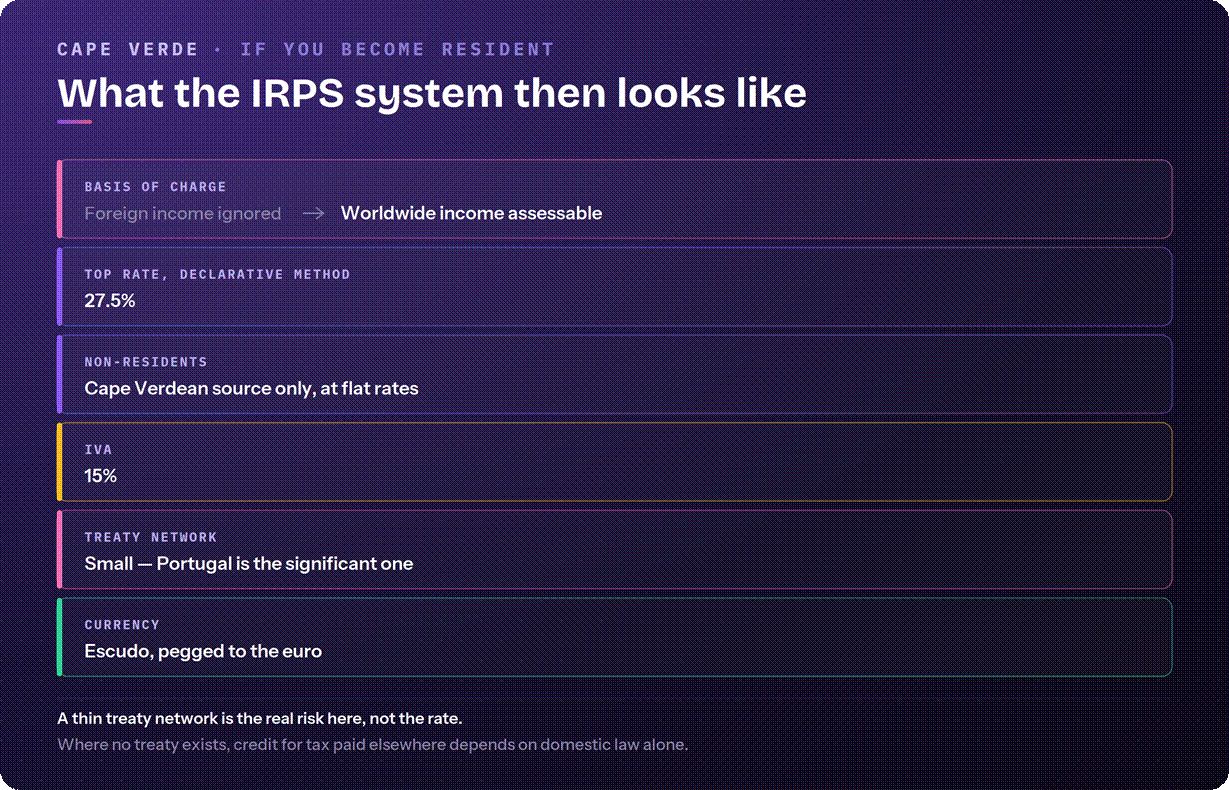
The position once the day count is crossed and the exemption has run out.
The system sorts income into categories — employment, business and professional income, property, capital and others — and applies either a final withholding or a declarative self-assessment depending on the category and the taxpayer. Under the declarative method, total income is taxed at progressive rates running to a top rate of 27.5%. Employment income is normally collected by withholding at source, with an option to file.
Consumption tax is IVA at 15%. The currency is the escudo, pegged to the euro, which removes exchange risk against European income but not against dollar income.
The treaty gap
Cape Verde has a small treaty network. Portugal is the significant agreement, alongside a handful of others. Large parts of the world — including the United States — are not covered.
This is the risk that actually costs money. If you become Cape Verdean tax resident and your income arises in a country with no agreement, there is no treaty tie-breaker to resolve dual residence and no treaty article to force a credit. Relief then depends entirely on what each country’s domestic law happens to offer, which is a much weaker position than a treaty and varies enormously.
For someone whose income is a single foreign salary and who leaves before the day count bites, none of this arises. For someone with a portfolio, rental property or business income in several countries who then stays, it is the dominant consideration — well ahead of the 27.5% rate.
Your checklist
• Map your arrival date against the calendar year before booking anything;
• Count every day in Cape Verde, not only the days the exemption covers;
• Treat the exemption as capped at twelve months, and plan the year it ends;
• Separate Cape Verdean-source income, which the exemption never reaches;
• Think about what your accommodation arrangements look like on 31 December;
• Decide your exit before month twelve rather than after it;
• Check whether Cape Verde has an agreement with each country your income arises in;
• Keep the foreign-source character of your income clearly documented; and
• If you intend to stay beyond the programme, take Cape Verdean advice before it expires, not afterwards.
Frequently asked questions
How long does the exemption last?
Six months, renewable once for a further six, so twelve months at most. After that there is no relief behind it — residents are taxed on worldwide income.
Is my foreign income taxed while the status holds?
No. Foreign employment and self-employment income is not taxed in Cape Verde while it holds. Cape Verdean-source income is not covered at any point.
Can I become tax resident while the exemption applies?
The two are decided separately. The 183-day count runs across the calendar year regardless, and a further test looks at whether you maintain a habitual residence here at 31 December. Both are worth watching if you stay the full twelve months.
What happens if I stay on afterwards?
You come into the IRPS system on a worldwide basis, with progressive rates to 27.5% under the declarative method. That is a materially different position, and there is no transitional relief between the two.
Does Cape Verde have many tax treaties?
No. The network is small, with Portugal the significant agreement. There is no treaty with the United States. Where no agreement exists, relief for tax paid elsewhere depends on domestic law alone.
How are non-residents taxed?
On Cape Verdean-source income only, generally at flat withholding rates rather than through the declarative method. IVA on local spending is 15% either way.
Official sources and further reading
• Government of Cabo Verde — official portal
• Boletím Oficial da República de Cabo Verde — official gazette
Important information
This article is general information and does not constitute tax, legal, immigration or financial advice, and does not create a client relationship. Tax outcomes depend on travel history, income sources, treaty status and the law applying to the relevant year. Rates, thresholds and regimes change, and some measures described may be proposed rather than enacted; this article reflects our understanding as at the date of publication. Obtain advice from a suitably qualified professional before acting or refraining from action.
