
If you are considering Chile as a base for remote work, investment or a longer stay in South America, the central question is straightforward: will Chile tax only your Chilean-source income, or will it eventually assess your income and gains from around the world?
Chile follows a residence taxation model. Residents are generally taxed on worldwide income, while non-residents are taxed only on Chilean-source income. But a foreigner who establishes domicile or residence in Chile is subject only to tax on Chilean-source income during their first three years, under Article 3 of the Income Tax Law.
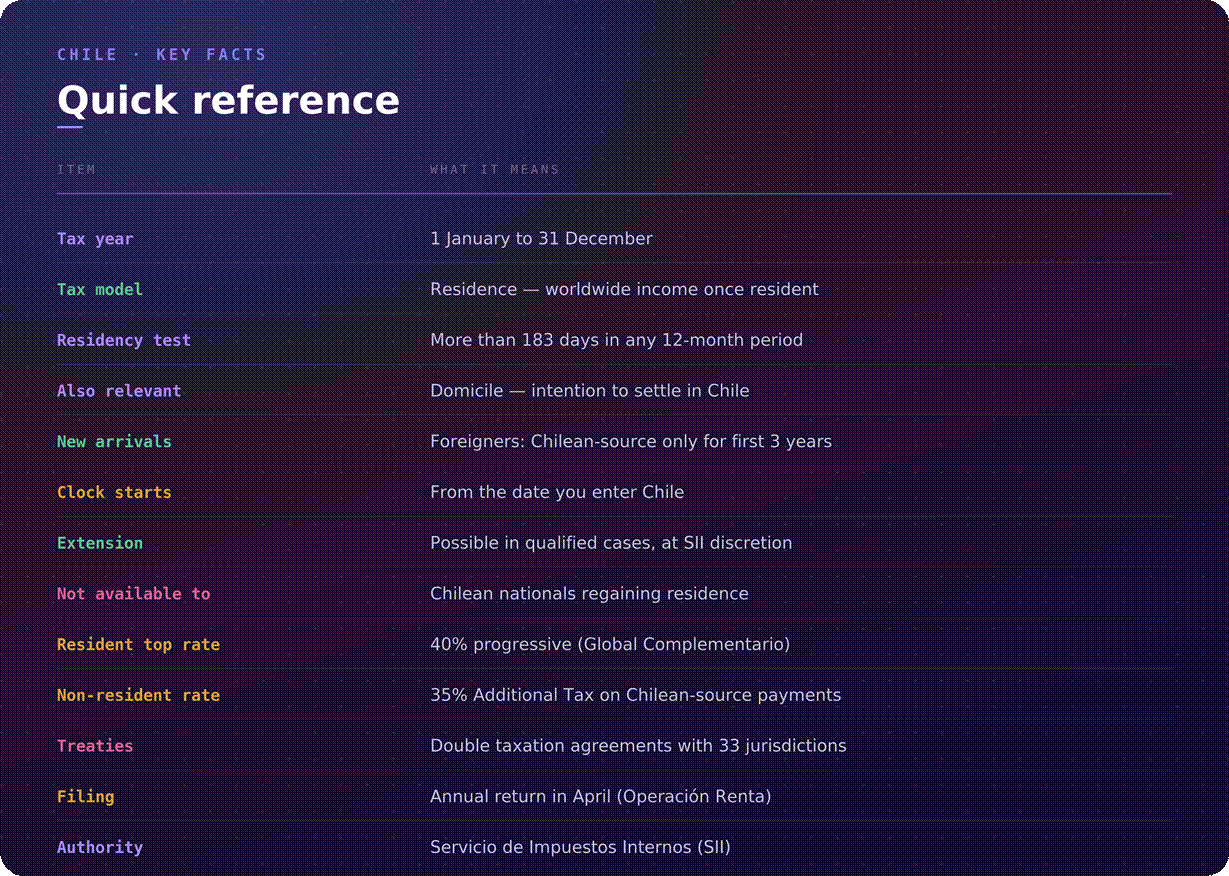
The Chilean position at a glance.
Your residency status is the first step
Establish your position before assessing how your income is treated. You may become tax resident if you are present in Chile for more than 183 days during any 12-month period, and the calculation is not limited to a single calendar year.
Maintain accurate records of:
• Arrival and departure dates;
• Time spent in Chile during rolling 12-month periods;
• Workdays physically performed in Chile;
• Accommodation arrangements;
• The location of your business and personal interests; and
• Any other countries in which you may also be resident.
Physical presence is only part of the analysis. Domicile — an intention to establish a more permanent home — may also be relevant where your activities and personal ties suggest you plan to remain. Chile assesses physical presence, where you physically perform your work, whether accommodation is available to you, and where your family, investments, business operations and principal interests sit.
If you are resident in more than one country, a double taxation agreement may apply. Chile has 33 such agreements, which can help determine treaty residence and allocate taxing rights. Do not assume a treaty removes all obligations; its terms must be reviewed against your actual facts.
The first three years: Chilean-source income only
The main planning opportunity for new foreign residents is the three-year rule. During that window, Chile generally taxes you on Chilean-source income rather than applying worldwide taxation to your foreign income.
This can matter considerably if you hold foreign property, investments or business interests, because the classification of each item decides whether it falls inside or outside the Chilean charge:
Income | Treatment during the three years |
Work performed in Chile | Chilean-source — taxable |
Income from Chilean property | Chilean-source — taxable |
Profits from a business in Chile | Chilean-source — taxable |
Rent from property abroad | Foreign-source — outside the charge |
Dividends from foreign companies | Foreign-source — outside the charge |
Interest on foreign accounts | Foreign-source — outside the charge |
Gains on foreign securities | Foreign-source — outside the charge |
📍 Source is fact-sensitive. The location of your bank account does not determine the source of income, and the location of your company does not always determine where services are performed. For employment and online business activity, where you physically work can be decisive — so working remotely from Chile for a foreign employer needs proper advice, not an assumption.
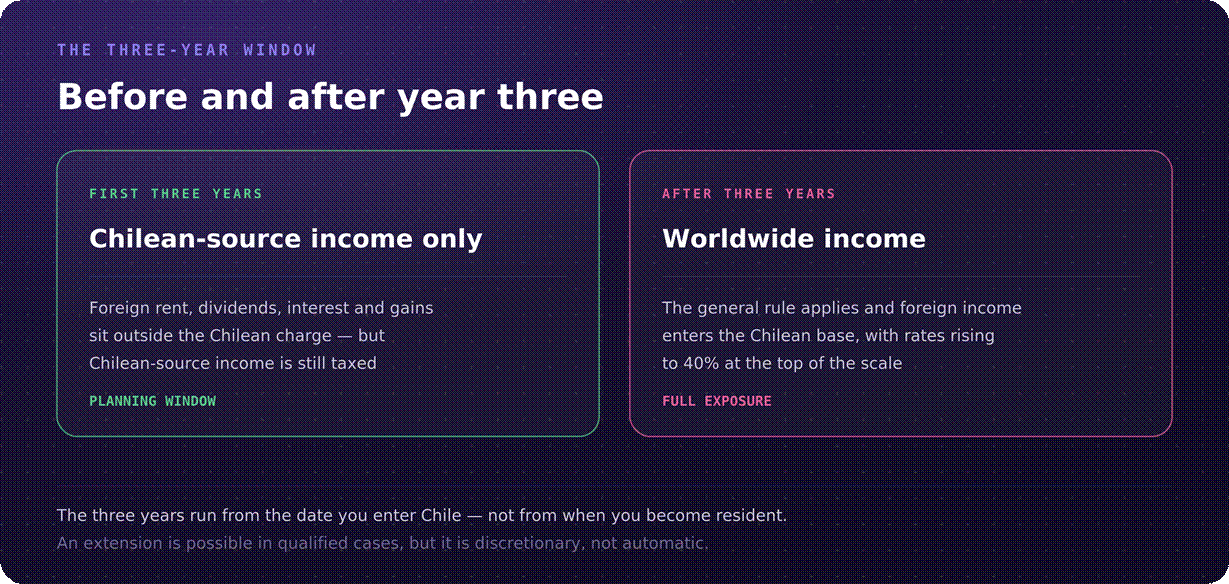
The window is shorter than comparable regimes elsewhere in the region.
It may be extendable — but do not count on it
The three-year period can be extended by the Regional Director of the SII in qualified cases, under Article 3 of the Income Tax Law — commonly a further three years, giving six in total. The extension must be applied for before the initial period expires. That is a discretionary decision rather than an entitlement, and the reasoning behind it matters: the rule exists for foreigners who remain in Chile transitorily. Where the facts show an intention to settle permanently, an extension is unlikely to be appropriate.
Practitioners report that extensions are granted sparingly rather than as a matter of course. Plan on the basis of three years, and treat the further three as a possibility to explore with advice rather than a step you can rely on.
Case study: Mark's three-year window
Mark moves to Chile in January to establish a South American base. He receives salary for work performed from his Chilean home, rental income from an apartment in the United Kingdom, and dividends from a foreign investment portfolio.
His Chilean work may be treated as Chilean-source income and therefore taxable. During the qualifying period, his foreign rental income and foreign dividends may sit outside the Chilean charge.
Mark should document the date he entered Chile, track his days, classify each income stream, and prepare for the point at which the window closes. The opportunity is not simply about moving to Chile — it is about knowing when the clock started and what happens when it stops.
What happens to the rate after three years
Once the window closes, the ordinary residence position applies and your worldwide income may become taxable in Chile, subject to available exemptions, foreign tax credits and treaty provisions.
Chile operates a progressive personal income tax, the Global Complementario, with a top marginal rate of 40% on the highest band. A separate 35% Additional Tax generally applies to Chilean-source payments made to people who are neither resident nor domiciled in Chile, so the two figures answer different questions.
Your effective rate will depend on your taxable income, deductions, credits, income category and any tax withheld during the year. Distinguish between the headline maximum rate, your marginal rate, your effective rate, and the tax withheld compared with your final annual liability.
If you receive income from several countries, review whether tax has already been paid abroad. Chile’s treaties and foreign tax credit rules may reduce double taxation, though the relief available depends on the treaty and the income category.
Filing and the compliance calendar
Chile's tax year follows the calendar year, running from 1 January to 31 December. The annual personal return is filed in April of the following year, during the process known as the Operación Renta. Confirm the exact date published for your filing year, because the authorities set the timetable annually and dates can vary by filing method.
⚠️ An exemption is not an exemption from filing. You may be required to file even where part of your foreign income falls outside the charge. During the three-year window, the rule does not remove your reporting obligations for Chilean-source income.
Prepare in good time:
• Chilean salary and employment records;
• Business income and allowable expenses;
• Chilean rental income;
• Foreign income statements;
• Investment and capital gains records;
• Foreign tax paid and supporting evidence;
• Travel and day-count records; and
• Documents supporting your residency and exemption position.
Advance payments may also be required during the year, so do not wait until April to identify your likely liability. A cash-flow plan helps you reserve funds for monthly payments, withholding and the annual balancing amount.
Timing matters more than the headline benefit
Three years is a planning period, not an indefinite arrangement, and it is shorter than comparable regimes elsewhere in the region. Model your position before you move, considering:
• Whether you will enter Chile near the beginning or end of a tax year;
• Exactly when the three-year period begins;
• Whether you will hold, sell or restructure foreign investments during the window;
• Whether foreign income will be received, accrued or remitted;
• What happens when worldwide taxation begins;
• Whether you may qualify for treaty protection; and
• Whether an extension or other relief is worth exploring.
Case study: Felicity compares South American bases
Felicity is a freelancer deciding between Chile and neighbouring countries. Her main income comes from foreign clients and she expects to spend more than 183 days in her chosen country.
She compares the length of the foreign income window, the top personal rate, residency triggers, treaty coverage, filing dates, advance payment requirements and the likely position once the window closes.
Chile may suit her, but only if she understands that its three-year period is shorter than some alternatives. Her decision should rest on her expected income, investment plans and long-term intentions rather than on the window alone.
Your Chile checklist
1. Track whether you exceed 183 days in any 12-month period;
2. Establish whether your activities could indicate a Chilean domicile;
3. Record the exact date you entered Chile, because the three years run from then;
4. Identify which income is Chilean-source and which is foreign-source;
5. Review the treaty position between Chile and your other relevant countries;
6. Confirm whether you must file an annual return;
7. Prepare for the April filing deadline;
8. Check whether advance payments are required;
9. Maintain evidence of foreign tax paid; and
10. Take advice well before the three-year window expires.
Frequently asked questions
When does the three-year clock actually start?
From the date you enter Chile, not from the date you become tax resident. That distinction can cost you months of planning time if you assume otherwise, so record your entry date precisely.
Does the three-year rule apply to everyone moving to Chile?
No. It is available to foreigners who establish domicile or residence in Chile. A Chilean national who regains residence falls under the general rule and is taxed on worldwide income from the outset.
Is the top rate 35% or 40%?
For residents, the progressive Global Complementario reaches 40% at the top band. The 35% figure is the Additional Tax that generally applies to Chilean-source payments made to non-residents — a different tax answering a different question.
I work remotely for a foreign employer. Is that foreign income?
Not necessarily. Where you physically perform the work carries significant weight, so employment duties carried out from Chile may be Chilean-source even though your employer and payment sit abroad. This is the single most common misreading of the rule.
Can I extend the three years?
An extension is possible in qualified cases at the discretion of the Regional Director. It is aimed at people staying transitorily; where the facts show an intention to settle permanently, it is unlikely to be granted. Plan for three years.
Do I still have to file during the three years?
Probably. The rule limits what Chile taxes, not whether you report. Chilean-source income still needs declaring, and advance payments may be required during the year.
When is the filing deadline?
The tax year ends on 31 December and the annual return is filed in April through the Operación Renta. Check the exact dates published for your year, as the timetable is set annually.
What happens the day the window closes?
The general rule applies and your worldwide income enters the Chilean base, subject to treaties and foreign tax credits. Decide before that point whether you are staying, and whether foreign investments should be restructured beforehand.
Official sources and further reading
• Servicio de Impuestos Internos (SII)
• SII guidance on direct taxes and personal tax rates
• SII ruling on the three-year rule for foreign arrivals (Article 3)
• SII ruling confirming the rule does not apply to returning Chilean nationals
Important information
This article is general information and does not constitute tax, legal, immigration or financial advice, and does not create a client relationship. Tax outcomes depend on travel history, income sources, treaty status and the law applying to the relevant year. Rates, thresholds and regimes change, and some measures described may be proposed rather than enacted; this article reflects our understanding as at the date of publication. Obtain advice from a suitably qualified professional before acting or refraining from action.
