
Cyprus is an EU member state with a tax system that suits internationally mobile employees, remote workers and investors. It also changed substantially on 1 January 2026, so much of what you will read online is now out of date.
The reform is enacted, not proposed. Parliament voted on 22 December 2025 and the law was gazetted at the end of that month, taking effect from 1 January 2026. Anything describing a €19,500 tax-free threshold, a 12.5% corporate rate or 17% dividend tax for domiciled residents is describing the old system.
This guide covers the 20% employment exemption, how it compares with the other two employment incentives, the non-dom regime that underpins most of the interest in Cyprus, the new rate structure, and how capital gains are treated.
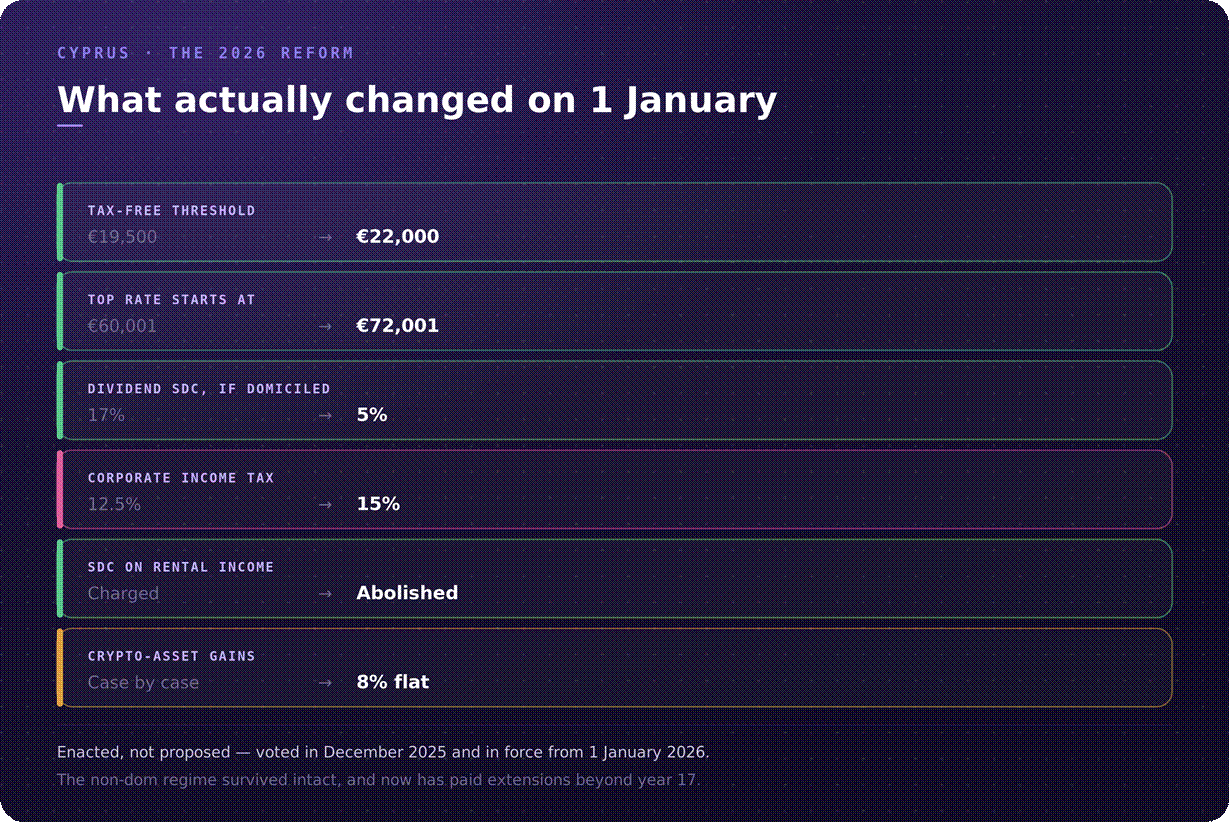
The changes that matter most to an individual arriving in Cyprus.
The tax rate structure
Cyprus taxes residents on worldwide income, with a separate charge called the Special Defence Contribution applying to certain passive income. The two operate independently, which is the key to understanding why Cyprus works the way it does.
Band | Rate from 1 January 2026 |
Up to €22,000 | 0% |
€22,001 to €32,000 | 20% |
€32,001 to €42,000 | 25% |
€42,001 to €72,000 | 30% |
Above €72,001 | 35% |
Gains on securities | Exempt from income tax |
Gains on Cyprus immovable property | 20% capital gains tax |
Capital gains barely exist in Cyprus. There is no general capital gains tax. Gains on the disposal of shares, bonds and other qualifying securities are fully exempt from income tax. Capital gains tax at 20% applies only to Cyprus immovable property, or to shares in companies holding it. For an investor, that is one of the most significant features of the system — and it is unchanged by the reform.
The 2026 reform also introduced an 8% flat tax on crypto-asset gains, which had previously been dealt with case by case. If digital assets form a material part of your position, that is a change worth understanding before you move.
Dividends and interest sit outside income tax altogether regardless of domicile. Where they are taxed, it is through the Special Defence Contribution — and that is where non-dom status does its work.
The non-dom regime
This is the centrepiece of Cyprus’s appeal and it survived the reform intact. A Cyprus tax resident who is not domiciled in Cyprus pays 0% Special Defence Contribution on worldwide dividends and interest.
You qualify as non-domiciled broadly where you are Cyprus tax resident but have not been Cyprus tax resident for 17 of the last 20 years. The exemption then runs for up to 17 years of residence.
New in 2026: you can now extend beyond year 17. Previously, reaching the 17-year mark made you deemed domiciled and the exemption ended. The reform introduced an elective extension for individuals whose domicile of origin is outside Cyprus — two further five-year periods, each in exchange for a lump-sum payment, taking the maximum to 27 years. An alternative flat annual charge is also available for individuals with high passive income.
For a domiciled Cyprus resident the position also improved considerably: the Special Defence Contribution on dividends fell from 17% to 5% for distributions out of post-2026 profits, although pre-2026 retained profits distributed on or before the end of 2031 remain at the older rate. The contribution on rental income was abolished outright.
Becoming Cyprus tax resident
There are two routes. The 183-day rule is the familiar one: more than 183 days in Cyprus in a calendar year. The 60-day rule is the distinctive one, and it is why Cyprus appears in so many relocation plans.
Under the 60-day rule you must spend at least 60 days in Cyprus, not spend more than 183 days in any one other country, carry on employment or business or hold an office in Cyprus, and maintain a permanent home there.
⚠️ One condition was removed in 2026. The 60-day rule previously also required that you not be tax resident in any other country. That condition was dropped, so dual residence is now resolved through treaty tie-breaker rules instead. It is a meaningful loosening but another country may still claim you under its own law, so review every jurisdiction where you spend substantial time.
The 20% employment exemption
Qualifying individuals may claim an exemption equal to 20% of remuneration from qualifying employment, capped at €8,550 a year, generally for up to seven tax years beginning with the year following the one in which the employment commences. It applies to qualifying first employments commencing after 26 July 2022 and on or before 31 December 2027.
The conditions are specific. The work must be employment exercised in Cyprus, assessed by where you physically perform your duties rather than where your employer is incorporated. You must not have been Cyprus tax resident for at least three consecutive tax years immediately beforehand. And you must have been employed outside Cyprus by a non-Cyprus-resident employer immediately before taking up the Cyprus employment.
A consequence worth flagging to your employer. If you are a remote employee of a foreign company physically working from Cyprus, you may well be exercising employment in Cyprus. That can raise payroll, employer registration, permanent establishment and employment-law questions on your employer’s side. They should take advice too.
Example: Mark
Mark earns €42,000 from employment with a non-Cyprus employer, was not Cyprus tax resident during the previous three tax years, worked outside Cyprus during that period, and begins his first employment exercised in Cyprus.
Twenty per cent of €42,000 is €8,400, which is below the €8,550 cap, so his potential exempt amount is €8,400. That is deducted from the relevant employment income before the bands are applied — it is not a reduction in his tax bill of that amount. His final liability also depends on the bands, deductions, contributions and any other income.
Which of the three exemptions applies to you
Cyprus offers three employment incentives and you cannot combine them. Identifying the right one comes down to your salary level and your history.
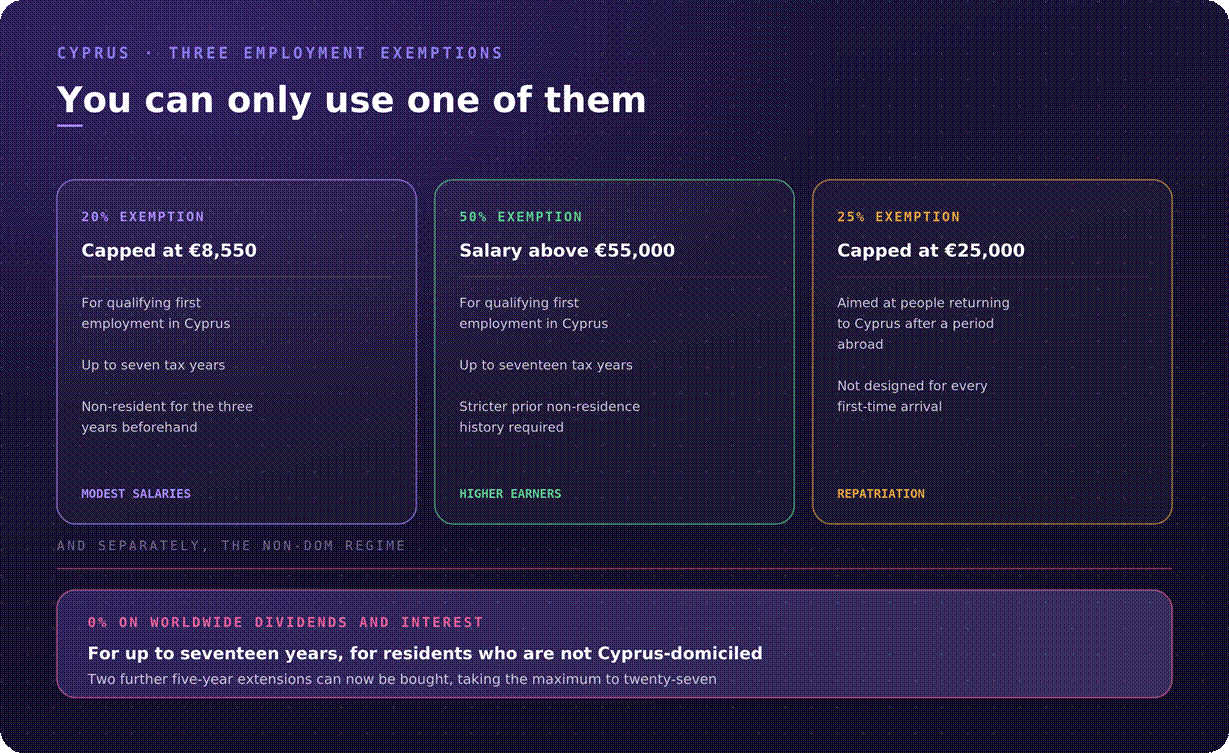
Three incentives, one choice — plus the non-dom regime alongside.
The 50% exemption is the bigger prize: generally available where annual remuneration exceeds €55,000, for up to 17 tax years, with stricter prior non-residence and non-employment requirements. The 25% exemption, capped at €25,000, is aimed at qualifying former Cyprus residents returning after a period abroad.
The 20% exemption is therefore most relevant where you earn below the threshold for the 50% regime, are taking up qualifying first employment, have been non-resident for at least three consecutive tax years, and were employed abroad by a non-resident employer.
One further incentive is worth knowing if you are retiring rather than working: foreign pension income can be taxed at a flat 5% above a threshold that the reform raised to €5,000, as an alternative to the ordinary bands.
Your checklist
1. Establish whether you will meet the 183-day or the 60-day residency test;
2. Confirm your non-dom position, and how many of the last 20 years you were Cyprus resident;
3. Identify which employment exemption fits your salary and history — you can only use one;
4. Check the three-year prior non-residence condition year by year;
5. Confirm your prior employment was outside Cyprus with a non-resident employer;
6. Flag the payroll and permanent establishment question to your employer;
7. Review whether your investment income benefits from the non-dom exemption;
8. Consider the crypto position if digital assets are material to you;
9. Model the 2026 bands rather than any older figures; and
10. Take Cyprus advice before the employment starts, not afterwards.
Frequently asked questions
What is the tax-free threshold now?
€22,000 from 1 January 2026, up from €19,500. The top rate of 35% now begins above €72,001 rather than €60,001, so the bands in between were widened too.
Does Cyprus tax capital gains?
Only on Cyprus immovable property, at 20%, and on shares in companies holding such property. Gains on shares, bonds and other qualifying securities are exempt from income tax. From 2026 crypto-asset gains attract an 8% flat tax.
Is the non-dom regime still available?
Yes, and it survived the reform unchanged in substance — 0% Special Defence Contribution on worldwide dividends and interest for up to 17 years. The reform added optional paid extensions of two further five-year periods.
How do I become tax resident in only 60 days?
Spend at least 60 days in Cyprus, spend no more than 183 days in any one other country, carry on employment or business or hold an office in Cyprus, and maintain a permanent home there. The requirement not to be tax resident elsewhere was removed in 2026.
Can I claim the 20% and the 50% exemptions together?
No. The three employment exemptions are mutually exclusive, so the right one depends on your salary and your prior residence and employment history.
When does the 20% exemption start?
Generally from the tax year following the one in which the qualifying employment commences, for up to seven tax years. It applies to qualifying first employments commencing on or before 31 December 2027.
What changed for company owners?
Corporate income tax rose from 12.5% to 15%, the deemed dividend distribution regime was abolished for profits from 2026, and stamp duty on documents was abolished. A concealed-dividends anti-avoidance rule was introduced at a higher rate.
Official sources and further reading
Important information
This article is general information and does not constitute tax, legal, immigration or financial advice, and does not create a client relationship. Tax outcomes depend on travel history, income sources, treaty status and the law applying to the relevant year. Rates, thresholds and regimes change, and some measures described may be proposed rather than enacted; this article reflects our understanding as at the date of publication. Obtain advice from a suitably qualified professional before acting or refraining from action.
