
Denmark has one of the highest personal tax burdens in the world, with a top marginal rate on employment income of around 56%. It also has one of Europe’s most valuable expatriate reliefs, which cuts that to a flat 32.84% for seven years.
The scheme is called the forskerskatteordning — the researcher scheme, sometimes the 48E scheme — and despite the name it is not limited to researchers. Any sufficiently well-paid hire from abroad can use it. For a senior professional moving to Denmark, it is the single most consequential tax decision they will make.
And the door opened wider this year. From 1 January 2026 the minimum monthly salary fell from DKK 78,000 to DKK 65,400, bringing a substantially larger pool of specialist hires within reach. If you looked at this scheme before and did not qualify, it is worth looking again.
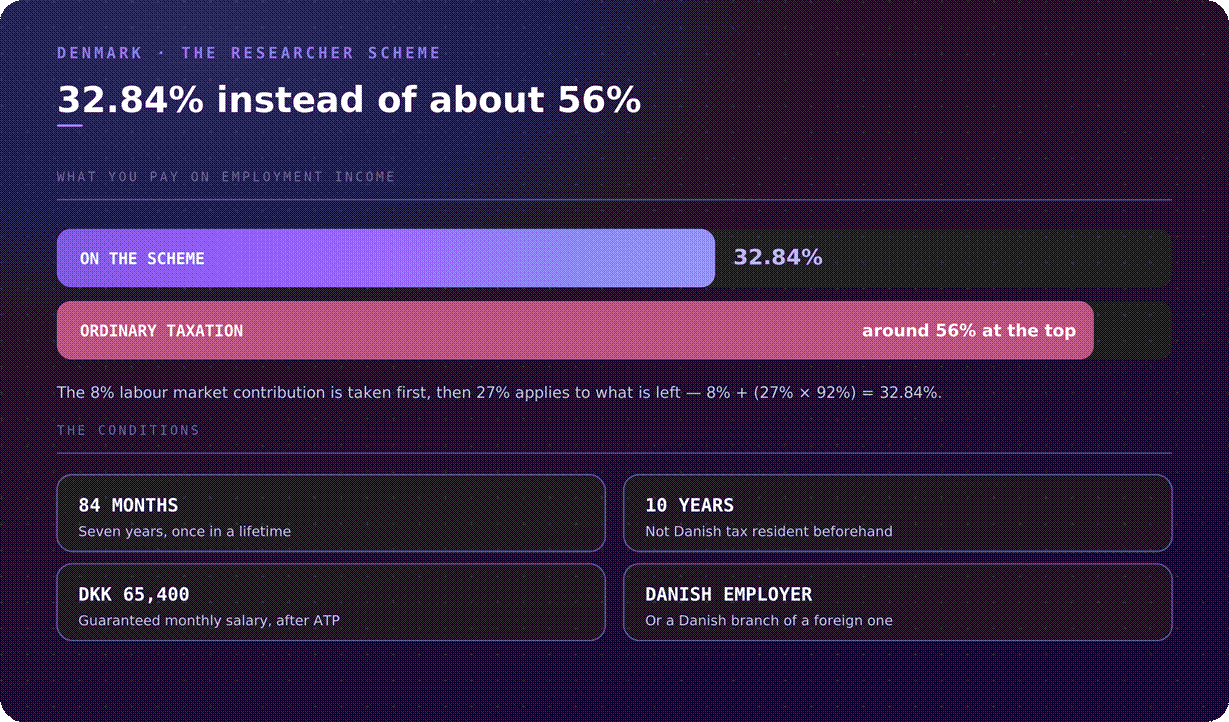
The rate, and the four conditions behind it.
What the tax rate actually is
The headline is 27%, but that is not the number you pay. The 8% labour market contribution, AM-bidrag, is deducted from gross salary first, and the 27% then applies to the remaining 92%. The arithmetic is 8% + (27% × 92%), giving an effective 32.84% of gross employment income.
No brackets, no deductions, and no progressive stack. Against an ordinary system that layers the labour market contribution, bottom tax, municipal tax and state brackets to reach the mid-fifties, the difference at a senior salary runs to several hundred thousand kroner a year.
Item | Danish position for 2026 |
Researcher scheme rate | 27%, plus the 8% labour market contribution applied first |
Effective rate on the scheme | 32.84% of gross employment income |
Duration | Up to 84 months, once in a lifetime |
Minimum monthly salary | DKK 65,400 after ATP, reduced from DKK 78,000 |
Prior residence bar | No Danish tax residence in the previous ten years |
Ordinary top marginal rate | Around 56% on employment income |
Share income | 27% up to a threshold, 42% above it |
Wealth tax | None |
The four conditions
All of them have to hold, and each one catches people.
You must not have been a Danish tax resident at any point in the ten years before the employment begins. That is a hard bar with no discretion, and it rules out anyone returning after a shorter absence.
Your employment must be with a Danish company, or the Danish branch of a foreign one. Being paid from abroad while working in Denmark does not qualify.
Your guaranteed monthly salary must average at least DKK 65,400 after deduction of ATP contributions. Researchers holding a qualifying doctoral-level degree and approved under the research criteria can qualify without meeting the salary threshold.
And the scheme runs for a maximum of 84 months, once in a lifetime. After that ordinary taxation resumes automatically.
Where it goes wrong
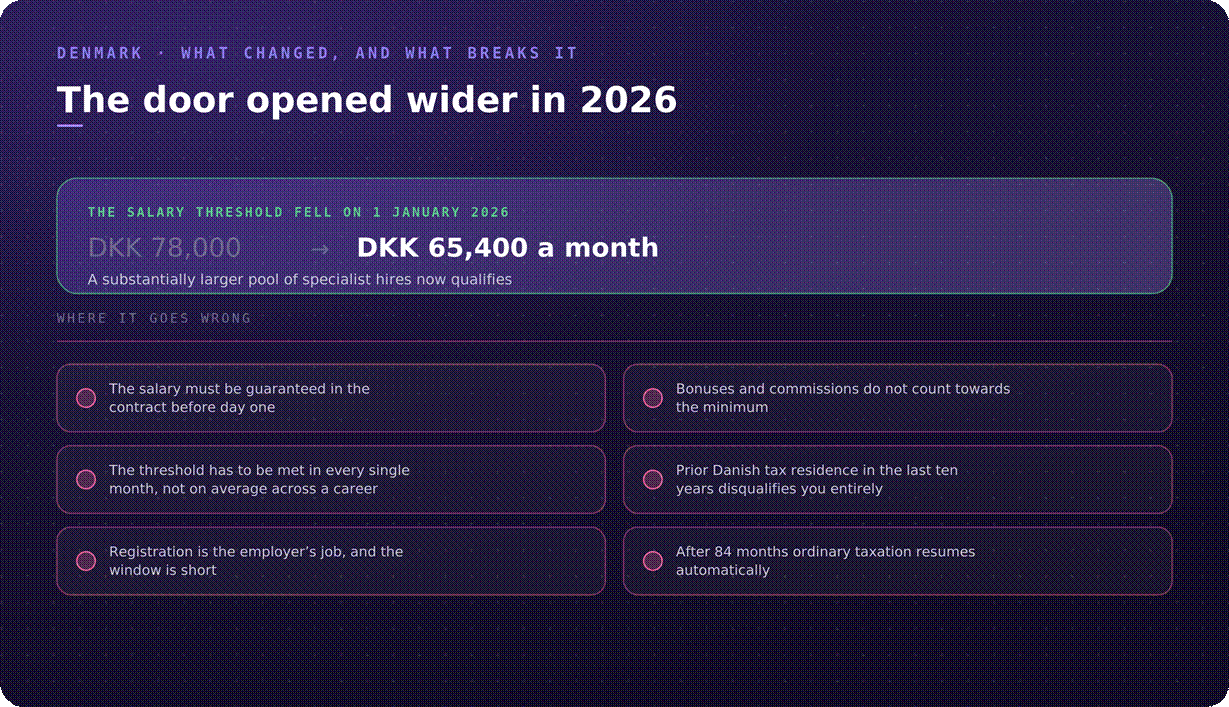
The threshold change, and the six ways people lose it.
The salary has to be guaranteed, and guaranteed in advance. The minimum must be written into the employment contract before the first working day. Bonuses and commissions do not count towards it, because they are not guaranteed. A package that reaches the threshold only when variable pay is included will not qualify.
The threshold also has to be met in every month, not averaged across good months and bad. Unpaid leave, a period of reduced hours, or a month where accrued holiday pay changes the figure can all break it — and losing the scheme mid-term is considerably worse than never having had it.
Registration is the employer’s responsibility and the window is short. In practice the arrangement needs to be in place from day one, which means the tax position has to be settled during contract negotiation rather than after arrival. If you are the one being hired, do not assume the payroll department knows the scheme exists.
The 2026 reform behind it
Denmark legislated a broader restructuring of personal income tax which took effect on 1 January 2026, splitting what was a single top-tax bracket into tiers — giving relief in the middle and adding a further layer at the very highest incomes.
For someone on the researcher scheme this mostly does not matter, because the flat rate replaces the progressive stack entirely. It matters a great deal in year eight, when ordinary taxation resumes, and it is worth modelling that cliff before the seven years run out rather than discovering it.
What the scheme does not cover
The flat rate applies to employment income from the qualifying employer. It does not extend to everything else, and Danish investment taxation is unusually complex.
Two features that surprise people. Share income — dividends and gains on shares — is taxed at 27% up to a threshold and 42% above it, which is high by international standards. And Denmark taxes certain investment holdings on unrealised gains rather than on disposal, which is genuinely unusual and can produce a tax bill in a year you sold nothing.
There is no wealth tax. But if you hold a meaningful investment portfolio, the Danish treatment of it deserves separate advice. The researcher scheme solves the salary problem and leaves the investment problem entirely intact.
All Danish tax residents must declare worldwide income, including foreign accounts, regardless of where they are held. The scheme changes the rate on your salary; it does not narrow what you report.
Is it worth it?
At a senior salary, overwhelmingly yes. Without the scheme a high earner keeps less than half of the top krone. With it they keep about two thirds, on the whole salary, at a flat rate, for seven years.
The cases where it is less clear are people close to the threshold, where the guaranteed-salary requirement constrains how the package can be structured, and people who expect to stay in Denmark long term, for whom year eight arrives eventually and the transition is abrupt.
Your checklist
1. Confirm you have not been Danish tax resident in the previous ten years;
2. Confirm the employer is Danish or a Danish branch of a foreign company;
3. Get the minimum salary guaranteed in the contract before your first working day;
4. Exclude bonuses and commissions from the calculation (they do not count);
5. Check the figure is met in every month, including months with leave;
6. Confirm who is registering the scheme, and get evidence that it was done;
7. If you are a researcher, check the qualification route rather than the salary route;
8. Model your position in year eight, when ordinary rates resume;
9. Take separate advice on any investment portfolio; and
10. Remember the scheme is once per lifetime, spending it early has a cost.
Frequently asked questions
What rate do I actually pay?
32.84% of gross employment income. The 8% labour market contribution comes off first, then 27% applies to the remaining 92%. The 27% headline is not the figure that leaves your pay.
Do I have to be a researcher?
No. Despite the name, any employee meeting the salary threshold can use it. Researchers with a qualifying doctoral-level degree can qualify through the research route without meeting the salary figure.
What is the salary threshold now?
DKK 65,400 a month after ATP, from 1 January 2026, reduced from DKK 78,000. That change brought a much wider group of specialist hires into scope.
Do bonuses count towards the minimum?
No. The salary must be guaranteed in the contract, so variable pay is excluded. A package that only clears the threshold with bonuses included will not qualify.
How long does it last?
Up to 84 months — seven years — and it is available once in a lifetime. After that, ordinary progressive taxation resumes automatically.
What if I lived in Denmark before?
If you were Danish tax resident at any point in the previous ten years, you are disqualified. There is no discretion in that condition.
Does it cover my investments?
No. It applies to employment income from the qualifying employer. Share income is taxed at 27% and 42%, and Denmark taxes some holdings on unrealised gains — both need separate consideration.
Who applies for it?
The employer registers it, and the timing is tight. You remain responsible for confirming it was actually done — get written evidence rather than assuming payroll handled it.
Official sources and further reading
• Skattestyrelsen — the Danish Tax Agency
• Lifeindenmark.dk — official guidance for people moving to Denmark
Important information
This article is general information and does not constitute tax, legal, immigration or financial advice, and does not create a client relationship. Tax outcomes depend on travel history, income sources, treaty status and the law applying to the relevant year. Rates, thresholds and regimes change, and some measures described may be proposed rather than enacted; this article reflects our understanding as at the date of publication. Obtain advice from a suitably qualified professional before acting or refraining from action.
