
Dominica announced two reforms in its August 2026 budget: a flat 10% rate and an end to taxing worldwide income, both from January 2027. Neither has reached the statute book yet.
On 4 August 2026, Finance Minister Dr Irving McIntyre put two measures to the House of Assembly inside a budget of EC$1.24 billion. Taken together they would change Dominica’s position for an inbound resident more than any other Caribbean reform in recent years.
The first: from 1 January 2027, personal income would be taxed at a single rate of 10%, replacing the current bands of 15%, 25% and 35%. Income up to EC$30,000 would remain free of tax, as it is now.
The second reaches further. From the same date, residents and non-residents would pay income tax only on income earned in Dominica — ending the taxation of worldwide income and moving Dominica to a territorial system.
The essential caveat. Neither change is law. Both arrived in a budget address, and the amendment that would give them effect had not reached the gazette. Anyone planning around them should treat them as announced intentions rather than as the current position.
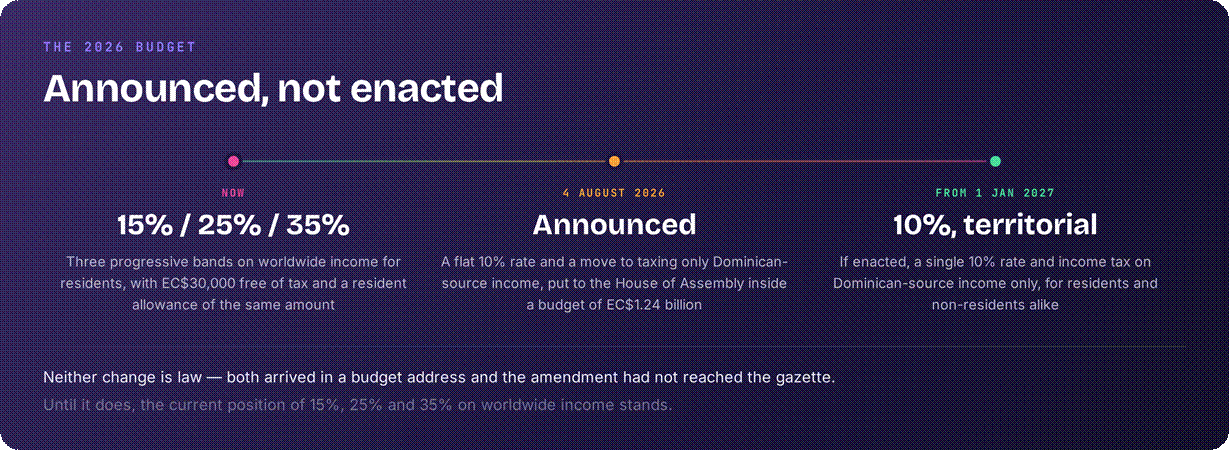
What was announced, and what is actually in force.
Your residency status is the first step
Dominican tax residence turns on physical presence. The Inland Revenue Division reaches individuals who are physically present in Dominica for more than 183 days continuously.
That word "continuously" is worth noting, because it is a stricter formulation than the aggregated day counts used in most systems.
The point that matters most for your readers: Dominican citizenship has never made anyone a tax resident. The Citizenship by Investment programme confers citizenship, not tax residence, and the two reforms therefore reach the retirees and remote workers who actually move to the island rather than the citizens by investment who remain abroad.
Maintain accurate records of:
• Days present in Dominica, and whether they are continuous;
• Whether you rely on citizenship or on presence for your status;
• Income by source, Dominican and foreign;
• Total employment income against the EC$30,000 threshold;
• Mortgage interest, donations and student loan costs, for allowances; and
• Whether the 2027 amendments have been gazetted.
The tax rates, now and announced
Item | Position |
Current bands | 15%, 25% and 35% |
Announced from 1 January 2027 | A flat 10% |
Tax-free amount | EC$30,000, unchanged under the proposal |
Current basis for residents | Worldwide income |
Announced basis from 2027 | Dominican-source income only |
Capital gains tax | None |
Resident allowance | EC$30,000 |
Status of both reforms | Announced in the budget, not yet law |
The Minister gave two worked examples. Someone on EC$48,000 a year would retain an extra EC$900, and the saving on EC$84,000 would be about EC$6,500. He described it as the most significant income tax relief ever granted in Dominica.
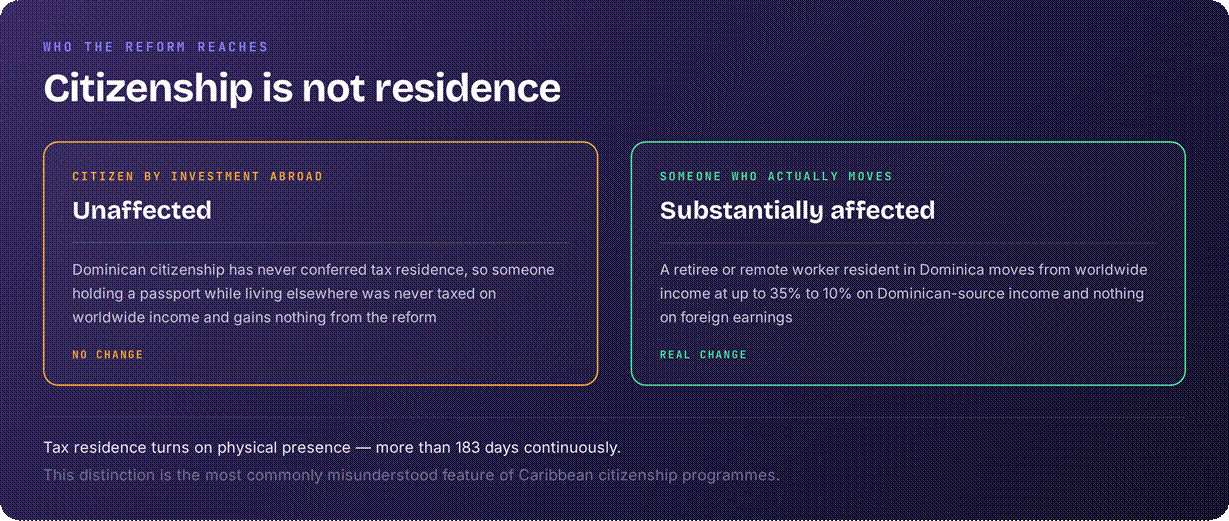
Who the reform reaches, and who it does not.
The allowances available now
Most individuals are entitled to one or more of the following:
• A resident allowance of EC$30,000, granted only to those considered resident for tax purposes;
• Mortgage interest up to a maximum of EC$25,000;
• Donations given to approved institutions; and
• Student loan relief, up to a maximum of EC$5,000 per student.
Deductions are granted where expenses were incurred in the production of taxable income, provided they were wholly and exclusively — and, for employment income, necessarily — incurred for that purpose. Income accruing from different sources must be totalled before claiming allowances, a point the Inland Revenue Division makes explicitly because taxpayers tend to report sources separately.
What makes Dominica attractive
Even on the current rules the position has real strengths, and the announced reforms would add substantially:
• No capital gains tax of any kind;
• A resident allowance of EC$30,000 before any charge arises;
• No filing obligation where income is entirely from employment and below EC$30,000;
• Residence requiring more than 183 continuous days, a stricter test that is easier to stay outside;
• Citizenship that has never conferred tax residence, so the two are cleanly separated;
• If enacted, a flat 10% from 2027 replacing bands reaching 35%; and
• If enacted, territorial taxation from the same date, removing worldwide income from the charge.
The honest qualification is the one worth repeating: the two headline reforms are not yet law. Until the amendment is gazetted, the position remains 15%, 25% and 35% on worldwide income for residents.
Case study: two people, one reform
A citizen by investment living in Dubai with foreign income is unaffected by either reform. They were never a Dominican tax resident, because citizenship has never conferred residence, and so the end of worldwide taxation changes nothing for them.
A remote worker who actually relocates to Roseau is affected substantially. Today they are resident on worldwide income at up to 35%. Under the announced reforms they would pay 10% on Dominican-source income and nothing on foreign earnings.
That distinction is the most commonly misunderstood thing about Caribbean citizenship programmes generally, and Dominica is a clean illustration of it.
Filing and the compliance calendar
All individuals considered resident must furnish returns to the Inland Revenue Division by 31 March each calendar year. Persons whose income is entirely from employment and is less than EC$30,000 are not obliged to file.
The Income Tax Act Chapter 67:01 makes partnerships, anyone who incurred a loss in the previous year of assessment, and anyone with income from business, employment, rental and royalties, interest or discounts, premiums, commissions, fees or annuities liable to file.
Prepare in good time:
• Registration with the Inland Revenue Division;
• Day-count records, noting whether presence was continuous;
• All income sources totalled before allowances are claimed;
• Mortgage interest, donation and student loan documentation;
• Confirmation of whether the 2027 amendments have been gazetted; and
• A 31 March filing reminder.
Watch the gazette, not the budget speech
Consider:
• That the flat 10% and territorial reforms are announced, not enacted;
• That the current position remains 15%, 25% and 35% on worldwide income;
• That residence requires more than 183 continuous days;
• That citizenship by investment has never conferred tax residence;
• That the EC$30,000 tax-free amount survives under the proposal;
• That there is no capital gains tax either way; and
• That sources must be totalled before allowances are claimed.
Your Dominica checklist
1. Check whether the 2027 amendments have been gazetted;
2. Until then, apply 15%, 25% and 35% on worldwide income;
3. Note that residence needs more than 183 continuous days;
4. Do not assume citizenship confers tax residence;
5. Claim the EC$30,000 resident allowance if resident;
6. Total all income sources before claiming allowances;
7. Claim mortgage interest up to EC$25,000;
8. Claim student loan relief up to EC$5,000 per student;
9. Note no filing is needed on employment income under EC$30,000; and
10. File by 31 March where a return is required.
Frequently asked questions
Is Dominica moving to a flat 10%?
It was announced in the budget address of 4 August 2026, to take effect from 1 January 2027, replacing bands of 15%, 25% and 35%. It is not yet law — the amendment had not reached the gazette.
Is Dominica becoming territorial?
That was announced in the same budget, from the same date — residents and non-residents would pay income tax only on income earned in Dominica. Like the rate change, it is an announced intention rather than enacted law.
What applies today?
Progressive bands of 15%, 25% and 35%, with residents taxed on worldwide income. Income up to EC$30,000 is free of tax and a resident allowance of EC$30,000 is available.
Does Dominican citizenship make me tax resident?
No, and it never has. Tax residence turns on physical presence — more than 183 days continuously. Citizenship by investment confers citizenship, not tax residence, which is why the reforms change little for citizens living abroad.
Who actually benefits from the reform?
Retirees and remote workers who genuinely relocate to Dominica. Someone resident there today faces worldwide income at up to 35%; under the announced reforms they would pay 10% on Dominican-source income and nothing on foreign earnings.
What allowances are available?
A resident allowance of EC$30,000, mortgage interest up to EC$25,000, donations to approved institutions, and student loan relief up to EC$5,000 per student. Income from different sources must be totalled before allowances are claimed.
Is there capital gains tax?
No. Dominica levies no capital gains tax, and that is unaffected by the announced reforms.
Do I have to file a return?
Residents must file by 31 March each year. Persons whose income is entirely from employment and less than EC$30,000 are not obliged to file.
Official sources and further reading
• Inland Revenue Division, Dominica
Important information
This article is general information and does not constitute tax, legal, immigration or financial advice, and does not create a client relationship. Tax outcomes depend on travel history, income sources, treaty status and the law applying to the relevant year. Rates, thresholds and regimes change, and some measures described may be proposed rather than enacted; this article reflects our understanding as at the date of publication. Obtain advice from a suitably qualified professional before acting or refraining from action.
