
El Salvador removed a 30% charge on money brought in from abroad. The relief is real and substantial, but it applies to the capital on entry, not to whatever that capital goes on to earn.
In March 2024 the Legislative Assembly approved, with 69 votes, a reform cutting income tax on capital entering El Salvador from abroad from 30% to 0%, regardless of the amount.
Before the reform, sums at or above USD 150,000 entering the country attracted 30% at the point of entry. That charge had a chilling effect on Salvadorans abroad who had built capital elsewhere and wanted to bring it home, and on foreign investors generally.
The reform covers family remittances and any capital originating from abroad, including foreign dividends and business earnings, whether intended to start a business or strengthen an existing one.
The limit that matters most. The exemption applies to the capital on entry. The legislation specifies that if the capital subsequently generates any form of profitability, that profit is liable to the respective taxes in the ordinary way. This is a gateway relief, not a shelter for future earnings.
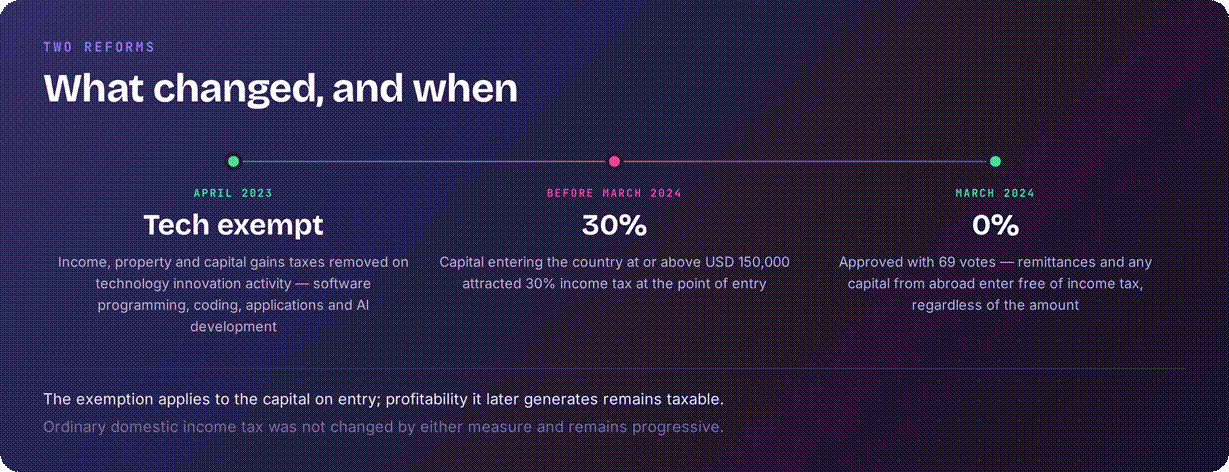
Two reforms, two years apart.
What the reform does and does not do
It is worth being precise, because the measure is widely described as El Salvador "removing income tax", which it did not.
What it does: removes the charge on capital and remittances at the moment they enter the country, at any amount, where previously 30% applied above USD 150,000.
What it does not do: it does not change El Salvador’s ordinary domestic income tax, which remains progressive. It does not exempt income the capital later earns. And it does not make El Salvador a flat-tax or zero-tax jurisdiction, despite frequent claims to that effect.
Anyone modelling a move should confirm the current domestic rate scale and residency rules directly with the tax authority, because the reform reshaped one specific charge rather than the system around it.
The technology exemption
A separate measure passed in April 2023 is arguably more relevant to a remote worker. El Salvador removed income, property and capital gains taxes on technology innovation activity including software programming, coding, applications and artificial intelligence development.
For someone whose work falls squarely within those categories, that is a far more substantial relief than the incoming-capital measure, because it reaches the income itself rather than the transfer of capital.
The qualifying conditions, registration requirements and duration should be confirmed directly, as the scope of a sector-specific exemption is where the detail sits.
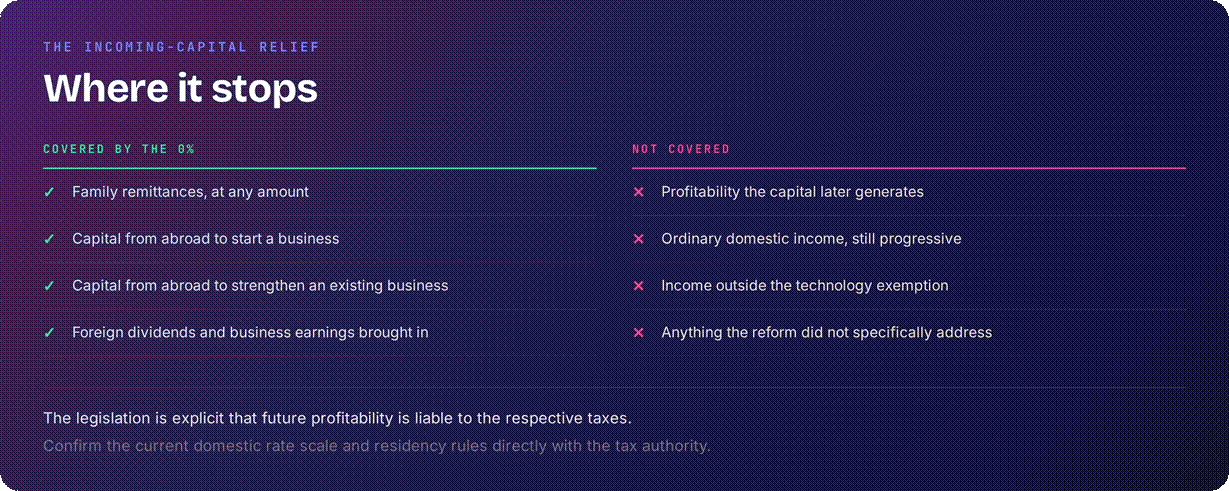
What the exemption reaches, and where it stops.
What makes El Salvador attractive
Taken together the position has genuine strengths:
• 0% on capital entering the country from abroad, at any amount, since March 2024;
• That relief covering remittances, foreign dividends and business earnings alike;
• A technology sector exemption from income, property and capital gains taxes for qualifying innovation activity, since April 2023;
• A dollarised economy, so there is no currency risk for anyone earning or holding in US dollars;
• A government that has moved repeatedly and quickly on tax policy in an investor-facing direction; and
• Reported record foreign direct investment in the periods following the reform.
The honest qualifications are that the incoming-capital exemption stops at the gate, that ordinary domestic income tax is unchanged and progressive, and that a jurisdiction which legislates quickly in one direction can legislate quickly in another. A point worth weighing for anyone planning over a long horizon.
Case study: Beatriz brings capital home
Beatriz spent fifteen years working in the United States and accumulated USD 400,000. Under the old rules, bringing that into El Salvador would have attracted 30% at the point of entry, which is USD 120,000.
Under the reform she brings the full USD 400,000 in at 0%. The saving is immediate and substantial, and it is exactly the outcome the measure was designed to produce.
What she should not assume is that the capital now sits outside the system. If she invests it and it produces rental income, dividends or business profit, that profitability is taxable in the ordinary way. The exemption bought her entry, not immunity.
Filing and the compliance calendar
The reform was approved by the Legislative Assembly in March 2024 and applies to capital entering the country. Ordinary filing obligations for domestic income continue under the existing rules.
Prepare in good time:
• Registration with the tax authority and a taxpayer number;
• Documentation evidencing that capital originated abroad;
• A clear record of the entry date and amount;
• Separate records of income the capital subsequently generates;
• Evidence of qualifying technology activity, if claiming that exemption; and
• Confirmation of the current domestic rate scale for the year.
Distinguish the entry from the earnings
Consider:
• That the 0% applies to capital on entry, not to what it earns;
• That any profitability generated afterwards is taxable normally;
• That ordinary domestic income tax remains progressive;
• That El Salvador is not a flat-tax or zero-tax jurisdiction;
• Whether your work falls within the technology exemption;
• That dollarisation removes currency risk but not the tax; and
• That fast-moving tax policy can move in either direction.
Your El Salvador checklist
1. Document that incoming capital originated abroad;
2. Record the entry date and amount clearly;
3. Keep the capital separate from what it later earns;
4. Expect profitability on that capital to be taxable;
5. Do not treat El Salvador as a zero-tax jurisdiction;
6. Confirm the current domestic rate scale for your year;
7. Check whether your work qualifies for the technology exemption;
8. Establish the registration requirements for that exemption;
9. Note that dollarisation removes currency risk only; and
10. Weigh policy volatility over a long planning horizon.
Frequently asked questions
Did El Salvador abolish income tax?
No. It cut the rate on capital entering the country from abroad from 30% to 0% in March 2024. Ordinary domestic income tax was not changed by that reform and remains progressive.
What exactly is exempt?
Family remittances and any capital originating from abroad, including foreign dividends and business earnings, whether intended to start a business or strengthen an existing one — at any amount, where previously sums at or above USD 150,000 paid 30% on entry.
Is income earned afterwards exempt?
No, and this is the most important limit. The legislation specifies that if the capital subsequently generates any form of profitability, that profit is liable to the respective taxes in the ordinary way.
What is the technology exemption?
A separate measure passed in April 2023 removing income, property and capital gains taxes on technology innovation activity, including software programming, coding, applications and artificial intelligence development.
Which reform matters more to a remote worker?
Usually the technology exemption, because it reaches the income itself rather than the transfer of capital. The incoming-capital relief matters most to someone moving accumulated wealth into the country.
Does dollarisation help?
It removes currency risk for anyone earning or holding in US dollars, since El Salvador uses the dollar. It has no effect on the scope of the tax charge, which is a separate question.
Is El Salvador a flat-tax country?
No. It is frequently described that way but the ordinary domestic income tax remains progressive. The reforms targeted specific charges rather than replacing the rate structure.
What should I confirm before relying on this?
The current domestic rate scale, the residency rules, and the qualifying conditions and registration requirements for the technology exemption. The reforms reshaped particular charges rather than the system around them.
Official sources and further reading
• Ministerio de Hacienda de El Salvador
Important information
This article is general information and does not constitute tax, legal, immigration or financial advice, and does not create a client relationship. Tax outcomes depend on travel history, income sources, treaty status and the law applying to the relevant year. Rates, thresholds and regimes change, and some measures described may be proposed rather than enacted; this article reflects our understanding as at the date of publication. Obtain advice from a suitably qualified professional before acting or refraining from action.
