
Fiji is often quoted at 39%. The basic top rate is 20% — the higher figures only engage above FJD 270,000. And expatriates on contracts of three years or less get their foreign investment income left alone.
Fiji’s headline rate is widely reported as 39%, which is accurate only at the extreme top and misleading everywhere else. The basic income tax rate tops out at 20%.
The structure is short. Nothing on the first FJD 30,000. Then 18% on the band to FJD 50,000, and FJD 3,600 plus 20% on everything above. That is the whole resident scale for most people.
The higher composite figures come from two separate charges that only engage above FJD 270,000 — the Social Responsibility Tax, progressive from 13% to 19%, and the Environment and Climate Adaptation Levy at 10%. Below that threshold neither applies.
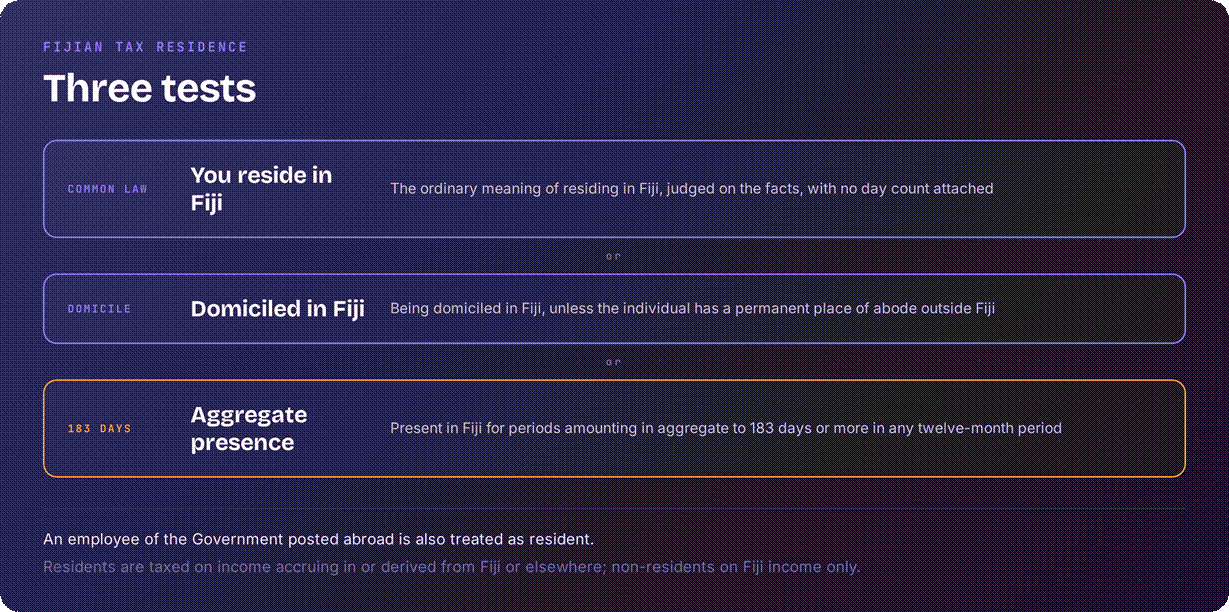
Three tests, and any one is enough.
Your residency status is the first step
Fiji uses three tests, and meeting any one makes you resident:
• The common law test — you reside in Fiji;
• The domicile test — you are domiciled in Fiji, unless you have a permanent place of abode outside Fiji; or
• The 183-day test — you are present in Fiji for periods amounting in aggregate to 183 days or more in any twelve-month period.
An employee of the Government posted abroad is also resident. Residents are liable on taxable income accruing in or derived from Fiji or elsewhere; non-residents only on income accruing in or derived from Fiji.
Maintain accurate records of:
• Days present across rolling twelve-month periods;
• Whether you have a permanent place of abode outside Fiji;
• The length of your employment contract, for the three-year provision;
• Income other than employment income, and where it accrues;
• Whether your employment income comes from a single source; and
• Annual income against the FJD 270,000 threshold.
The tax rates
Chargeable income (FJD) | Resident position |
0 to 30,000 | Nil |
30,001 to 50,000 | 18% of the excess over 30,000 |
50,001 to 270,000 | 3,600 plus 20% of the excess over 50,000 |
Above 270,000 | Plus Social Responsibility Tax, 13% to 19% |
Above 270,000 | Plus Environment and Climate Adaptation Levy, 10% |
Non-residents | 20% from the first dollar, no threshold |
Dividends | No longer taxed in shareholders’ hands |
Local income taxes | None |
🌎 Non-residents get no threshold at all — 20% applies from the first dollar. The FJD 30,000 tax-free band is a resident entitlement, and it is worth FJD 1,860 a year at the margin.
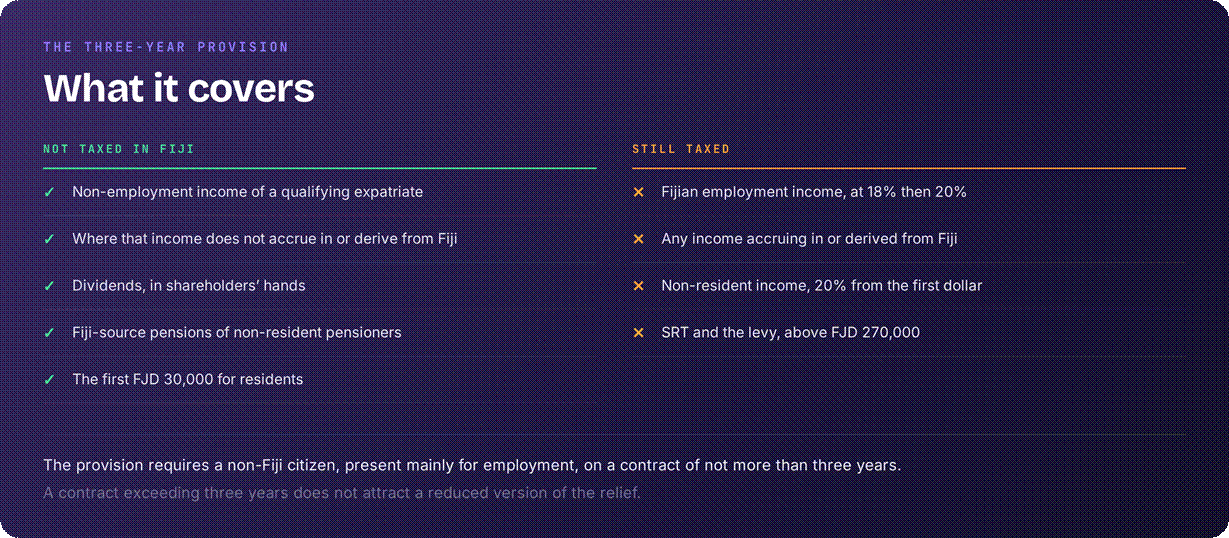
What the three-year provision reaches.
The three-year expatriate provision
This is the provision worth building a plan around. Where a non-Fiji citizen is in Fiji mainly for employment purposes under a contract of employment of not more than three years, income other than employment income is not subject to tax in Fiji if it is not derived from or does not accrue in Fiji.
In practice that means an inbound professional on a three-year posting pays Fijian tax on their Fijian salary and nothing on their overseas portfolio, rental income or business interests — despite being resident.
Three conditions govern it, and all three matter. The individual must not be a Fiji citizen. The purpose of presence must be mainly employment. And the contract must not exceed three years. A four-year contract does not get a partial version of this.
What makes Fiji attractive
For the right profile the position is considerably better than the headline:
• A FJD 30,000 tax-free threshold for residents;
• A basic top rate of 20%, with the higher charges only above FJD 270,000;
• The three-year contract exemption on non-employment foreign income for inbound expatriates;
• Dividends no longer taxed in shareholders’ hands;
• PAYE as a final tax for single-source employment income, so no annual return is needed;
• Interest derived by a taxpayer with annual income of no more than FJD 30,000 is outside resident interest withholding; and
• No local income taxes of any kind, and no tax on Fiji-source pensions received by non-resident pensioners.
The honest qualifications are that non-residents pay 20% from the first dollar with no threshold, that the Social Responsibility Tax and levy make the top end genuinely expensive, and that the three-year provision depends on contract length rather than on anything you can adjust later.
Case study: Daniel’s three-year posting
Daniel, a New Zealander, takes a three-year contract in Suva. He is present well over 183 days and is therefore Fijian resident, which would ordinarily bring his worldwide income into charge.
Because he is a non-Fiji citizen, present mainly for employment, on a contract of not more than three years, his income other than employment income — his New Zealand rental property and share portfolio — is not subject to Fijian tax, as it neither derives from nor accrues in Fiji.
His Fijian salary is taxed normally, with FJD 30,000 free and 18% then 20% above. Had the contract run to four years, the exemption would not apply and his overseas income would have come into charge from the start.
Filing and the compliance calendar
PAYE became a final tax from 1 January 2013, which removes the need for an annual return for employees with only one source of employment income. Employers deduct PAYE and remit to the Fiji Revenue and Customs Service by the last day of the month following deduction, alongside Fiji National Provident Fund contributions.
Employers must register with FRCS within 30 days of starting business and submit monthly Employer Monthly Schedules even where no PAYE was deducted.
Prepare in good time:
• A Tax Identification Number and Tax Code Declaration;
• Your employment contract, evidencing its length;
• Records of non-employment income and where it accrues;
• Day-count records across twelve-month periods;
• Evidence of any permanent place of abode outside Fiji; and
• Annual income figures against the FJD 270,000 threshold.
Contract length is the variable
Consider:
• That the basic top rate is 20%, not 39%;
• That SRT and the levy only engage above FJD 270,000;
• Whether your contract runs to three years or less;
• That the exemption covers income other than employment income;
• That it requires you not to be a Fiji citizen;
• That non-residents get no threshold at all; and
• That PAYE is final for single-source employment income.
Your Fiji checklist
1. Check whether your contract runs to three years or less;
2. Confirm you are present mainly for employment purposes;
3. Separate employment income from all other income;
4. Establish where non-employment income accrues;
5. Count days across rolling twelve-month periods;
6. Check whether you have a permanent place of abode abroad;
7. Note the basic top rate is 20%, not 39%;
8. Model SRT and the levy only above FJD 270,000;
9. Note that dividends are not taxed in your hands; and
10. Confirm whether PAYE operates as a final tax for you.
Frequently asked questions
Is the Fijian top rate really 39%?
Only at the extreme top. The basic income tax rate tops out at 20%. The higher composite figures come from the Social Responsibility Tax and the Environment and Climate Adaptation Levy, which only engage above FJD 270,000.
What is the three-year contract exemption?
Where a non-Fiji citizen is in Fiji mainly for employment under a contract of not more than three years, income other than employment income is not subject to tax in Fiji if it does not derive from or accrue in Fiji.
Does that cover my salary?
No. Fijian employment income is taxed normally. The provision covers income other than employment income — overseas investments, rental income and similar — where it does not accrue in Fiji.
What are the resident rates?
Nil on the first FJD 30,000, 18% on the band to FJD 50,000, and FJD 3,600 plus 20% above that. Social Responsibility Tax and the levy apply above FJD 270,000.
How are non-residents taxed?
At 20% from the first dollar of chargeable income, with no tax-free threshold. The FJD 30,000 band is a resident entitlement.
Are dividends taxed?
No. Dividends are no longer subject to tax in the hands of shareholders.
Do I need to file a return?
Often not. PAYE became a final tax from 1 January 2013, which removes the need for an annual return for employees with only one source of employment income.
How do I become tax resident?
Through any of three tests — residing in Fiji at common law, being domiciled in Fiji unless you have a permanent place of abode outside it, or being present for 183 days or more in aggregate in any twelve-month period.
Official sources and further reading
Important information
This article is general information and does not constitute tax, legal, immigration or financial advice, and does not create a client relationship. Tax outcomes depend on travel history, income sources, treaty status and the law applying to the relevant year. Rates, thresholds and regimes change, and some measures described may be proposed rather than enacted; this article reflects our understanding as at the date of publication. Obtain advice from a suitably qualified professional before acting or refraining from action.
