
If you are planning to live and work in Finland, examine your tax residency position before you arrive. Finland uses a residence taxation model, so becoming tax resident brings your worldwide income within the Finnish system.
The central question is not simply how many days you can spend in Finland. It is also where your main home is, where your work is physically performed, which country holds your closest personal and financial ties, whether you will remain tax resident elsewhere, and what documentation you will need to support your position.
Why Finland is different. Many people travel on the assumption that 183 days in a calendar year is the universal threshold. Finland instead looks at a continuous stay of more than six months, and the count runs straight across the turn of the year. You can become Finnish tax resident before reaching the day count you expected to matter.
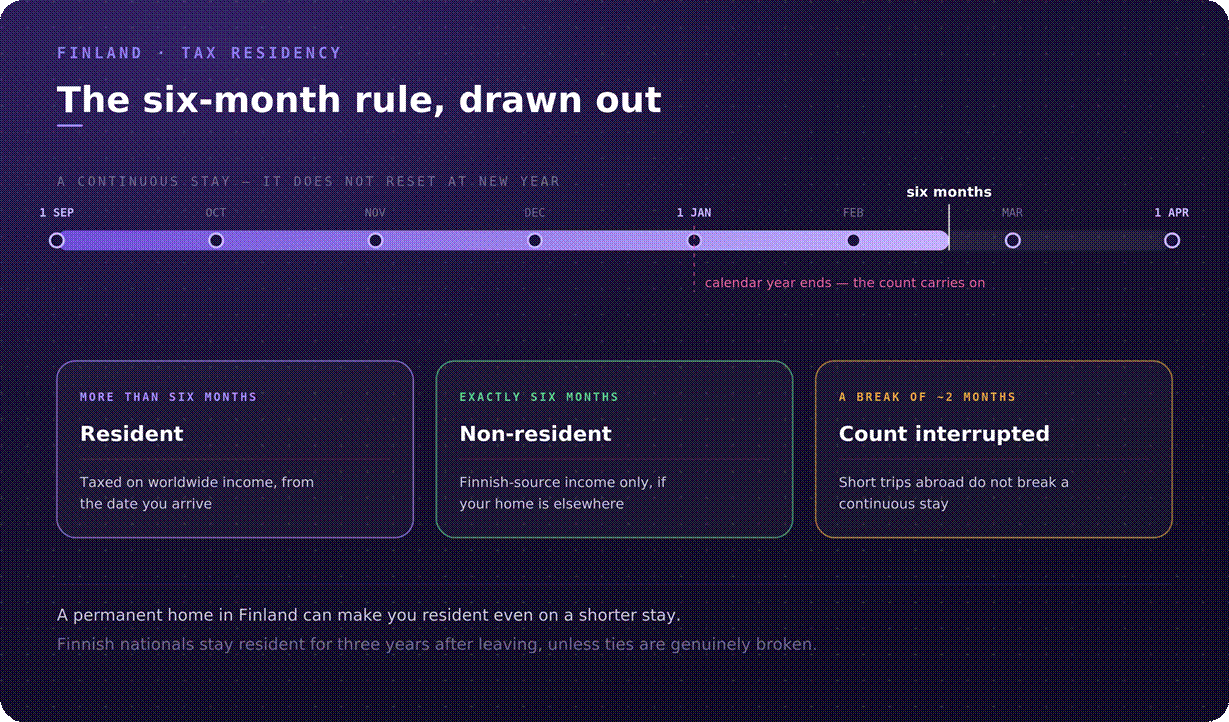
The count is continuous, and the calendar year is irrelevant to it.
Resident or non-resident?
Finland distinguishes between resident taxpayers, who have unlimited tax liability, and non-resident taxpayers, who have limited tax liability.
If you are resident, you will generally be taxable on Finnish employment and business income, foreign employment and business income, foreign dividends and interest, certain foreign pensions, and other worldwide income, subject to domestic rules and treaty relief.
If you are non-resident and your main home is not in Finland, you will generally be taxable only on Finnish-source income. That may include income connected with work physically performed in Finland, though the outcome can depend on the type of income, the payer and the relevant treaty. Non-resident treatment does not automatically mean you have no Finnish filing or withholding obligations.
What triggers residency | How it works |
A stay of more than six months | Continuous presence, counted straight across calendar years |
Exactly six months | Still non-resident, where your permanent home is elsewhere |
A permanent home in Finland | Can make you resident even on a shorter stay |
Finnish nationality | Resident for three years after leaving, unless ties are broken |
A break of around two months | May interrupt continuity; short trips generally do not |
Reason for the stay | Work, study or personal reasons — generally does not change the test |
📍 The detail that decides it. Temporary absences do not break a continuous stay — a holiday abroad will not reset the clock. Finnish practice treats an absence of roughly two months as long enough to interrupt continuity. A fortnight away does nothing; a genuine two-month departure may.
Practical example: Felicity
Felicity arrives in Helsinki on 15 October to work remotely for a foreign technology company. She rents an apartment and plans to remain until 15 April.
Her stay crosses two calendar years, but it is a continuous period of more than six months. If she remains beyond the threshold, Finland may treat her as resident from the date of arrival, and her foreign salary and other worldwide income may then fall to be considered under the residence rules.
She should not wait until the end of the stay to assess this. Accommodation, employment location, travel dates, tax residence in her home country and any applicable treaty all need reviewing before she arrives.
What happens to remote-work income?
Separate your tax residence from the source of your income. If you physically perform employment duties from Finland, Finland may seek to tax the related employment income even where your employer is incorporated overseas, your salary is paid into a foreign bank account, your contract was signed elsewhere, or you remain tax registered in another country.
For freelancers and online business owners the analysis is more involved. Where services are physically performed, the nature of the business, the location of clients and the existence of a permanent establishment may all matter.
Does a treaty prevent double taxation?
Finland has an extensive treaty network — 86 double taxation agreements. A treaty may allocate taxing rights between Finland and another country and provide relief where the same income is taxed twice.
If both Finland and another country treat you as resident under their domestic laws, the treaty may apply tie-breaker criteria: the location of your permanent home, your centre of vital interests, your habitual abode, and finally your nationality.
Domestic status and treaty status are different questions. You can be resident under Finnish domestic law but treaty resident in another country. Where that happens, Finland’s taxing rights may be limited to Finnish-source income within the treaty’s terms. Obtain a residence certificate from the other country if you intend to rely on treaty treatment.
How much tax will you actually pay?
Finland charges income tax in two layers, which is why a single headline percentage tends to mislead. State income tax is progressive and rises with income. Municipal tax is then charged on top at a flat rate set by your municipality, and the rate varies by where you live.
Taken together, the top marginal rate on employment income is over 50%, depending on your municipality. Further charges sit outside those rates and apply in addition.
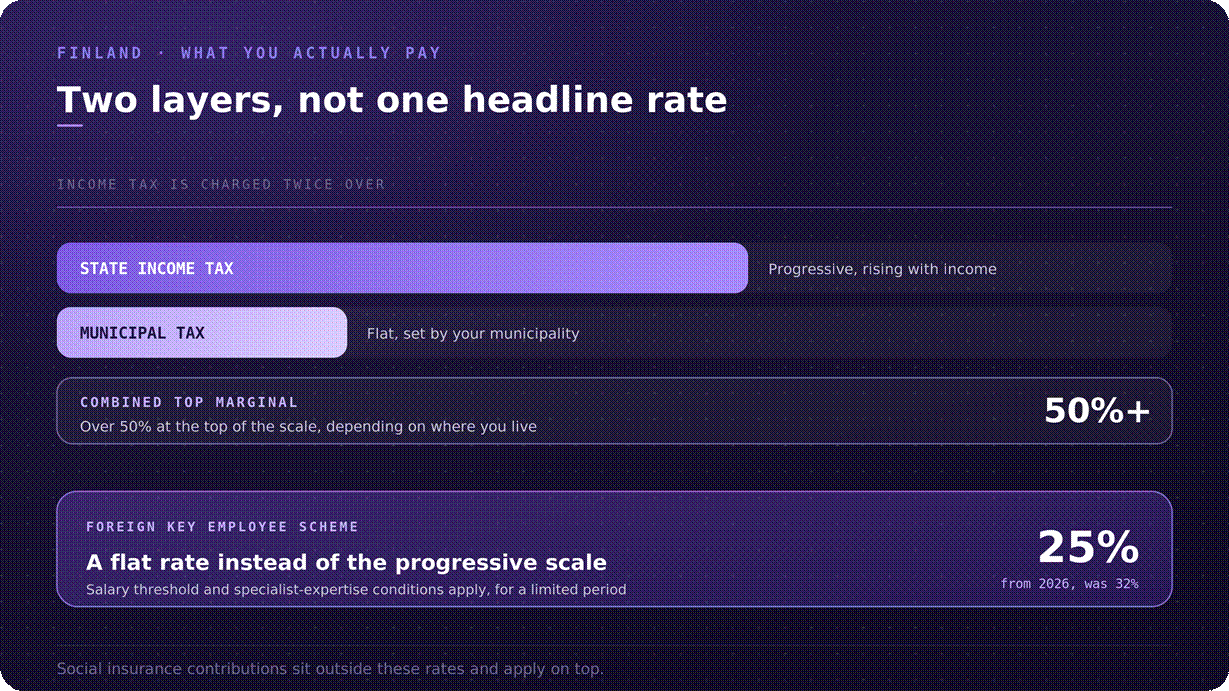
State tax, municipal tax, and the flat-rate route for qualifying specialists.
The foreign key employee scheme
Finland operates a flat-rate regime for qualifying foreign specialists, which replaces the progressive scale on wage income for a limited period. The rate was reduced from 32% to 25% with effect from 1 January 2026, which makes it considerably more attractive than it was.
The conditions are specific. Broadly, you must become a resident taxpayer when you start work in Finland, earn at least a set monthly cash salary, work in a role requiring special expertise, not be a Finnish citizen, and not have been a Finnish resident taxpayer in the five calendar years before the work begins. Teachers and researchers at higher education institutions may qualify without meeting the salary threshold.
Worth checking before you accept a role. Because the source tax is final, no deductions are available under this regime — so it is not automatically better than progressive taxation in every case. Model both before choosing, and note that an existing key-employee tax card showing 32% can move to the new rate without a fresh application.
Your actual liability will depend on your total taxable income, your municipality, available deductions and credits, the type and source of income, and whether treaty relief applies.
Compliance dates
Finland follows the calendar year, from 1 January to 31 December. Most individuals receive a pre-completed tax return in spring and need only review and supplement it. Deadlines are staggered and printed on your own return, generally falling in April or May, so work from the date on your document rather than a date you read elsewhere.
If you are resident, you may need to add worldwide income, foreign tax paid and relevant deductions to the pre-completed return. If you are non-resident, Finnish tax may be collected by withholding at source, though you may still need to file where tax has not been withheld correctly. Advance payments may be required where you earn freelance or business income without sufficient withholding, and any residual tax falls due later in the year.
Your Finland checklist
1. Map your travel dates, recording every arrival, departure and temporary absence;
2. Review your accommodation and whether a home is available for your primary use;
3. Identify where you physically work, not where your employer sits;
4. List your worldwide income, including salary, freelance profits, dividends, interest, pensions and gains;
5. Check whether another country will continue to treat you as resident;
6. Review the applicable treaty, including tie-breakers and income allocation;
7. Check whether you qualify for the key employee regime before accepting a role;
8. Work from the deadlines printed on your own pre-completed return;
9. Consider whether advance payments apply; and
10. Retain leases, travel records, employment contracts, tax statements and residence certificates.
Frequently asked questions
Is it 183 days or six months?
Six months, and it is a continuous stay rather than a day count within a calendar year. Exactly six months leaves you non-resident where your permanent home is elsewhere; more than six months makes you resident.
Does the count reset on 1 January?
No. The six-month period runs straight through the turn of the year. A stay beginning in September and ending in March is one continuous period, not two part-years.
Will a holiday abroad break the continuous stay?
Generally not. Temporary absences do not interrupt continuity. Finnish practice treats an absence of around two months as long enough to break it, so ordinary trips will not help you avoid residency.
My employer is abroad and pays me abroad. Does Finland still tax me?
It may. Where you physically perform the work carries significant weight, so duties carried out from Finland can bring the income into scope regardless of where your employer is incorporated, where the contract was signed, or which account you are paid into.
What is the top rate of tax?
There is no single figure, because state tax and municipal tax both apply. The combined top marginal rate on employment income exceeds 50% depending on your municipality, with further charges on top.
What is the foreign key employee scheme worth?
It applies a flat rate to wage income instead of the progressive scale — 25% from 2026, reduced from 32%. Conditions include a minimum monthly salary, specialist expertise, and not having been a Finnish resident taxpayer in the previous five years. No deductions are available under it.
I am a Finnish citizen who moved abroad. Am I still resident?
Possibly. Finnish nationals generally remain resident for three years after leaving, unless they can show that substantial ties with Finland have genuinely been broken.
When do I file?
Most people receive a pre-completed return in spring and check or supplement it. The deadlines are staggered and printed on your own return, typically in April or May, so use the date on your document.
Official sources and further reading
• Finnish Tax Administration (Vero)
• Vero guidance on residency and non-residency
• Vero detailed guidance on tax residency and treaty residence
Important information
This article is general information and does not constitute tax, legal, immigration or financial advice, and does not create a client relationship. Tax outcomes depend on travel history, income sources, treaty status and the law applying to the relevant year. Rates, thresholds and regimes change, and some measures described may be proposed rather than enacted; this article reflects our understanding as at the date of publication. Obtain advice from a suitably qualified professional before acting or refraining from action.
