
Suriname has no 183-day rule. Residence turns on where the centre of your personal economic interests lies — and it can attach without any official residency at all.
Almost every country in this series decides residence with a day count. Suriname does not. An individual is resident if the centre of his personal economic interests lies in Suriname, determined on actual facts and circumstances — for example the place of work, or the place where the family resides.
The consequence is stated explicitly in the guidance and is worth quoting plainly: tax residency can exist without official residency. Fulfilling or not fulfilling the legal requirements for residence permits does not settle the tax question.
Residents are subject to income tax on worldwide income; non-residents only on Surinamese-source income. The Income Tax Law dates from 1922.
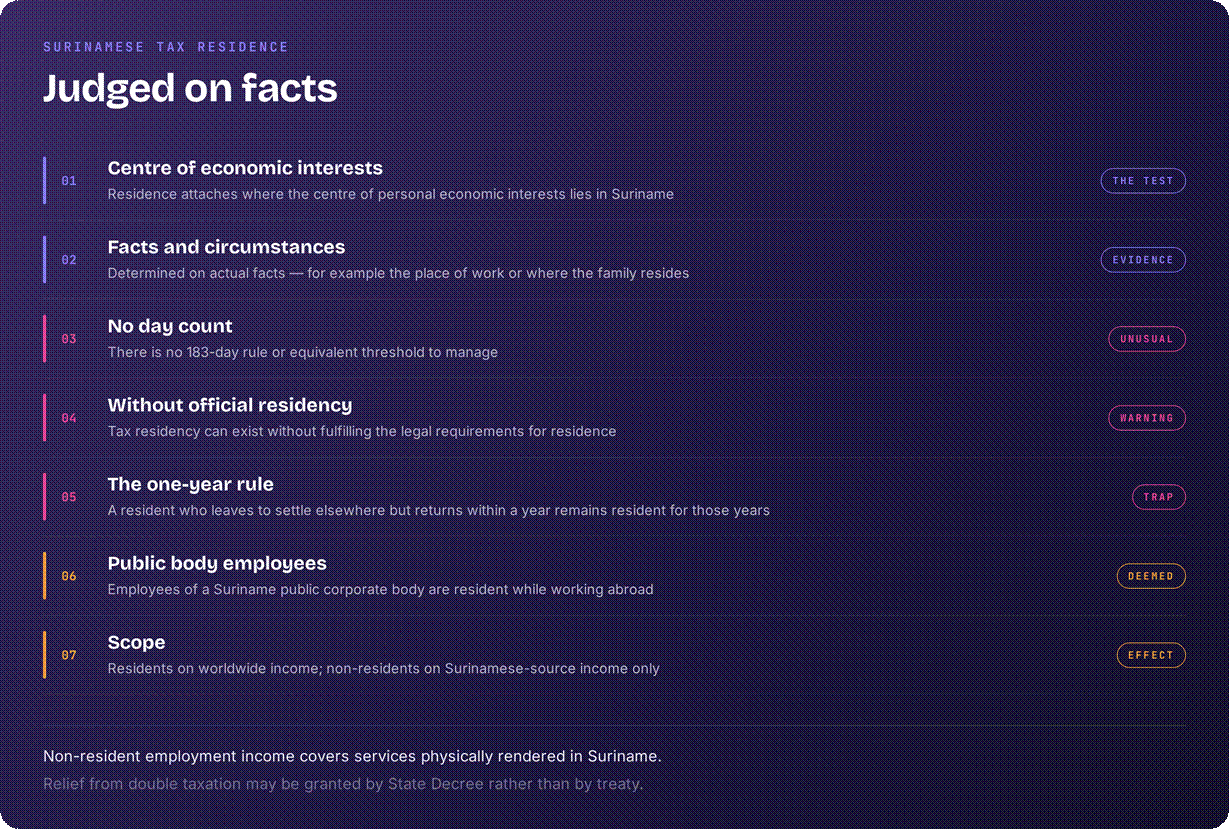
What makes you resident, with no days involved.
Your residency status is the first step
Because there is no day count to manage, the analysis is factual rather than arithmetic. Where do you work? Where does your family live? Where is the centre of your economic life? Those questions decide the answer.
Two further rules attach residence regardless:
• The one-year return rule — a resident who intends to leave Suriname and settle elsewhere, but returns within one year of having left, remains a resident for that year or those years; and
• Individuals employed by a Suriname public corporate body are considered to reside in Suriname for the duration of their employment outside the country.
A non-resident is liable only on Surinamese-source income, which includes employment income so far as the services are physically rendered in Suriname, business income attributable to a permanent establishment there, income from immovable property located in Suriname, rights to a share in the profit of a Suriname company other than by share ownership or employment, and income from a Suriname public body.
Maintain accurate records of:
• Where your work is actually performed;
• Where your family resides;
• Evidence bearing on the centre of your economic interests;
• Departure dates and any return within one year;
• Where services generating employment income were physically rendered; and
• Foreign income and tax paid in the host country.
The tax rates
Item | Position |
Tax-free basic allowance | Around SRD 108,000 a year — confirm for the year |
First band above the allowance | 8% |
Second band | 18% |
Third band | 28% |
Top band | 38% |
Lump-sum payments, on request | 5%, 15%, 25% and 35% |
Overtime, on request | 5%, 15% and 25% |
Old Age Pension premium | Around 4% to 5% of taxable income |
Two separate concessionary tables exist, and both are available only on request to the tax authorities. Lump-sum payments not relating to a specific period comprising several normal pay periods can be taxed at 5%, 15%, 25% and 35% instead of the normal table, and overtime performed in a monthly wage period at 5%, 15% and 25%. Neither applies automatically.
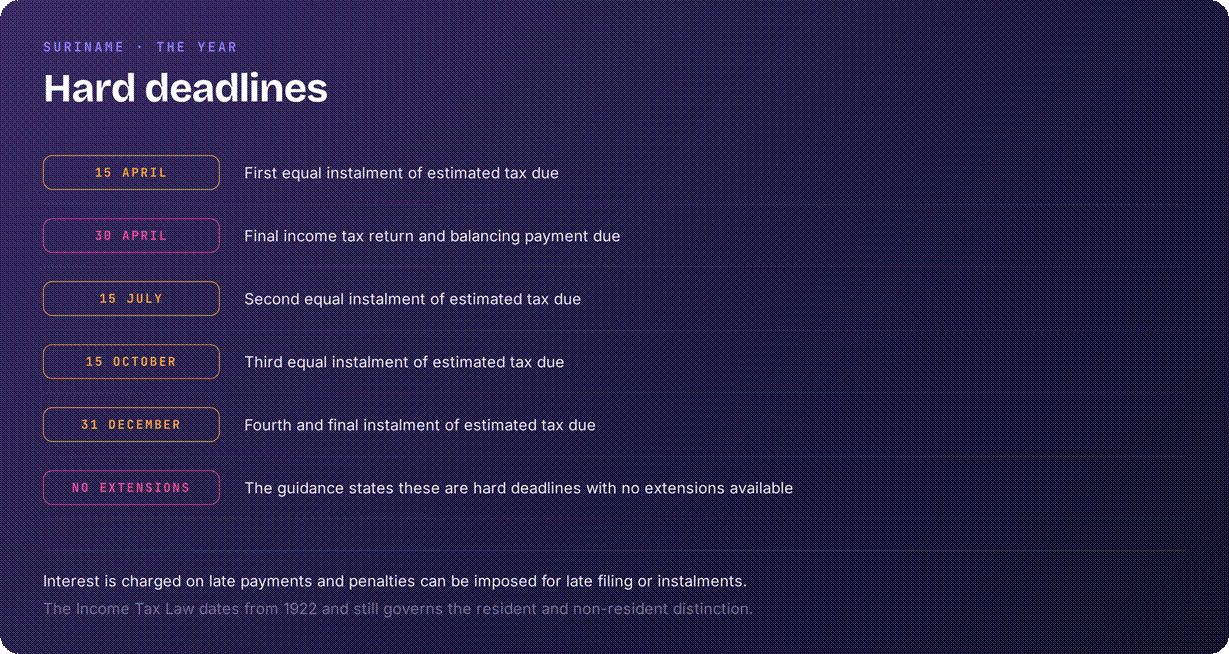
Four instalments and a final return, all fixed.
Relief by State Decree
Suriname has an unusual mechanism for relieving double taxation. Under the Income Tax Act, complete or partial exemption from income tax may be granted by State Decree to individuals who remained resident in Suriname during an assignment and obtained income outside Suriname which has been subject to tax in the host country.
That is relief by administrative decree rather than by treaty, and it is worth knowing about precisely because it will not appear in a treaty search. Anyone in that position should raise it directly rather than assume no relief exists.
Separately, expatriates are in most cases considered non-resident for Old Age Pension premium purposes and are therefore not obliged to pay it — but a formal request must be made. It is not automatic.
What makes Suriname workable
The honest position is that Suriname is not a low-tax destination, but several features are worth knowing:
• A tax-free basic allowance before any rate applies;
• An 8% entry band above that allowance;
• Concessionary tables for lump sums and overtime, at rates below the normal scale, available on request;
• Relief from double taxation available by State Decree where a resident was taxed in a host country;
• Exemption from the Old Age Pension premium for most expatriates, on formal request; and
• A draft measure that would remove from the income tax base revenues received by residents from Suriname companies deriving more than 75% of profit from business activities.
The qualifications are substantial. The top rate is 38%, residence has no day count you can manage, the one-year return rule catches people who leave and come back, and the deadlines are hard with no extensions.
Case study: Roshan comes back too soon
Roshan leaves Suriname intending to settle in the Netherlands. He treats himself as non-resident from the date of departure and stops reporting his worldwide income.
Eleven months later his circumstances change and he returns. Under the one-year return rule, he is treated as having remained resident for that year, and must report his worldwide income for the whole of it — including everything he earned in the Netherlands.
The rule exists precisely to prevent a short break from severing residence. Anyone contemplating departure should treat the twelve-month mark as the point at which the position becomes secure, not the date of the flight.
Filing and the compliance calendar
Estimated tax is paid in four equal instalments, due on 15 April, 15 July, 15 October and 31 December. At the end of each year individuals file a final income tax return, with filing and payment of the balance due by 30 April.
Interest is charged on late payments and penalties can be imposed for late filing or late instalments. The guidance is explicit that these are hard deadlines and no extensions are available, which is unusual enough to plan around.
Prepare in good time:
• Registration with the Directorate of Taxes;
• Evidence supporting your residence position;
• Estimated tax calculations ahead of each instalment date;
• A formal request for the Old Age Pension exemption, if applicable;
• A request for the lump-sum or overtime tables, if relevant; and
• Documentation for any State Decree relief claim.
Facts, not days
Consider:
• That there is no day count — residence is factual;
• That tax residency can exist without official residency;
• Where the centre of your economic interests actually lies;
• That returning within one year of leaving restores residence;
• That the concessionary tables require a request;
• That State Decree relief exists outside the treaty network; and
• That the deadlines are hard, with no extensions available.
Your Suriname checklist
1. Establish where the centre of your economic interests lies;
2. Document where you work and where your family resides;
3. Do not rely on a day count — there is none;
4. Do not assume the absence of official residency settles it;
5. Treat the twelve-month mark after departure as the secure point;
6. Request the lump-sum or overtime tables where they would help;
7. Request the Old Age Pension exemption formally, if applicable;
8. Raise State Decree relief directly where an assignment was taxed abroad;
9. Diarise all four instalment dates and the 30 April return; and
10. Plan on there being no extensions available.
Frequently asked questions
How is Surinamese tax residence decided?
By where the centre of your personal economic interests lies, determined on actual facts and circumstances such as the place of work or where the family resides. There is no 183-day rule.
Can I be resident without a residence permit?
Yes. The guidance states plainly that tax residency can exist without official residency, so the absence of a permit does not settle the tax question.
What happens if I leave and come back?
If you left intending to settle elsewhere but return within one year, you remain a resident for that year or those years and must report worldwide income for them.
What are the rates?
A tax-free basic allowance, then bands of 8%, 18%, 28% and 38%. The allowance figure has been revised repeatedly and should be confirmed for the year in question.
Are there lower rates for anything?
Yes, on request. Lump-sum payments not relating to a specific period across several normal pay periods can be taxed at 5%, 15%, 25% and 35%, and overtime in a monthly wage period at 5%, 15% and 25%. Neither applies automatically.
Is there double taxation relief?
Complete or partial exemption may be granted by State Decree to individuals who remained resident during an assignment and obtained income outside Suriname that was taxed in the host country. It is administrative relief rather than treaty relief.
Do expatriates pay the Old Age Pension premium?
In most cases expatriates are considered non-resident for that purpose and are not obliged to pay, but a formal request must be made. It is not automatic.
When are the deadlines?
Estimated tax in four equal instalments due 15 April, 15 July, 15 October and 31 December, with the final return and balancing payment due 30 April. The guidance states these are hard deadlines with no extensions available.
Official sources and further reading
• Directorate of Taxes, Suriname
Important information
This article is general information and does not constitute tax, legal, immigration or financial advice, and does not create a client relationship. Tax outcomes depend on travel history, income sources, treaty status and the law applying to the relevant year. Rates, thresholds and regimes change, and some measures described may be proposed rather than enacted; this article reflects our understanding as at the date of publication. Obtain advice from a suitably qualified professional before acting or refraining from action.
