
If you are considering Mexico as a base for remote work, freelancing or international investment, you will find a lot of material online suggesting that Mexico offers new arrivals a four-year exemption on foreign income. It is worth being precise about this, because the claim is simply wrong.
There is no four-year foreign income exemption. Mexican tax law contains no such relief, and no immigration status creates one. What actually keeps foreign income outside the Mexican charge is not being a Mexican tax resident — and that is available to anyone who genuinely is not resident, whatever permission they hold.
The useful question is therefore different: how does Mexico decide who is tax resident, and what does it take to stay outside that? That is what this guide covers.
Immigration status and tax residency are separate questions
Permission to live in Mexico and liability to Mexican tax are decided under different rules by different authorities. Holding a residence permission does not make you tax resident, and not holding one does not exempt you.
For tax purposes, Mexico follows a residence model: residents are taxed on worldwide income, non-residents on Mexican-source income only.
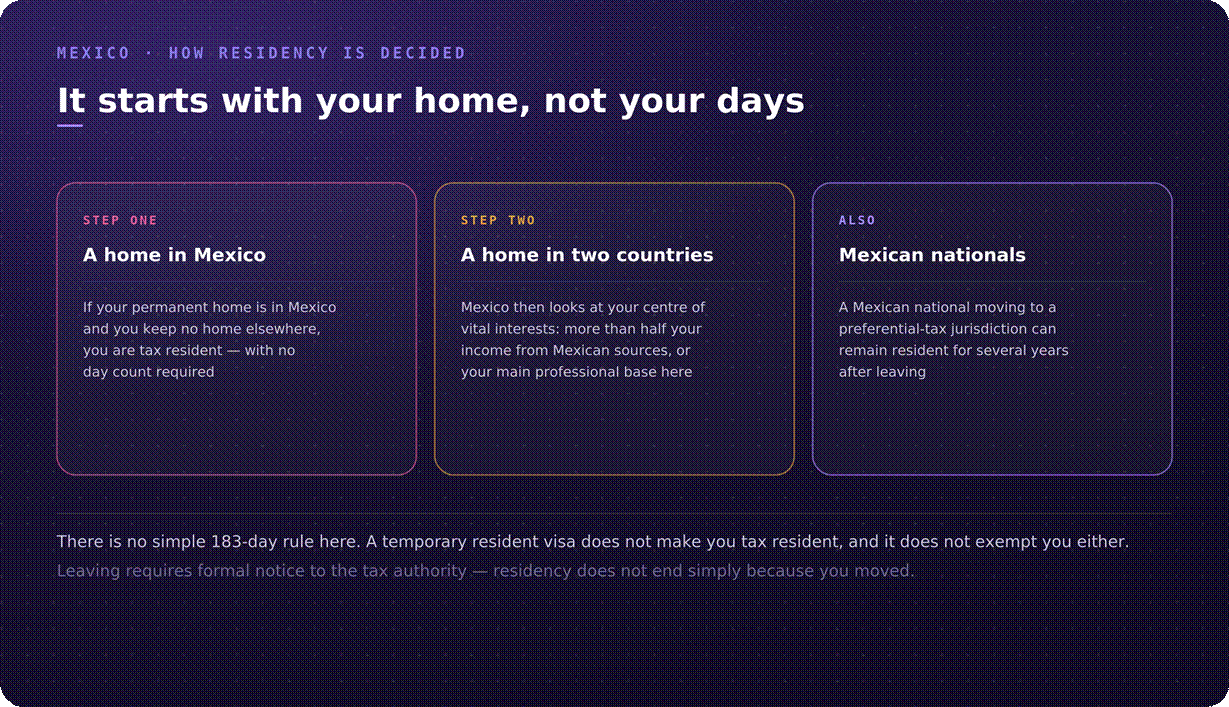
Mexico starts with your home, not with a day count.
How Mexican residency is actually decided
This is where most guidance goes wrong. Mexico does not lead with a 183-day rule. It leads with your home.
Trigger | How it works |
A home in Mexico only | You are tax resident, with no day count required |
A home in Mexico and abroad | Centre of vital interests decides it |
Centre of vital interests | Over half your income from Mexican sources, or your main professional base |
Mexican nationals | Moving to a preferential-tax jurisdiction may not end residency immediately |
Holding a residence permission | Immigration status only — it decides nothing for tax |
If your permanent home is in Mexico and you maintain no home in another country, you are tax resident — regardless of how many days you actually spent there. If you have homes in more than one country, Mexico then looks at your centre of vital interests, which turns on whether more than half your income comes from Mexican sources, or whether your principal centre of professional activities is in Mexico.
The day count is supporting evidence, not the test. Spending fewer than 183 days in Mexico does not guarantee non-residency if your home and your centre of life point there. Conversely, a long stay without a permanent home available to you does not automatically make you resident. This is the opposite of how most countries work, and it catches people out in both directions.
A home for these purposes means permanent housing at your disposal. Short-term accommodation usually does not constitute one, and owning an investment property that is not available for your habitual use is a different thing again.
Keep detailed records of your days in Mexico, your accommodation, where you work, your travel, and your tax residency elsewhere. If the position is ever questioned, those records are what you will be relying on.
What changes if you cross the line
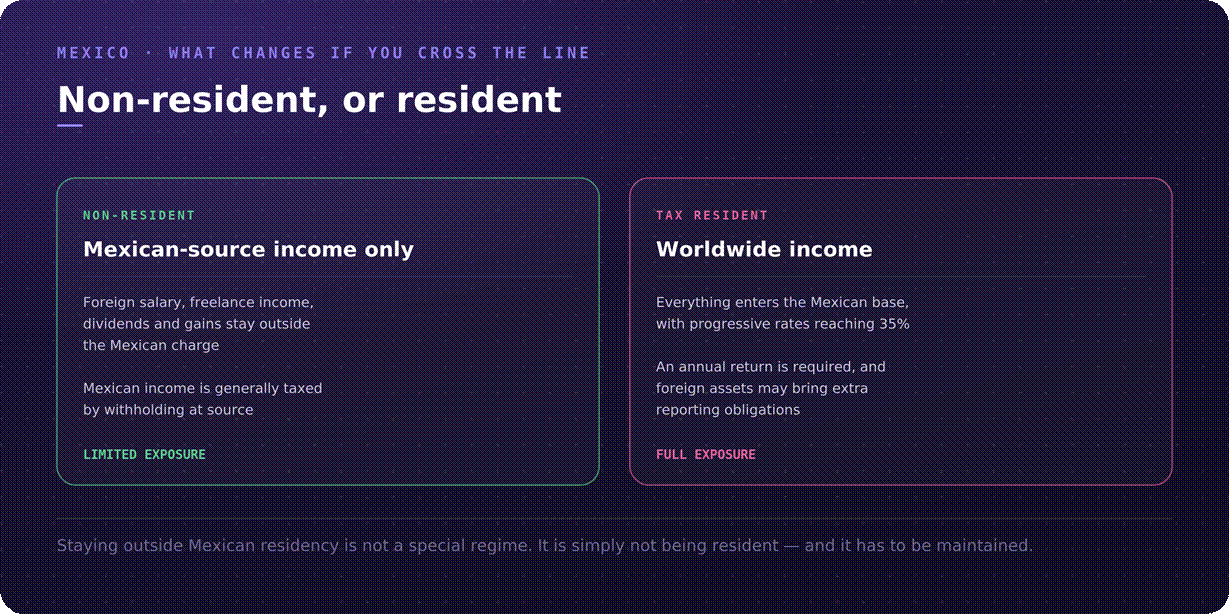
The difference between the two positions is substantial.
If you become tax resident, Mexico generally taxes your worldwide income, with progressive rates reaching 35%. Your taxable income may include both Mexican and foreign amounts, subject to exemptions, deductions, foreign tax credits and treaty provisions. Investment income and gains should be reviewed separately, since treatment depends on the asset, the source and how the transaction is structured. Additional reporting may apply where you hold foreign assets or receive income connected with preferential tax regimes.
If you remain non-resident, Mexico taxes Mexican-source income only, generally collected by withholding at source. Foreign salary, freelance income, dividends and gains stay outside the Mexican charge.
Case study: Mark plans his relocation
Mark works remotely for a company based outside Mexico. He plans to spend time in Mexico while keeping his home, primary work base and tax residency elsewhere.
If he genuinely remains a Mexican non-resident, his foreign salary stays outside the Mexican charge — not because of any permission he holds, but because he is not resident. He should document his home arrangements abroad, travel days, where his duties are performed, his tax residency elsewhere and the source of his income, and confirm whether any Mexican-source income arises during his stay.
The result changes if he establishes his only available home in Mexico or moves his professional base there. At that point the residence model applies and his worldwide income may become taxable.
Where your work is performed
Do not assume that a foreign bank account or payment from a foreign company makes income foreign-source. Where you physically perform work can affect the source of employment or business income even where the employer, company or client is overseas — the same principle that applies in most countries.
Leaving is a formal step
Residency does not end because you moved. Where you cease to be a Mexican tax resident, formal notice to the tax authority is generally required within a defined period before the change takes effect. Failing to file it can leave you presumptively resident. Mexican nationals moving to a preferential-tax jurisdiction can also remain within the Mexican net for a number of years after leaving.
If you have registered with the Mexican tax authority, keep your registration current and any pending returns filed, because a residency change can prompt a review. Obtain a tax residency certificate from your new country as soon as you are eligible, and keep records evidencing the shift — a foreign employment contract, lease, utility bills and your immigration status.
Treaties and filing
Mexico has an extensive treaty network, which can allocate taxing rights and reduce or eliminate Mexican tax that would otherwise apply. Treaties also contain tie-breaker tests where two countries both treat you as resident.
Mexico uses the calendar year. Residents file an annual return, generally due by 30 April of the following year, and provisional payments may apply where you have self-employment income. Non-residents are usually dealt with through withholding at source rather than an annual return.
Your checklist
1. Decide, honestly, whether you intend to make Mexico your home — that is the question that matters;
2. Identify where your permanent home is, and whether you maintain one elsewhere;
3. Work out where your centre of vital interests sits;
4. Keep records of days, accommodation, work location and travel;
5. Establish where your work is physically performed;
6. Confirm whether any Mexican-source income arises;
7. Check your residency position in the country you are leaving;
8. Review the applicable treaty;
9. If you register with the Mexican tax authority, keep it current; and
10. File the formal notice if and when your residency changes.
Frequently asked questions
Is there a four-year exemption on foreign income for new arrivals?
No. Mexican tax law contains no such relief. Foreign income stays outside the Mexican charge only while you are genuinely not a Mexican tax resident.
So how do I become a Mexican tax resident?
Principally by having your permanent home in Mexico. If you have a home in Mexico and none elsewhere, you are resident with no day count needed. With homes in two countries, your centre of vital interests decides it.
What is the centre of vital interests test?
It looks at whether more than half your income comes from Mexican sources, or whether your principal centre of professional activities is in Mexico. Family and social ties form part of the wider picture.
Is there a 183-day rule at all?
Not as the primary test. Days spent in Mexico are supporting evidence rather than the determining factor, which is the reverse of how most countries approach it.
Does holding a residence permission make me tax resident?
No — but it raises the question. Immigration and tax records are increasingly cross-referenced, so asserting non-residency while holding a residence card needs solid documentation behind it.
What rate applies if I am resident?
Progressive rates reaching 35% on worldwide income, with an annual return generally due by 30 April and possible provisional payments during the year.
What if I only have Mexican-source income as a non-resident?
It is generally taxed through withholding at source rather than an annual return, at rates that depend on the type of income. A treaty may reduce them.
How do I stop being a Mexican tax resident?
By genuinely changing your circumstances and filing the formal notice of change of tax residency within the required period. Simply leaving does not update the position, and Mexican nationals moving to low-tax jurisdictions face additional rules.
Official sources and further reading
Important information
This article is general information and does not constitute tax, legal, immigration or financial advice, and does not create a client relationship. Tax outcomes depend on travel history, income sources, treaty status and the law applying to the relevant year. Rates, thresholds and regimes change, and some measures described may be proposed rather than enacted; this article reflects our understanding as at the date of publication. Obtain advice from a suitably qualified professional before acting or refraining from action.
