
France gives inbound employees up to nine years of partial exemption, and a separate relief from its property wealth tax. The two run on different clocks and different conditions, and most people claim only one.
France has a reputation as a high-tax country, and for a resident on ordinary rules that reputation is broadly deserved. What is less well known is the régime des impatriés, which for a qualifying inbound employee can shelter a substantial part of a package for the better part of a decade.
The regime sits in Article 155 B of the Code général des impôts. Alongside it, and frequently missed, is a partial exemption from the impôt sur la fortune immobilière — the IFI, France’s property wealth tax — which limits the charge to French real estate for new arrivals.
France taxes residents on worldwide income. Residence under Article 4 B turns on having your household or principal place of stay in France, carrying on a professional activity there, or having the centre of your economic interests in France. Any one is enough.
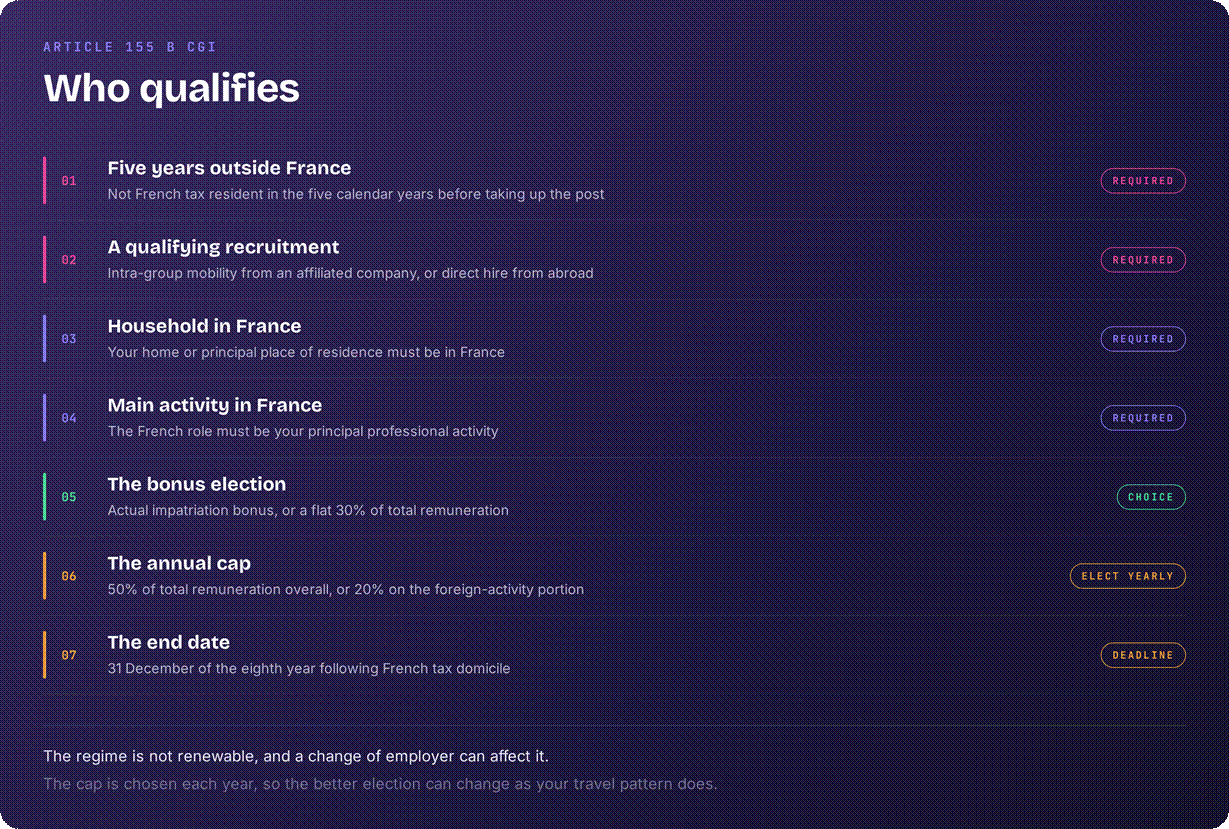
Every condition must be met — the regime is narrower than the reliefs suggest.
Your residency status is the first step
Under Article 4 B you are French tax resident if your foyer — your household, broadly where your family habitually lives — or your principal place of stay is in France; or if you carry on a professional activity in France other than incidentally; or if the centre of your economic interests is in France.
These are alternatives, not cumulative, and the household limb is the one that catches people. Someone working abroad whose spouse and children remain in France can be French resident regardless of their own day count. The 183-day figure that dominates popular guidance does not appear in the domestic test at all — it belongs to treaty tie-breakers.
Maintain accurate records of:
• Where your household habitually lives, and from what date;
• Days spent in France, even though no statutory day test applies;
• The date you took up your post, since the regime runs from it;
• Evidence of non-residence in the five calendar years beforehand;
• The location and value of real estate held anywhere in the world; and
• Any other country that may also treat you as resident.
What the impatriate regime exempts
For a qualifying employee, three categories of income are partially or wholly exempt from French income tax:
Income | Treatment under Article 155 B |
Impatriation bonus | Exempt — actual amount, or a 30% flat-rate election |
Pay for activity performed abroad | Exempt, where in the employer’s interest |
Foreign investment income | 50% exempt |
Foreign capital gains | 50% exempt |
Foreign intellectual property income | 50% exempt |
French salary generally | Taxable on ordinary rules |
French-source investment income | Taxable on ordinary rules |
Where the employment contract does not fix an impatriation bonus, it can be assessed at a flat 30% of total remuneration, which is often more generous than an itemised figure and removes an argument with the administration.
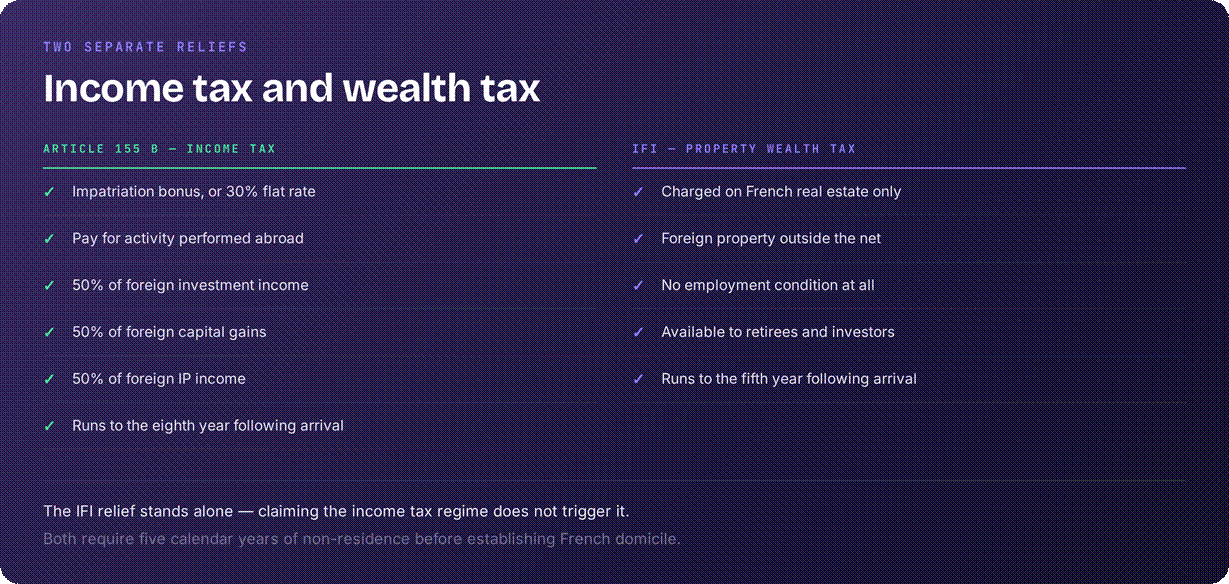
Two reliefs, two clocks, two sets of conditions.
The caps, and the annual election
The exemptions on the bonus and the foreign-activity portion are capped, and the taxpayer chooses which cap applies each year:
• An overall cap, under which the bonus and the foreign-activity exemption together cannot exceed 50% of total remuneration; or
• A cap on the foreign-activity portion alone, which cannot exceed 20% of taxable remuneration net of the impatriation bonus.
Because the election is annual, the better answer depends on how much of the year was spent working abroad. Someone whose travel pattern changes materially between years should re-run the comparison rather than repeating last year’s choice.
Who qualifies, and for how long
You must have been tax resident outside France for the five calendar years before the year you take up your post, and you must be recruited either through intra-group mobility from an affiliated company abroad, or directly from abroad by a company established in France. You must then have your household or principal residence in France and your main activity there.
The regime applies for each year of French residence up to 31 December of the eighth year following the year you established French tax domicile — so up to nine calendar years in practice. It is not renewable, and a change of employer can affect it depending on the circumstances.
The IFI relief, which stands on its own
France’s wealth tax applies only to real estate. A French resident is normally charged on worldwide property above the threshold; a non-resident only on French property.
Anyone who was not French tax resident in the five calendar years before establishing residence is taxable on French real estate only, for the year of arrival and the five following years. In effect they stay on the non-resident basis while living in France.
No employment condition attaches to this relief. It is available to people who never qualified for the income tax regime — a retiree, an investor, someone self-employed. If you moved to France in the last few years and own property abroad, it is worth checking whether this was claimed.
Case study: Anneke claims one relief and misses the other
Anneke moves from Amsterdam to Lyon to join a French subsidiary of her employer. Her adviser sets up the impatriate regime on her salary, correctly.
She also owns two apartments in the Netherlands. Those sit inside the IFI net on the ordinary rules, and nobody raises the separate five-year relief that would exclude them. She pays wealth tax she did not owe for three years before the position is picked up.
The two reliefs are in different parts of the code and are administered separately. Claiming one does not prompt anyone to consider the other.
Filing and the compliance calendar
The French tax year follows the calendar year. Income tax has been withheld at source since 2019 through the prélèvement à la source, but that does not remove the return — an annual declaration is still required, filed online in the spring with deadlines staggered by département.
Prepare in good time:
• Your employment contract and any impatriation bonus clause;
• A record of workdays performed outside France and the employer’s purpose;
• Evidence of non-residence in the five preceding calendar years;
• Foreign investment income and gains statements;
• Valuations of real estate held anywhere in the world for IFI; and
• Any treaty position you intend to claim.
Timing matters, and so does the exit
Model your position before you move, considering:
• Whether your recruitment route fits one of the two qualifying forms;
• Whether the 30% flat-rate bonus election beats an itemised figure;
• Which cap suits your expected pattern of foreign workdays;
• Whether the IFI relief applies to you independently of the regime;
• What happens in year ten, when ordinary rules apply in full;
• Whether French residence would arise through your household regardless of days; and
• Whether France’s exit tax on substantial shareholdings would reach you on departure.
Your France checklist
1. Confirm five calendar years of non-residence before taking up the post;
2. Check your recruitment route against the two qualifying forms;
3. Compare the 30% flat-rate bonus against an itemised amount;
4. Record foreign workdays and the employer’s purpose for each trip;
5. Re-run the cap election every year rather than repeating it;
6. Check the IFI relief separately, whatever your employment position;
7. Value worldwide real estate before the first IFI declaration;
8. Note the household limb of Article 4 B if your family is in France;
9. Diarise 31 December of the eighth year following arrival; and
10. Review the exit tax position before any later departure.
Frequently asked questions
How long does the impatriate regime last?
Until 31 December of the eighth year following the year you established French tax domicile, so up to nine calendar years in practice. It is not renewable.
What exactly is exempt?
The impatriation bonus, the portion of pay relating to activity carried out abroad in the employer’s interest, and 50% of foreign investment income, foreign capital gains and foreign intellectual property income. French salary generally remains taxable.
What if my contract does not specify an impatriation bonus?
It can be assessed at a flat 30% of total remuneration. That is frequently more generous than an itemised figure and avoids a dispute about quantum.
How do the caps work?
You elect annually between an overall cap, where the bonus and foreign-activity exemptions together cannot exceed 50% of total remuneration, or a cap on the foreign-activity portion alone at 20% of remuneration net of the bonus.
Is the wealth tax relief part of the same regime?
No, and this is the most commonly missed point. The IFI relief is separate, has no employment condition, and limits the charge to French real estate for the year of arrival and the five following years.
Can I claim the IFI relief if I am retired?
Yes. The only condition is that you were not French tax resident in the five calendar years before establishing residence. Employment is irrelevant to it.
Does the 183-day rule decide French residence?
Not domestically. Article 4 B looks at your household or principal place of stay, your professional activity and your centre of economic interests. The 183-day figure belongs to treaty tie-breakers, not the domestic test.
What happens when the regime ends?
Ordinary rules apply in full — worldwide income at progressive rates, and worldwide real estate within IFI once the separate five-year relief has also expired. The two end in different years, so plan for both.
Official sources and further reading
• Direction générale des Finances publiques — impots.gouv.fr
• impots.gouv.fr guidance on the special expatriate tax regime
Important information
This article is general information and does not constitute tax, legal, immigration or financial advice, and does not create a client relationship. Tax outcomes depend on travel history, income sources, treaty status and the law applying to the relevant year. Rates, thresholds and regimes change, and some measures described may be proposed rather than enacted; this article reflects our understanding as at the date of publication. Obtain advice from a suitably qualified professional before acting or refraining from action.
