
Georgia does not tax an individual on foreign income, and charges registered sole traders 1% on turnover. The interesting question is which of those two treatments your income actually falls under.
Georgia has become one of the most discussed bases for independent workers, and for two separate reasons that are frequently run together. The first is that foreign-source income of an individual is outside the Georgian charge altogether. The second is a small business status taxing a registered sole trader at 1% of turnover.
They are different reliefs doing different jobs. The territorial rule removes foreign income from the tax base. The 1% status applies a very low rate to Georgian-source business turnover. Whether your income sits in one or the other depends on source, and that is the question worth resolving before you arrive rather than afterwards.
Georgian-source income of an individual outside any special status is taxed at a flat 20%.
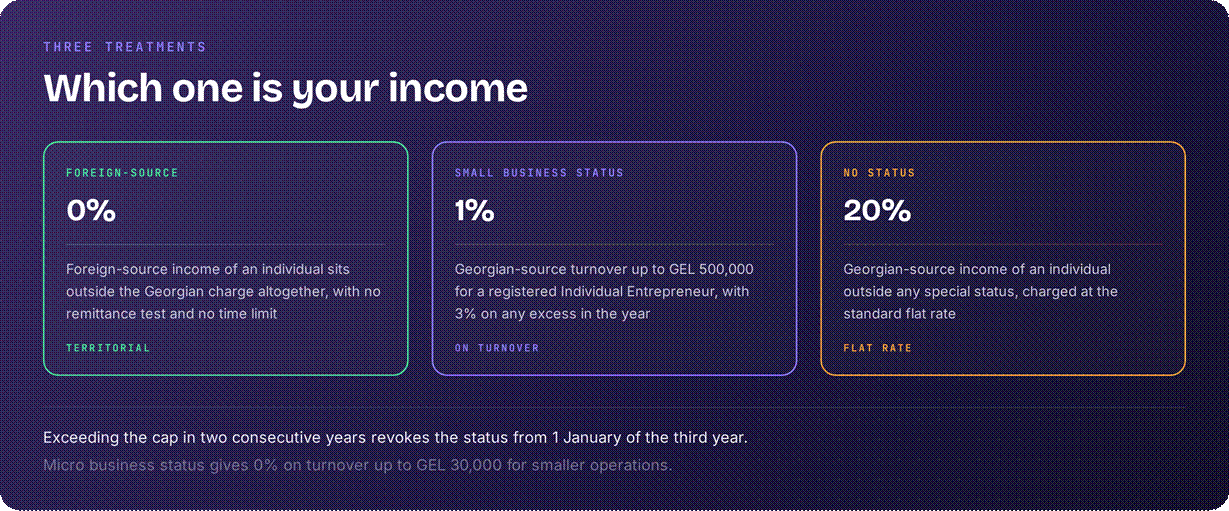
Three treatments, and source decides which applies.
Your residency status is the first step
You are Georgian tax resident by being present for 183 days or more in any continuous twelve-month period ending in the tax year. There is also a high net worth route allowing a residency certificate without meeting the day count, on defined conditions.
Registration as an Individual Entrepreneur is separate from residence, quick to complete, and does not itself require you to be resident. That separation is one reason Georgia is easy to set up in, and also one reason people end up with a registration that does not match their actual position.
Maintain accurate records of:
• Days present across rolling twelve-month periods;
• Where services were physically performed, and for whom;
• Turnover by year, tested against the status threshold;
• The date small business status was granted;
• Monthly filings, including nil filings from 2026; and
• Any other country that may also treat you as resident.
The three treatments
Income | Georgian treatment |
Foreign-source income of an individual | Outside the charge |
Georgian-source turnover with small business status | 1% up to GEL 500,000 |
Turnover above that threshold in the year | 3% on the excess |
Micro business status | 0% on turnover up to GEL 30,000 |
Agrotourism activity | Higher threshold of GEL 700,000 |
Georgian-source income without a status | 20% flat |
Georgian-source dividends and interest | 5% withholding |
💡 Exceeding the cap does not cost you the status immediately. Turnover above GEL 500,000 in a year is taxed at 3% on the excess and you keep the status to the year end. Exceed it in two consecutive years and the status is revoked automatically from 1 January of the third year.
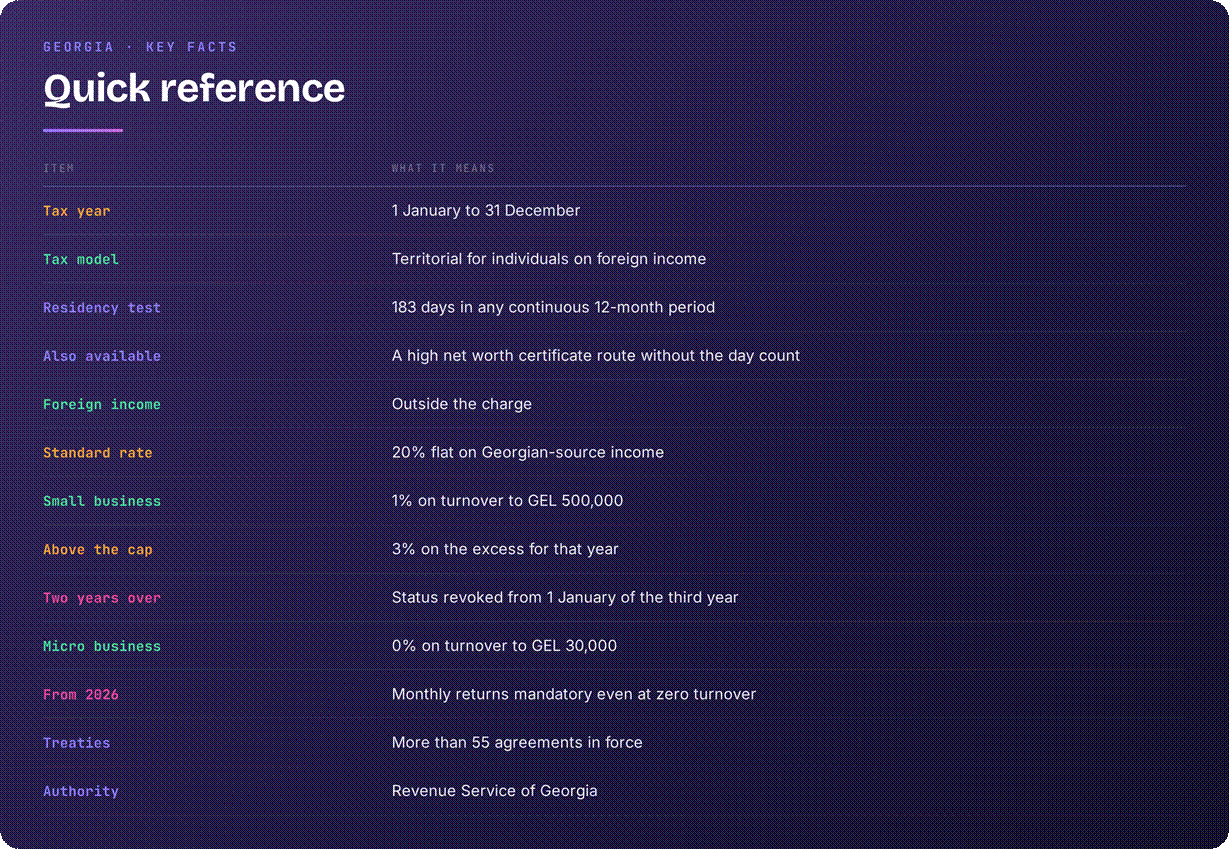
The Georgian position at a glance.
Where source becomes the whole question
For a freelancer invoicing clients abroad while sitting in Tbilisi, the two reliefs point in different directions. If the income is foreign-source, the territorial rule takes it outside the charge entirely and the 1% is irrelevant. If it is Georgian-source, the 1% status is what keeps the rate low.
The Revenue Service has historically applied the territorial exemption broadly for foreign remote workers, which has made the question feel settled in practice. It is not settled in principle, and the analysis turns on where the work is performed rather than on where the client or the payment sits.
The practical answer for most independent workers is to register as an Individual Entrepreneur with small business status and pay 1% on the turnover, which is low enough that the source argument rarely needs to be won. That is a pragmatic choice rather than a technical one, and it is worth understanding it as such.
The 2026 filing change
Previously, a small business status holder with no turnover in a month simply did not file, and the absence of a filing was treated as a nil return. That changed. Failure to file a monthly return is now a tax offence subject to a fine, whether or not there was any income.
Small business status also now takes effect from the date of application rather than from a later period, so income from that date is taxed at 1% immediately. Registration can be completed quickly, which means the gap between arriving and being inside the regime can be very short.
Case study: Nia files nothing for four months
Nia registers as an Individual Entrepreneur with small business status in January and invoices nothing until May while she builds her client base. Under the old practice she would have filed nothing for those months without consequence.
Under the 2026 rules each missed monthly return is a separate offence attracting a fine, regardless of the zero turnover. Her first tax problem in Georgia arrives before her first invoice does.
The obligation is administrative rather than financial, which is precisely why it gets overlooked. Nobody chases a filing that produces no tax.
Filing and the compliance calendar
The Georgian tax year follows the calendar year and the Revenue Service administers the system electronically. Small business status holders file monthly; other taxpayers follow the annual cycle for their category.
Georgia has a treaty network of more than 55 agreements, and a residency certificate is obtainable for treaty purposes. Prepare in good time:
• Individual Entrepreneur registration and status documentation;
• Monthly turnover records for each filing;
• Contracts and invoices evidencing where work was performed;
• Day counts across rolling twelve-month periods;
• A residency certificate, if you need one for treaty purposes; and
• Evidence supporting the source treatment of any foreign income.
Get the source position straight first
Model your position before you register, considering:
• Whether your income is genuinely foreign-source or arises from work performed in Georgia;
• Whether the 1% status is worth taking regardless, for certainty;
• How close your turnover runs to the GEL 500,000 threshold;
• Whether two consecutive years above it is a realistic risk;
• Whether micro business status at 0% fits a smaller operation;
• Whether you will meet the 183-day test or need the certificate route; and
• Whether your former country accepts that you have left.
Your Georgia checklist
1. Resolve whether your income is foreign-source or arises from work performed in Georgia;
2. Decide whether to take the 1% status for certainty regardless;
3. Register as an Individual Entrepreneur before invoicing;
4. Note that the status now runs from the date of application;
5. File a monthly return every month, including nil months;
6. Track turnover against the GEL 500,000 threshold through the year;
7. Watch for a second consecutive year above the cap;
8. Count days across rolling twelve-month periods;
9. Obtain a residency certificate if you need one for a treaty; and
10. Keep evidence of where work was physically performed.
Frequently asked questions
Does Georgia tax foreign income?
Not for individuals. Foreign-source income of an individual falls outside the Georgian charge entirely, with no remittance test and no time limit. Georgian-source income is taxed at a flat 20% outside any special status.
What is the 1% small business status?
A regime for registered Individual Entrepreneurs taxing Georgian-source turnover at 1% up to GEL 500,000 a year, with 3% on any excess within the year. Micro business status gives 0% on turnover up to GEL 30,000.
What happens if I exceed the threshold?
The excess in that year is taxed at 3% and you keep the status to the year end. If you exceed it in two consecutive years, the status is revoked automatically from 1 January of the third year.
I invoice foreign clients from Tbilisi. Which rule applies?
That is the question source analysis decides, and it turns on where the work is performed rather than where the client sits. The Revenue Service has historically applied the territorial exemption broadly, but most independent workers take the 1% status for certainty rather than relying on the argument.
What changed in 2026?
Monthly returns became mandatory for small business status holders even where turnover is zero — failure to file is now an offence attracting a fine, rather than being treated as a nil return. Small business status also now takes effect from the date of application.
Do I need to be resident to register as an Individual Entrepreneur?
No. Registration is separate from tax residence and can be completed quickly without being resident, which is part of why Georgia is straightforward to set up in.
How do I become Georgian tax resident?
By being present for 183 days or more in any continuous twelve-month period ending in the tax year. There is also a high net worth route allowing a residency certificate without meeting the day count, on defined conditions.
Does Georgia have tax treaties?
Yes, more than 55 agreements are in force, and a residency certificate is obtainable for treaty purposes. That matters for the tie-breaker if another country also claims you as resident.
Official sources and further reading
Important information
This article is general information and does not constitute tax, legal, immigration or financial advice, and does not create a client relationship. Tax outcomes depend on travel history, income sources, treaty status and the law applying to the relevant year. Rates, thresholds and regimes change, and some measures described may be proposed rather than enacted; this article reflects our understanding as at the date of publication. Obtain advice from a suitably qualified professional before acting or refraining from action.
