
Hungary has charged a flat 15% on personal income since 2011. What makes the system distinctive is not the rate but the exemptions stacked on top of it, several of which take the bill to zero.
Hungary applies a flat 15% personal income tax across employment income, business income, capital gains, dividends and rental income alike. There are no brackets, no top rate and no phase-outs. It has been 15% since 2011 and the simplicity is genuine.
What is not simple is everything built on top. Hungary has assembled one of the most extensive sets of personal exemptions in Europe, aimed at young workers and at families, and for a qualifying individual they do not reduce the rate — they remove the liability entirely.
The government has described the current programme as the largest tax cut in Europe. Whether or not that holds up, the effect for eligible people is substantial: employees under 25 pay no income tax up to the gross national average wage, and mothers in several categories pay none at all.
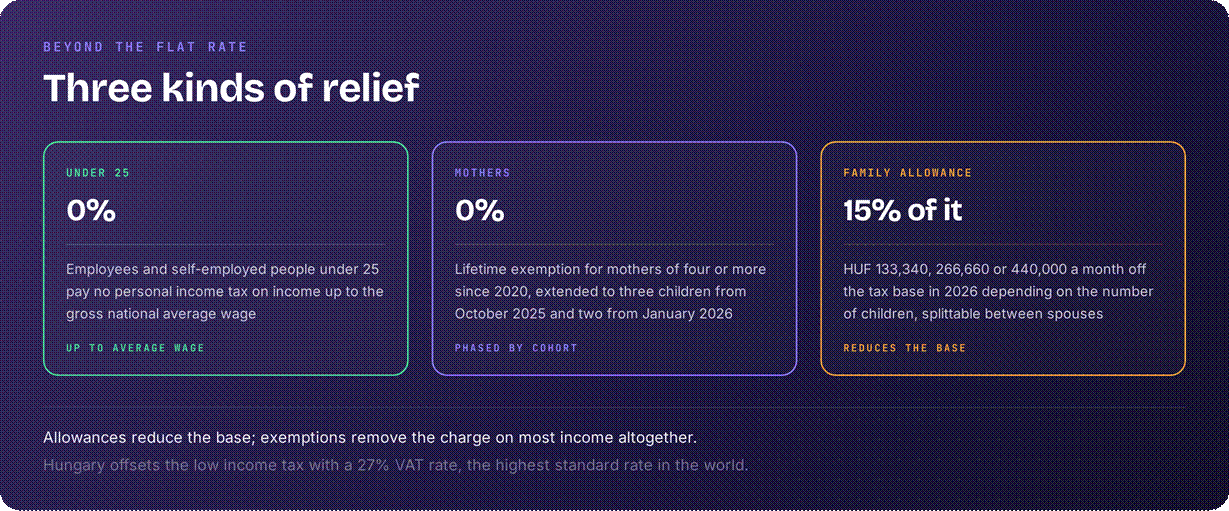
Three routes to a lower bill, and two of them reach zero.
Your residency status is the first step
Hungarian tax residence follows citizenship, a permanent home, a centre of vital interests, or a habitual abode of 183 days or more in the calendar year. The citizenship limb is unusual: a Hungarian citizen is generally treated as resident, with a narrow exception for dual nationals without a Hungarian address.
For a non-citizen arriving, the ordinary tests apply. Residents are taxed on worldwide income; non-residents on Hungarian-source income.
Maintain accurate records of:
• Days present in Hungary in the calendar year;
• Whether you hold a permanent home in Hungary;
• Where your centre of vital interests lies;
• Your age, and that of any children, for the exemptions;
• Entitlement to family allowance, which several exemptions key off; and
• Any other country that may also treat you as resident.
The tax exemptions
Relief | What it does |
Under-25 exemption | No income tax up to the gross national average wage |
Mothers under 30 | Comparable exemption, broadened from 2026 |
Mothers of four or more | Lifetime exemption under the NÉTAK scheme |
Mothers of three | Lifetime exemption, from October 2025 |
Mothers of two | Exemption phased in from January 2026, with age conditions |
Family allowance, one child | HUF 133,340 a month off the tax base in 2026 |
Family allowance, two children | HUF 266,660 a month |
Family allowance, three or more | HUF 440,000 a month |
🧑🧑🧒🧒 The family allowance reduces the base, not the tax. The saving is 15% of the allowance amount, and it can be split between spouses. The mothers’ exemptions work differently — they remove the charge on most income altogether rather than reducing what it is calculated on.
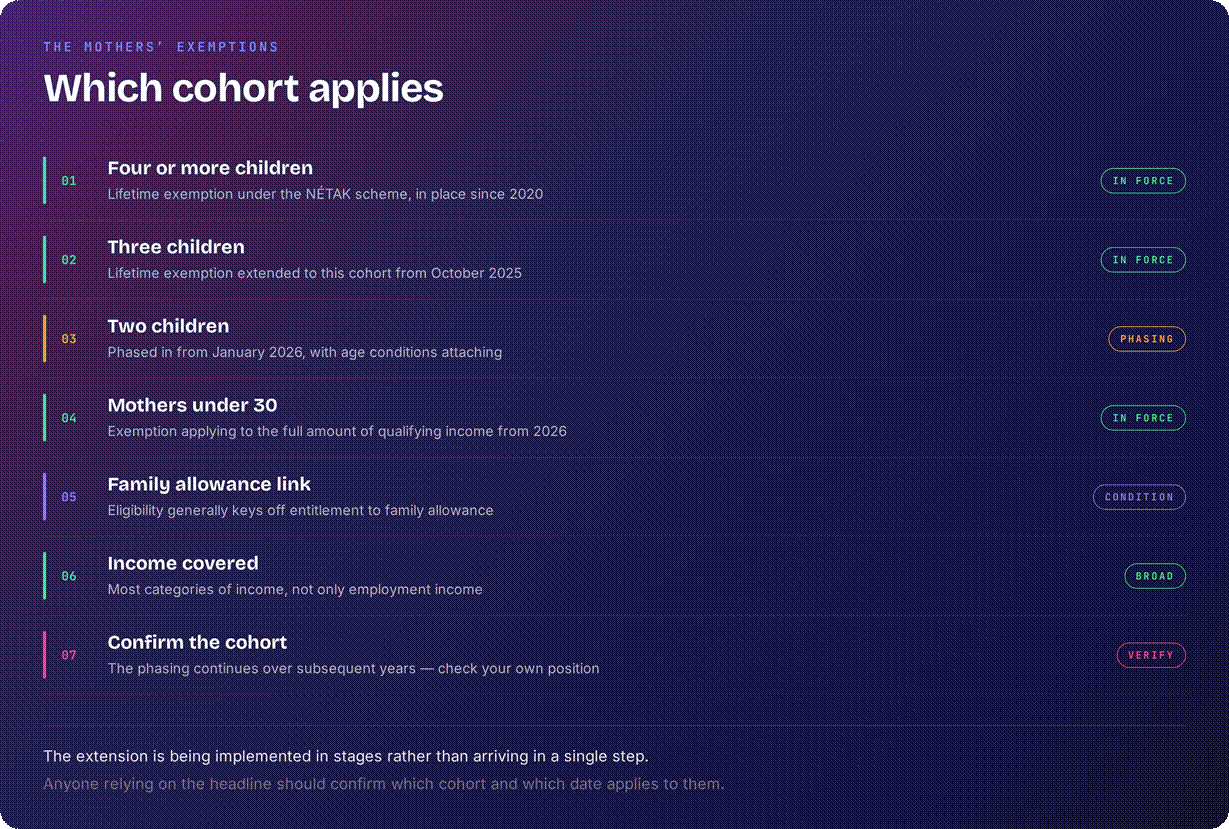
The conditions attaching to the mothers’ exemptions.
The under-25 exemption
Employees and self-employed people under the age of 25 pay no personal income tax on income up to the gross national average wage. It is among the most generous youth incentives in Europe and it applies automatically to qualifying income rather than requiring a claim.
For a young professional relocating to Budapest, that materially changes the comparison against Western European cities, at least until their twenty-fifth birthday.
The mothers’ exemptions
Hungary has granted a lifetime personal income tax exemption to mothers raising four or more children since 2020, under the NÉTAK scheme. In 2025 the government announced an extension: mothers of three children from October 2025, and mothers of two children from January 2026.
The extension is being phased rather than applied at once, and age conditions attach — reporting indicates the two-child exemption runs to age 40 in its initial form, with the phasing continuing over subsequent years. Because the detail is being implemented in stages, anyone relying on it should confirm which cohort they fall into rather than assuming the headline applies to them today.
Separately, mothers under 30 receive an exemption, which from 2026 applies to the full amount of qualifying income rather than being subject to a fixed monthly cap.
Case study: two employees, one salary
Anna is 23, working in Budapest on a salary at around the national average. Her personal income tax is nil under the under-25 exemption, and she keeps 15% more of her gross than a colleague on identical pay.
Bea is 34 with two children. From 2026 she falls within the phased exemption for mothers of two, and her income tax on most categories of income is removed rather than reduced. Before the change, her relief came through the family allowance, which reduced her base by HUF 266,660 a month and saved her 15% of that.
Same employer, same salary, entirely different outcomes — and in Bea’s case the outcome changed because of legislation rather than anything she did.
What the headline rate leaves out
Hungary funds its low income tax through consumption. The standard VAT rate is 27%, the highest in the world, with reduced rates on some categories. For anyone modelling a move, that is a substantial and unavoidable cost that a 15% income tax figure conceals.
Mandatory contributions also apply on employment income and are administered alongside the income tax. They follow their own rules and are outside the scope of this article, but they are a material part of the total burden and should not be omitted from a comparison.
Filing and the compliance calendar
The Hungarian tax year follows the calendar year. The annual return is due by 20 May of the following year, with payment generally due on the same date. Quarterly advance payments are required for income not subject to withholding.
The tax authority prepares a draft return for many taxpayers, which can be accepted or amended. Exemptions and allowances are claimed through the employer via monthly declarations or on the annual return.
Check which cohort you fall into
Consider:
• Whether you are under 25, and how long that will remain true;
• Whether any mothers’ exemption applies to you, and from which date;
• Which phase of the two-child extension you fall into;
• Whether the family allowance is the better relief in the meantime;
• That allowances reduce the base while exemptions remove the charge;
• What 27% VAT does to your cost of living; and
• Whether Hungarian citizenship would make you resident regardless.
Your Hungary checklist
1. Establish whether the under-25 exemption applies, and until when;
2. Check which mothers’ cohort you fall into, and from what date;
3. Confirm entitlement to family allowance, which several reliefs key off;
4. Use the family allowance where an exemption does not yet apply;
5. Claim reliefs through the employer or on the annual return;
6. Remember allowances reduce the base rather than the tax;
7. Factor 27% VAT into any cost-of-living comparison;
8. Check whether Hungarian citizenship would make you resident;
9. Review the tax authority’s draft return rather than accepting it blindly; and
10. Diarise 20 May for filing and payment.
Frequently asked questions
What is the Hungarian income tax rate?
A flat 15% across employment income, business income, capital gains, dividends and rental income. There are no brackets and no top rate, and the rate has been unchanged since 2011.
What is the under-25 exemption?
Employees and self-employed people under 25 pay no personal income tax on income up to the gross national average wage. It applies automatically to qualifying income rather than requiring a claim.
Are mothers exempt from income tax?
Increasingly. Mothers of four or more children have had a lifetime exemption since 2020 under NÉTAK. That was extended to mothers of three from October 2025 and mothers of two from January 2026, with age conditions and phasing.
How do I know which cohort I am in?
The extension is being implemented in stages over several years, so the position depends on the number of children, your age and the date. Confirm your own cohort rather than relying on a headline announcement.
What is the family allowance worth?
It reduces the tax base by HUF 133,340 a month for one child, HUF 266,660 for two and HUF 440,000 for three or more in 2026. The saving is 15% of the allowance, and it can be split between spouses.
What is the catch with a 15% flat rate?
Consumption. Hungary charges VAT at 27%, the highest standard rate in the world, and mandatory contributions apply on employment income. The income tax figure alone substantially understates the total burden.
Am I resident if I hold Hungarian citizenship?
Generally yes. Hungarian citizens are treated as tax resident, with a narrow exception for dual nationals without a Hungarian address. For non-citizens, the ordinary tests of permanent home, vital interests and 183 days apply.
When is the return due?
By 20 May of the following year, with payment generally due on the same date. Quarterly advance payments apply to income not subject to withholding, and the tax authority prepares a draft return for many taxpayers.
Official sources and further reading
Important information
This article is general information and does not constitute tax, legal, immigration or financial advice, and does not create a client relationship. Tax outcomes depend on travel history, income sources, treaty status and the law applying to the relevant year. Rates, thresholds and regimes change, and some measures described may be proposed rather than enacted; this article reflects our understanding as at the date of publication. Obtain advice from a suitably qualified professional before acting or refraining from action.
