
If you are considering moving to Italy as a remote worker, freelancer, returning Italian or internationally mobile professional, assess the impatriate regime before you establish tax residence — not after.
Italy is usually associated with a high personal tax burden. Residents are generally taxed on worldwide income, and the top rate of national income tax is 43%. But qualifying new residents may exclude half of their employment or self-employment income produced in Italy from the taxable base for five tax years.
⚠️ The regime changed in 2024. A legislative decree issued at the end of 2023 replaced the previous rules for anyone transferring tax residence from 2024 onwards. The exemption fell from 70% to 50%, an annual ceiling was introduced, and the prior non-residence requirement rose. Guidance describing a 70% or 90% exemption relates to the old regime and does not apply to new arrivals.
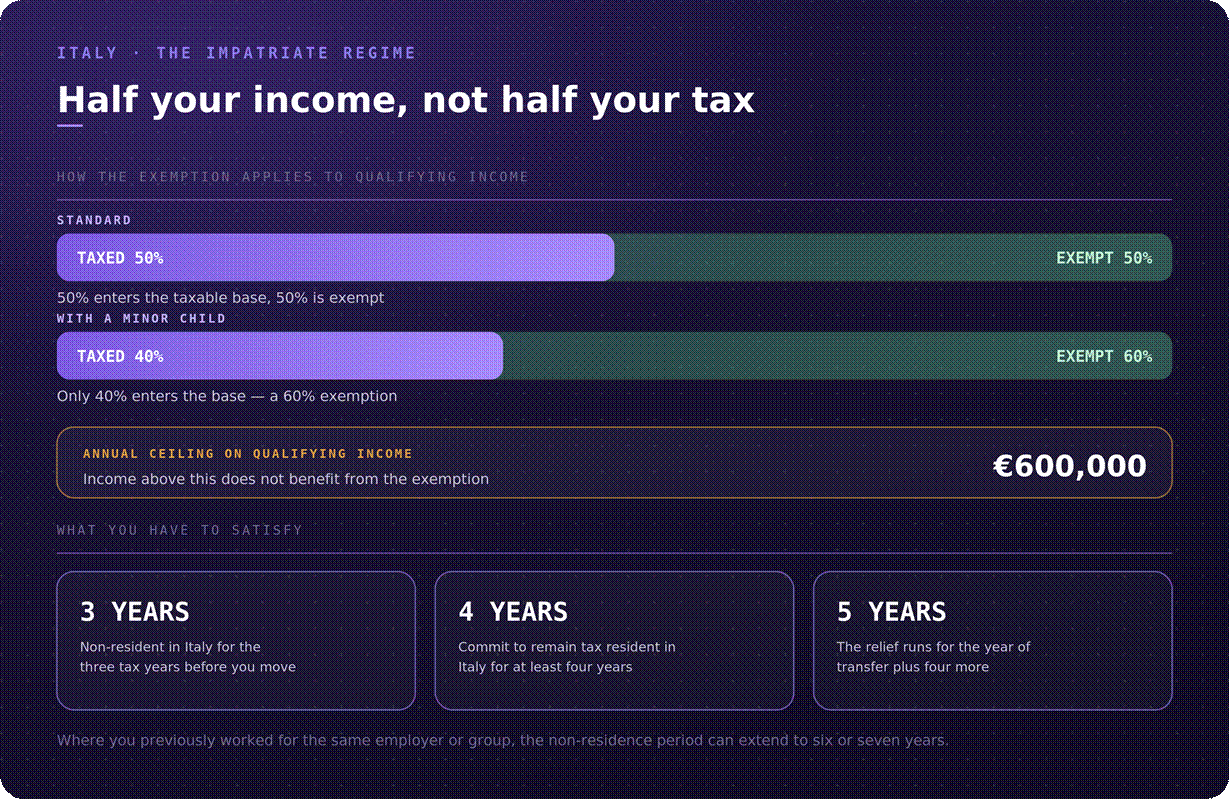
The exemption, the ceiling, and the periods you have to satisfy.
First, how Italy taxes residents
Italy follows a residence taxation model. If you are tax resident, you are generally assessed on worldwide income — employment income from an overseas employer, self-employment or freelance income, foreign dividends and interest, rental income from overseas property, and certain capital gains and investment income. If you are non-resident, you are generally taxed only on Italian-source income.
Moving to Italy therefore does not mean only your Italian income becomes relevant. Italy has 99 double taxation agreements, which allocate taxing rights and may relieve double taxation, but you should establish your residency position before moving rather than relying on a day count alone.
What the regime requires
The conditions are more demanding than they were. Broadly, you must:
• Not have been tax resident in Italy for the three tax years before your transfer;
• Transfer your tax residence to Italy and commit to remaining tax resident there for at least four years;
• Carry out the work mainly in Italy; and
• Meet the qualification or specialisation requirements that apply to the regime.
A trap for internal transfers. Where you previously worked in Italy for the same employer or the same group before moving abroad, the required period of prior non-residence extends to six or seven years rather than three. This catches people returning on an intra-group assignment.
How much is actually exempt
Qualifying income enters the Italian taxable base at 50% of its amount, so half is effectively exempt. That proportion falls to 40% — a 60% exemption — where you move to Italy with a minor child, or where a child is born or adopted during the period the regime applies.
Crucially, the relief is capped: it applies to qualifying income up to €600,000 a year. Income above that ceiling is taxed in full under the ordinary rules, which materially changes the calculation for higher earners.
Half the income is not half the tax. The regime reduces the taxable base, not the rate. Because Italian income tax is progressive, halving the base does not halve the bill — and regional and municipal surcharges apply on top.
Which income qualifies
The regime applies to employment income, income assimilated to employment, and self-employment income from arts and professions produced in Italy. It is not a general reduction across every category of personal income.
Income type | Does the impatriate regime apply? |
Employment income produced in Italy | Yes, within the annual ceiling |
Self-employment and professional income | Yes, within the annual ceiling |
Income above the annual ceiling | No — taxed in full |
Foreign dividends and interest | No — treated under the ordinary rules |
Foreign rental income | No — treated under the ordinary rules |
Capital gains | No — treated under the ordinary rules |
For a remote employee, the analysis involves your contract, your employer’s location, where you work and the portion of duties physically performed in Italy. For a freelancer, it involves where you perform services, how your activity is structured, permanent establishment risk and how the income is classified under Italian law.
Example: Mark moves from the United Kingdom to Italy
Mark has not been Italian tax resident for the three years before his move. He relocates to Milan, becomes tax resident, and earns €80,000 from qualifying self-employment.
If he satisfies the conditions, €40,000 rather than €80,000 enters the taxable base. That is not his final liability — regional and municipal taxes, deductible expenses and income classification all still apply.
How long it lasts
The relief runs for the tax year in which you transfer your residence and the four following tax years — five in total. Because Italy uses the calendar year, the timing of your arrival matters: a move late in the year still consumes one of the five, while an early move maximises the benefit of the first year.
Transitional rules have applied to people who moved in 2024 and bought a main residence in Italy within the relevant window, potentially extending the period. If you moved around that time, check whether you fall within them.
Residency is not only a day count
Physical presence matters, but the authorities may also review where you maintain a home, where your work is carried out, where your spouse or children live, where your economic interests are concentrated, where you hold assets, and whether another country also considers you resident.
Retain accurate evidence: flight records, accommodation records, utility bills, lease agreements, work calendars and anything else showing where you lived and worked.
Example: Felicity works across Europe
Felicity moves to Italy but spends substantial periods elsewhere in Europe. She keeps an apartment in Rome and performs most of her freelance work from Italy.
Her Italian accommodation, work pattern and personal connections may support Italian tax residence despite frequent travel. She should not assume short trips abroad prevent her meeting the requirements — and if another country also treats her as resident, the relevant treaty must be reviewed.
The impatriate regime and the flat tax are different things
Italy also offers a separate flat-tax option for certain new residents, under which a fixed annual charge substitutes for ordinary Italian tax on foreign-source income.
Check the current flat charge before relying on any figure. It has been increased twice since it was introduced, most recently for transfers of residence from 2026. Older articles quoting €100,000 are well out of date, and the amount that applies depends on when you moved.
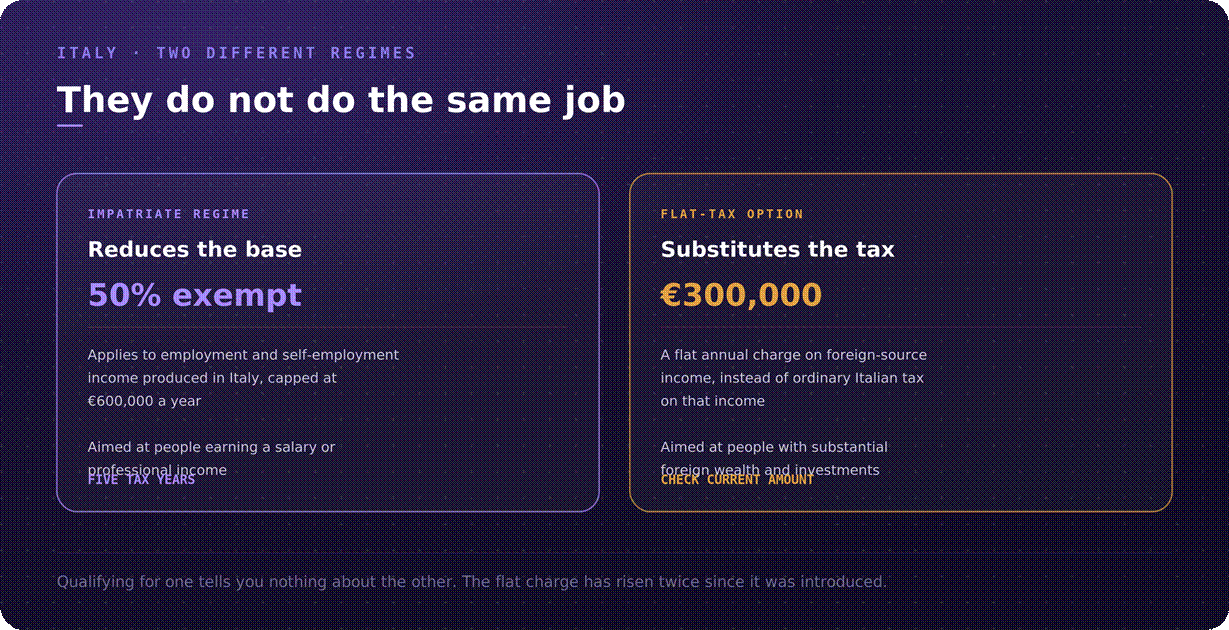
One reduces the base on Italian income; the other substitutes the tax on foreign income.
The two serve different purposes. If you earn moderate employment or freelance income in Italy, the impatriate regime is likely to be the relevant one. If you have substantial foreign investment income, the flat-tax option warrants separate consideration. Qualifying for one tells you nothing about the other.
Filing obligations
The Italian tax year runs from 1 January to 31 December, with the annual return and balancing payment generally due by 30 June following the end of the tax year. Advance payments towards the following year may also be required alongside the balance for the previous one.
Prepare payslips and annual income statements, invoices and expense records, bank and investment statements, foreign income and tax records, travel and accommodation evidence, documents supporting your previous non-residence, evidence of your Italian residence, and records relating to any treaty claim or foreign tax credit.
Employees may receive the relief through payroll arrangements; freelancers typically claim it through the Italian return.
Your checklist before moving
1. Review your residence history for the three tax years before the move — or six or seven, if the same employer or group is involved;
2. Confirm you can commit to remaining Italian tax resident for at least four years;
3. Map your travel pattern and intended presence in Italy;
4. Classify your income, separating employment, self-employment, investment and rental;
5. Check whether your income will exceed the annual ceiling;
6. Consider whether the additional exemption for those with a minor child applies;
7. Compare the impatriate regime against the flat-tax option on current figures;
8. Review whether another country may also claim taxing rights;
9. Keep contemporaneous evidence rather than reconstructing it later; and
10. Take Italian advice before claiming the relief or changing your residence position.
Frequently asked questions
Is the exemption 50%, 70% or 90%?
50% for anyone transferring tax residence from 2024 onwards, rising to 60% where you move with a minor child or have a child during the period. The 70% and 90% figures belong to the previous regime and do not apply to new arrivals.
How long must I have been outside Italy?
Three tax years before the transfer. That rises to six or seven years if you previously worked in Italy for the same employer or the same group before moving abroad.
Is there a limit on the income that benefits?
Yes — €600,000 a year of qualifying income. Anything above that is taxed in full, which is the single most commonly missed feature of the current rules.
Does the regime halve my tax bill?
No. It halves the amount of qualifying income entering the taxable base. Because rates are progressive, the reduction in tax is smaller than the reduction in base, and regional and municipal surcharges still apply.
Does it cover my foreign investment income?
No. It applies to employment and self-employment income produced in Italy. Foreign dividends, interest, rent and gains follow the ordinary rules — that is what the separate flat-tax option addresses.
How many years does it run for?
The year you transfer your residence plus the four following years. Transitional extensions applied to some people who moved in 2024 and bought a main home in Italy.
Do I have to stay in Italy afterwards?
You must commit to remaining Italian tax resident for at least four years. Leaving earlier can put the relief at risk, so treat it as a commitment rather than a year-by-year choice.
When do I file?
The tax year ends on 31 December, with the return and balancing payment generally due by 30 June following. Advance payments towards the next year may also fall due.
Official sources and further reading
• Agenzia delle Entrate — reliefs for those transferring residence to Italy
• Agenzia delle Entrate — the impatriate regime under Legislative Decree 209/2023
Important information
This article is general information and does not constitute tax, legal, immigration or financial advice, and does not create a client relationship. Tax outcomes depend on travel history, income sources, treaty status and the law applying to the relevant year. Rates, thresholds and regimes change, and some measures described may be proposed rather than enacted; this article reflects our understanding as at the date of publication. Obtain advice from a suitably qualified professional before acting or refraining from action.
