
If you are considering Jersey as a base, you need to understand more than the headline 20% income tax rate. Your result depends on your residency status, whether you are ordinarily resident, the source of your income, and whether foreign income or gains are remitted to Jersey.
Jersey can suit internationally mobile individuals because foreign income and gains may stay outside the Jersey charge while you are not ordinarily resident and the funds are not remitted. That is not automatic, and it does not stop another country taxing the same income.
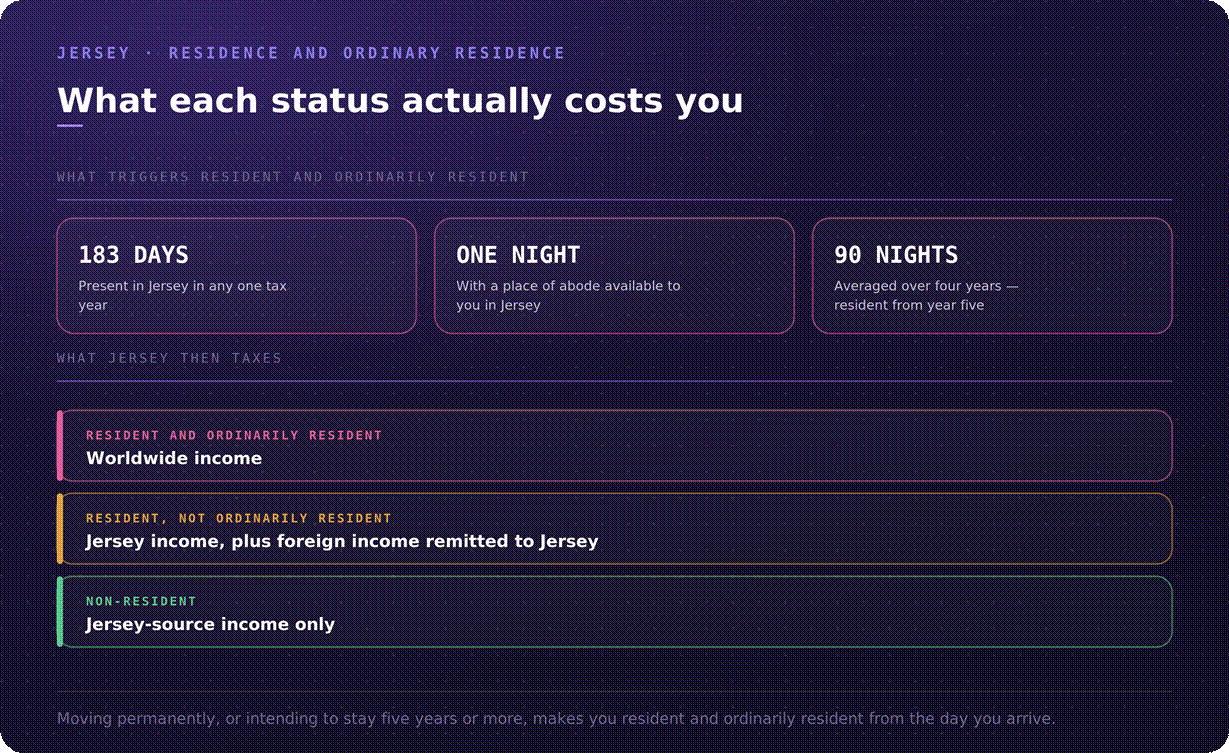
The triggers, and what each status then costs you.
Three ways to become resident and ordinarily resident
Jersey works on residence, and there are three routes into full residence:
• You are present in Jersey for 183 days in any one tax year;
• You maintain a place of abode in Jersey and stay even one night there in the tax year; or
• You do not maintain a place of abode but visit regularly, averaging more than 90 nights a year over a four-year period — in which case you become resident and ordinarily resident from the start of the fifth year.
The accommodation test is stricter than most people expect. If a property in Jersey is available for your use, a single night there in the tax year can make you resident. This is not a day count you can manage around — it turns on whether the accommodation is available to you at all.
There is a concession: someone whose centre of life is genuinely abroad, with a home and business or professional activities that keep them more or less continuously outside Jersey, may be treated as resident but not ordinarily resident — unless the average period spent in Jersey reaches or exceeds three months.
Intention matters too. If you move to Jersey permanently, or intend to live there for five years or more, you are classed as resident and ordinarily resident from the date you arrive. There is no waiting period to plan around.
What each status means for your tax
The distinction between resident and ordinarily resident, and resident but not ordinarily resident, is where the real money sits.
Residency status | What Jersey taxes |
Resident and ordinarily resident | Worldwide income |
Resident, not ordinarily resident | Jersey income, plus foreign income remitted to Jersey |
Non-resident | Jersey-source income only |
Jersey's top personal income tax rate is 20%, applying to taxable employment and self-employment income subject to the applicable rules, allowances and deductions. Jersey does not charge capital gains tax.
The rate is only part of the analysis. The more important question is which income falls within the Jersey tax base at all.
How the remittance basis works
If you are resident but not ordinarily resident, foreign income and gains may remain outside the Jersey charge while they are kept outside Jersey. Jersey-source income remains taxable throughout, foreign income remitted to Jersey may become taxable, and the position can change materially once you become ordinarily resident.
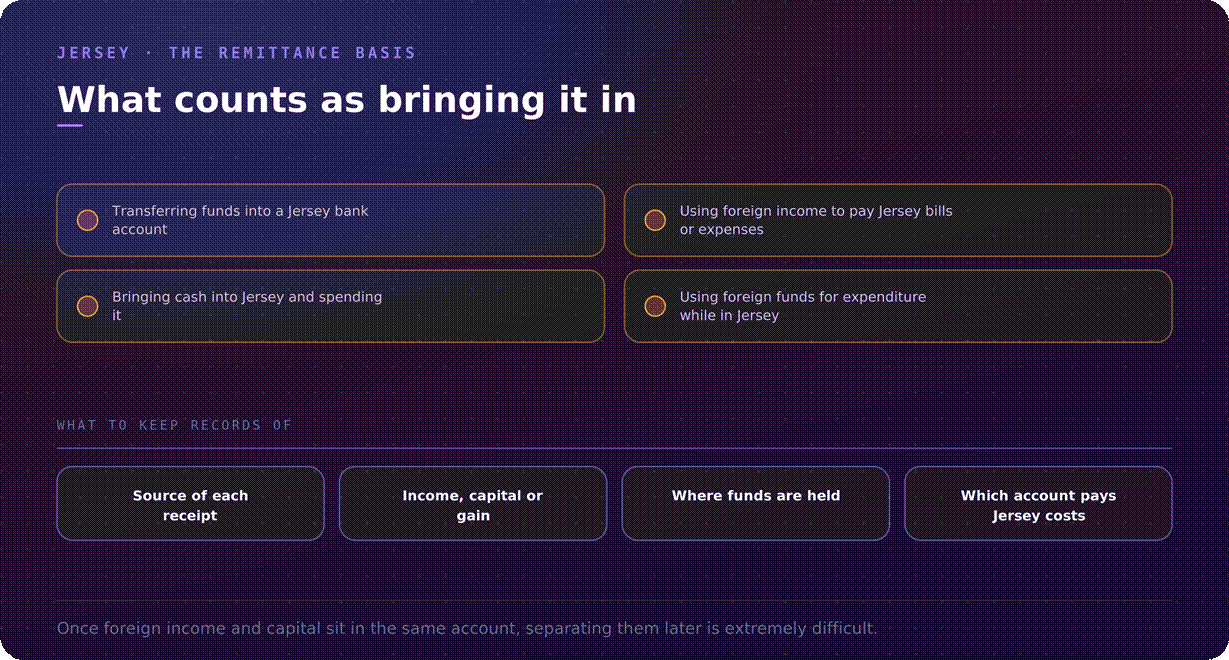
What counts as a remittance, and what you need to be able to show.
🔀 A remittance is not just a bank transfer. Depending on the facts it can include using foreign income to fund Jersey expenses, paying local bills, bringing cash in, or using foreign funds for expenditure while you are in Jersey.
Keep clear records showing the original source of each receipt, whether it represents income, capital or a gain, where the money is held, which account funds Jersey expenditure, whether funds are transferred into Jersey, and whether different types of funds have been mixed. Take advice before transferring funds to Jersey, particularly where foreign income and capital have been paid into the same account.
Case study: Felicity and the remittance basis
Felicity is a consultant who spends around 100 days a year in Jersey and keeps investment accounts outside the island. She receives foreign dividends and interest, and performs part of her consulting work in Jersey.
She cannot assume all her foreign income is exempt. She must first establish whether her accommodation and multi-year travel pattern make her resident, and whether she is ordinarily resident. If she is resident but not ordinarily resident, her Jersey consulting income remains relevant for Jersey tax, while her foreign investment income may be taxable if remitted.
Her 100-day pattern also matters over time: averaging more than 90 nights a year across four years would make her resident and ordinarily resident from year five. She should review her position before that period completes, and before making significant transfers to Jersey.
Offshore does not mean tax-free
Keeping foreign income outside Jersey does not make it tax-free worldwide. The country where the income arises may continue to impose withholding or source-country tax, and dividends, interest, employment income, rent and pensions each have different source rules.
Jersey has 25 double taxation agreements, which may allocate taxing rights and reduce double taxation — but a treaty does not automatically eliminate tax, and it must be applied to the relevant income category and residency status.
Offshore accounts are not private. Financial institutions and tax authorities exchange information under international reporting frameworks. The remittance basis concerns the timing and scope of Jersey taxation; it does not remove reporting obligations elsewhere.
Short-term arrangements
Two points are worth knowing if your stay is time-limited. Where your Jersey employment contract runs for less than four years, you may be classed as resident but not ordinarily resident — though extending the contract beyond four years changes that from the date of the change.
Separately, short-term business visitors who work in Jersey for 60 days or fewer in a year are not liable to Jersey income tax, with the day count cumulative and including arrival and departure days.
Filing deadlines
Jersey uses the calendar year. Personal tax returns are generally due by 31 May for paper returns and 31 July for online returns, in the year following the year of assessment. The tax balance is generally settled by 30 November following the end of the tax year, and advance payments may be required towards future years.
Do not wait until the deadline to reconstruct records. A remittance-basis position may require evidence covering bank transfers, account balances, investment movements, property income, workdays and the timing of receipts.
Your Jersey checklist
1. Track your days and nights in Jersey, and in every other country you visit;
2. Review accommodation arrangements, including whether a property is available for your use;
3. Determine your likely status for the current and following tax years;
4. Establish whether you are ordinarily resident, or resident but not ordinarily resident;
5. Separate foreign income from capital wherever possible;
6. Avoid mixing funds if you intend to rely on the remittance basis;
7. Record every transfer into Jersey and its purpose;
8. Review source-country tax, withholding and treaty relief;
9. Prepare for the filing deadline that applies to how you file; and
10. Budget for the 30 November settlement and any advance payments.
Frequently asked questions
Can one night in Jersey really make me resident?
Yes, if you maintain a place of abode there. Where accommodation is available for your use, staying even one night in the tax year is enough. The day count is a separate route in, not the only one.
What is the difference between resident and ordinarily resident?
Resident and ordinarily resident means Jersey taxes your worldwide income. Resident but not ordinarily resident means Jersey taxes Jersey-source income plus foreign income you remit. That distinction is the whole planning question.
How does the four-year rule work?
If you visit regularly without maintaining accommodation, averaging more than 90 nights a year across four consecutive years, you become resident and ordinarily resident from the start of year five.
Does the 20% rate apply to everything?
It is the top rate on taxable income, subject to allowances and deductions. What matters more is which income enters the Jersey base at all — that depends on your status, not the rate.
Is there capital gains tax in Jersey?
No. Jersey does not charge capital gains tax, though gains may still be taxable in the country where the asset or the gain arises.
What counts as remitting money to Jersey?
More than a transfer into a Jersey account. Using foreign income to pay Jersey bills or expenses, bringing in cash, or spending foreign funds while in Jersey can all count depending on the facts.
I am on a short contract. Does that change things?
It can. A Jersey employment contract of less than four years may mean you are resident but not ordinarily resident — but extending it beyond four years changes your status from the date of the change.
When are returns and payments due?
Generally 31 May for paper returns and 31 July for online returns in the following year, with the balance settled by 30 November. Advance payments may also apply.
Official sources and further reading
Important information
This article is general information and does not constitute tax, legal, immigration or financial advice, and does not create a client relationship. Tax outcomes depend on travel history, income sources, treaty status and the law applying to the relevant year. Rates, thresholds and regimes change, and some measures described may be proposed rather than enacted; this article reflects our understanding as at the date of publication. Obtain advice from a suitably qualified professional before acting or refraining from action.
