
Kyrgyzstan charges 10% on personal income and 10% on corporate profit. Its two larger neighbours have both raised rates recently, which has left it with the lowest burden in the region by some distance.
Kyrgyzstan operates one of the most consistent tax structures anywhere: 10% personal income tax and 10% profit tax, with no brackets on the personal side for most categories. Some categories attract lower rates, so the effective range runs from roughly 1% to 10%.
The comparison with its neighbours has moved in Kyrgyzstan’s favour. Kazakhstan replaced its flat 10% with a progressive 10% and 15% scale from January 2026 and raised corporate tax for banks and gambling to 25%. Uzbekistan charges 12% personal and 15% corporate. Kyrgyzstan has changed neither.
Withholding tax sits at 5% to 10%, against a range of 5% to 20% in the neighbouring states.
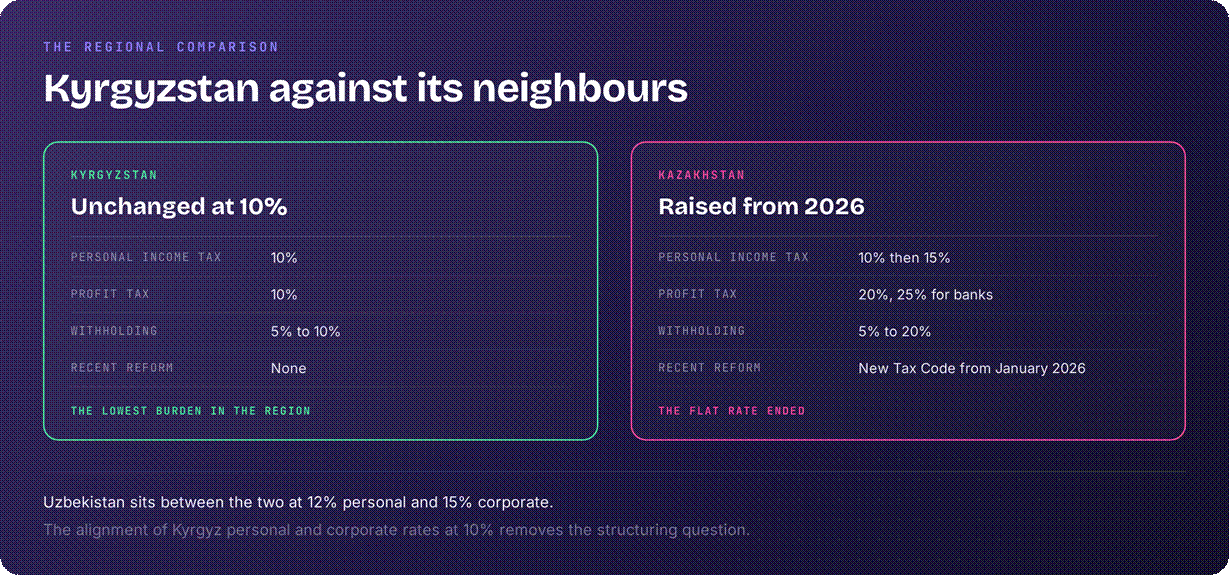
The same income, across three Central Asian neighbours.
Your residency status is the first step
Kyrgyz tax residence broadly follows presence in the country, with residents taxed on their income and non-residents on Kyrgyz-source income. Because the rate is the same flat 10% either way for most categories, the residence question carries less weight here than in a progressive system.
The position should be confirmed with the State Tax Service for your own circumstances, and a residency certificate obtained if you need to rely on a treaty. Kyrgyzstan’s treaty network is smaller than those of its neighbours, so the domestic rules do more of the work.
Maintain accurate records of:
• Days present in Kyrgyzstan during the tax year;
• Income by source, Kyrgyz and foreign;
• Whether any category of income attracts a reduced rate;
• Business turnover, for sales tax purposes;
• High Technology Park status, if applicable; and
• Any other country that may also treat you as resident.
The tax rates
Item | Rate |
Personal income tax | 10% |
Effective range across categories | Roughly 1% to 10% |
Profit tax | 10% |
Withholding tax | 5% to 10% |
Sales tax | 1% to 5% |
Kazakhstan, for comparison | 10% and 15% from 2026 |
Uzbekistan, for comparison | 12% personal, 15% corporate |
Local taxes | Land tax and property tax |
Kyrgyzstan is the only one of the three Central Asian neighbours not to have raised rates recently. Kazakhstan’s new Tax Code took effect in January 2026 and Uzbekistan sits higher on both personal and corporate tax, which leaves Kyrgyzstan with a competitive advantage it did not have to work for.
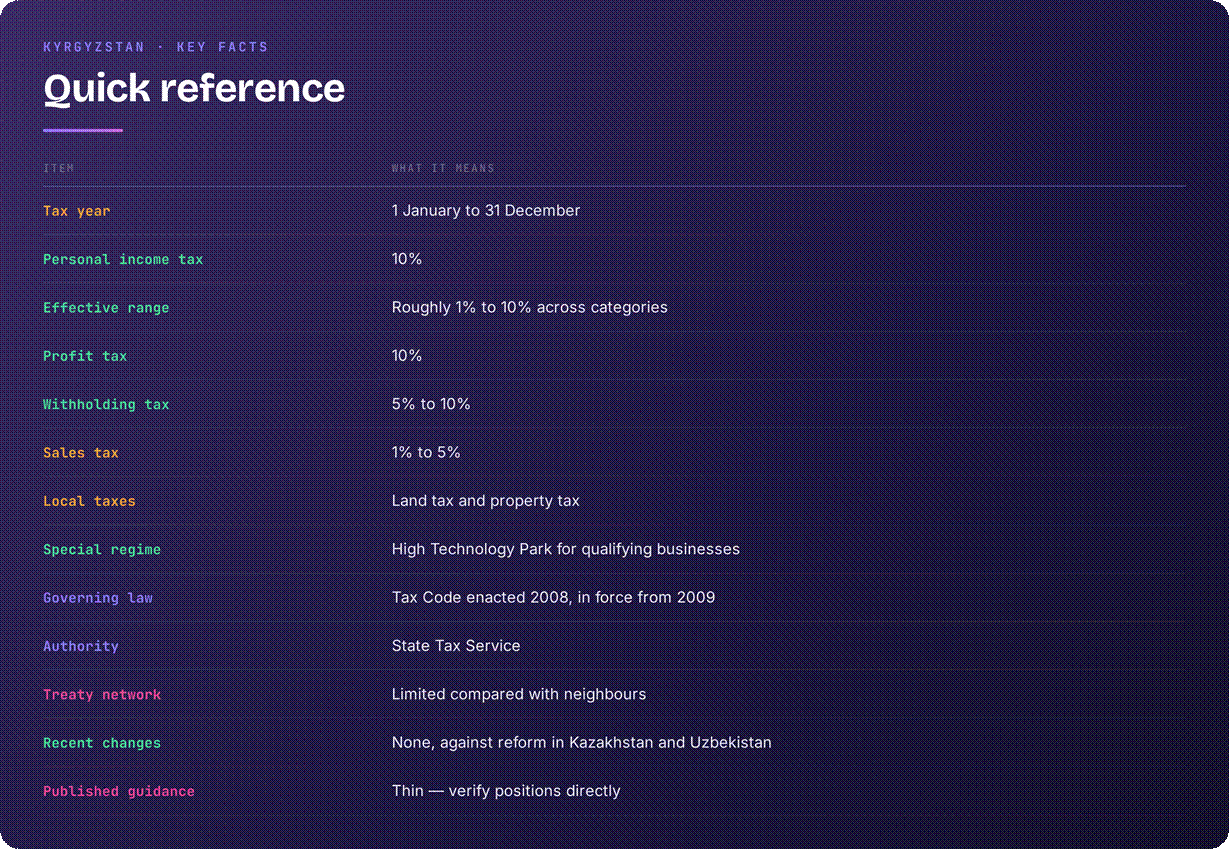
The Kyrgyz position at a glance.
What makes Kyrgyzstan attractive
The case is a simple one, which is much of the appeal:
• 10% personal income tax, among the lowest anywhere that is not a zero-tax jurisdiction;
• 10% profit tax, aligned with the personal rate so there is no rate gap to arbitrage;
• Withholding at 5% to 10%, against ranges reaching 20% in neighbouring states;
• Reduced rates on some categories, taking the effective range down toward 1%;
• A High Technology Park regime for qualifying technology businesses;
• No recent rate increases, against reforms in both Kazakhstan and Uzbekistan; and
• A very low cost of living, well below the regional average.
The honest qualifications are practical. The treaty network is limited, so relief from a competing residence claim depends on domestic rules rather than agreements. Banking and payment infrastructure is less developed than in Kazakhstan. And because published guidance on Kyrgyzstan is thin, positions should be confirmed with the State Tax Service rather than taken from secondary summaries.
Case study: the regional comparison
A consultant earning the equivalent of USD 90,000 faces 10% in Kyrgyzstan and 12% in Uzbekistan. In Kazakhstan, following the 2026 reform, the portion above roughly KZT 35 million attracts 15% rather than 10%.
On a corporate structure the gap widens. Kyrgyzstan charges 10% on profit against Uzbekistan’s 15% and Kazakhstan’s 20%, with 25% for Kazakh banks and gambling operators.
None of these are large differences in absolute terms at modest income levels. They compound at scale, and they compound further when the alignment of personal and corporate rates removes the structuring exercise entirely.
Filing and the compliance calendar
The tax year follows the calendar year and the system is administered by the State Tax Service. The current Tax Code was enacted in 2008 and took effect from 1 January 2009, with subsequent amendments.
Prepare in good time:
• Registration with the State Tax Service;
• Day-count records for the tax year;
• Income records by source and category;
• Business turnover records, for sales tax;
• A residency certificate, if relying on a treaty; and
• Confirmation of the current position directly, given thin published guidance.
Confirm rather than assume
Consider:
• That 10% applies broadly, with some categories lower;
• That the personal and corporate rates align, removing arbitrage;
• How the position compares with Kazakhstan after its 2026 reform;
• Whether the High Technology Park regime fits your activity;
• That the treaty network is limited;
• That banking infrastructure is less developed than in Kazakhstan; and
• That published guidance is thin, so verify with the State Tax Service.
Your Kyrgyzstan checklist
1. Confirm your residence position with the State Tax Service;
2. Check which categories attract rates below the standard 10%;
3. Note that personal and corporate rates align at 10%;
4. Compare against Kazakhstan, which raised rates from 2026;
5. Assess whether the High Technology Park regime fits your activity;
6. Track business turnover for sales tax purposes;
7. Obtain a residency certificate if relying on a treaty;
8. Allow for a limited treaty network in your planning;
9. Consider banking infrastructure alongside the rate; and
10. Verify any figure taken from secondary guidance.
Frequently asked questions
What is the Kyrgyz income tax rate?
10% on personal income, with some categories attracting lower rates so the effective range runs from roughly 1% to 10%. Profit tax is also 10%.
How does it compare with neighbouring countries?
Favourably, and increasingly so. Kazakhstan replaced its flat 10% with a 10% and 15% scale from January 2026 and charges 20% corporate tax, rising to 25% for banks and gambling. Uzbekistan charges 12% personal and 15% corporate.
Why does the rate alignment matter?
Because personal and corporate rates are both 10%, there is no rate gap between salary and dividend to arbitrage. That removes a recurring structuring exercise and the advisory cost and risk that come with it.
Is there a special regime?
Kyrgyzstan operates a High Technology Park regime for qualifying technology businesses, which sits below the standard rates. The detailed conditions should be confirmed with the authorities.
What is the withholding tax position?
5% to 10%, which is narrower and lower than the 5% to 20% ranges found in neighbouring states.
Does Kyrgyzstan have tax treaties?
A limited network compared with its neighbours. That means relief from a competing residence claim depends more on domestic rules than on agreements, which is worth establishing before you rely on it.
What are the practical drawbacks?
Banking and payment infrastructure is less developed than in Kazakhstan, and published guidance on Kyrgyz tax is thin. Positions should be confirmed with the State Tax Service rather than taken from secondary summaries.
When does the tax year run?
The calendar year. The system is administered by the State Tax Service under a Tax Code enacted in 2008 which took effect from 1 January 2009, with subsequent amendments.
Official sources and further reading
• State Tax Service of the Kyrgyz Republic
Important information
This article is general information and does not constitute tax, legal, immigration or financial advice, and does not create a client relationship. Tax outcomes depend on travel history, income sources, treaty status and the law applying to the relevant year. Rates, thresholds and regimes change, and some measures described may be proposed rather than enacted; this article reflects our understanding as at the date of publication. Obtain advice from a suitably qualified professional before acting or refraining from action.
