
Latvia replaced a three-band scale with a two-band one in 2025, and raised the entry rate by five and a half points in the process. The reform reads as simplification and lands as an increase for most people.
Until the end of 2024, Latvia taxed personal income at 20% up to EUR 20,004, 23% to the social contribution ceiling, and 31% above it. From 1 January 2025 that structure was replaced with two bands: 25.5% up to EUR 105,300 a year and 33% above.
The simplification is real. So is the effect on anyone previously in the 20% band — which is most people. The entry rate rose by five and a half percentage points, offset only partly by a fixed allowance.
Above both bands sits a further charge. An additional 3% applies to the portion of taxable income, including dividends and liquidation quotas, exceeding EUR 200,000 a year, taking the top effective rate to 36%.
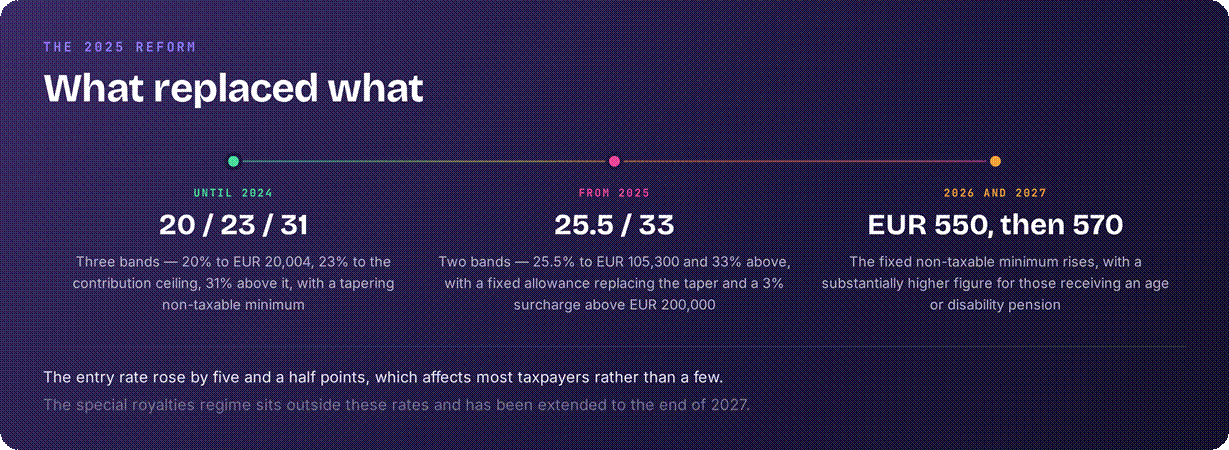
Three bands became two, and the entry rate rose.
Your residency status is the first step
You are Latvian tax resident if you have a declared place of residence in Latvia, or if you stay in Latvia for 183 days or more during any twelve-month period, or if you are a Latvian citizen employed abroad by the Latvian government.
The declared residence limb is administrative rather than factual, which makes it easier to trigger than a ties-based test and correspondingly harder to unwind. Residents are taxed on worldwide income; non-residents on Latvian-source income only.
Maintain accurate records of:
• Whether a place of residence is declared in Latvia, and from when;
• Days present across rolling twelve-month periods;
• Annual income against the EUR 105,300 threshold;
• Total income against the EUR 200,000 surcharge threshold;
• Whether any income qualifies as royalties under the special regime; and
• Any other country that may also treat you as resident.
The tax rates
Income | Latvian treatment |
Annual income up to EUR 105,300 | 25.5% |
Annual income above EUR 105,300 | 33% |
Income above EUR 200,000 | A further 3% on the excess |
Capital income and capital gains | 25.5% |
Dividends where corporate tax already applied | No further personal tax, but the 3% can still apply |
Rental income, simplified regime | 10% |
Royalties, unregistered recipients | 25% withheld by the payer |
Fixed non-taxable minimum, 2026 | EUR 550 a month |
Pensioners receive a materially larger allowance. An individual in receipt of an age or disability pension is entitled to a fixed non-taxable minimum of EUR 1,000 a month, nearly double the general figure, which makes Latvia notably more favourable for retirees than for working-age arrivals.
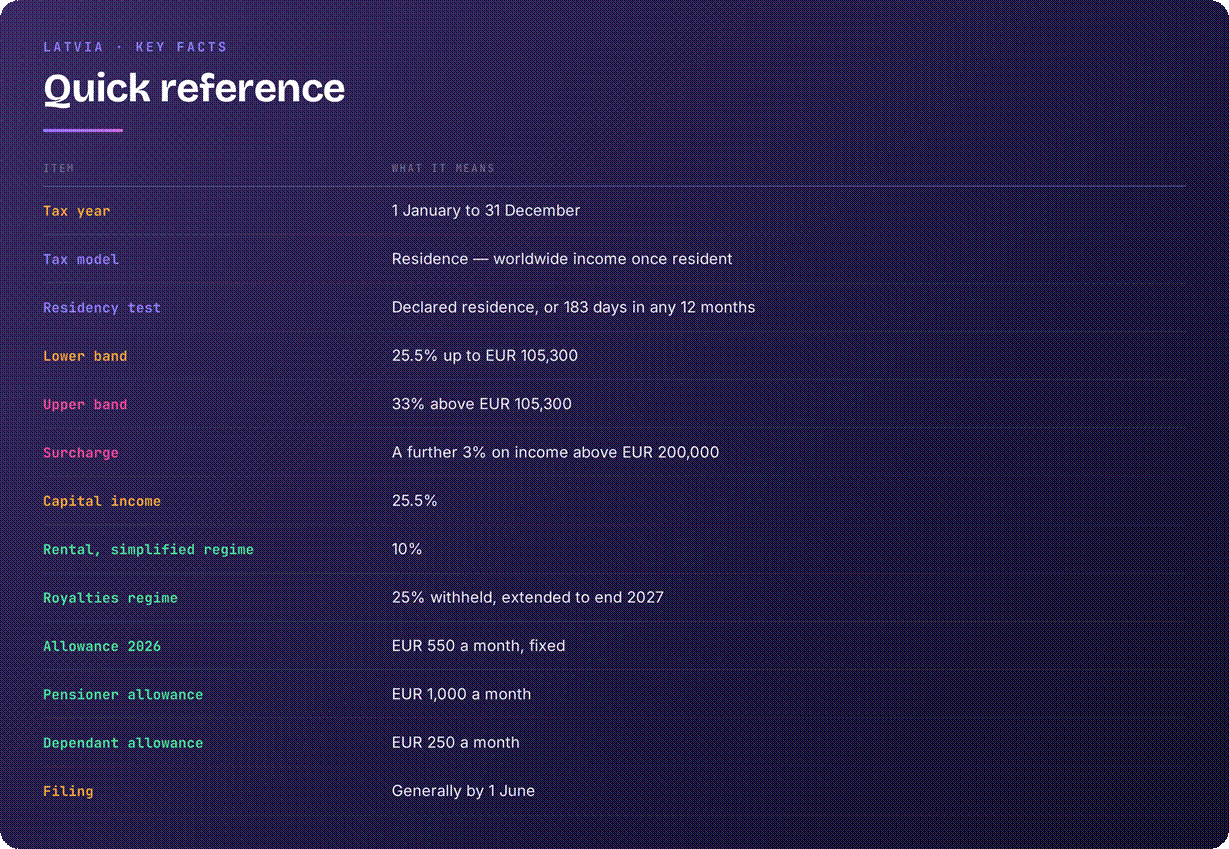
The Latvian position at a glance.
The royalties regime
Latvia operates a special arrangement for royalties that sits outside the ordinary rates entirely. Individuals who are not registered as self-employed and who receive payments classified as royalties have 25% withheld from gross by the payer, with no further assessment.
The regime was introduced as a transitional measure and has been extended repeatedly — most recently to the end of 2027. For writers, musicians, designers and others whose income is genuinely royalty income, it removes the registration and compliance burden of self-employment entirely, at a rate that compares reasonably with the 25.5% ordinary band.
Because it is transitional, it needs watching. Anyone building a long-term position around it should assume it may not survive beyond its current extension.
Case study: Ilze compares before and after
Ilze earns EUR 45,000 a year in Riga. Under the pre-2025 structure, the first EUR 20,004 was taxed at 20% and the balance at 23%, giving a blended rate a little above 21%.
From 2025 the whole amount falls in the 25.5% band. Her fixed allowance of EUR 6,600 a year comes off first, but the rate on everything above it is higher than either of the rates she previously paid.
The reform removed a bracket and made the system easier to describe. For someone in her position it also increased the bill, and describing it purely as simplification would be misleading.
Filing and the compliance calendar
The Latvian tax year follows the calendar year and the tax authority is the State Revenue Service. The annual income declaration is generally due by 1 June of the following year, with employment income taxed through payroll withholding during the year.
Prepare in good time:
• Registration with the State Revenue Service and EDS access;
• Payroll records and any withholding applied;
• Records of capital income and gains, taxed at 25.5%;
• Royalty payments and the withholding applied to them;
• Evidence supporting any allowance claimed; and
• Foreign income and foreign tax paid.
Model the reform, not the old figures
Consider:
• That the 20% and 23% bands no longer exist;
• Where your income sits relative to EUR 105,300;
• Whether total income would cross the EUR 200,000 surcharge threshold;
• That the allowance is now fixed rather than tapering;
• Whether the pensioner allowance applies to you;
• Whether royalty income could use the special regime; and
• That the royalties regime is transitional and currently runs to 2027.
Your Latvia checklist
1. Discard any modelling built on the 20% and 23% bands;
2. Check where your income sits relative to EUR 105,300;
3. Test total income against the EUR 200,000 surcharge threshold;
4. Apply the fixed allowance rather than the old tapering one;
5. Check whether the pensioner allowance applies;
6. Establish whether any income qualifies as royalties;
7. Note that the royalties regime currently runs only to 2027;
8. Consider whether a declared residence would trigger residency;
9. Register with the State Revenue Service and obtain EDS access; and
10. Diarise the 1 June filing deadline.
Frequently asked questions
What are the Latvian income tax rates?
25.5% on annual income up to EUR 105,300 and 33% above, since 1 January 2025. A further 3% applies to the portion of income above EUR 200,000, taking the top effective rate to 36%.
What happened to the 20% band?
It was abolished in the 2025 reform. The three-band structure of 20%, 23% and 31% was replaced by two bands, which raised the entry rate by five and a half percentage points for most taxpayers.
What is the non-taxable minimum?
A fixed EUR 550 a month in 2026, rising to EUR 570 in 2027, applying regardless of income level. It replaced a sliding allowance that tapered away as income rose. Pensioners receive EUR 1,000 a month.
How is capital income taxed?
At 25.5%. Dividends from a company that has already paid corporate tax are generally not subject to further personal tax, though the 3% surcharge above EUR 200,000 can still apply to them.
What is the royalties regime?
Individuals not registered as self-employed who receive payments classified as royalties have 25% withheld from gross by the payer, with no further assessment. It is a transitional measure, currently extended to the end of 2027.
When am I Latvian tax resident?
If you have a declared place of residence in Latvia, stay 183 days or more in any twelve-month period, or are a Latvian citizen employed abroad by the government. The declared residence limb is administrative and easy to trigger.
Is Latvia good for retirees?
More favourable than for working-age arrivals, because the non-taxable minimum for those receiving an age or disability pension is EUR 1,000 a month against EUR 550 generally.
When is the return due?
Generally 1 June of the year following the calendar tax year, filed with the State Revenue Service. Employment income is taxed through payroll withholding during the year.
Official sources and further reading
• State Revenue Service of Latvia
Important information
This article is general information and does not constitute tax, legal, immigration or financial advice, and does not create a client relationship. Tax outcomes depend on travel history, income sources, treaty status and the law applying to the relevant year. Rates, thresholds and regimes change, and some measures described may be proposed rather than enacted; this article reflects our understanding as at the date of publication. Obtain advice from a suitably qualified professional before acting or refraining from action.
