
Lebanon is described as a territorial system, and for most purposes it is. But a resident’s salary is taxed regardless of where the money comes from, and foreign asset income carries its own charge.
Lebanon adopts a territorial system under which income sourced in Lebanon is taxed and income derived from foreign sources generally is not. That description appears in most summaries and it is broadly right — for business profits.
For salaries it is not. Under the principle of territoriality as applied to salaries, tax is due in Lebanon if any of three conditions is met, and the first of them is that the beneficiary of the salary is resident in Lebanon, regardless of the source of funding.
So a remote worker living in Beirut and paid by a foreign employer into a foreign account is within the Lebanese charge on that salary. The territorial label does not protect them.
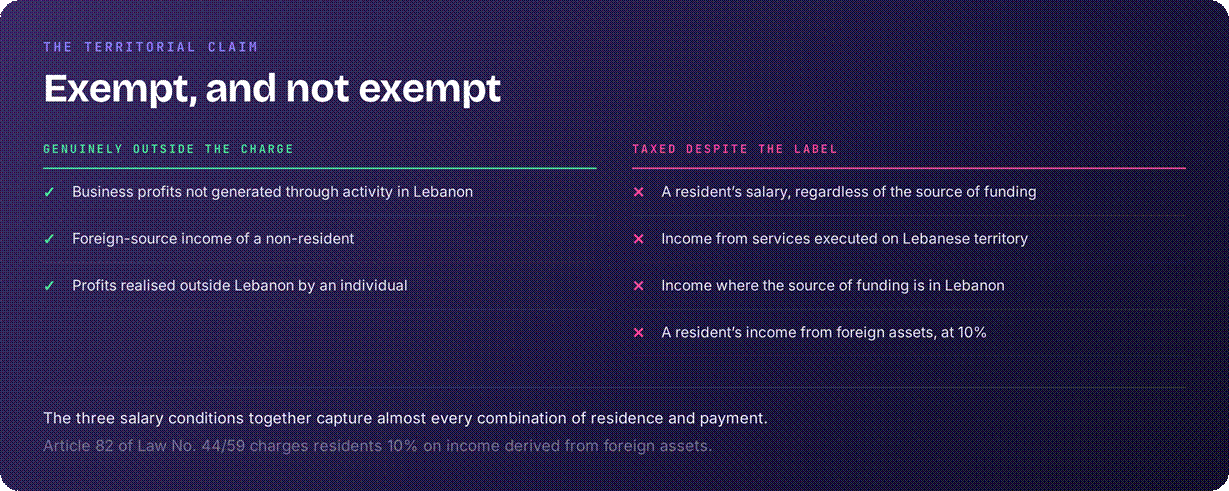
What the territorial label covers, and what it does not.
Your residency status is the first step
An individual is considered resident if they meet any one of the following:
• They have a fixed place of doing business in Lebanon;
• They maintain a permanent home in Lebanon used for their usual residence;
• They stay in Lebanon for six months, continuously or intermittently, in a consecutive twelve-month period — with transit stays and stays for medical treatment excluded from the count; or
• They register as a licensed professional, which triggers residency in its own right.
That last limb is genuinely unusual. Professional registration is an administrative act, and in Lebanon it brings tax residence with it regardless of presence.
Maintain accurate records of:
• Days present in Lebanon across consecutive twelve-month periods;
• Transit and medical stays, which are excluded from the count;
• Whether you maintain a permanent home used as your usual residence;
• Whether you hold any professional registration;
• Income by chapter, since each is taxed separately; and
• Foreign assets and the income they produce.
The tax rates
Lebanon does not levy a single tax on income. The law divides income into three chapters, and where a taxpayer has income from different sources, each type is taxed according to the chapter it falls under:
Item | Rate |
Chapter I — profits from professions | Progressive |
Chapter II — salaries, wages and pensions | 2% to 25% |
Chapter III — revenues from moveable capital | Dividends 10% |
Pensions and similar benefits | Rates reduced to half |
Capital gains on foreign assets, residents | 10% |
Capital gains on fixed assets | 15% |
Capital gains on immovable property | 15% |
Corporate income tax | 17% |
Payroll rates run from 2% to 25%, having been raised from a 2% to 20% range by Article 23 of the 2019 Budget Law with effect from 1 August 2019. Rates are reduced to half for retirement pensions and similar benefits.
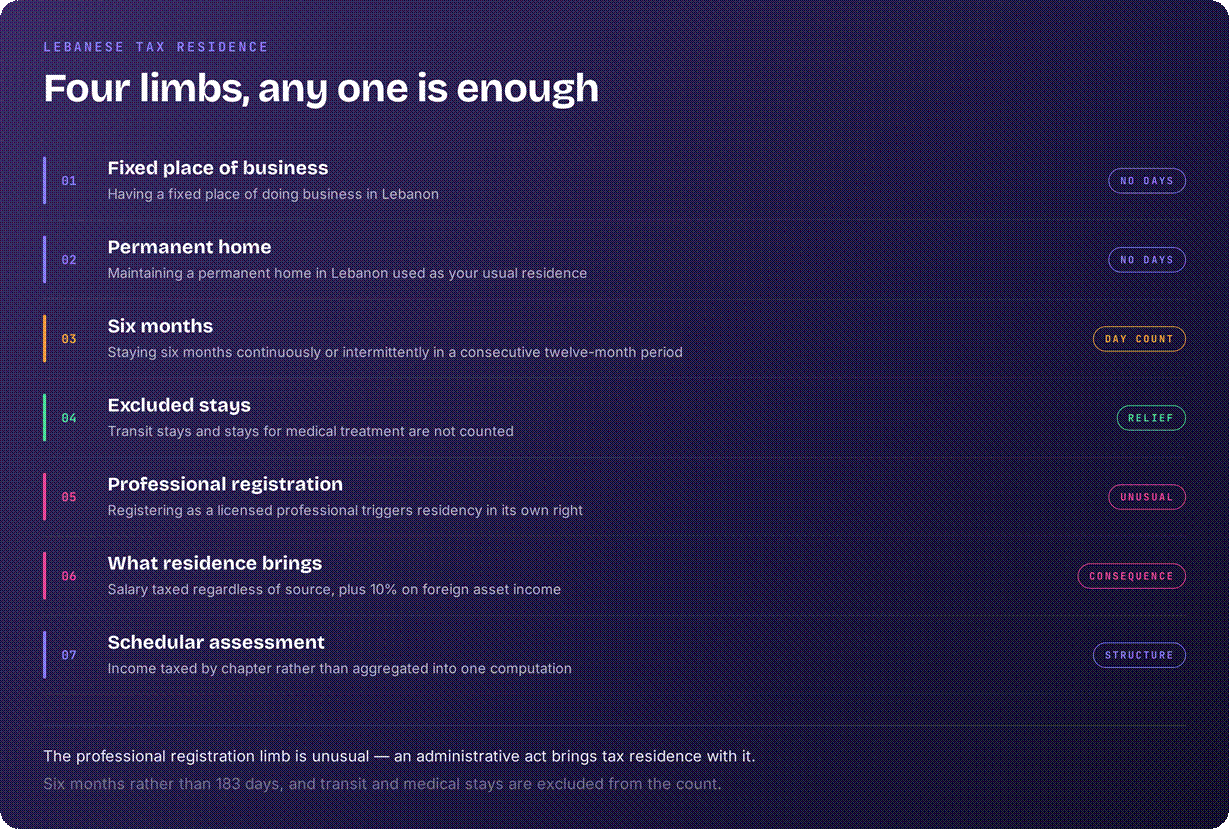
Four ways into Lebanese residence.
Where the territorial label fails
Taxes on salaries are due in Lebanon if any of the following applies:
• The beneficiary is resident in Lebanon, regardless of the source of funding;
• The services that triggered the income were executed on Lebanese territory, or contributed to the welfare of a company located in Lebanon, even though the source of funding is outside Lebanon; or
• The source of funding is in Lebanon, regardless of where the beneficiary resides or where the effort was made.
Read together, those three conditions capture almost every combination. A resident is taxed on salary wherever it comes from; a non-resident is taxed if the work was done in Lebanon or if a Lebanese entity paid for it.
The 10% charge on income derived from foreign assets compounds the point for residents. Between them, the salary rule and Article 82 remove most of what a territorial system would normally exempt.
What makes Lebanon attractive
There are genuine positives, and they should be stated alongside the caution:
• Payroll rates starting at 2%, so lower earners face a very light charge;
• Rates reduced to half for retirement pensions and similar benefits;
• A schedular system, so a loss or low income in one chapter does not push another into a higher band;
• Business profits genuinely territorial — profit is treated as realised in Lebanon only where generated through effort or activity exerted there;
• Corporate income tax at 17%, moderate by regional standards; and
• Capital gains on foreign assets at 10%, lower than the 15% on fixed assets and immovable property.
The honest qualification is the one this article is built around: the territorial description is misleading for individuals, and anyone planning on it should establish their position on salary and foreign asset income specifically.
Case study: Karim is paid from Dubai
Karim lives in Beirut and works remotely for a Dubai company, paid into an account outside Lebanon. He has read that Lebanon is territorial and assumes his salary is outside the charge.
It is not. He is resident in Lebanon, and salaries are taxed where the beneficiary is resident regardless of the source of funding. His salary falls within Chapter II at 2% to 25%.
His portfolio abroad is also caught, at 10% on income derived from foreign assets under Article 82. What he expected to be an exempt position is substantially a taxable one.
Filing and the compliance calendar
The tax year follows the calendar year. Because the system is schedular, income from different chapters is assessed separately rather than aggregated, and the filing obligation depends on which chapters apply to you.
Non-resident withholding was amended by the 2024 Budget Law to 8.5% on services and 3.4% on goods, effective from the second quarter of 2024, and non-resident tax is due quarterly within 15 days of each quarter end rather than annually.
Prepare in good time:
• Registration with the tax authority;
• Income records separated by chapter;
• Evidence of where services were executed;
• Records of foreign assets and the income they produce;
• Day-count records excluding transit and medical stays; and
• Documentation of any professional registration held.
Check the salary rule before anything else
Consider:
• That a resident is taxed on salary regardless of its source;
• That residents also face 10% on foreign asset income;
• Which of the four residence limbs applies to you;
• That professional registration alone can trigger residence;
• That income is taxed by chapter rather than aggregated;
• That payroll rates start at 2% and are halved for pensions; and
• That business profits are genuinely territorial, unlike salaries.
Your Lebanon checklist
1. Do not rely on the territorial label for salary income;
2. Establish whether you are resident under any of the four limbs;
3. Check whether professional registration would trigger residence;
4. Exclude transit and medical stays from your day count;
5. Separate income by chapter, since each is taxed on its own;
6. Identify foreign assets, whose income carries 10% for residents;
7. Note payroll rates run from 2% to 25% since August 2019;
8. Claim the halved rate on retirement pensions where applicable;
9. Check the non-resident withholding rates, amended from Q2 2024; and
10. Confirm the current filing timetable with the authority.
Frequently asked questions
Is Lebanon a territorial tax system?
For business profits, broadly yes. For salaries it is not — tax is due in Lebanon where the beneficiary is resident regardless of the source of funding, so a resident paid from abroad is still within the charge.
I live in Beirut and am paid from abroad. Am I taxed?
Yes, on that salary. The first of the three salary conditions is that the beneficiary is resident in Lebanon, regardless of where the funding comes from. The foreign employer and foreign account do not change it.
Is foreign investment income taxed?
Individuals resident in Lebanon are liable to a 10% capital gains tax on income derived from foreign assets under Article 82 of Law No. 44/59, so foreign asset income is not outside the charge either.
How do I become tax resident?
Through any of four limbs — a fixed place of doing business, a permanent home used as your usual residence, six months in a consecutive twelve-month period, or registering as a licensed professional. Transit and medical stays are excluded from the day count.
What are the payroll rates?
2% to 25%, raised from a 2% to 20% range by Article 23 of the 2019 Budget Law with effect from 1 August 2019. Rates are reduced to half for retirement pensions and similar benefits.
What does schedular taxation mean here?
The income tax law does not provide a single tax on income. It divides income into three chapters — professions, salaries and pensions, and revenues from moveable capital — and each type is taxed according to its own chapter rather than aggregated.
How are capital gains taxed?
Gains on fixed assets and on immovable property at 15%, and income derived from foreign assets by a resident individual at 10% under Article 82.
What applies to non-residents?
Withholding at 8.5% on services and 3.4% on goods, effective from the second quarter of 2024, and due quarterly within 15 days of each quarter end rather than annually.
Official sources and further reading
Important information
This article is general information and does not constitute tax, legal, immigration or financial advice, and does not create a client relationship. Tax outcomes depend on travel history, income sources, treaty status and the law applying to the relevant year. Rates, thresholds and regimes change, and some measures described may be proposed rather than enacted; this article reflects our understanding as at the date of publication. Obtain advice from a suitably qualified professional before acting or refraining from action.
