
Malawi raised its tax-free threshold in January 2026 and reintroduced a 40% top rate. It also deleted the 25% band which means income just above the threshold now jumps straight to 30%.
The Taxation (Amendment) Act No. 36 of 2025 was enacted on 30 December 2025 and took effect from 1 January 2026, following the 2025/26 Mid-Year Budget Review presented to Parliament on 21 November 2025.
It made three changes to PAYE. The zero-rate band rose from MK 150,000 to MK 170,000 a month. A 40% top rate was reintroduced on monthly income above MK 10 million. And the 25% bracket was removed entirely.
The first two were presented as the headline — relief for low earners and a greater contribution from the highest. The third is the one that changes most people’s position and got the least attention.
What the removal of 25% actually does. With that bracket gone, income immediately above the zero band no longer passes through 25% on its way up. It goes straight to 30%. For a middle earner that is a sharper step than the previous structure produced.
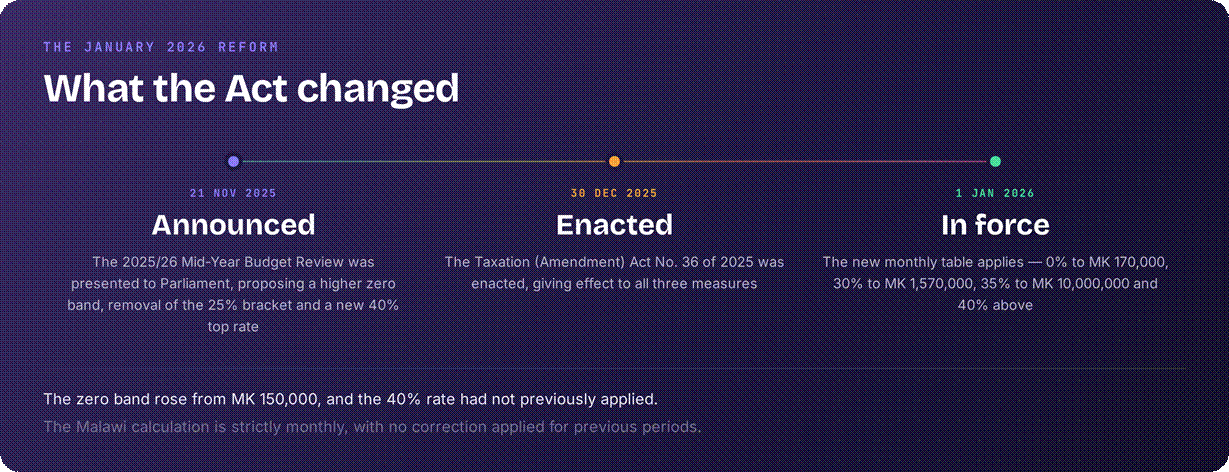
Three changes, and what each one did.
The tax rates from January 2026
Monthly income (MK) | Rate |
0 to 170,000 | 0% |
170,000.01 to 1,570,000 | 30% |
1,570,000.01 to 10,000,000 | 35% |
Above 10,000,000 | 40% |
Previous zero band | MK 150,000 |
Removed bracket | 25% |
Reintroduced rate | 40%, above MK 120 million a year |
Calculation basis | Strictly monthly |
The Malawi calculation is strictly monthly, and no correction is applied for previous periods. That matters for anyone whose income varies through the year, because there is no annual reconciliation smoothing the effect of a high month against a low one.
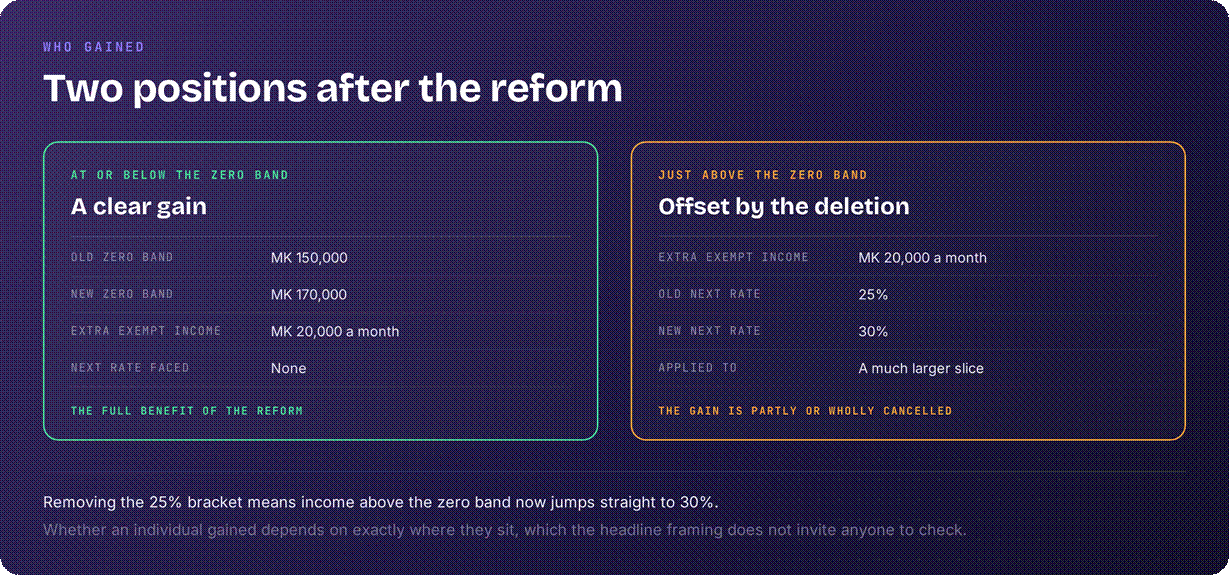
The same reform, two very different outcomes.
Who gains and who does not
The reform produces different answers at different income levels, and it is worth being precise:
• Someone earning at or below MK 170,000 a month gains the full benefit — the increase in the zero band takes more of their income out of charge;
• Someone just above MK 170,000 gains on the first MK 170,000 but then faces 30% immediately, where the old structure would have applied 25% first;
• Someone in the middle of the scale sees the two effects partly offset one another; and
• Someone above MK 10 million a month faces a 40% rate that did not previously exist.
The measure was described as providing relief to low-income earners while increasing the contribution from the highest. That is accurate at both ends. In between, the removal of the 25% bracket does real work that the framing does not capture.
What makes Malawi workable
The position has some genuine features alongside a high top rate:
• A MK 170,000 monthly zero band, raised from MK 150,000 in January 2026;
• A 30% band running to MK 1,570,000 a month, covering most professional salaries;
• A 40% rate that only engages above MK 10 million a month, or MK 120 million a year — genuinely high;
• A simple four-band structure with no phase-outs or cliffs beyond the band edges;
• Changes published through gazetted amendment Acts, so they are traceable; and
• A monthly calculation that is straightforward to operate.
The honest qualifications are that the 30% rate now applies from just above MK 170,000 a month, that the strictly monthly basis gives no relief for uneven income across the year, and that the top rate of 40% is high by regional standards even though it arrives late.
Case study: the middle of the scale
Under the old structure, income above the zero band passed through a 25% bracket before reaching 30%. A middle earner therefore had a portion of income taxed at 25%.
Under the new structure that bracket does not exist. The same income is taxed at 30% from MK 170,000.01, with nothing in between.
For someone at the bottom of the scale the higher zero band more than compensates. For someone in the middle, the gain from MK 20,000 of additional exempt income is offset by a five-point increase on a much larger slice. Whether they are better or worse off depends on exactly where they sit — which is precisely the calculation the headline framing does not invite anyone to do.
Filing and the compliance calendar
PAYE is administered by the Malawi Revenue Authority. Employers were advised to update systems immediately for the January 2026 changes, and the amended table sits in the Eleventh Schedule to the Taxation Act.
Because the calculation is strictly monthly, no correction for previous periods is applied when tables change mid-year — a point that matters when a reform lands on 1 January as this one did.
Prepare in good time:
• Registration with the Malawi Revenue Authority;
• Payroll systems updated to the January 2026 table;
• Monthly income records, since the basis is monthly;
• Awareness that no prior-period correction applies;
• Confirmation of which amendment Act governs the period; and
• Records of any month crossing a band threshold.
Work out where you actually sit
Consider:
• That the zero band rose to MK 170,000 a month;
• That the 25% bracket was removed entirely;
• That income above the zero band now goes straight to 30%;
• That 40% returned on income above MK 10 million a month;
• That the calculation is strictly monthly;
• That no correction is applied for previous periods; and
• That whether you gained depends on exactly where you sit.
Your Malawi checklist
1. Apply the January 2026 table, not the earlier one;
2. Note the zero band is MK 170,000 a month;
3. Note that the 25% bracket no longer exists;
4. Expect 30% from just above the zero band;
5. Note that 40% applies above MK 10 million a month;
6. Calculate strictly on a monthly basis;
7. Expect no correction for previous periods;
8. Check where your own income sits against the bands;
9. Confirm payroll systems were updated in January; and
10. Reference the Taxation (Amendment) Act No. 36 of 2025.
Frequently asked questions
What changed in Malawi in January 2026?
Three things under the Taxation (Amendment) Act No. 36 of 2025 — the monthly zero band rose from MK 150,000 to MK 170,000, the 25% bracket was removed entirely, and a 40% top rate was reintroduced on monthly income above MK 10 million.
What are the current rates?
0% to MK 170,000 a month, 30% to MK 1,570,000, 35% to MK 10,000,000 and 40% above that.
Why does removing the 25% bracket matter?
Because income immediately above the zero band no longer passes through 25% on its way up — it goes straight to 30%. For a middle earner that is a sharper step than the previous structure produced.
Did everyone gain from the reform?
Not evenly. Someone at or below MK 170,000 gains the full benefit. Someone just above it gains on the first MK 170,000 but then faces 30% where 25% would previously have applied, so the two effects partly offset.
When does the 40% rate apply?
On monthly income above MK 10 million, which is MK 120 million a year. It is a high threshold, so the rate reaches only the top of the scale.
Is the calculation monthly or annual?
Strictly monthly, and no correction is applied for previous periods. That matters for anyone whose income varies through the year, since there is no annual reconciliation.
When was it enacted?
The Act was enacted on 30 December 2025 and took effect from 1 January 2026, following the Mid-Year Budget Review presented on 21 November 2025.
Who administers PAYE?
The Malawi Revenue Authority. The amended table sits in the Eleventh Schedule to the Taxation Act.
Official sources and further reading
Important information
This article is general information and does not constitute tax, legal, immigration or financial advice, and does not create a client relationship. Tax outcomes depend on travel history, income sources, treaty status and the law applying to the relevant year. Rates, thresholds and regimes change, and some measures described may be proposed rather than enacted; this article reflects our understanding as at the date of publication. Obtain advice from a suitably qualified professional before acting or refraining from action.
