
Malaysia is increasingly considered by digital nomads, remote workers, freelancers and expats who want an Asian base with strong infrastructure and relatively straightforward tax administration.
Before you relocate, three questions need answering: where will you be tax resident, which income can Malaysia tax, and what must you report and by when?
Start from the right premise. Malaysia is not a worldwide-income system. It taxes Malaysian-source income, and foreign income only where it is received in Malaysia — and even then, a long-running exemption order currently keeps most foreign income of resident individuals out of charge. Getting this the wrong way round leads to badly wrong conclusions.
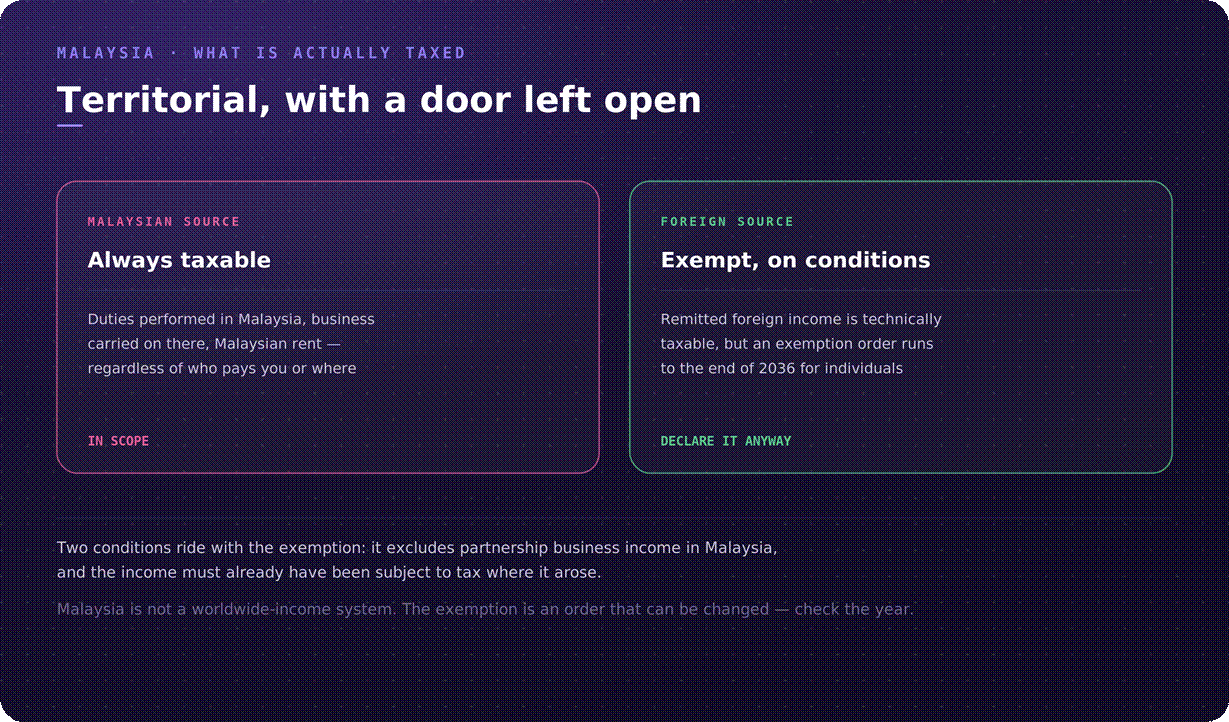
Source decides the charge. The exemption order does the rest.
What Malaysia actually taxes
Malaysia operates a territorial system. Income sourced in Malaysia is taxable. The source of income is determined by the facts of your activity, not by the location of your bank account or the country where your client is incorporated.
Income | Malaysian treatment |
Duties performed in Malaysia | Malaysian-source — taxable |
Business carried on in Malaysia | Malaysian-source — taxable |
Rent from Malaysian property | Malaysian-source — taxable |
Foreign income kept offshore | Outside the charge |
Foreign income remitted | Chargeable in principle, but exempt to 2036 on conditions |
Foreign partnership business income | Outside the exemption |
From 1 January 2022 the pure territorial position changed: foreign-source income received in Malaysia by a resident became taxable in principle. An exemption order then switched that back off for resident individuals, and it has since been extended to 31 December 2036.
The exemption is conditional, not automatic. It does not cover income received through a partnership business in Malaysia, and the income must already have been subject to tax of a similar character in the country where it arose. You must also declare the income on your Malaysian return and keep evidence, even where it is exempt.
Because this is an exemption order rather than the underlying statute, it can be changed. Check the position for the year you are dealing with rather than assuming it holds indefinitely.
Your residency status
Residency determines the rates and reliefs available to you, and whether the foreign-income exemption is even in point — it applies to resident individuals.
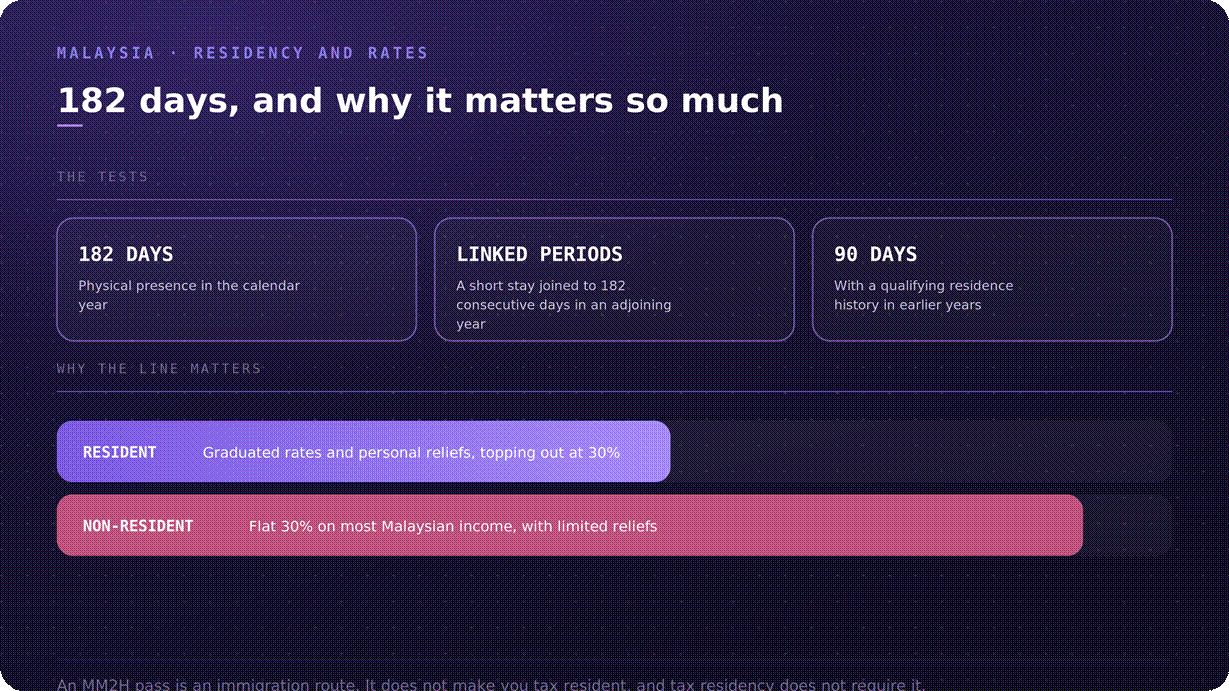
Crossing 182 days changes the rate you pay on Malaysian income.
The primary test is physical presence of at least 182 days in the calendar year, and the days do not generally need to be consecutive. But do not assume that 181 days or fewer means non-resident: other statutory tests can apply, including rules linking a short stay to a period of at least 182 consecutive days in an adjoining year, and a 90-day test that considers your presence across several years.
Before relying on a day-count plan, review your arrival and departure dates, your presence in the previous and following years, your presence in earlier years, and your wider circumstances — home, family, employment, business and financial interests — particularly if another country also considers you resident.
Record every entry and exit. Border days may count towards your total, so a calculation based only on hotel nights or working days will be wrong. Review your position across multiple tax years rather than treating 182 days as an isolated threshold.
Rates: the line between resident and non-resident
For residents, personal income tax is calculated using graduated rates, with the highest reaching 30%, and personal reliefs are available.
For non-residents, most Malaysian-source employment, business and rental income is subject to a flat 30% rate, with limited access to resident reliefs and graduated rates. For someone on a modest income, that difference is substantial — a non-resident pays the top rate on the first ringgit.
Case study: Mark works remotely from Kuala Lumpur
Mark is employed by a company incorporated outside Malaysia and works from Kuala Lumpur for 200 days during the calendar year. He has no Malaysian employer but performs his duties while physically present in Malaysia.
He is likely to satisfy the primary residency test. More importantly, his employment income relates to duties performed in Malaysia, which points towards Malaysian source regardless of where his employer sits or where he is paid. He should check whether the employer’s country has a treaty with Malaysia, and take advice before relying on a remote-work arrangement.
Residence permissions do not decide your tax position
A long-stay pass may have real planning value, but holding one does not make you tax resident — and you can become tax resident without it.
One set of rules determines whether you may enter or remain. A separate set determines whether Malaysia treats you as tax resident. Source rules determine which income Malaysia may tax. Treaty rules may affect the position if another country also treats you as resident. Programme conditions can change, including financial and minimum-stay requirements, so confirm the current position through official sources.
Case study: Felicity holds a long-stay pass
Felicity receives pension and investment income from outside Malaysia, holds a long-stay pass, spends 100 days in Malaysia and travels elsewhere for the rest of the year. She has no Malaysian employment or business activity.
She may not satisfy the primary 182-day test, though she should review the alternative statutory tests and her position in other countries. Holding that pass does not establish tax residency by itself. Any Malaysian-source income, local work or property income should be reviewed separately, and she should retain evidence of travel dates, income sources and fund transfers.
Treaties
Malaysia has 78 double taxation agreements, which coordinate taxing rights over specific types of income and may contain a tie-breaker where you are domestically resident in two countries. A treaty may consider your permanent home, centre of vital interests, habitual abode, nationality, where you perform employment duties, and whether a permanent establishment or fixed base exists.
A treaty does not mean you automatically pay no tax in one country. It determines which country has primary taxing rights and how the other provides relief, usually by exemption or foreign tax credit.
Filing
Malaysia uses the calendar year. Individual returns without business income are generally due by 30 April following the year of assessment, with a later deadline where you have business income. Confirm which applies to you.
You may need to file if you earn employment income from duties performed in Malaysia, operate a business or freelance activity there, receive Malaysian rental or other Malaysian-source income, or need to claim treaty relief or document your position. Remember that foreign income covered by the exemption still needs declaring.
Your relocation checklist
1. Map your expected days in Malaysia for the current, preceding and following tax years;
2. Record every entry and departure date, including short regional trips;
3. Identify where you physically perform your work duties;
4. Separate Malaysian-source from foreign-source income;
5. Check whether the foreign-income exemption conditions are met for your income;
6. Review your residence status in your former country;
7. Check whether a treaty applies;
8. Prepare for the filing deadline that applies to you; and
9. Keep contracts, payslips, invoices, bank records and accommodation evidence.
Frequently asked questions
Does Malaysia tax my worldwide income?
No. Malaysia is territorial. It taxes Malaysian-source income, and foreign income only where it is received in Malaysia — and an exemption order currently keeps most foreign income of resident individuals outside the charge.
So is my foreign income definitely tax-free?
Not definitely. The exemption excludes income received through a Malaysian partnership business, and requires that the income was already subject to tax where it arose. It also runs on an order that could change, so check the current year.
Do I still have to declare exempt foreign income?
Yes. Resident individuals must declare foreign income received in Malaysia on the return and keep supporting documentation showing it qualifies for the exemption.
How many days make me resident?
At least 182 days in the calendar year under the primary test. Other tests can also apply, including one linking a short stay to 182 consecutive days in an adjoining year, and a 90-day test based on your history.
I work remotely for a foreign employer. Is that foreign income?
Probably not. Where you physically perform the duties carries significant weight, so work done from Malaysia can be Malaysian-source even though your employer and bank account are abroad.
What is the difference in rate if I am non-resident?
Non-residents generally pay a flat 30% on most Malaysian-source income with limited reliefs. Residents use graduated rates topping out at 30%, with reliefs available — a large difference at modest income levels.
Does a long-stay pass make me tax resident?
No. Tax residency turns on the statutory tests alone. You can be tax resident without holding a long-stay pass, or hold one without being tax resident.
When do I file?
Generally 30 April following the year of assessment for individuals without business income, with a later date where business income is involved.
Official sources and further reading
• Lembaga Hasil Dalam Negeri Malaysia (Inland Revenue Board)
Important information
This article is general information and does not constitute tax, legal, immigration or financial advice, and does not create a client relationship. Tax outcomes depend on travel history, income sources, treaty status and the law applying to the relevant year. Rates, thresholds and regimes change, and some measures described may be proposed rather than enacted; this article reflects our understanding as at the date of publication. Obtain advice from a suitably qualified professional before acting or refraining from action.
