
If you are considering Malta as a base for remote work, retirement, investment management or an international business, three questions need answering: where will you be tax resident, which income can Malta tax, and when must you file and pay?
The 35% headline rate looks unappealing at first. But for a resident who is not domiciled in Malta, the remittance basis can significantly limit what falls into the Maltese charge — foreign income and gains can stay outside it where they are not remitted.
It is not a general exemption. The remittance basis limits the scope of Maltese tax. It does not remove tax obligations in the country where the income arises, and it does not make Maltese-source income exempt.
Residence and domicile are separate
Tax residence concerns where you live during a particular year. Domicile is a different concept, relating to your permanent home and long-term connection. You can become tax resident in Malta without becoming domiciled there, and that combination — resident but not domiciled — is what the remittance basis turns on.
You will generally be treated as tax resident if you are present in Malta for more than 183 days during the calendar year. But that threshold is not the only route in: accommodation, personal ties, work pattern and intention to reside can all matter.
Intention can override the day count. Maltese guidance takes the position that someone who moves to Malta to establish residence there becomes tax resident from the date of arrival, regardless of how long they stay in that particular year. If you are moving rather than visiting, do not assume a part-year arrival keeps you out.
Keep contemporaneous evidence of your movements: travel dates and boarding passes, lease agreements and accommodation records, employment or client contracts, utility bills and local registrations, and evidence of where your family and main economic interests are located.
What a resident non-dom is actually taxed on
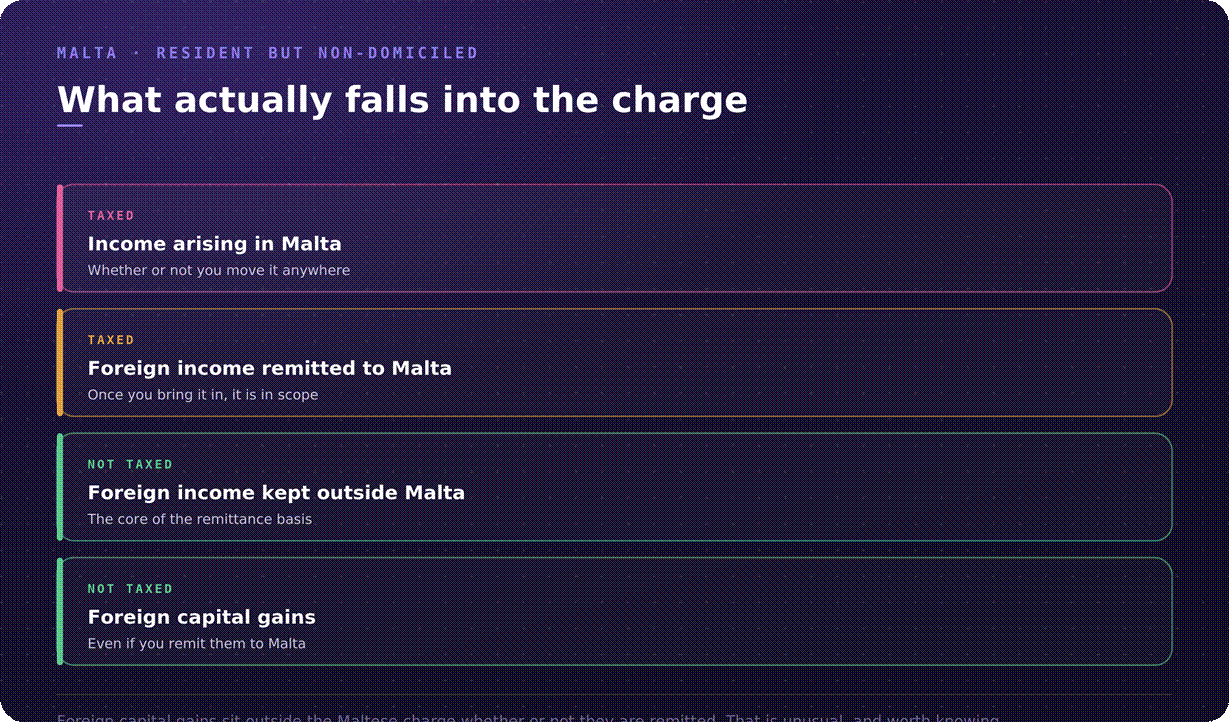
Four categories, and one of them surprises people.
Income | Maltese treatment for a resident non-dom |
Income arising in Malta | Taxable |
Capital gains arising in Malta | Taxable |
Foreign income remitted to Malta | Taxable |
Foreign income kept outside Malta | Not taxable |
Foreign capital gains | Not taxable, even if remitted |
Foreign capital gains are the standout. For a resident non-dom, foreign capital gains fall outside the Maltese charge whether or not they are remitted to Malta. That is a genuine distinction from income, and it is unusual among remittance-basis jurisdictions.
Foreign income can include employment income, freelance profits, dividends, interest, rental income, pensions and other investment returns. The source and character of each has to be established before the treatment can be confirmed.
Where the work is performed still matters
If you work physically from Malta for a foreign employer, the employment income is not automatically foreign simply because the employer is overseas. Where the duties are performed, the terms of the employment and any applicable treaty can all bear on it.
Equally, moving money to Malta does not fully describe what has happened. The source of the transfer, the underlying account history, and whether the funds represent income, capital or previously accumulated savings may all need documenting.
Case study: Felicity receives foreign investment income
Felicity is tax resident in Malta but remains non-domiciled. She receives dividends from an overseas portfolio and leaves them in an account outside Malta.
The dividends may stay outside the Maltese charge because they have not been remitted. If she transfers them to her Maltese account, the position changes and the remitted income may become taxable. She should keep records showing the original source of each payment, the date and amount, the account it was paid into, whether the funds were later transferred to Malta, and whether any amount represents capital rather than income.
The minimum tax charge
There is a cost to the remittance basis that is frequently left out of summaries.
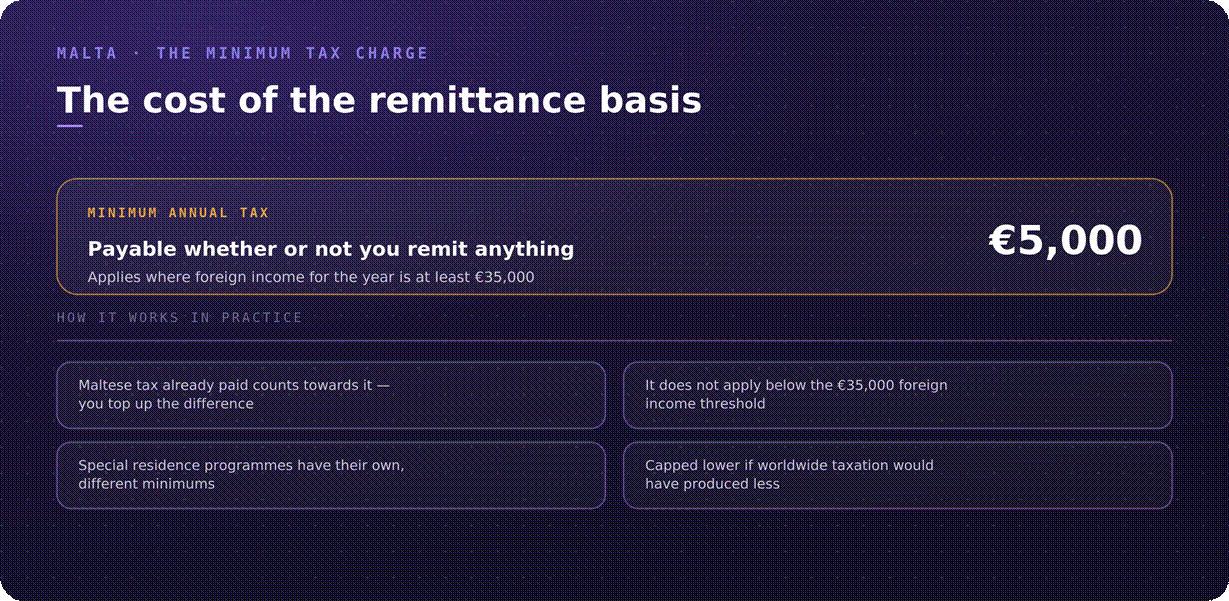
Payable whether or not anything is remitted.
A resident non-domiciled individual is subject to a minimum annual tax charge of €5,000, payable regardless of how much foreign income is actually remitted, where foreign income for the year is at least €35,000. For a married couple the combined income is taken into account.
Maltese tax already paid, including tax withheld, counts towards the minimum, so in practice you top up the difference. Below the €35,000 threshold the charge does not apply and ordinary rates govern. And if you can show that worldwide taxation would have produced a smaller liability, the amount may be agreed lower.
Special programmes are a different conversation. Malta's residence programmes — such as the Global Residence Programme, the Residence Programme and the Malta Retirement Programme — have their own minimum tax levels and their own rules. The €5,000 figure applies to res non-doms who are not within one of those schemes.
The 35% rate
Malta applies progressive bands, with 35% the highest rate for employment and self-employment income. It may apply to Maltese employment income, self-employment income from activities carried out in Malta, foreign income remitted to Malta, and other taxable income under the Maltese rules.
It does not mean all your worldwide income is taxed at 35%. The remittance basis restricts how much foreign income enters the charge — but it does not convert Maltese-source income into exempt income.
If you run an online business while working physically from Malta, consider where the activity is performed, whether it creates local taxable income, and and whether Maltese registration and reporting obligations arise.
Remittances and record-keeping
A remittance can extend beyond a simple bank transfer. Paying Maltese rent from an offshore account, using an overseas card for Maltese living costs, or arranging for someone else to meet your Maltese bills can each raise remittance questions.
Keep accounts clean from the start. Foreign capital, income and gains should sit in separate accounts with clear records. Once they are mixed, proving what was actually remitted becomes extremely difficult — and the burden is on you.
Malta participates in the automatic exchange of financial account information. The remittance basis is a tax rule, not a confidentiality rule, and offshore balances should never be treated as invisible.
Treaties and filing
Malta has 81 double taxation agreements, which may allocate taxing rights and provide relief where the same income is taxed twice. A treaty does not remove filing obligations, and the relief available depends on the income type and your residence position.
The tax year is the calendar year, and individual returns are generally due by 30 June of the following year. Tax on some income, such as employment income, is deducted at source.
Your checklist
1. Establish your domicile position, not just your residence;
2. Track your days in Malta, and record your date of arrival;
3. Separate foreign income, capital and gains into distinct accounts before you arrive;
4. Document the source of every transfer into Malta;
5. Check whether your foreign income reaches the €35,000 threshold for the minimum charge;
6. Consider whether a special residence programme would suit you better;
7. Review where your employment or business duties are physically performed;
8. Check the treaty position with the countries your income comes from; and
9. Prepare for the 30 June filing deadline.
Frequently asked questions
Do I have to remit anything to pay Maltese tax?
Not necessarily. A resident non-dom with at least €35,000 of foreign income is subject to a €5,000 minimum annual charge whether or not anything is remitted. Maltese tax already paid counts towards it.
Are foreign capital gains taxed if I bring them into Malta?
No. For a resident non-dom, foreign capital gains sit outside the Maltese charge whether or not they are remitted. That is different from foreign income, which becomes taxable on remittance.
Is 183 days the only way to become resident?
No. It is the main indicator, but accommodation, ties, work pattern and intention all matter. Someone moving to Malta to establish residence can be treated as resident from the date of arrival regardless of the day count that year.
What counts as remitting money to Malta?
More than a bank transfer. Paying Maltese rent or bills from an offshore account, using an overseas card for Maltese living costs, or having someone else pay on your behalf can all raise the question.
Is 35% what I will pay?
It is the top band of the progressive scale, applying to Maltese income and to foreign income you remit. The remittance basis limits how much foreign income enters the charge, but Maltese-source income is fully in scope.
Does the non-dom status expire?
Malta does not operate deemed domicile rules of the kind found elsewhere, so there is no fixed time limit on the status itself. Your domicile position is still a question of fact that can change.
What about the residence programmes?
Programmes such as the Global Residence Programme have their own rates and their own minimum tax levels, and they sit outside the ordinary res non-dom position. Which suits you depends on your income profile.
When do I file?
The tax year is the calendar year and individual returns are generally due by 30 June of the following year.
Official sources and further reading
Important information
This article is general information and does not constitute tax, legal, immigration or financial advice, and does not create a client relationship. Tax outcomes depend on travel history, income sources, treaty status and the law applying to the relevant year. Rates, thresholds and regimes change, and some measures described may be proposed rather than enacted; this article reflects our understanding as at the date of publication. Obtain advice from a suitably qualified professional before acting or refraining from action.
