
Foreign income is taxed in Mauritius only when you bring it in. What changed on 1 July 2026 is the rate waiting for it when you do — a new top band of 35%.
Mauritius is one of a small group of countries still operating a remittance basis for individuals, and that is the heart of its appeal to globally mobile people. A resident is taxed in full on Mauritius-source income, but foreign income is taxed only if and when it is brought into the country.
Two things have changed enough to invalidate most published guidance. The old flat 15% personal rate is gone, replaced by a progressive scale that now reaches 35%. And the 80% partial exemption frequently quoted in articles about Mauritius is a corporate provision — it has never been available to individuals on their personal income.
Residence is governed by section 73 of the Income Tax Act 1995, which sets out three alternative tests. Meeting any one of them is enough.
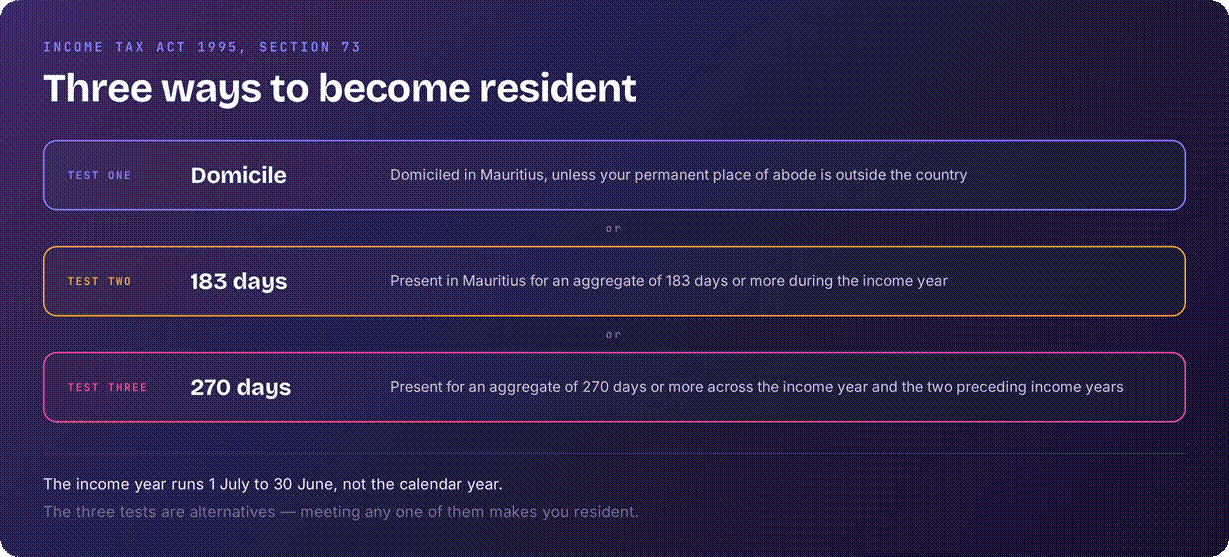
Meeting any one of the three tests is enough.
Your residency status is the first step
The three tests under section 73 are alternatives rather than cumulative conditions. You are resident if you are domiciled in Mauritius, unless your permanent place of abode is outside it; or present for an aggregate of 183 days or more in the income year; or present for an aggregate of 270 days or more across the income year and the two preceding income years.
The 270-day test is the one people miss, because it looks backwards across three years. Someone splitting time between Mauritius and elsewhere can become resident on an average of ninety days a year without ever crossing 183 in a single year.
Maintain accurate records of:
• Arrival and departure dates by income year, running July to June;
• Aggregate days for the current year and the two preceding years;
• Where your permanent place of abode is, if you are domiciled in Mauritius;
• Workdays physically performed in Mauritius;
• Every transfer of funds into Mauritius, with its source identified; and
• Any other country that may also treat you as resident.
The remittance basis, and what counts as a remittance
A resident individual is taxed on income derived in Mauritius and on foreign income received in Mauritius. Foreign income genuinely kept and used outside Mauritius generally falls outside the charge.
Income | Mauritius treatment |
Salary for work performed in Mauritius | Mauritius-source — taxable in full |
Income from a Mauritian business | Mauritius-source — taxable in full |
Rent from Mauritian property | Mauritius-source — taxable in full |
Foreign dividends kept abroad | Outside the charge |
Foreign rent kept abroad | Outside the charge |
Foreign income remitted to Mauritius | Taxable when received |
Foreign income spent abroad on a foreign card | Not treated as remitted, for qualifying visa holders |
Source is fact-sensitive. The location of your bank account does not determine the source of income, and income from work physically performed in Mauritius can be Mauritius-source even where a foreign payer pays into an overseas account. For remote work this is the point that needs advice rather than assumption.
The Finance Act 2026 clarified the mechanics for Premium Visa and Golden Visa holders: foreign-source income from work performed remotely is taxable only on remittance, amounts spent using a foreign credit or debit card are not regarded as remitted income, and funds deposited into a Mauritian bank account are not taxed where a declaration is provided that tax has already been paid abroad.
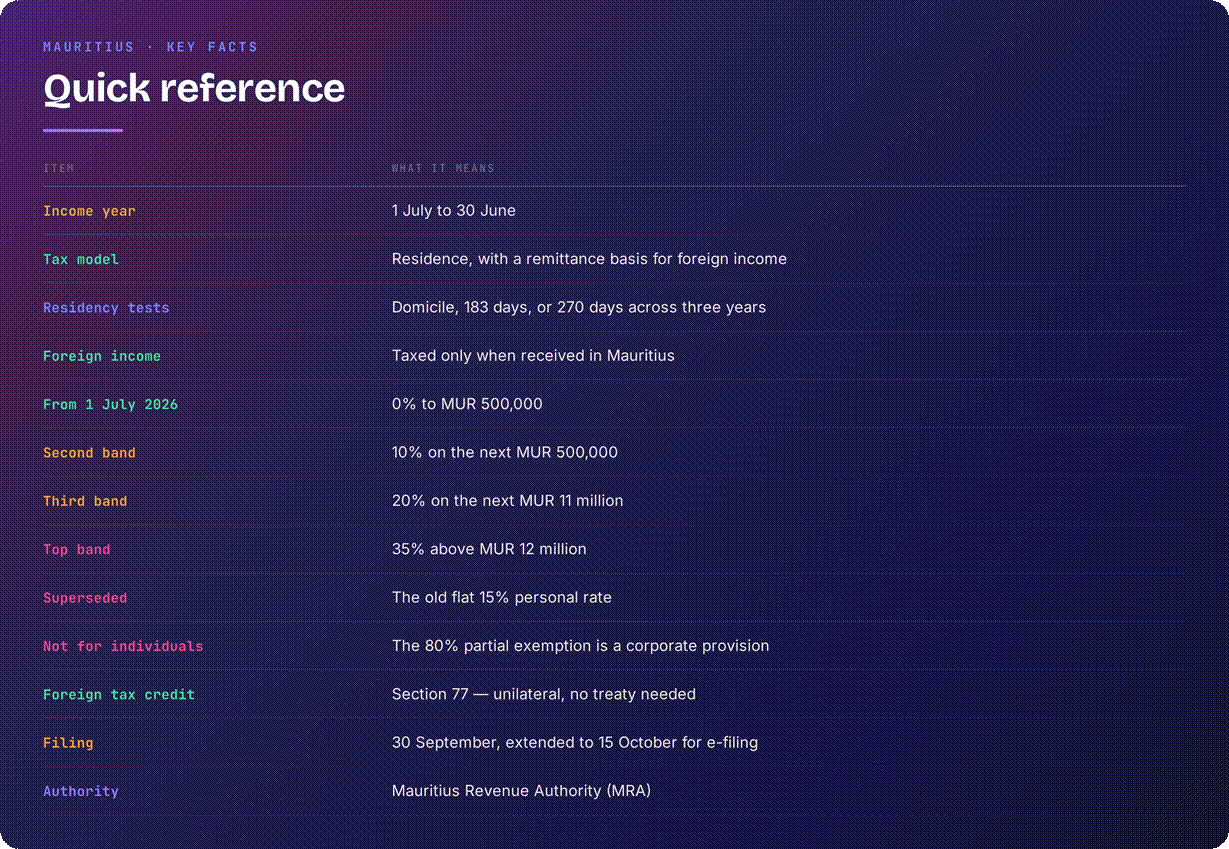
The Mauritian position at a glance.
The new bands
For the income year beginning 1 July 2026, chargeable income is taxed at 0% on the first MUR 500,000, 10% on the next MUR 500,000, 20% on the next MUR 11 million, and 35% above MUR 12 million. The individual Fair Share Contribution that applied as a transitional measure for 2025/26 does not continue alongside these bands.
This is a material change of character rather than a rate tweak. Mauritius spent years being described as a flat 15% jurisdiction; at the top of the scale it is now a 35% one, and any model built on the old figure will understate the liability substantially.
Relief for foreign tax
Where foreign income is remitted and taxed in Mauritius, section 77 provides a credit for foreign tax against the Mauritian charge on the same income. This is a unilateral provision — it is not dependent on a treaty being in place, which is a genuine advantage over jurisdictions where relief follows the treaty network.
Case study: Yusuf remits, Ingrid does not
Yusuf and Ingrid are both Mauritian tax residents with similar foreign portfolios generating around MUR 3 million a year in dividends and interest.
Yusuf brings the income into Mauritius to fund his living costs. It is taxable when received, on the bands above, with a credit for any foreign tax already paid on it. Ingrid leaves her portfolio income invested offshore and lives on capital she brought in before becoming resident. Her foreign income is not remitted, so it stays outside the charge.
The difference is not their wealth or their tax planning sophistication. It is whether the money crosses the border, and that makes record-keeping on transfers the single most important habit for a Mauritian resident.
Filing and the compliance calendar
The Mauritian income year runs 1 July to 30 June. The individual return is due by 30 September following the year end, with the deadline usually extended to 15 October for taxpayers filing electronically and paying electronically.
A return is generally required where, in the income year, you derived net income above the statutory threshold, gross business income above MUR 2 million, employment income subject to PAYE, or income subject to Tax Deduction at Source. Taxpayers with business income may also fall within the Current Payment System, which requires quarterly statements and payments during the year.
Prepare in good time:
• A Tax Account Number and e-filing access;
• Employee Declaration Form details from any Mauritian employer;
• A complete record of remittances into Mauritius with sources identified;
• Foreign income statements, whether remitted or not;
• Evidence of foreign tax paid, for the section 77 credit; and
• Day-count records on the July-to-June year.
Timing matters more than the headline rate
Model your position before you move, considering:
• Whether the 270-day backward-looking test catches you earlier than expected;
• How much of your living cost genuinely needs to be funded from foreign income;
• Whether capital accumulated before residence can fund the early years instead;
• Whether work performed physically in Mauritius will be Mauritius-source;
• Where your income falls against the new MUR 12 million threshold;
• Whether foreign tax already paid will generate a useful credit; and
• How the July-to-June year interacts with your other countries’ tax years.
Your Mauritius checklist
1. Work the three section 73 tests, not just the 183-day one;
2. Count days on the July-to-June income year, not the calendar year;
3. Check the 270-day test across the current and two preceding years;
4. Log every transfer into Mauritius with its source identified;
5. Separate pre-residence capital from post-residence foreign income;
6. Establish whether work performed in Mauritius is Mauritius-source;
7. Model your position against the MUR 12 million top band;
8. Collect evidence of foreign tax paid for the section 77 credit;
9. Register for a Tax Account Number and e-filing access; and
10. Diarise 30 September, or 15 October if filing electronically.
Frequently asked questions
Is Mauritius still a 15% flat tax country?
No. For the income year beginning 1 July 2026 there are four bands — 0%, 10%, 20% and 35% — with the top rate applying above MUR 12 million of chargeable income. Guidance still quoting a flat 15% personal rate is out of date.
What is the 80% exemption people mention?
It is a corporate partial exemption available to companies on specified categories of income, subject to substance conditions. It is not available to individuals on their personal income, and it is routinely misapplied in articles aimed at expats.
Is my foreign income taxed if I leave it abroad?
Generally not. A resident is taxed on Mauritius-source income and on foreign income received in Mauritius. Income genuinely kept and used outside the country typically falls outside the charge, though records matter.
Does spending on a foreign card count as a remittance?
For qualifying Premium Visa and Golden Visa holders, amounts spent using a foreign credit or debit card are not regarded as remitted income under the Finance Act 2026 clarifications. The position should be confirmed against your own status.
I work remotely for a foreign employer. Is that foreign income?
Not necessarily. Where the work is physically performed carries significant weight, so duties carried out from Mauritius can be Mauritius-source even though the employer and the payment sit abroad. This is the point that most needs advice.
How does the 270-day test work?
It looks at your aggregate presence across the current income year and the two preceding income years. Someone averaging ninety days a year can become resident under it without ever reaching 183 days in a single year.
Do I need a treaty to claim relief for foreign tax?
No. Section 77 provides a unilateral credit for foreign tax against the Mauritian charge on the same income, whether or not a treaty exists. Relief in Mauritius has never depended on treaty access.
When is the return due?
By 30 September following the 30 June year end, with the deadline usually extended to 15 October for taxpayers who file and pay electronically. Business income may also bring quarterly obligations during the year.
Official sources and further reading
Important information
This article is general information and does not constitute tax, legal, immigration or financial advice, and does not create a client relationship. Tax outcomes depend on travel history, income sources, treaty status and the law applying to the relevant year. Rates, thresholds and regimes change, and some measures described may be proposed rather than enacted; this article reflects our understanding as at the date of publication. Obtain advice from a suitably qualified professional before acting or refraining from action.
