
Mongolia taxes most income at 10% and investment income at 10% flat. Sales of immovable property are charged at 2% of the gross proceeds, which is among the lowest property disposal rates anywhere.
Mongolia charges resident individuals on a short progressive scale starting at 10%, and taxes investment income at a flat 10% regardless of amount. Non-residents pay a flat 20% on income earned in or sourced from Mongolia.
The entry rate covers a wide band. 10% applies to annual taxable income up to MNT 120 million, then 15% to MNT 180 million and 20% above that — so the top rate only engages at a level well beyond most professional salaries.
Investment income is treated separately and lightly. Dividends, royalties, interest and capital gains from the sale of securities are all taxed at 10% for residents, without being aggregated into the progressive scale.
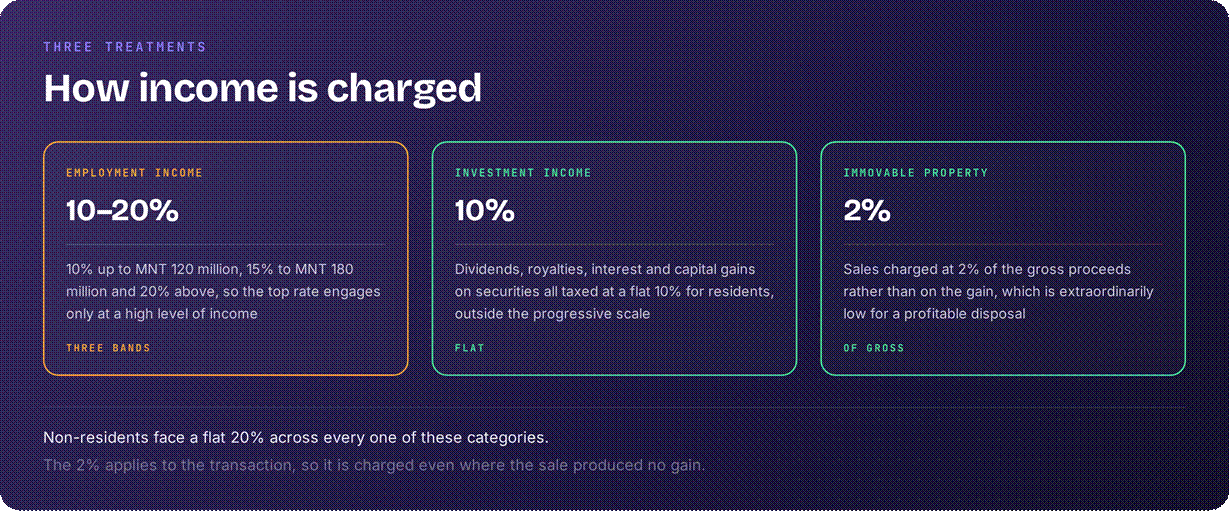
Three treatments, and the category decides the rate.
Your residency status is the first step
Mongolian tax residence broadly follows having a residence in Mongolia or being present in the country for a substantial part of the tax year. Residents are taxed on income earned in Mongolia and abroad; non-residents on income earned in or sourced from Mongolia.
Because the resident and non-resident rates diverge so sharply — 10% against 20% at the entry level — the residence position is materially more consequential here than in a country where both sides face similar rates.
The precise test should be confirmed with the General Department of Taxation for your own circumstances.
Maintain accurate records of:
• Days present in Mongolia during the tax year;
• Whether you maintain a residence in the country;
• Annual taxable income against the MNT 120 million and 180 million thresholds;
• Investment income separately from employment income;
• Gross proceeds on any immovable property disposal; and
• Any other country that may also treat you as resident.
The tax rates
Annual taxable income (MNT) | Residents / Non-residents |
0 to 120 million | 10% / 20% |
120 million to 180 million | MNT 12m plus 15% on the excess / 20% |
Above 180 million | MNT 21m plus 20% on the excess / 20% |
Dividends | 10% / 20% |
Royalties | 10% / 20% |
Interest | 10% / 20% |
Capital gains on securities | 10% / 20% |
Sale of immovable property | 2% of gross / 20% |
The 2% on immovable property is charged on the gross sale price, not on the gain. For a substantial gain that is extraordinarily cheap. For a disposal at or below cost it is a charge on a transaction that produced nothing, so the mechanism cuts both ways.
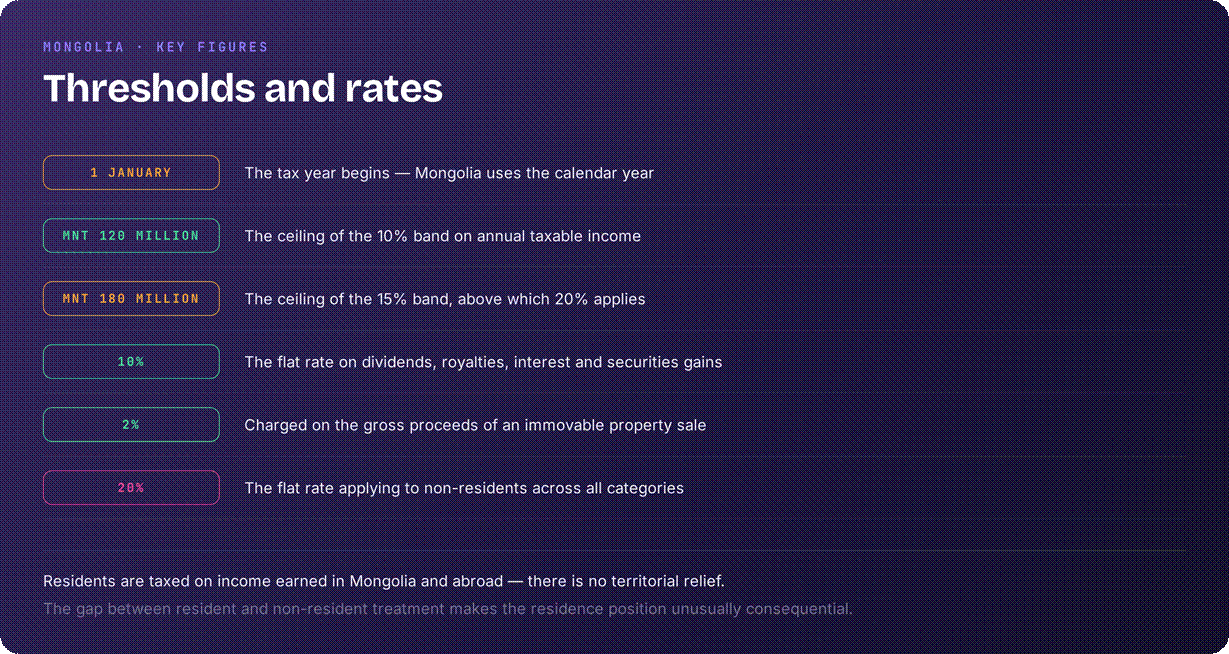
The thresholds and the deadlines that matter.
What makes Mongolia attractive
For a resident the position is considerably better than the 20% top rate suggests:
• A 10% entry rate covering annual income up to MNT 120 million, which is well beyond most professional salaries;
• Investment income at a flat 10% — dividends, royalties, interest and securities gains alike — without aggregation into the progressive scale;
• 2% of gross on immovable property sales, among the lowest disposal charges anywhere for a profitable sale;
• A short, legible three-band scale with no phase-outs or cliffs;
• A clear separation between employment income and investment income, making the position easy to model; and
• A very low cost of living outside the capital.
The honest qualifications are that residents are taxed on income earned in Mongolia and abroad, so there is no territorial shelter, and that the resident and non-resident rates diverge sharply — so someone who fails the residence test faces double the entry rate on the same income.
Case study: Batbold sells an apartment
Batbold bought an apartment in Ulaanbaatar some years ago and sells it at a substantial gain. In most systems the gain would be computed, a cost base deducted and a rate applied — often 15% to 30% of the profit.
In Mongolia the charge is 2% of the gross sale price. On a large gain relative to the price, that is a fraction of what a conventional gains tax would take, and there is no computation of cost base to argue about.
The reverse case is the one to watch. Had he sold at a loss, the 2% would still apply to the gross proceeds, because the charge is on the transaction rather than on the profit.
Filing and the compliance calendar
The Mongolian tax year follows the calendar year, and the system is administered by the General Department of Taxation. Employment income is withheld at source, and individuals with other income sources file under the published timetable.
Prepare in good time:
• Registration with the tax authority;
• Day-count records for the tax year;
• Income separated between employment and investment categories;
• Documentation of gross proceeds on any property disposal;
• Records of foreign income, where you are resident; and
• Confirmation of your residence position with the authority.
Establish residence, then the category
Consider:
• Whether you will meet the residence test, since the rates double if not;
• Where your income sits against MNT 120 million and 180 million;
• That investment income is a flat 10% and not aggregated;
• That property disposals are charged on gross proceeds, not the gain;
• That the 2% applies even to a loss-making sale;
• That residents are taxed on income earned at home and abroad; and
• That the precise residence test should be confirmed directly.
Your Mongolia checklist
1. Confirm your residence position with the General Department of Taxation;
2. Note that non-residents pay double the resident entry rate;
3. Model income against the MNT 120 million and 180 million thresholds;
4. Separate investment income, taxed at a flat 10%;
5. Remember investment income is not aggregated into the scale;
6. Calculate property disposals on gross proceeds, not the gain;
7. Note the 2% applies even to a loss-making sale;
8. Keep records of foreign income, since residents are taxed worldwide;
9. Register with the tax authority; and
10. Track days present across the tax year.
Frequently asked questions
What are the Mongolian income tax rates?
10% on annual taxable income up to MNT 120 million, MNT 12 million plus 15% to MNT 180 million, and MNT 21 million plus 20% above that. Non-residents pay a flat 20% on income earned in or sourced from Mongolia.
How is investment income taxed?
At a flat 10% for residents — dividends, royalties, interest and capital gains from the sale of securities alike — without being aggregated into the progressive scale. Non-residents pay 20% on the same categories.
How are property sales taxed?
At 2% of the gross sale proceeds rather than on the gain. For a profitable disposal that is extraordinarily cheap; for a sale at or below cost it is still charged, because the basis is the transaction rather than the profit.
Does Mongolia tax foreign income?
Residents are taxed on income earned in Mongolia and abroad, so there is no territorial shelter. Non-residents are taxed only on income earned in or sourced from Mongolia.
Why does residence matter so much here?
Because the rates diverge sharply. A resident faces 10% at the entry level while a non-resident faces 20% on the same income, and the gap runs across investment income and property disposals as well.
When does the top rate apply?
Above MNT 180 million of annual taxable income, which is a level well beyond most professional salaries. The 10% band covering everything up to MNT 120 million does most of the work.
How do I become tax resident?
Residence broadly follows having a residence in Mongolia or being present for a substantial part of the tax year. Because the consequences are significant, the precise test should be confirmed with the General Department of Taxation.
When does the tax year run?
The calendar year. Employment income is withheld at source, and individuals with other income sources file under the published timetable.
Official sources and further reading
• General Department of Taxation of Mongolia
Important information
This article is general information and does not constitute tax, legal, immigration or financial advice, and does not create a client relationship. Tax outcomes depend on travel history, income sources, treaty status and the law applying to the relevant year. Rates, thresholds and regimes change, and some measures described may be proposed rather than enacted; this article reflects our understanding as at the date of publication. Obtain advice from a suitably qualified professional before acting or refraining from action.
