
Morocco is not a tax haven, and an article that pretends otherwise would mislead you. Residents are taxed on worldwide income at progressive rates reaching 37%. What Morocco has instead is two specific reliefs, aimed at two very different people, and both are unusually generous.
The first is for retirees: an 80% reduction in income tax on foreign pensions brought into Morocco, and from 2026 a full exemption for those whose only income is a basic pension. The second is for senior employees: a flat 20% rate for staff of companies holding Casablanca Finance City status.
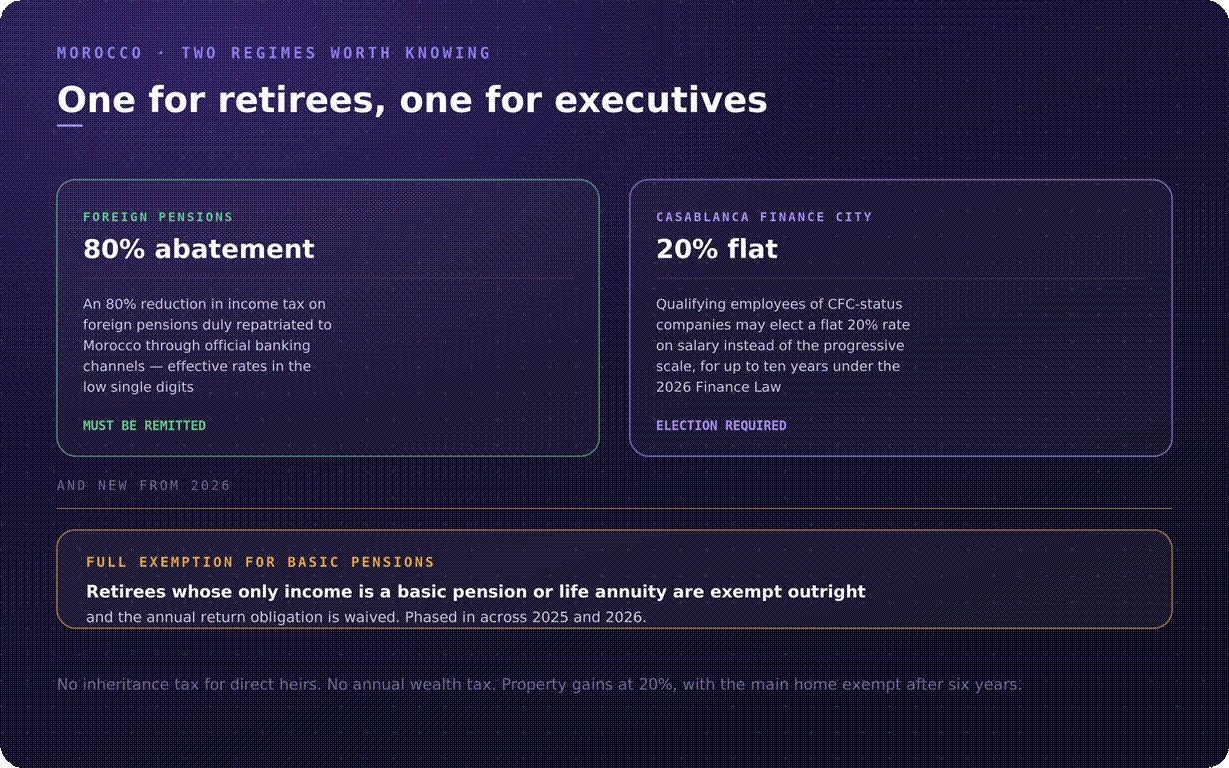
Two reliefs, two audiences, both within a worldwide system.
The pension abatement
A Moroccan resident receives an 80% reduction in income tax on foreign-source pensions duly repatriated to Morocco. Only a fifth of the tax that would ordinarily arise is payable, which on a typical European state pension produces an effective rate in the low single digits.
The word doing the work is "repatriated". The relief applies to pensions brought into Morocco through official banking channels. A pension left sitting in an account abroad does not qualify. This is a remittance condition in substance, and it needs building into how you arrange your banking before you move, not after.
It is also not automatic in the first year. You have to file and claim it; in later years it is generally applied for you. Keep bank statements, pension authority documentation, your residence certificates and the foreign currency credit notes that evidence the transfer.
New from 2026: full exemption for basic pensions
The Finance Law went further. Retirees whose only income consists of basic pensions and life annuities paid under group insurance contracts are now fully exempt from income tax, and the obligation to file an annual return is waived for them. The measure was phased in, with half applying in 2025 and the remainder from 2026.
The distinction matters: the exemption covers basic schemes, not supplementary ones. If your income includes a supplementary pension, investment income or rental income, you are outside the full exemption and back with the 80% abatement on the pension element.
Casablanca Finance City
The second regime is for working people rather than retired ones. Employees of companies holding CFC status may elect to be taxed at a flat 20% on gross salary instead of the progressive scale.
The 2026 Finance Law extended it. The election now runs for a maximum of ten years from the date the employee takes up the position, counted whether the period is continuous or not, and disregarding time worked outside CFC-status companies. Older guidance describing a five-year period predates this change.
The election is made through your employer on a prescribed form, before 1 February of the year concerned, and it can be terminated the same way. That is worth knowing because the flat rate is not always better: at lower salary levels the progressive scale, with its exempt band and family allowances, can produce less tax. Model both before electing.
Becoming Moroccan tax resident
Three tests exist, and meeting any one of them makes you habitually resident.
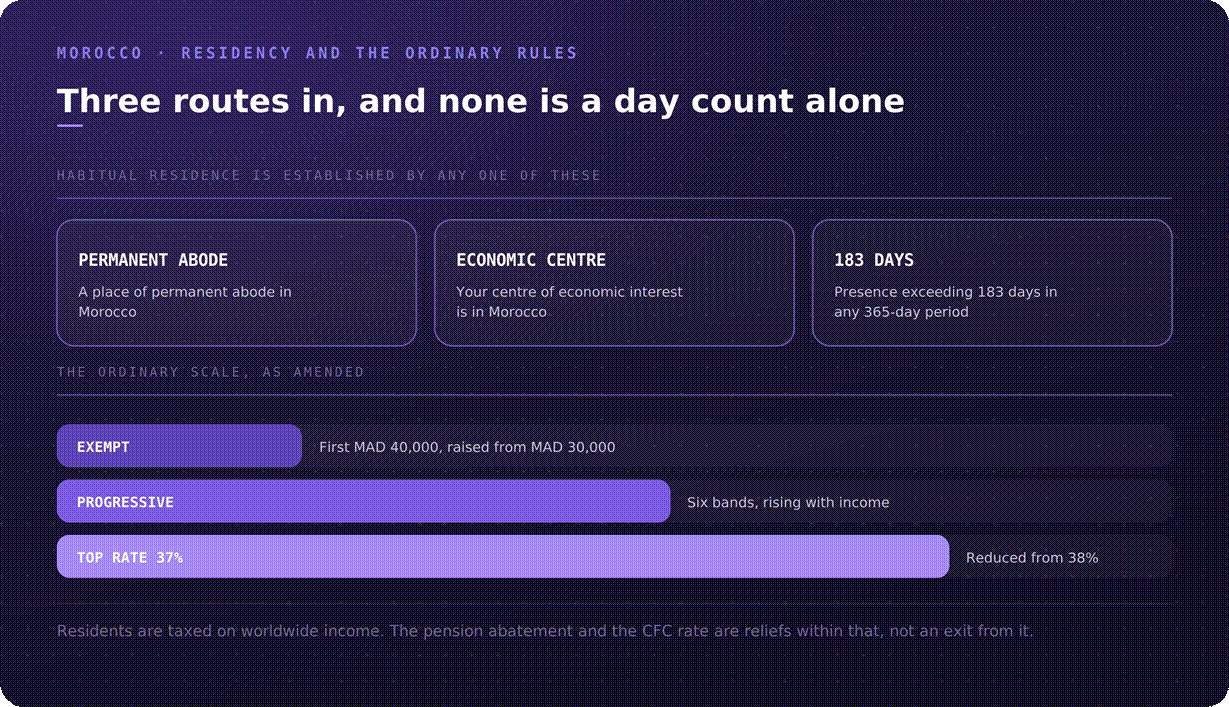
Habitual residence, and the scale that applies once you have it.
You are resident if you have a place of permanent abode in Morocco, if your centre of economic interest is in Morocco, or if you are present for more than 183 days in any 365-day period. Note that the day count runs on a rolling basis rather than by calendar year, so a stay spanning New Year can pass the threshold without either year looking problematic alone.
Once resident, worldwide income is in scope. Both reliefs discussed here sit inside that framework rather than replacing it.
The ordinary rules
The Finance Law 2025 reshaped the scale: the exempt threshold rose from MAD 30,000 to MAD 40,000, the top rate came down from 38% to 37%, and the bands in between were widened. Family allowances also increased.
Income | Moroccan treatment for a resident |
Foreign pension, repatriated | 80% reduction in income tax |
Basic pension or life annuity only | Exempt outright, with no annual return required |
Salary at a CFC-status company | 20% flat, by election, for up to ten years |
Ordinary employment and business income | Progressive to a top rate of 37% |
Property gains | 20%, with the main home exempt after six years |
Inheritance to direct heirs | No inheritance tax |
Net wealth | No annual wealth tax |
Deductions are available for contributions to approved Moroccan pension schemes, for dependent children up to a limit, and for life insurance premiums within a cap.
The capital gains position is worth knowing. Gains on real estate are taxed at 20%, with full exemption for a main residence held for six years or more. There is no annual wealth tax, and no inheritance tax for direct heirs — spouse, children and parents — which makes Morocco notably straightforward for family succession compared with most of Europe.
Other changes to be aware of
Two further measures from the 2026 reforms affect people arriving. From 1 July 2026, certain institutional payers must withhold 5% on rental income, creditable against your final liability rather than being a final tax. And newly created entities may qualify for an exemption on gross monthly salary up to MAD 10,000 for 24 months for qualifying new hires, subject to conditions.
Separately, the corporate tax reform reached its final stage on 1 January 2026, with most companies at 20%, large standard companies at 35% and financial institutions at 40%. If you are moving a business rather than yourself, that is the number that matters.
Morocco has been fully compliant with the Common Reporting Standard since 2018 and has been removed from the relevant EU and FATF watchlists. Offshore accounts are visible; the reliefs here are statutory, not opacity.
Your checklist
1. Establish which of the three residency tests you will meet, and when;
2. If retiring, confirm whether your pension is a basic scheme or a supplementary one;
3. Arrange banking so pensions are genuinely repatriated through official channels;
4. File and claim the abatement in your first year rather than assuming it applies;
5. If employed, confirm whether your employer holds CFC status;
6. Model the 20% election against the progressive scale before choosing;
7. Diarise the 1 February deadline for making or ending the CFC election;
8. Check the treaty position with the country paying your pension;
9. Keep bank statements, pension documentation and residence certificates; and
10. Take Moroccan advice before the first tax year rather than after it.
Frequently asked questions
How much tax will I actually pay on a foreign pension?
With the 80% abatement, only a fifth of the normal liability arises, which typically produces an effective rate in the low single digits. If your only income is a basic pension or life annuity, you may now be exempt outright.
Do I have to bring the pension into Morocco?
For the abatement, yes. The relief applies to pensions duly repatriated through official banking channels. Leaving the money abroad takes it outside the relief.
Does the full exemption cover every pension?
No. It covers basic pensions and life annuities under group insurance contracts, for people whose only income is those. Supplementary pensions, investment income or rent put you outside it.
Is the CFC rate five years or ten?
Ten, under the 2026 Finance Law, counted from when you take up the position and disregarding time worked outside CFC companies. Guidance quoting five years predates the change.
Is the 20% flat rate always better?
No. It replaces the progressive scale entirely, so you lose the exempt band and family allowances. At more modest salaries the ordinary scale can cost less. Model both, then elect before 1 February.
How do I become Moroccan tax resident?
By having a permanent abode there, having your centre of economic interest there, or spending more than 183 days in any 365-day period. The rolling period is the detail people miss.
Is there inheritance or wealth tax?
No annual wealth tax, and no inheritance tax for direct heirs — spouse, children and parents. Property gains are taxed at 20%, with the main home exempt after six years.
What is the top rate of income tax?
37%, reduced from 38%, with the exempt threshold raised to MAD 40,000 under the Finance Law 2025. Residents are taxed on worldwide income at that scale unless a specific relief applies.
Official sources and further reading
Important information
This article is general information and does not constitute tax, legal, immigration or financial advice, and does not create a client relationship. Tax outcomes depend on travel history, income sources, treaty status and the law applying to the relevant year. Rates, thresholds and regimes change, and some measures described may be proposed rather than enacted; this article reflects our understanding as at the date of publication. Obtain advice from a suitably qualified professional before acting or refraining from action.
