
Myanmar residence is decided by a single day count, and the consequences are unusually stark. Residents get progressive bands and a 20% relief. Non-residents get a flat 25% and nothing else.
In most countries the residence test changes the scope of the charge. In Myanmar it changes the scope, the rate structure and the reliefs all at once, which makes the 183-day test the single biggest variable in the system.
A resident — present in Myanmar for 183 days or more in the tax year — is taxed on worldwide income at progressive rates from 0% to 25%, after a 20% basic personal relief. A non-resident is taxed at a flat 25% on Myanmar-source income, with no reliefs and no allowances.
The tax year runs 1 April to 31 March, which misaligns with the calendar year and with most of the countries an inbound worker will have come from.
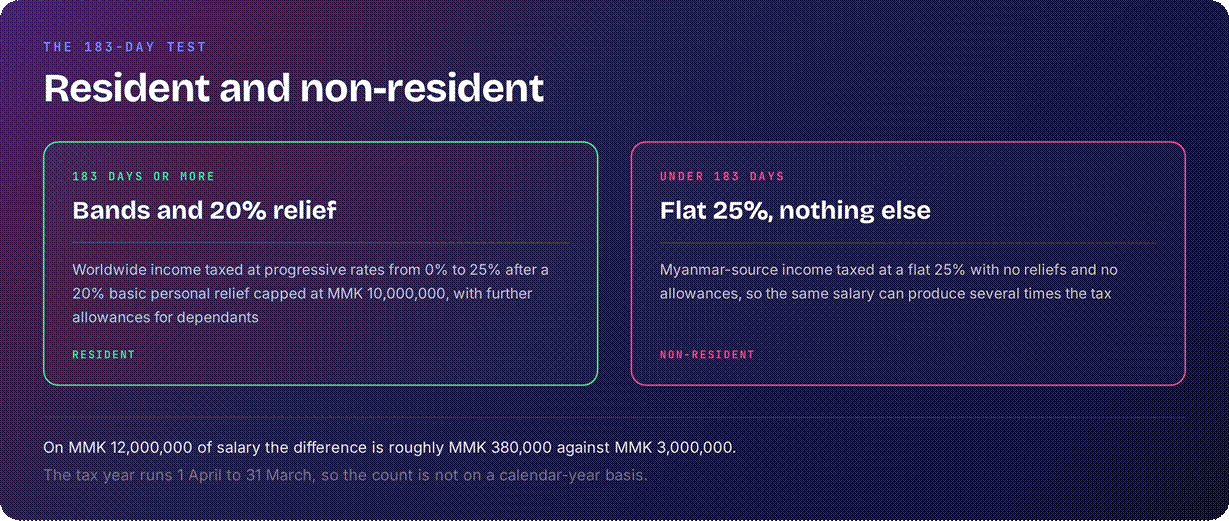
Same salary, and where the day count leaves you.
Your residency status is the first step
The test is a day count. A foreign national present in Myanmar for 183 days or more in the tax year is resident; below that they are non-resident. Days of physical presence count, including arrivals and departures, and short trips out do not typically break residency provided the in-year total remains at 183 or above.
Residents are liable on worldwide income — salary, business profits, dividends, interest, royalties and rental income earned anywhere are added together before the relief and the bands are applied. Non-residents are liable only on Myanmar-source income.
Maintain accurate records of:
• Days present across the April-to-March tax year;
• Arrival and departure dates, both of which count;
• Worldwide income by category, if resident;
• Foreign currency amounts and the conversion date used;
• Spouse, child and parent allowances claimed; and
• Any other country that may also treat you as resident.
The tax rates
Annual taxable income (MMK) | Resident rate |
0 to 2,000,000 | 0% |
2,000,000 to 10,000,000 | 5% |
10,000,000 to 30,000,000 | 10% |
30,000,000 to 50,000,000 | 15% |
50,000,000 to 70,000,000 | 20% |
Above 70,000,000 | 25% |
Basic personal relief, residents | 20% of salary, capped at MMK 10,000,000 |
Non-residents | 25% flat, no reliefs |
Foreign income must be converted at the Central Bank reference rate on the date received, which matters for anyone with income in several currencies. Foreign rental income held in joint names is split on the agreed ownership ratio.
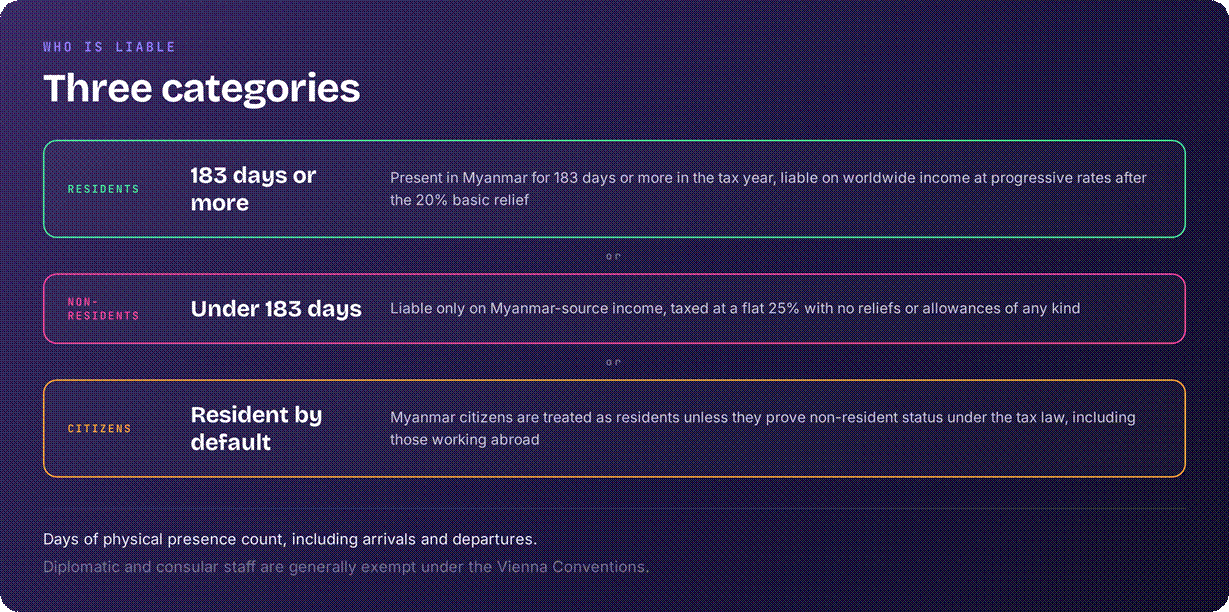
What each side of 183 days brings.
What makes Myanmar workable
For a resident the position is more favourable than the flat 25% suggests:
• A 20% basic personal relief on assessable salary income before the bands apply;
• Further spouse, child and parent allowances for residents with dependants;
• A nil band covering the first MMK 2,000,000 of taxable income;
• A 5% band running to MMK 10,000,000, so lower and middle earners face very modest effective rates;
• The 25% top rate only engaging above MMK 70,000,000; and
• Collection through PAYE withholding, remitted by the employer by the 15th.
The honest qualifications are significant. Residents are taxed on worldwide income with no territorial relief; non-residents lose every relief and pay 25% from the first kyat; and the practical, banking and operating environment in Myanmar is difficult in ways that no tax position offsets.
Case study: the same salary, two answers
Take a gross salary of MMK 12,000,000. A resident deducts the 20% basic relief — MMK 2,400,000 — leaving taxable income of MMK 9,600,000. Nothing is charged on the first MMK 2,000,000 and 5% on the remaining MMK 7,600,000, giving MMK 380,000 for the year.
A non-resident on the same MMK 12,000,000 gets no relief and pays a flat 25% on the whole amount — MMK 3,000,000.
That is roughly eight times the tax on identical pay, decided entirely by whether the day count reaches 183. Few systems put so much weight on a single number.
Filing and the compliance calendar
The tax year runs 1 April to 31 March. Employers withhold personal income tax from salaries through PAYE and remit to the Internal Revenue Department by the 15th of the following month. Directors and freelancers are separately liable on their own basis.
Diplomatic and consular staff are generally exempt under the Vienna Conventions and Myanmar’s bilateral practice.
Prepare in good time:
• Registration and a taxpayer identification arrangement;
• Day-count records on the April-to-March year;
• Worldwide income records, if resident;
• Central Bank reference rates used for currency conversion;
• Documentation supporting spouse, child and parent allowances; and
• Monthly PAYE remittance records.
Count the days carefully
Consider:
• That 183 days changes the rate structure, not just the scope;
• That the tax year runs April to March, not January to December;
• That arrival and departure days both count;
• That the 20% basic relief is capped at MMK 10,000,000;
• That residents are taxed on worldwide income;
• That Myanmar citizens are residents by default; and
• The practical operating environment alongside the tax position.
Your Myanmar checklist
1. Count days on the April-to-March tax year, not the calendar year;
2. Include arrival and departure days in the count;
3. Establish whether you will reach 183 days before planning;
4. Apply the 20% basic relief, capped at MMK 10,000,000;
5. Claim spouse, child and parent allowances if resident;
6. Report worldwide income if resident, not just Myanmar income;
7. Convert foreign income at the Central Bank rate on the date received;
8. Split jointly held foreign rental income by ownership ratio;
9. Ensure PAYE is remitted by the 15th each month; and
10. Note that citizens are residents by default.
Frequently asked questions
How is Myanmar tax residence decided?
By a single day count. Presence in Myanmar for 183 days or more in the tax year makes you resident; below that you are non-resident. Days of physical presence count, including arrivals and departures.
Why does the test matter so much?
Because it changes the rate structure and the reliefs, not just the scope. A resident faces progressive 0% to 25% bands after a 20% basic relief; a non-resident faces a flat 25% with nothing. On the same salary the difference can be several times the tax.
What is the 20% basic relief?
A relief on assessable salary income available to residents, capped at MMK 10,000,000 a year. Non-residents are not eligible for it or for any other allowance.
Does Myanmar tax foreign income?
For residents, yes. Salary, business profits, dividends, interest, royalties and rental income earned anywhere in the world are added together before the relief and the bands apply. Non-residents are liable only on Myanmar-source income.
When does the tax year run?
1 April to 31 March. That misalignment with the calendar year affects day counting and matching income, particularly for someone arriving from a January-to-December system.
What are the bands?
Nil to MMK 2,000,000, then 5% to MMK 10,000,000, 10% to MMK 30,000,000, 15% to MMK 50,000,000, 20% to MMK 70,000,000 and 25% above.
How is foreign currency income converted?
At the Central Bank reference rate on the date the income is received, which matters for anyone earning across several currencies during the year.
Are citizens treated differently?
Yes. Myanmar citizens are residents by default unless they prove non-resident status under the tax law, which affects citizens working abroad in particular.
Official sources and further reading
Important information
This article is general information and does not constitute tax, legal, immigration or financial advice, and does not create a client relationship. Tax outcomes depend on travel history, income sources, treaty status and the law applying to the relevant year. Rates, thresholds and regimes change, and some measures described may be proposed rather than enacted; this article reflects our understanding as at the date of publication. Obtain advice from a suitably qualified professional before acting or refraining from action.
