
Nepal starts its resident scale at 1% and sets a higher first-band threshold for couples than for individuals. Non-residents get neither — a flat 25% with no bands at all.
Nepal’s resident scale opens at 1%, which is among the lowest entry rates anywhere. It then climbs through 10%, 20% and 30% to a top rate of 36% on income above NPR 2,000,000.
The structure has a feature rarely found elsewhere: the first band threshold is higher for couples than for individuals. A couple filing on that basis gets a larger amount taxed at the 1% rate before the 10% band begins.
Non-residents are treated very differently. They face a flat 25% on Nepal-source income with no progressive bands and no basic threshold — so the entry rate advantage is available only to residents.
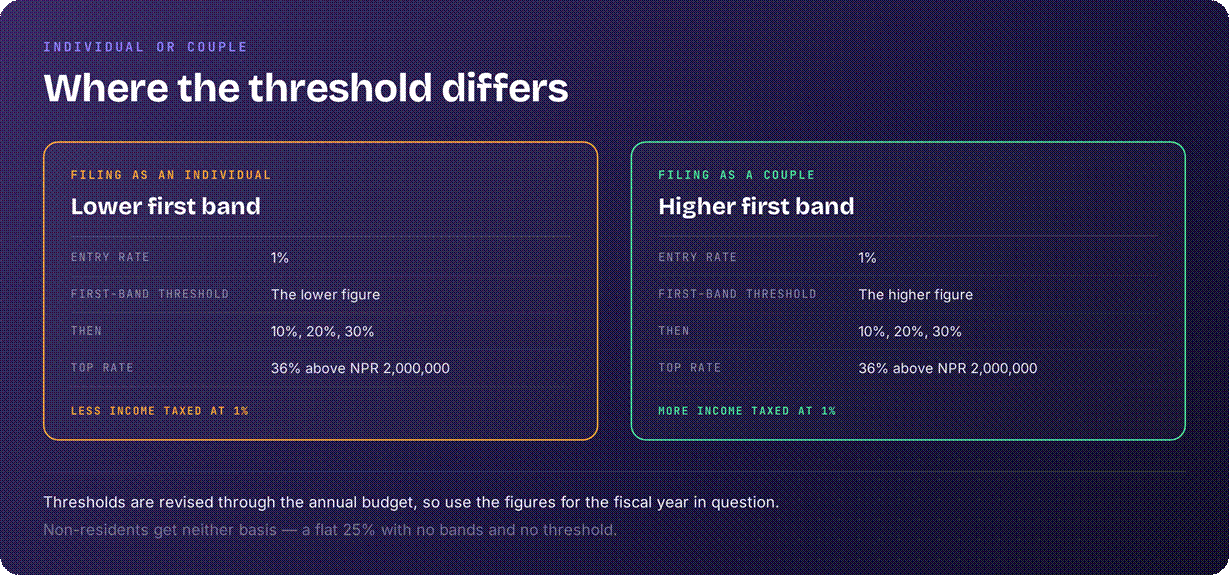
Two filing bases, and the threshold differs.
Your residency status is the first step
An individual is generally resident if they remain in Nepal for 183 days or more in a period of 365 days. Resident individuals are taxed on income generated regardless of its source; non-resident individuals on their Nepalese-source income only.
Residence also attaches to an employee of the Government of Nepal deployed in any foreign country, regardless of days.
Because non-residents lose both the progressive bands and the basic threshold, the residence position is materially more consequential in Nepal than the rate difference alone suggests.
Maintain accurate records of:
• Days present across rolling 365-day periods;
• Whether you are filing as an individual or as a couple;
• Income by source, Nepalese and foreign;
• Bank deposits held outside a business, for the 5% interest rate;
• Dividend receipts and whether withholding was final; and
• Any other country that may also treat you as resident.
The tax rates
Item | Position |
First band, individual | 1%, on a lower threshold |
First band, couple | 1%, on a higher threshold |
Next band | 10% |
Following band | 20% |
Following band | 30% |
Above NPR 2,000,000 | 36% |
Non-residents | 25% flat, no bands, no threshold |
Dividends | 5% final withholding |
Thresholds are revised through the annual budget, so the figures for the first, second and subsequent bands move from year to year. Any calculation should use the thresholds published for the fiscal year in question rather than a figure taken from an older guide.
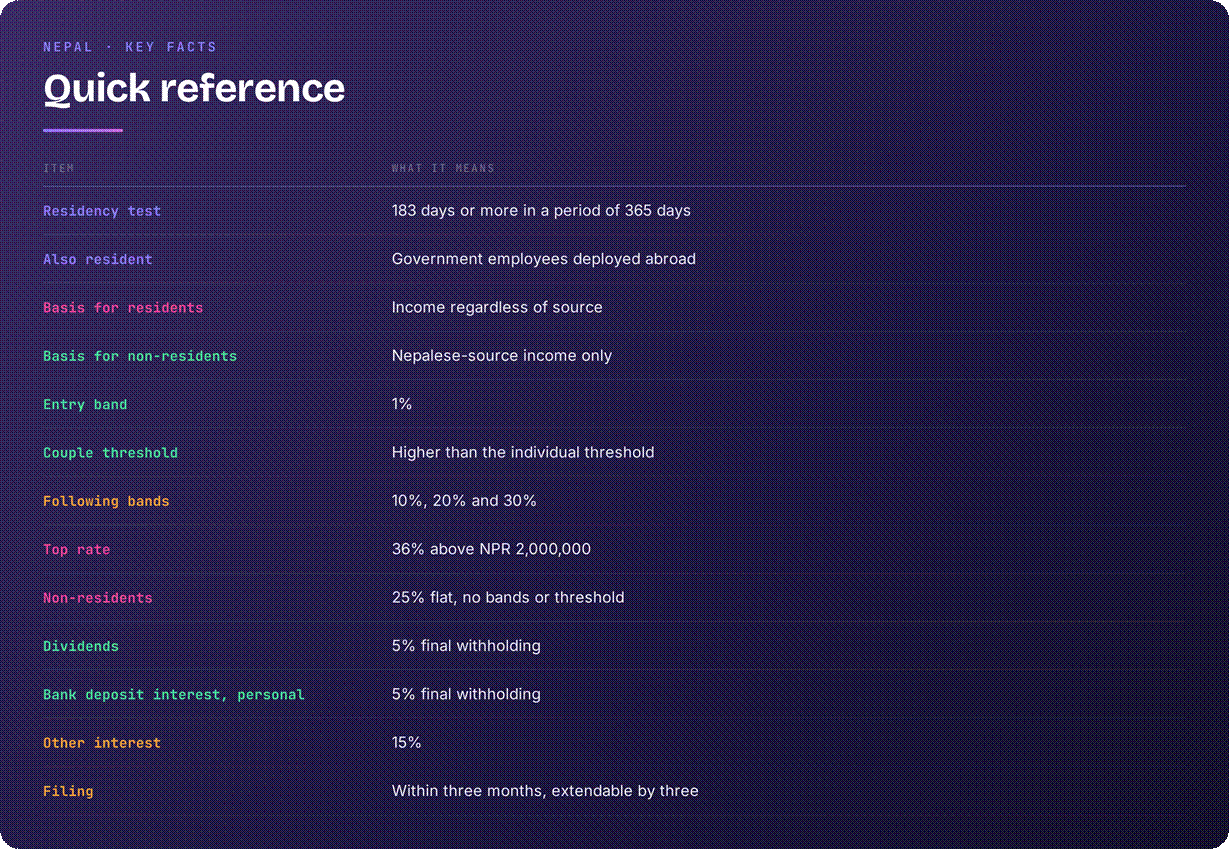
The Nepalese position at a glance.
What makes Nepal attractive
For a resident the entry position is unusually light:
• A 1% entry band, among the lowest anywhere, covering the first slice of income entirely;
• A higher first-band threshold for couples, which is a genuine structural advantage for a household;
• Dividends at a 5% final withholding, with distributions of already-taxed income exempt;
• Bank deposit interest at 5% for a natural person where the deposit is outside a business, against 15% otherwise;
• A three-month filing window after year end, extendable by a further three on application; and
• A low cost of living.
The honest qualifications are that residents are taxed on income regardless of source, that the 36% top rate arrives at a relatively modest level of income, and that non-residents face a flat 25% with no threshold at all.
Case study: filing as a couple
Two people on the same combined income can reach a different answer depending on whether they fall within the individual or the couple threshold for the first band.
The couple threshold is higher, so more of the income is taxed at 1% before the 10% band begins. The saving is modest in absolute terms but it applies every year and requires nothing beyond the correct filing basis.
It is a small feature and easy to miss, which is exactly why it is worth checking rather than assuming the individual figures apply.
Filing and the compliance calendar
Each taxpayer files a return of income for the tax year within three months after the end of that year, with an extension of up to a further three months available on application.
Dividends distributed by a resident company to a resident or non-resident person are subject to a 5% final withholding, and the distribution of dividends derived after final withholding is exempt. Dividends of a non-resident entity distributed to a resident beneficiary are taxed as part of the beneficiary’s income.
Prepare in good time:
• Registration with the Inland Revenue Department;
• Day-count records across 365-day periods;
• Confirmation of your filing basis, individual or couple;
• The published thresholds for the fiscal year in question;
• Records of bank deposits held outside a business; and
• Evidence of withholding suffered, and whether it was final.
Check the year’s thresholds
Consider:
• That the entry band is 1%, but the threshold moves annually;
• That couples have a higher first-band threshold than individuals;
• That residents are taxed on income regardless of source;
• That non-residents face a flat 25% with no threshold;
• That the 36% top rate arrives above NPR 2,000,000;
• That bank deposit interest outside a business is 5%; and
• That the filing window is three months, extendable by three.
Your Nepal checklist
1. Use the thresholds published for the fiscal year in question;
2. Confirm whether you file as an individual or a couple;
3. Note the couple threshold for the first band is higher;
4. Count days across rolling 365-day periods;
5. Remember residents are taxed on income regardless of source;
6. Note non-residents get a flat 25% with no threshold;
7. Check whether bank deposits sit outside a business, for the 5%;
8. Treat dividend withholding as final where it applies;
9. File within three months of year end; and
10. Apply for the extension early if you need it.
Frequently asked questions
What is the Nepalese entry tax rate?
1%, which is among the lowest anywhere. The scale then rises through 10%, 20% and 30% to a top rate of 36% on income above NPR 2,000,000.
Do couples get a different threshold?
Yes. The first-band threshold is higher for couples than for individuals, so more income is taxed at the 1% rate before the 10% band begins. It is a small but recurring advantage.
How are non-residents taxed?
At a flat 25% on Nepalese-source income, with no progressive bands and no basic threshold. The entry rate advantage is available only to residents.
Does Nepal tax foreign income?
Resident individuals are taxed on income generated regardless of its source. Non-resident individuals are taxed only on Nepalese-source income.
How do I become tax resident?
Generally by remaining in Nepal for 183 days or more in a period of 365 days. Residence also attaches to an employee of the Government of Nepal deployed in any foreign country, regardless of days.
How are dividends taxed?
At a 5% final withholding on distributions by a resident company to a resident or non-resident person, with the distribution of dividends derived after final withholding exempt. Dividends from a non-resident entity to a resident beneficiary are taxed as part of that beneficiary’s income.
What about interest?
Interest sourced in Nepal and paid by a resident person is generally 15%. Where it is paid by a bank or financial institution to a natural person on a deposit not related to a business, a 5% final withholding applies instead.
When do I file?
Within three months after the end of the tax year, with an extension of up to a further three months available on application.
Important information
This article is general information and does not constitute tax, legal, immigration or financial advice, and does not create a client relationship. Tax outcomes depend on travel history, income sources, treaty status and the law applying to the relevant year. Rates, thresholds and regimes change, and some measures described may be proposed rather than enacted; this article reflects our understanding as at the date of publication. Obtain advice from a suitably qualified professional before acting or refraining from action.
