
New migrants get four years free of New Zealand tax on most foreign income. Foreign employment income and income from supplying services are carved out which is precisely what a remote worker earns.
New Zealand offers one of the most generous inbound reliefs anywhere: four years during which a new migrant pays no New Zealand tax on most foreign income. It is automatic, it requires no application, and it covers a remarkably wide range of income.
It also contains an exclusion that is easy to read past and expensive to misjudge. Foreign employment income earned while you are a transitional resident, and income from the supply of services, are outside the exemption. For someone moving to New Zealand to keep working remotely for an overseas employer, the relief delivers nothing at all on the salary.
New Zealand follows a residence taxation model. Residents are taxed on worldwide income; non-residents are taxed on New Zealand-source income. The transitional resident rules sit on top as a time-limited exemption.
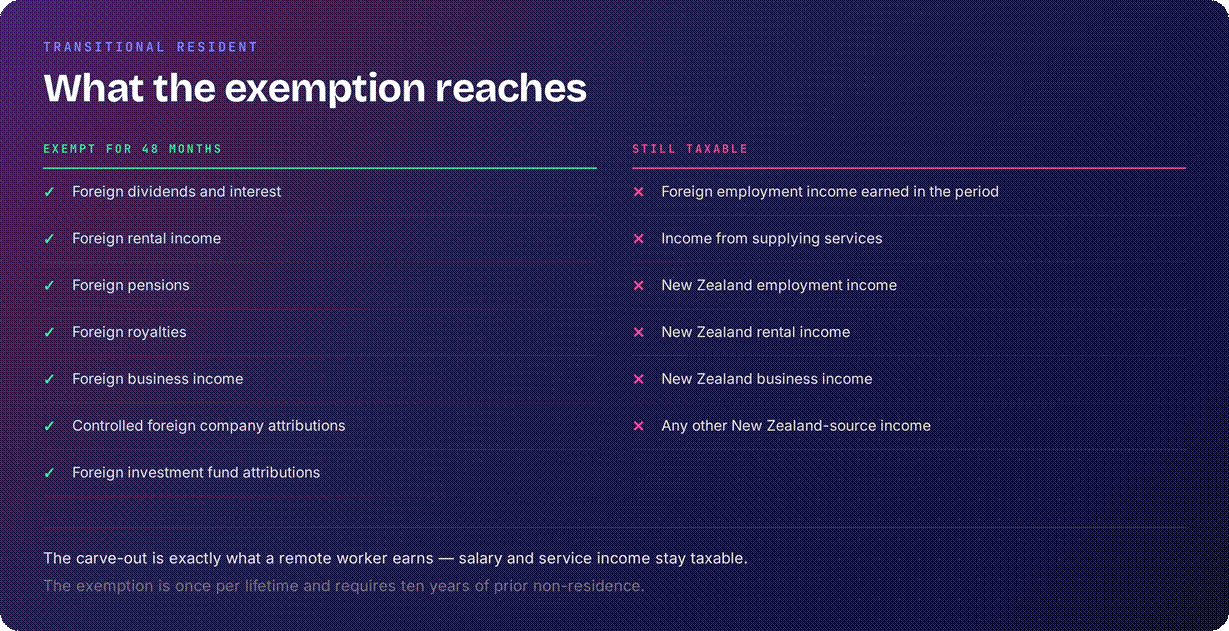
The exclusion is what a remote worker earns.
Your residency status is the first step
You become a New Zealand tax resident if you are present in New Zealand for more than 183 days in any 12-month period, or if you have a permanent place of abode in New Zealand. Where the 183-day test applies, residence is backdated to the first of those days, so the status can begin earlier than you expect.
Part days count as whole days for the test, which matters more than it sounds. The permanent place of abode test is separate and looks at your connections such as housing arrangements above all, but also family, employment, investments and personal ties. It can make you resident even where the day count does not.
Ceasing residence is harder than starting it. You generally need to be absent for more than 325 days in a 12-month period and to have lost any permanent place of abode in New Zealand.
Maintain accurate records of:
• Arrival and departure dates, with part days counted as whole days;
• Days present across rolling 12-month periods;
• Housing arrangements, including property owned or available to you;
• Where your family lives and where your investments sit;
• The date you first met a residence test, because the exemption runs from it; and
• Evidence of the ten-year period of non-residence before arrival.
What the exemption covers, and what it does not
A transitional resident is exempt from New Zealand tax on most foreign-sourced income for 48 months. The exemption reaches foreign investment income, foreign rental income, foreign pensions, foreign royalties and foreign business income, and it switches off the controlled foreign company and foreign investment fund attribution rules for the period.
Income | Treatment while a transitional resident |
Foreign dividends and interest | Exempt |
Foreign rental income | Exempt |
Foreign pensions | Exempt |
Foreign royalties | Exempt |
CFC and FIF attributed income | Exempt |
Foreign employment income earned in the period | Taxable — outside the exemption |
Income from supplying services | Taxable — outside the exemption |
All New Zealand-source income | Taxable from day one |
The carve-out is the whole question for remote workers. Salary from an overseas employer, and fees for services you supply, are taxable in New Zealand from the first day of residence. The exemption is built for people bringing investments and assets, not people bringing a job.
Who qualifies
You must become a New Zealand tax resident having not been a New Zealand tax resident at any time in the previous ten years, and you must never have been a transitional resident before. The relief is available once in a lifetime and cannot be renewed.
It applies equally to new migrants and to returning New Zealanders who have been away long enough. The period generally runs for 48 months from the end of the month in which you meet the residence requirements, and because residence can be backdated to your first day of presence, the relationship between arrival and the end date is worth confirming rather than estimating.
The election to opt out
You can elect not to be a transitional resident. That sounds perverse until you consider the cases where it helps: someone with foreign losses they would rather use, or a household that would prefer to access family assistance entitlements that transitional residence affects.
The election needs care, because opting out is generally not something you can reverse once made. It is one of the few decisions in this area that should be taken deliberately at the outset rather than left to the first return.
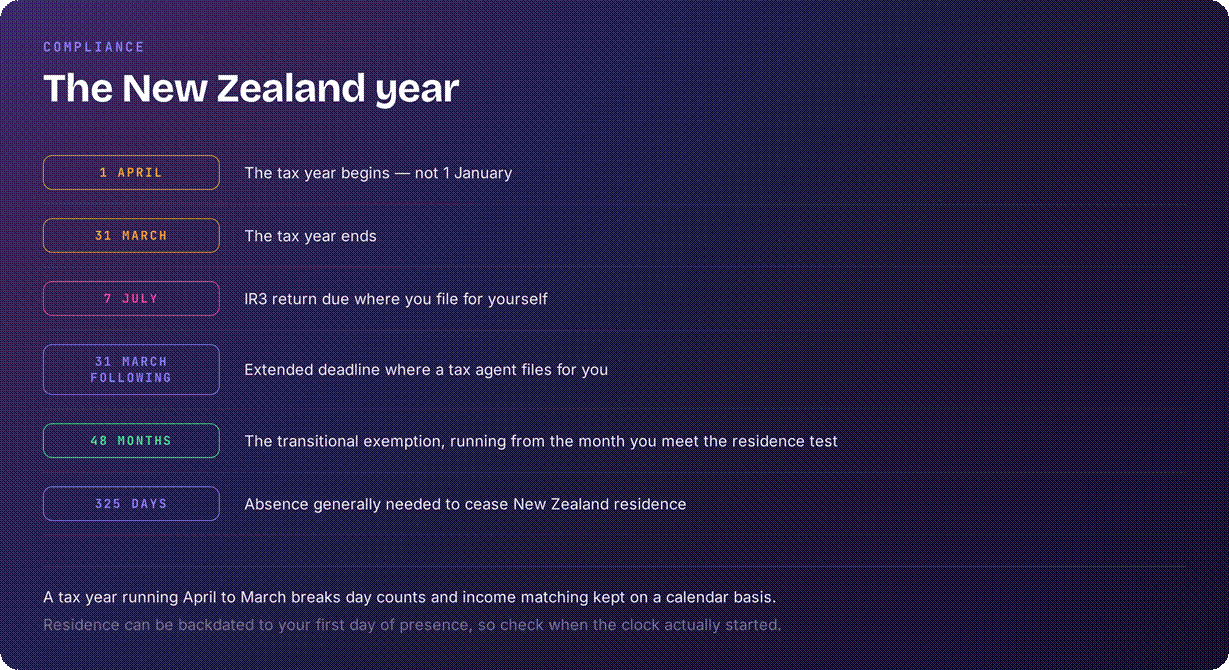
A tax year that begins in April, and the dates that follow it.
Case study: Owen and Mia arrive together
Owen and Mia move from London to Wellington in the same month. Neither has been a New Zealand tax resident before.
Owen has a portfolio of UK shares, a rental flat in Bristol and a UK pension. All of that income is exempt in New Zealand for four years, and the FIF rules that would otherwise attribute income from his overseas holdings are switched off for the period. The relief is worth a great deal to him.
Mia continues working remotely for her London employer on a salary. Her foreign employment income is expressly outside the exemption, so it is taxable in New Zealand from day one. The relief is worth nothing to her, and she needs to consider the UK side of the arrangement as well.
Rates, and what New Zealand does not tax
New Zealand has a progressive income tax scale running from 10.5% to 39%. The system is unusually clean by international standards: there is no general capital gains tax, no inheritance tax, no gift duty and no wealth tax.
Two qualifications are worth stating plainly. Gains on residential land can be taxable under specific rules aimed at property, so "no capital gains tax" is not an absolute. And the absence of a general capital gains tax makes the transitional exemption on foreign investment income more valuable than it looks, because there is often no equivalent charge waiting on the other side.
Filing and the compliance calendar
The New Zealand tax year runs 1 April to 31 March. Where you file your own return, the IR3 is generally due by 7 July following the year end. Where a tax agent files for you, an extension of time arrangement typically pushes that to 31 March of the following year.
Many taxpayers with only employment and investment income receive an automatic income tax assessment rather than filing a return, but a transitional resident with foreign income will usually need to file. Provisional tax obligations can also arise where residual income tax exceeds the threshold.
Note your status where the return asks for it. The exemption is automatic in the sense that it does not require an application, but your transitional resident status still needs to be reflected in your filing.
Timing matters more than the headline exemption
Model your position before you move, considering:
• How much of your income is employment or service income, since that is excluded;
• Whether the ten-year non-residence condition is satisfied without doubt;
• When you will first meet a residence test, and whether it will be backdated;
• Whether the 48 months end mid-way through a New Zealand tax year;
• Whether opting out would produce a better result for your household;
• What happens to FIF and CFC attribution when the exemption ends; and
• How a 1 April to 31 March year lines up against your other countries.
Your New Zealand checklist
1. Confirm you have not been a New Zealand tax resident in the previous ten years;
2. Confirm you have never previously been a transitional resident;
3. Separate employment and service income from investment income before modelling;
4. Track days across rolling 12-month periods, counting part days as whole days;
5. Assess the permanent place of abode test separately from the day count;
6. Identify the month you first met a residence test;
7. Decide whether opting out would suit your household better;
8. Diarise the end of the 48 months against the 31 March year end;
9. Plan for FIF and CFC attribution resuming when the exemption ends; and
10. Note your transitional resident status in your return.
Frequently asked questions
Does the exemption cover my remote salary?
No. Foreign employment income earned while you are a transitional resident, and income from supplying services, are expressly outside the exemption. They are taxable in New Zealand from the first day of residence.
Do I have to apply for transitional resident status?
No application is required. It applies automatically where you meet the conditions. You do still need to reflect the status in your tax return, so it is not something to leave unmentioned.
How long does the exemption last?
Forty-eight months, generally running from the end of the month in which you meet the residence requirements. Because residence can be backdated to your first day of presence, it is worth confirming the actual end date rather than counting four years from arrival.
Can I claim it more than once?
No. It is available once in a lifetime, and you must not have been a New Zealand tax resident at any time in the previous ten years. A returning New Zealander who has been away long enough can qualify on the same terms as a first-time migrant.
Why would anyone opt out of the exemption?
Because transitional residence can affect entitlement to family assistance, and because someone with foreign losses may prefer to use them. The election needs care, since opting out is generally not reversible.
Does New Zealand have a capital gains tax?
There is no general capital gains tax, which is unusual and makes the transitional exemption on foreign investment income more valuable than it first appears. Specific rules can tax gains on residential land, so the absence is not absolute.
When does the New Zealand tax year run?
1 April to 31 March. This misalignment with the calendar year is a persistent source of error for people keeping day counts or matching foreign income on a January-to-December basis.
What is the filing deadline?
Where you file for yourself, the IR3 is generally due by 7 July following the 31 March year end. Where a tax agent files for you under an extension of time arrangement, the deadline is typically 31 March of the following year.
Official sources and further reading
• Inland Revenue (Te Tari Taake)
• Inland Revenue Tax Technical
• Inland Revenue guidance on the transitional resident exemption
Important information
This article is general information and does not constitute tax, legal, immigration or financial advice, and does not create a client relationship. Tax outcomes depend on travel history, income sources, treaty status and the law applying to the relevant year. Rates, thresholds and regimes change, and some measures described may be proposed rather than enacted; this article reflects our understanding as at the date of publication. Obtain advice from a suitably qualified professional before acting or refraining from action.
