
Nicaragua keeps foreign earnings completely outside the tax base under strict territorial rules. It also has a residence test that catches people who assume a permit is enough in both directions.
Nicaragua operates a strictly territorial system. Foreign earnings stay completely outside the tax base, and only income generated within the country’s borders is charged. That applies to individuals and to businesses alike.
What is charged on the Nicaraguan side is not cheap. Employment income runs through a progressive scale reaching 30%, and business income faces the same top rate. Capital gains are taxed at a flat 15%, and dividends carry 15% withheld at source.
So the proposition is a clean one: bring foreign income and pay nothing on it, earn locally and pay a fairly ordinary Central American rate.
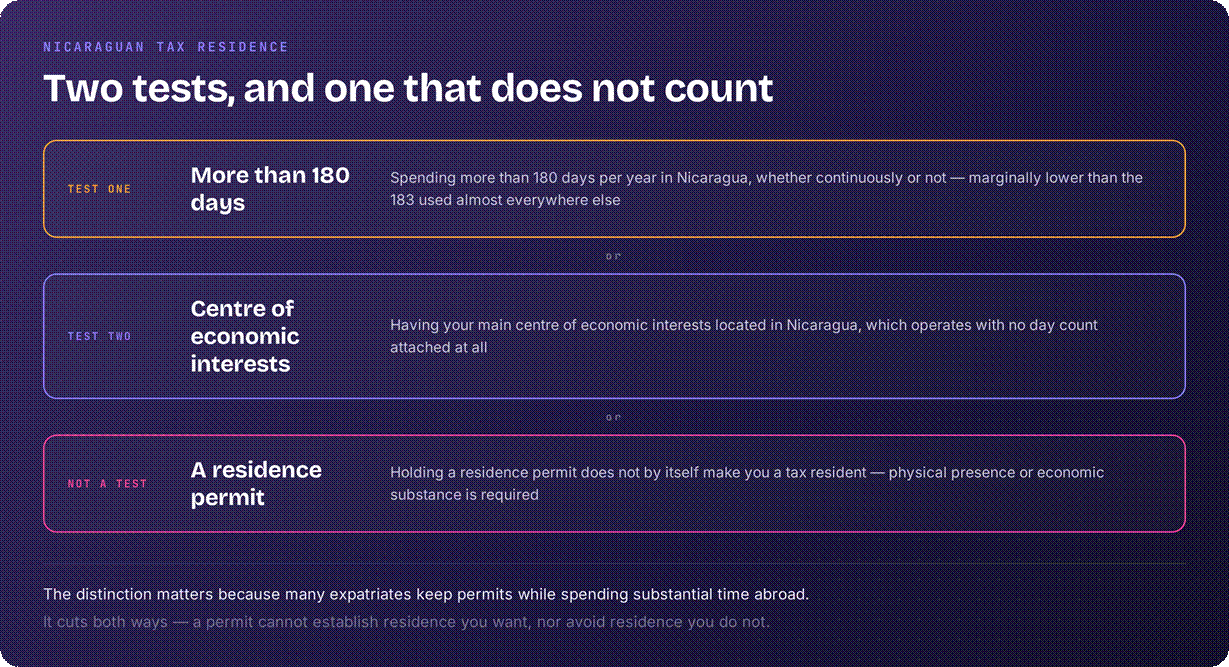
Two limbs, and a permit is neither of them.
Your residency status is the first step
Nicaragua determines tax residence through two tests. You become a tax resident if either:
• You spend more than 180 days per year in the country, whether continuously or not; or
• Your main centre of economic interests is located in Nicaragua.
The point that catches people is what does not count. Holding a residence permit alone does not automatically make you a tax resident, but physical presence or economic substance is required. That distinction matters because many expatriates retain permits while spending substantial time abroad.
It cuts both ways. Someone who wants Nicaraguan tax residence for treaty or certification purposes cannot obtain it simply by holding a permit, and someone who wants to avoid it cannot assume that surrendering days is enough if their economic centre remains in the country.
Maintain accurate records of:
• Days present in Nicaragua, against the 180-day threshold;
• Where your main centre of economic interests lies;
• The distinction between your residence permit and your tax status;
• Income by source, Nicaraguan and foreign;
• Where each activity was physically performed; and
• Any other country that may also treat you as resident.
The tax rates
Item | Rate |
Foreign-source income | Completely outside the tax base |
Employment income | Progressive, reaching 30% |
Business income | Reaching 30% |
Capital gains | 15% flat |
Dividends | 15%, withheld at source |
Non-residents on Nicaraguan-source income | 20% flat withholding |
Corporate income tax | 30% |
Corporate minimum tax | 1% to 3% of gross income |
Activity location determines source, not client location or where payment comes from. Work performed within Nicaragua generates Nicaraguan-source income regardless of who pays for it or from where. The same rule that governs the territorial systems in Costa Rica, Panama and Guatemala.
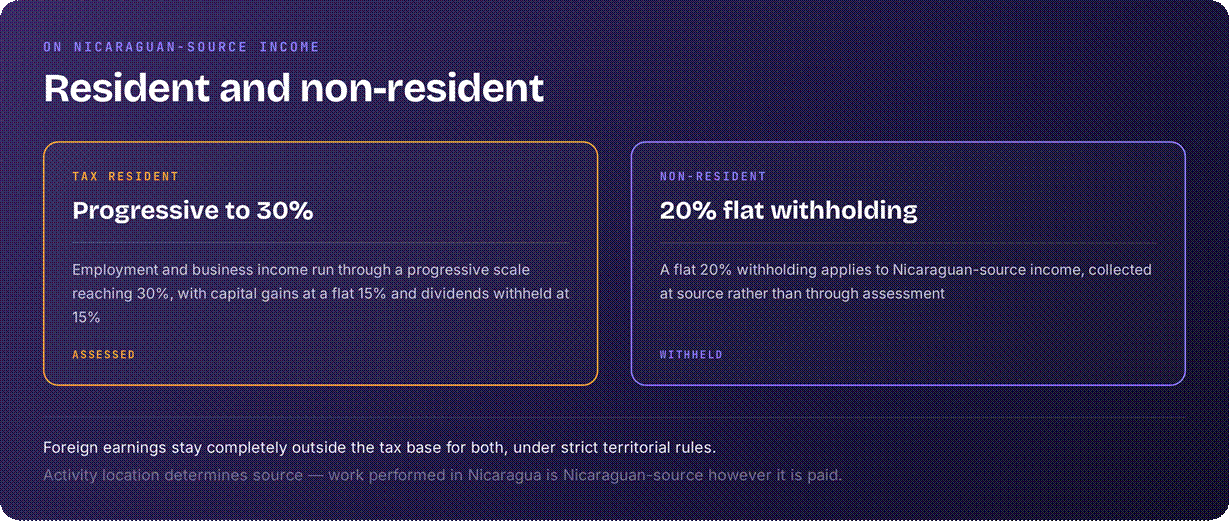
Resident and non-resident, on Nicaraguan income.
What makes Nicaragua attractive
The case rests almost entirely on the territorial rule:
• Foreign earnings completely outside the tax base, under strict territorial rules with no remittance test;
• Capital gains at a flat 15%, well below the 30% top rate on income;
• A residence test that requires genuine presence or substance, so a permit alone does not drag you in;
• Free zone incentives under recently updated legislation, offering exemptions from corporate income tax and dividend tax for successive fifteen-year periods for qualifying operations;
• A 180-day residence threshold, marginally lower than the 183 used almost everywhere; and
• One of the lowest costs of living in the Americas.
The honest qualifications are substantial and should not be glossed over. Political stability and banking infrastructure create what advisers describe as hidden operational costs, and international financial institutions maintain limited correspondent relationships with Nicaraguan banks compared with Panama or Costa Rica. For someone whose income arrives by international transfer, that is a practical constraint that the tax position does not solve.
Case study: Roberto and the permit
Roberto obtained Nicaraguan residency some years ago and holds a valid permit. He spends about four months a year in Granada and the rest travelling, with his business interests spread across several countries.
He assumes his permit makes him Nicaraguan tax resident, and plans on that basis. It does not since the permit alone is not sufficient, and at four months he is well under the 180-day threshold. Whether the second limb catches him depends on where his main centre of economic interests actually sits.
For his purposes the outcome barely matters, because the system is territorial either way. It matters a great deal if another country asks him to prove where he is resident, because a permit will not answer the question.
Filing and the compliance calendar
Nicaragua taxes on a territorial basis for both individuals and businesses. Self-employed professionals and freelancers who are tax residents pay progressive income tax on their Nicaraguan-source earnings, while non-residents face a flat 20% withholding on Nicaraguan-source income.
Prepare in good time:
• Registration with the tax authority;
• Day-count records against the 180-day threshold;
• Evidence of where your main centre of economic interests lies;
• Documentation establishing the source of each receipt;
• Records of where activities were physically performed; and
• Separate evidence of your residence permit and your tax status.
Substance, not paperwork
Consider:
• That a residence permit alone does not establish tax residence;
• Whether you will cross the 180-day threshold;
• Where your main centre of economic interests actually sits;
• That activity location determines source, not client location;
• That work performed in Nicaragua is Nicaraguan-source however it is paid;
• That capital gains are 15% against a 30% top rate on income; and
• The banking and correspondent constraints alongside the tax position.
Your Nicaragua checklist
1. Do not assume a residence permit establishes tax residence;
2. Count days against the 180-day threshold, not 183;
3. Establish where your main centre of economic interests lies;
4. Confirm the source of every receipt before assuming exemption;
5. Note that work performed in Nicaragua is Nicaraguan-source;
6. Separate capital gains, taxed at a flat 15%;
7. Account for dividends withheld at 15%;
8. Check whether free zone incentives apply to a business;
9. Assess banking and correspondent constraints practically; and
10. Keep evidence distinguishing permit status from tax status.
Frequently asked questions
Does Nicaragua tax foreign income?
No. The system is strictly territorial and foreign earnings stay completely outside the tax base, for individuals and businesses alike. Only income generated within the country is charged.
Does a residence permit make me tax resident?
No, and this is the point most often missed. Holding a residence permit does not by itself make you a tax resident. Physical presence or economic substance is required.
How do I become tax resident?
Through either of two tests: spending more than 180 days per year in Nicaragua, continuously or not, or having your main centre of economic interests located there. The second operates with no day count.
What are the rates?
Employment and business income run through a progressive scale reaching 30%. Capital gains are taxed at a flat 15% and dividends at 15% withheld at source. Non-residents face a flat 20% withholding on Nicaraguan-source income.
I work remotely for foreign clients. Am I taxed?
Activity location determines source rather than client location or payment origin. Work performed within Nicaragua generates Nicaraguan-source income regardless of who pays, so the source position needs establishing.
How are capital gains taxed?
At a flat 15%, applicable to gains from the sale of assets, properties or company shares. That is materially below the 30% top rate on income.
Are there business incentives?
Free zones offer significant incentives under recently updated legislation, with qualifying companies able to receive exemptions from corporate income tax and dividend tax for successive fifteen-year periods, particularly for manufacturing, assembly and export-oriented operations.
What are the practical drawbacks?
Banking is the main one. International financial institutions maintain limited correspondent relationships with Nicaraguan banks compared with Panama or Costa Rica, which advisers describe as a hidden operational cost that the tax position does not solve.
Official sources and further reading
Important information
This article is general information and does not constitute tax, legal, immigration or financial advice, and does not create a client relationship. Tax outcomes depend on travel history, income sources, treaty status and the law applying to the relevant year. Rates, thresholds and regimes change, and some measures described may be proposed rather than enacted; this article reflects our understanding as at the date of publication. Obtain advice from a suitably qualified professional before acting or refraining from action.
