
Nigeria replaced its personal income tax law wholesale on 1 January 2026. Residence now turns on ties as much as days, and almost every guide still online describes the system it replaced.
The Nigeria Tax Act 2025 was signed on 26 June 2025 and took effect on 1 January 2026. It repeals the Personal Income Tax Act and consolidates Nigeria’s major tax provisions into a single statute, alongside three companion Acts that rebuilt the administration — including replacing the Federal Inland Revenue Service with the Nigeria Revenue Service.
For anyone with an international position, three things changed that matter more than the rates: how residence is determined, what a resident is taxed on, and which foreign income is exempt when brought into the country.
Nigeria now taxes residents on worldwide income with clearer statutory footing than before, while non-residents remain taxable on Nigerian-source income only. Employment income is taxable in Nigeria where the duties are performed in Nigeria, or where the individual is resident there and not taxed in their country of residence.
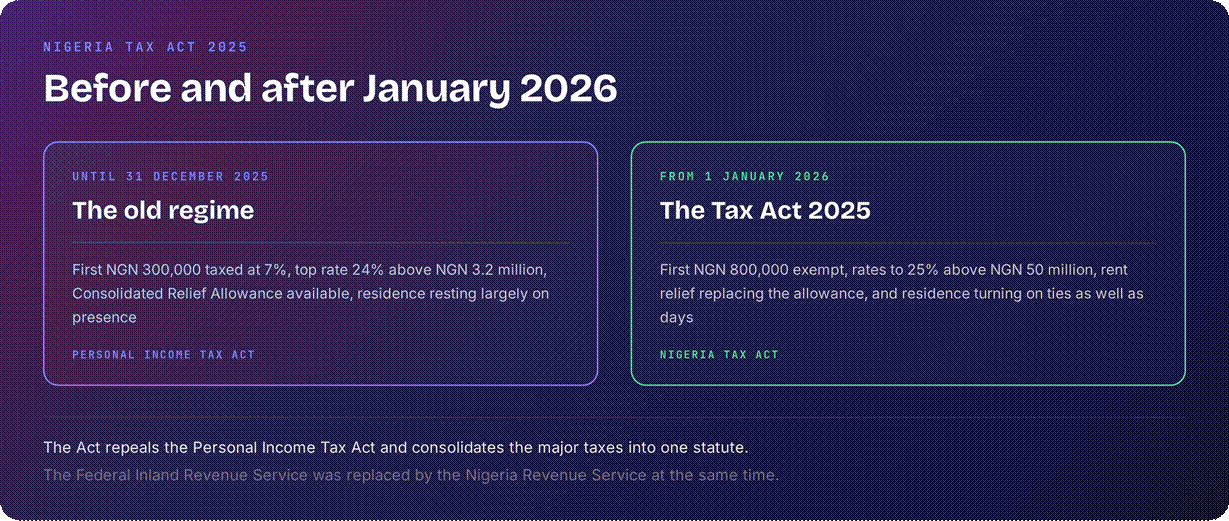
What changed on 1 January 2026.
Your residency status is the first step
The Act sets out alternative triggers, and meeting any one is enough. You are resident if you are domiciled in Nigeria; if you have a permanent home available for personal or family use; if you have your habitual abode there; if you have substantial economic or immediate family ties; or if you are present for 183 days or more in any twelve-month period, including short leaves and temporary absences.
Nigerian diplomats and public servants serving abroad are also treated as resident. The ties limb is the significant change: a day count alone no longer settles the question, and someone whose spouse and children live in Lagos can be resident while spending most of the year elsewhere.
Maintain accurate records of:
• Days present in Nigeria across rolling twelve-month periods, including short leaves;
• Whether a home is available for your personal or family use;
• Where your spouse, children and dependants live;
• The location and scale of your business and financial interests;
• The channel through which any foreign income is remitted; and
• Any other country that may also treat you as resident.
The new tax rate bands
The old structure taxed the first NGN 300,000 at 7% and reached 24% above NGN 3.2 million. The new scale raises the exempt threshold sharply and extends the upper bands considerably:
Annual taxable income | Rate |
First NGN 800,000 | 0% |
Next NGN 2,200,000 | 15% |
Next NGN 9,000,000 | 18% |
Next NGN 13,000,000 | 21% |
Next NGN 25,000,000 | 23% |
Above NGN 50,000,000 | 25% |
The Consolidated Relief Allowance was abolished, which offsets some of the gain. In its place is a rent relief of 20% of annual rent paid, capped at NGN 500,000, and for many taxpayers that is worth less than the allowance it replaced. Capital gains of individuals are now taxed at the applicable progressive rates rather than a separate flat rate.
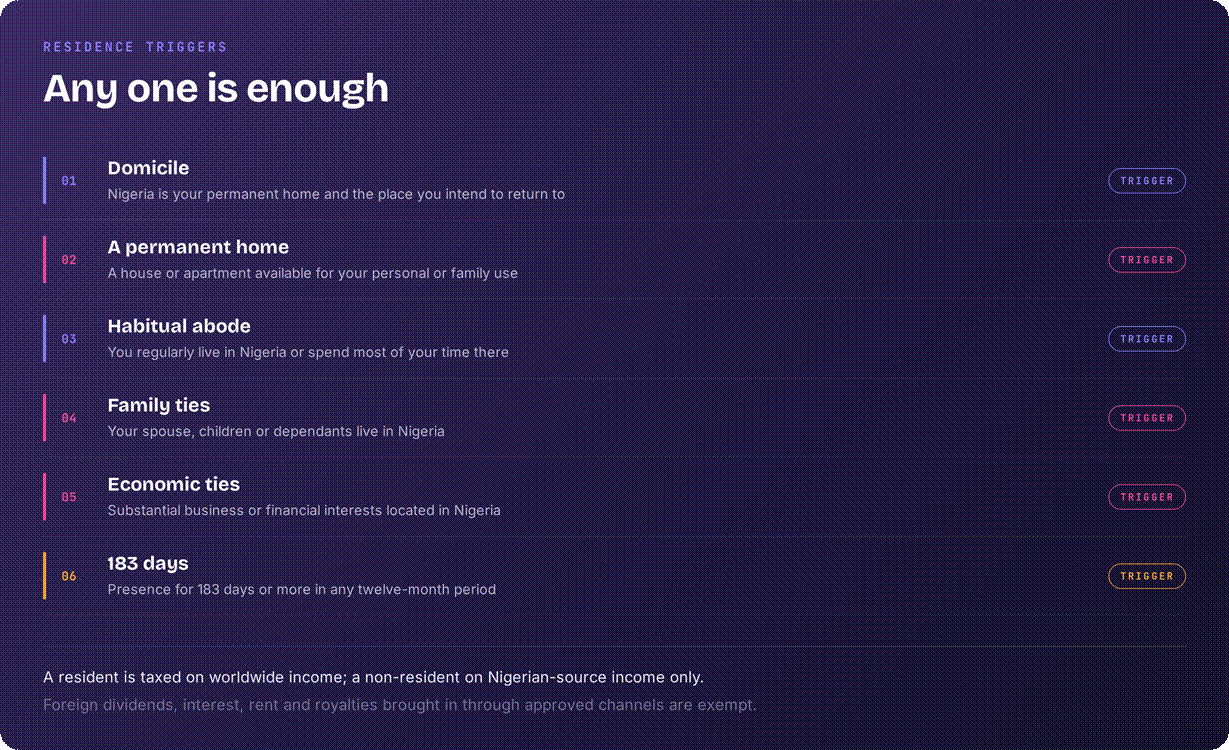
Meeting any one trigger is enough. The day count is only one of them.
What is exempt
The exemption list is where the Act is most useful to someone with an international position. Alongside pension income and approved investment scheme dividends, it exempts dividends, interest, rent and royalties earned abroad and brought into Nigeria through approved channels.
That is a meaningful relief and it is conditional on the route rather than the amount. Bringing the same income in outside approved channels forfeits it. Anyone relying on this should confirm the mechanics with a Nigerian adviser before moving money, not after.
The exemption for compensation for loss of employment also rose from NGN 10 million to NGN 50 million, and section 51 provides a one-off capital gains exemption on the sale of a principal private residence, covering the house and up to one acre of adjoining land.
Case study: Chidi never crossed 183 days
Chidi runs a business from Johannesburg and spends around a hundred days a year in Nigeria. His wife and children live in Abuja, he owns the family home there, and he holds significant shareholdings in Nigerian companies.
Under the old rules his position was arguable. Under the Act it is not: a permanent home available for family use, immediate family ties and substantial economic ties each point to residence independently of his day count. His worldwide income is within the Nigerian charge.
The reform did not change what Chidi does. It changed what the law asks about him, and the answer came out differently.
Filing and the compliance calendar
The Nigerian tax year follows the calendar year. Individuals filing self-assessment returns are generally required to do so by 31 March following the year end, while employers file annual returns of employee remuneration by 31 January.
Penalties were consolidated and raised. Late filing attracts NGN 100,000 for the first month and NGN 50,000 for each subsequent month, and a formal accreditation regime now applies to tax agents representing taxpayers before the Nigeria Revenue Service.
Prepare in good time:
• A Tax Identification Number and access to the filing system;
• Records supporting your residence position, ties included;
• Rent documentation, since rent relief requires accurate disclosure;
• Evidence of the channel used for any foreign income remitted;
• Foreign income statements by category; and
• Records of any capital disposals, now taxed at progressive rates.
Timing matters, but ties matter more
Model your position against the new Act rather than the old one, considering:
• Whether family or economic ties make you resident regardless of days;
• Whether a home in Nigeria is available for your family’s use;
• How much of your income sits above the NGN 50 million band;
• What the loss of the Consolidated Relief Allowance costs you;
• Whether foreign income can be remitted through approved channels;
• Whether your employment income is taxed in your country of residence; and
• Whether any guidance you are relying on predates 1 January 2026.
Your Nigeria checklist
1. Re-run your residence position against the Act, not the repealed law;
2. Check the ties limbs before relying on a day count;
3. Establish whether a Nigerian home is available for family use;
4. Locate your substantial business and financial interests;
5. Model your income against the new bands to 25%;
6. Quantify what losing the Consolidated Relief Allowance costs you;
7. Confirm the approved channels for remitting foreign income;
8. Keep accurate rent records to support rent relief;
9. Diarise 31 March for individuals and 31 January for employers; and
10. Discard any guidance written before 1 January 2026.
Frequently asked questions
When did the Nigeria Tax Act 2025 take effect?
It was signed on 26 June 2025 and took effect on 1 January 2026. It repeals the Personal Income Tax Act and consolidates the major taxes into a single statute.
How is residence decided now?
By alternative triggers, any one of which is enough: domicile, a permanent home available for personal or family use, habitual abode, substantial economic or immediate family ties, or 183 days in any twelve-month period.
Can I be resident without spending much time in Nigeria?
Yes. The ties limbs operate independently of presence, so someone whose family lives in Nigeria or whose substantial business interests sit there can be resident on a modest day count.
What are the new rates?
Nil on the first NGN 800,000, then 15%, 18%, 21% and 23% on successive bands, reaching 25% on income above NGN 50 million.
Is foreign income taxable?
Residents are taxed on worldwide income. However, dividends, interest, rent and royalties earned abroad and brought into Nigeria through approved channels are listed among the exempt categories, so the route used matters.
What happened to the Consolidated Relief Allowance?
It was abolished. A rent relief of 20% of annual rent paid, capped at NGN 500,000, replaces it, and for many taxpayers that is worth less than the allowance it replaced.
How are capital gains taxed for individuals?
At the applicable progressive income tax rates rather than a separate flat rate. Section 51 provides a one-off exemption on the sale of a principal private residence, covering the house and up to one acre of adjoining land.
What are the filing deadlines?
Individuals filing self-assessment returns are generally required to file by 31 March following the calendar year end, and employers file annual returns of employee remuneration by 31 January. Late filing penalties were raised under the reform.
Official sources and further reading
Important information
This article is general information and does not constitute tax, legal, immigration or financial advice, and does not create a client relationship. Tax outcomes depend on travel history, income sources, treaty status and the law applying to the relevant year. Rates, thresholds and regimes change, and some measures described may be proposed rather than enacted; this article reflects our understanding as at the date of publication. Obtain advice from a suitably qualified professional before acting or refraining from action.
