
North Macedonia tried a progressive scale, suspended it after a year, and abolished it in 2023. The flat 10% that replaced it now applies across almost every category of income.
North Macedonia has charged personal income tax at a flat 10% since 2008, with one interruption. A progressive 10% and 18% structure was introduced, suspended from 1 January 2020, and then abolished with effect from 1 January 2023 — making the flat rate permanent rather than temporary.
That history matters because it removes the main objection to a flat-tax jurisdiction, which is that the rate is a political decision liable to reverse. North Macedonia tried progressivity, found it unsatisfactory, and legislated the flat rate back in.
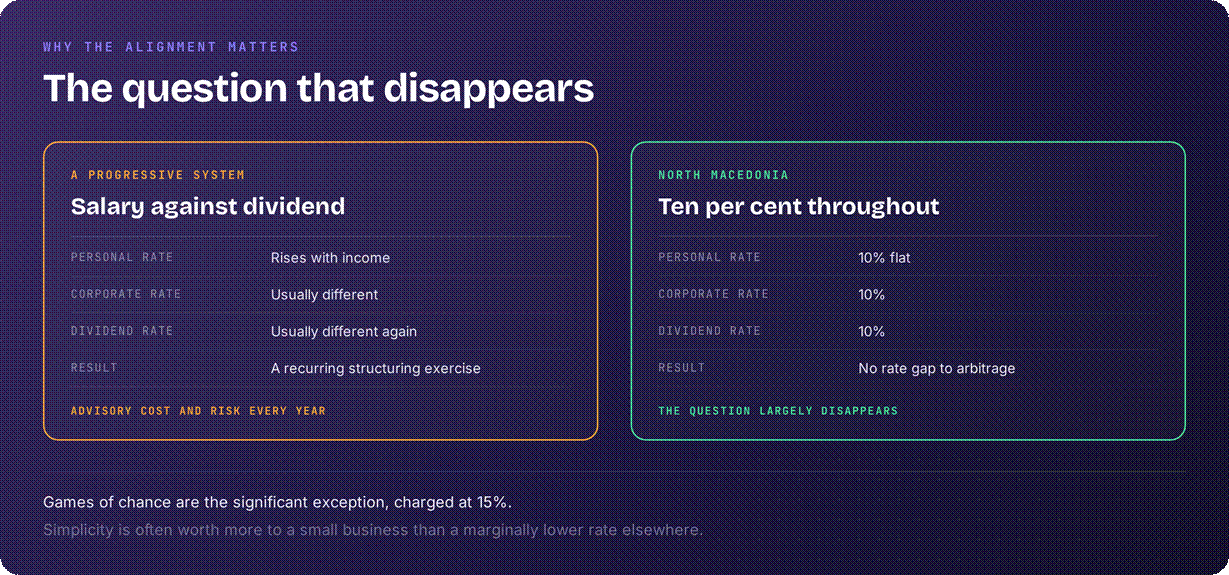
The 10% applies broadly. It is imposed on income from labour, pensions, interest and dividends alike, rather than carving investment income onto a separate schedule. The only significant departure is income from games of chance, charged at 15%.
One rate, applied across almost everything.
Your residency status is the first step
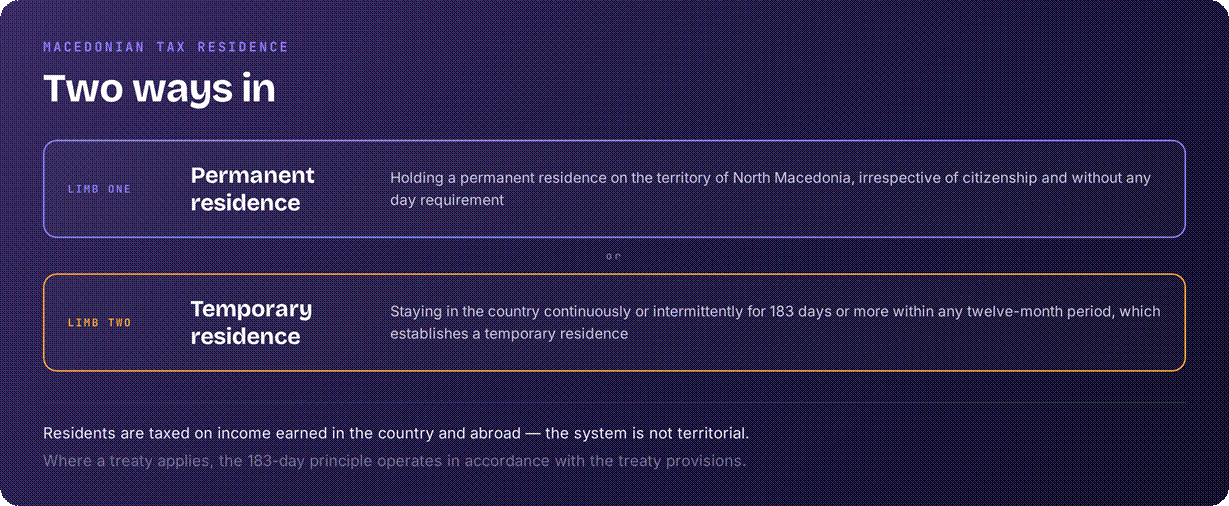
Irrespective of citizenship, an individual is a Macedonian tax resident if they have a permanent or temporary residence in the country. Temporary residence is established where the individual stays in North Macedonia continuously or intermittently for 183 days or more within any twelve-month period.
Personal income tax applies to any resident on income earned in the country and abroad. A foreign tax resident — anyone who is not a Macedonian tax resident — is obliged to pay personal income tax only on income earned on Macedonian territory.
Where a double taxation treaty is in place, the 183-day principle applies in accordance with the treaty, and a non-resident can rely on the treaty by proving residence in the other state.
Maintain accurate records of:
• Days present across rolling twelve-month periods, not calendar years;
• Whether you hold a permanent or temporary residence in the country;
• Income by source, Macedonian and foreign;
• A residence certificate from another state, if relying on a treaty;
• Registration with the Public Revenue Office; and
• Any other country that may also treat you as resident.
The tax rates
Item | Rate |
Personal income tax | 10% flat |
Labour income | 10% |
Pensions | 10% |
Interest | 10% |
Dividends | 10% |
Games of chance | 15% |
Corporate income tax | 10% |
Withholding tax | 10% |
Alignment between the personal and corporate rates at 10% is unusual and useful. It removes most of the incentive to arbitrage between salary and dividend that drives structuring decisions elsewhere, which in turn makes the system simpler to operate and harder to get wrong.
Two limbs into residence, and one is rolling.
What makes North Macedonia attractive
The proposition is straightforward, which is most of its appeal:
• A 10% flat rate with no brackets, no phase-outs and no cliffs, among the lowest in Europe;
• The rate applies to interest and dividends at the same 10%, rather than through a separate and heavier schedule;
• The flat rate was made permanent in 2023 after the progressive experiment was abolished, which reduces the political risk;
• Corporate tax also at 10%, aligning the personal and corporate positions;
• Residence at 183 days in any twelve-month period, with no investment, property or capital requirement;
• The Public Revenue Office prepares an annual return for tax residents, reducing the compliance burden; and
• A treaty network allowing non-residents to claim reduced withholding rates on proof of foreign residence.
The honest qualification is that residents are taxed on income earned at home and abroad, so there is no territorial shelter — someone with substantial foreign income pays 10% on it in North Macedonia, subject to treaty relief and any credit available.
Case study: Stefan compares the two systems
Stefan runs a small software business from Skopje. Under a progressive system he would face a structuring question familiar across Europe: how much to take as salary, how much as dividend, and at what point the difference in rates makes the exercise worthwhile.
In North Macedonia the question largely disappears. Corporate income tax is 10%, personal income tax is 10%, and dividends are taxed at 10% like everything else. There is no rate gap to arbitrage.
That is worth more than it sounds. The simplicity removes a recurring advisory cost and a recurring risk of getting it wrong, which for a small business is often more valuable than a marginally lower rate somewhere else.
Filing and the compliance calendar
The tax year follows the calendar year. Each tax resident registers with the Public Revenue Office through its electronic system, and the office prepares an annual tax return for the taxpayer to review rather than requiring it to be built from scratch.
A non-resident receiving income subject to withholding can apply a treaty rate where one exists, provided they supply the appropriate forms verified by the Public Revenue Office and the tax office in the foreign country, or obtain approval for exemption or relief from the Public Revenue Office directly.
Prepare in good time:
• Registration on the Public Revenue Office system;
• Day-count records across rolling twelve-month periods;
• Income records by source and category;
• Treaty forms and foreign residence certificates, if relevant;
• Review of the annual return prepared by the authority; and
• Evidence of foreign tax paid, for relief purposes.
A simple system, deliberately
Consider:
• That the 183-day count is rolling rather than by calendar year;
• That holding a residence can make you resident independently of days;
• That residents are taxed on income earned at home and abroad;
• That interest and dividends are taxed at the same 10% as labour income;
• That corporate and personal rates align, removing arbitrage;
• Whether a treaty covers your former country; and
• That the authority prepares the annual return for you to review.
Your Macedonia checklist
1. Count days across rolling twelve-month periods, not calendar years;
2. Check whether holding a residence makes you resident without a day count;
3. Treat the system as worldwide for residents;
4. Note that interest and dividends are taxed at the same 10%;
5. Use the corporate and personal alignment rather than structuring around it;
6. Register with the Public Revenue Office electronically;
7. Review the annual return the authority prepares for you;
8. Obtain treaty forms if claiming a reduced withholding rate;
9. Keep evidence of foreign tax paid; and
10. Note the 15% rate on income from games of chance.
Frequently asked questions
What is the North Macedonian income tax rate?
A flat 10%, applying to labour income, pensions, interest and dividends alike. Income from games of chance is the significant exception, charged at 15%.
Is the flat rate permanent?
Yes. A progressive 10% and 18% structure was suspended from 1 January 2020 and then abolished with effect from 1 January 2023, leaving the flat rate in place rather than as a temporary measure.
How do I become tax resident?
By having a permanent or temporary residence in the country, irrespective of citizenship. Temporary residence is established by staying 183 days or more, continuously or intermittently, within any twelve-month period.
Does North Macedonia tax foreign income?
Yes for residents — personal income tax applies to income earned in the country and abroad. Non-residents pay only on income earned on Macedonian territory.
How are dividends taxed?
At the same flat 10% as other income. That alignment with the corporate rate, also 10%, removes most of the incentive to arbitrage between salary and dividend that exists in progressive systems.
Do I have to prepare my own return?
The Public Revenue Office prepares an annual tax return for each tax resident, which reduces the compliance burden considerably. Registration on its electronic system is required.
Can I use a tax treaty?
Yes. A non-resident can apply a treaty rate by proving tax residence in the other state, supplying forms verified by the Public Revenue Office and the foreign tax office, or by obtaining approval for exemption or relief directly.
Is the 183-day count by calendar year?
No — it runs across any twelve-month period, so it is rolling. That is a meaningful difference for anyone whose stay straddles a year end.
Official sources and further reading
• Public Revenue Office of North Macedonia
Important information
This article is general information and does not constitute tax, legal, immigration or financial advice, and does not create a client relationship. Tax outcomes depend on travel history, income sources, treaty status and the law applying to the relevant year. Rates, thresholds and regimes change, and some measures described may be proposed rather than enacted; this article reflects our understanding as at the date of publication. Obtain advice from a suitably qualified professional before acting or refraining from action.
