
Pakistan cut the entry rate on salaried income to 1% from July 2025, a sharp reduction from earlier years. The top band still arrives at a relatively modest level of income.
Pakistan taxes salaried individuals on a progressive slab system, and the slabs applying from 1 July 2025 carry a change worth knowing: the entry rate was cut to 1%.
The first PKR 600,000 of taxable salary income is exempt entirely. The band above it — from PKR 600,000 to PKR 1,200,000 — is now taxed at 1% of the amount exceeding PKR 600,000. In earlier years that same band carried 2.5% and, before that, 5%.
The reduction is aimed squarely at lower earners and it is a meaningful one. Someone at the top of that band pays PKR 6,000 for the year where they would previously have paid PKR 15,000 or PKR 30,000.
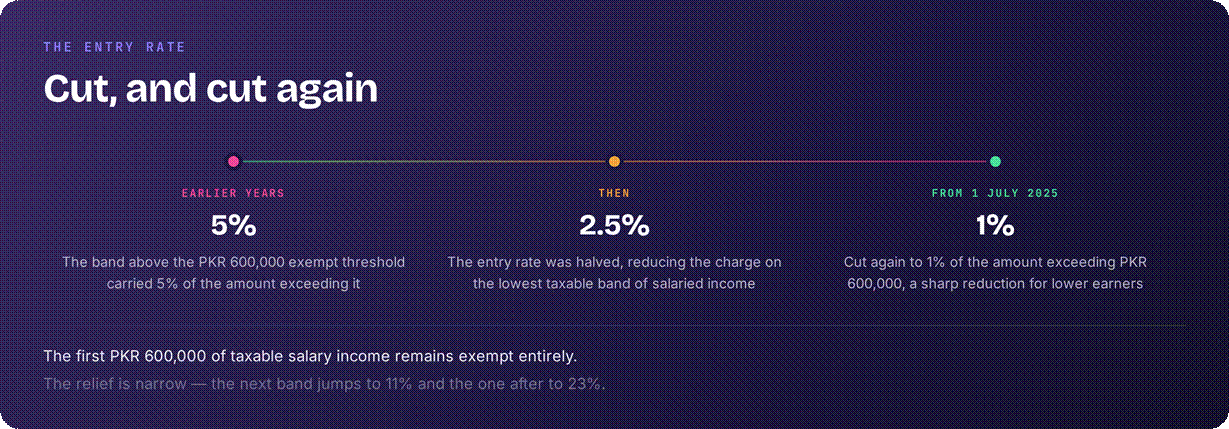
How the entry rate has moved.
The tax rates from July 2025
Taxable salary income (PKR) | Tax |
Not exceeding 600,000 | 0% |
600,001 to 1,200,000 | 1% of the amount exceeding 600,000 |
1,200,001 to 2,200,000 | 6,000 plus 11% of the excess over 1,200,000 |
2,200,001 to 3,200,000 | 116,000 plus 23% of the excess over 2,200,000 |
3,200,001 to 4,100,000 | 346,000 plus 30% of the excess over 3,200,000 |
Above 4,100,000 | 616,000 plus 35% of the excess over 4,100,000 |
Entry rate previously | 2.5%, and 5% before that |
Effective from | 1 July 2025 |
The jump from 1% to 11% is the feature to model. The relief at the bottom is real, but it applies to a narrow band, and the marginal rate rises steeply immediately afterwards. Someone just above PKR 1,200,000 faces a very different position from someone just below it.
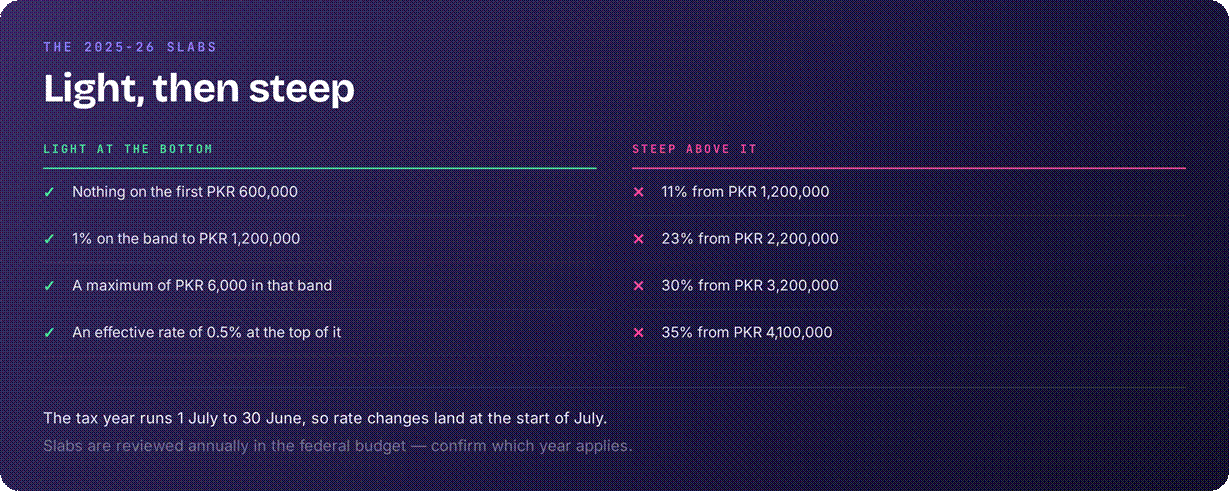
What the slabs charge, and where they jump.
Your residency status is the first step
Pakistan operates a residence-based system, with residents taxed more broadly than non-residents. The fiscal year runs from 1 July to 30 June, which is why rate changes take effect at the start of July rather than in January.
Because the slabs are set annually through the federal budget, the position should be confirmed against the Federal Board of Revenue for the tax year in question rather than taken from a guide written for an earlier year.
Maintain accurate records of:
• Days present in Pakistan during the July-to-June tax year;
• Taxable salary income against each slab threshold;
• Which tax year’s slabs apply to the period in question;
• Income by source, Pakistani and foreign;
• Withholding deducted by the employer; and
• Any other country that may also treat you as resident.
What makes Pakistan workable
The positives are concentrated at the lower end of the scale:
• A PKR 600,000 exempt threshold before any charge arises;
• An entry rate of just 1% on the band above it, cut from 2.5% and previously 5%;
• A genuinely progressive structure, so each slice of income carries its own rate;
• Collection through employer withholding, so salaried employees have little to administer;
• Slabs reviewed annually through the federal budget, which has moved in the taxpayer’s favour at the lower end; and
• A very low cost of living.
The honest qualifications are that the relief is narrow, the marginal rate climbs steeply from 1% to 11% to 23% across successive bands, and the 35% top rate arrives at PKR 4,100,000 — a modest figure for a top band by international standards.
Case study: two salaries, PKR 100,000 apart
Someone on PKR 1,200,000 pays 1% of the amount above PKR 600,000 — PKR 6,000 for the year, an effective rate of 0.5%.
Someone on PKR 1,300,000 pays PKR 6,000 plus 11% of the PKR 100,000 above the threshold — PKR 17,000, an effective rate of 1.3%.
A hundred thousand rupees more income produces nearly three times the tax. The entry relief is real but it ends sharply, and the structure rewards understanding exactly where each threshold sits.
Filing and the compliance calendar
The tax year runs 1 July to 30 June, administered by the Federal Board of Revenue. Salaried income is subject to withholding by the employer, and individuals file an annual return under the published timetable.
Prepare in good time:
• Registration with the Federal Board of Revenue and a national tax number;
• Salary records and evidence of withholding;
• Confirmation of which tax year’s slabs apply;
• Day-count records on the July-to-June year;
• Records of foreign income, where relevant; and
• The slabs published in the federal budget for the year.
Know where the thresholds sit
Consider:
• That the entry rate was cut to 1% from July 2025;
• That the first PKR 600,000 is exempt entirely;
• That the marginal rate jumps from 1% to 11% at PKR 1,200,000;
• That the 35% top band arrives at PKR 4,100,000;
• That the tax year runs July to June;
• That slabs are reviewed annually in the federal budget; and
• Which year’s slabs apply to the period you are computing.
Your Pakistan checklist
1. Confirm which tax year’s slabs apply to your period;
2. Note the first PKR 600,000 is exempt entirely;
3. Apply the 1% entry rate from July 2025, not earlier figures;
4. Model the jump to 11% at PKR 1,200,000;
5. Note the 35% top band arrives at PKR 4,100,000;
6. Count days on the July-to-June tax year;
7. Register with the Federal Board of Revenue;
8. Keep records of employer withholding;
9. Check the federal budget for the current year’s slabs; and
10. File under the published annual timetable.
Frequently asked questions
What are the Pakistani salary tax slabs?
From 1 July 2025: 0% up to PKR 600,000; 1% of the excess to PKR 1,200,000; PKR 6,000 plus 11% to PKR 2,200,000; PKR 116,000 plus 23% to PKR 3,200,000; PKR 346,000 plus 30% to PKR 4,100,000; and PKR 616,000 plus 35% above.
What changed in 2025?
The entry rate on the band above PKR 600,000 was cut to 1%, down from 2.5% and from 5% in earlier years. For someone at the top of that band the annual charge fell from PKR 30,000 to PKR 6,000.
Is the relief significant?
At the bottom of the scale, yes. But it is narrow — the marginal rate jumps to 11% immediately above PKR 1,200,000 and to 23% above PKR 2,200,000, so the benefit is concentrated in one band.
When does the top rate apply?
Above PKR 4,100,000 of taxable salary income, which is a relatively modest level for a top band by international standards.
When does the tax year run?
1 July to 30 June. That is why rate changes announced in the federal budget take effect at the start of July rather than in January.
Do the slabs change often?
Yes. They are reviewed annually through the federal budget, and they have moved in the taxpayer’s favour at the lower end in recent years. Always confirm which year’s slabs apply to the period you are computing.
How is salaried income collected?
Through withholding by the employer, so salaried employees generally have little to administer beyond filing the annual return under the published timetable.
Who administers the system?
The Federal Board of Revenue. Registration and a national tax number are required, and the annual return is filed with it.
Official sources and further reading
• Federal Board of Revenue, Pakistan
Important information
This article is general information and does not constitute tax, legal, immigration or financial advice, and does not create a client relationship. Tax outcomes depend on travel history, income sources, treaty status and the law applying to the relevant year. Rates, thresholds and regimes change, and some measures described may be proposed rather than enacted; this article reflects our understanding as at the date of publication. Obtain advice from a suitably qualified professional before acting or refraining from action.
