
Papua New Guinea has a 42% top rate and no capital gains tax at all. It also taxes qualifying small businesses at 2% of turnover — though not, unfortunately, professional services.
Papua New Guinea gets written off on its 42% top rate, and that rate is real. Two other features are not in the summary and matter considerably more to most people who move there.
The first is simply stated: the capital gains tax rate is 0%. PNG does not levy capital gains tax. For anyone holding appreciating assets, that is worth more than several percentage points on the income scale.
The second is the Small Business Tax regime, which applies to individuals. Tax is calculated at 2% of turnover for a small business deriving less than PGK 250,000 in an income year, or a flat PGK 400 annual fee where turnover is under PGK 50,000.
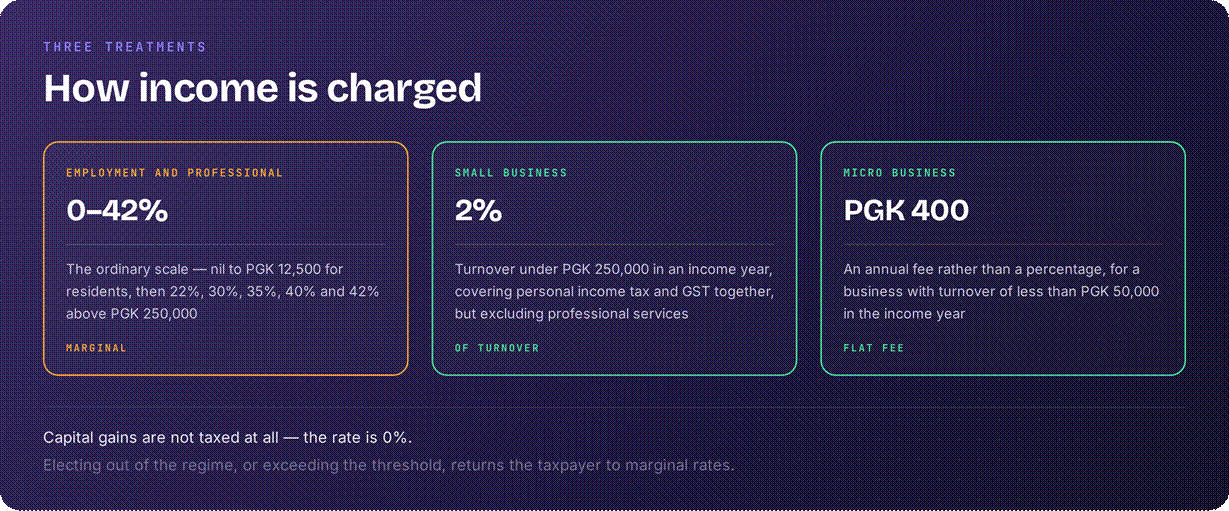
Three ways income is charged, and which applies.
Your residency status is the first step
An individual is treated as a resident of Papua New Guinea in a given year of income if they actually spend, continuously or intermittently, more than six months in the country in that year. Residence is also related to where the individual ordinarily lives, subject to further statutory tests and to any applicable double tax agreement.
Residents are taxed on worldwide income, with a foreign tax credit available to offset foreign tax paid against PNG tax payable. Non-residents are generally taxed only on PNG-sourced income.
The gap between the two positions is at its widest at the bottom of the scale. A resident pays nothing on the first PGK 12,500; a non-resident pays 22% on it.
Maintain accurate records of:
• Days spent in PNG, against the six-month test;
• Where you ordinarily live;
• Income by source, PNG and foreign;
• Foreign tax paid, for the credit;
• Turnover, if considering the Small Business Tax; and
• Whether your activity counts as professional services.
The tax rates
Taxable income (PGK) | Resident / Non-resident |
Up to 12,500 | Nil / 22% |
12,500 to 20,000 | 22% / 22% |
20,000 to 33,000 | 30% / 30% |
33,000 to 70,000 | 35% / 35% |
70,000 to 250,000 | 40% / 40% |
Above 250,000 | 42% / 42% |
Capital gains | 0% — not levied |
Dividend withholding | 15%, a first and final tax |
Dividend withholding tax is a first and final tax for individuals resident in PNG as well as for non-resident entities and individuals. Dividend income that has borne it does not need to be included in an individual tax return, which simplifies the position for anyone holding shares.
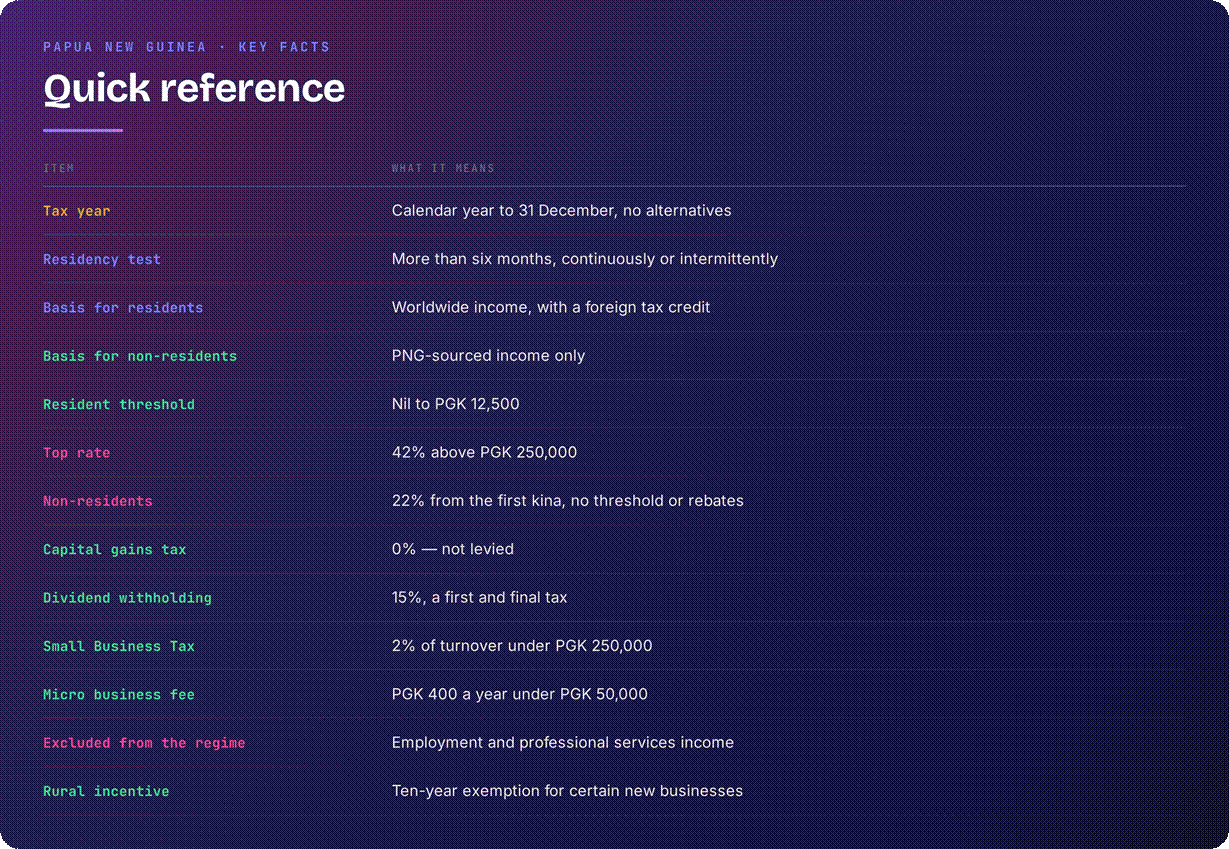
The PNG position at a glance.
The Small Business Tax in detail
Introduced in the 2020 Budget, the regime applies to individuals and simplifies compliance across goods and services tax and personal income tax together. Tax is calculated and paid on one of two bases:
• 2% of turnover for a small business deriving less than PGK 250,000 in an income year; or
• A PGK 400 annual fee for a business with turnover of less than PGK 50,000.
Once a taxpayer elects out of the regime, or exceeds the threshold, they are taxed as an individual at marginal rates instead. The election is therefore a decision with consequences beyond the current year.
The exclusion is the critical part. The regime excludes employment income and income from professional services. A consultant, lawyer, accountant or similar adviser does not get 2% of turnover — they fall on the ordinary marginal scale. It is aimed at trading and service businesses of a different kind.
What makes PNG attractive
The case is narrower than some but genuinely strong in parts:
• No capital gains tax at all — the rate is 0%;
• A Small Business Tax at 2% of turnover under PGK 250,000, or PGK 400 flat under PGK 50,000;
• Dividend withholding as a first and final tax, keeping dividend income out of the return entirely;
• A PGK 12,500 tax-free threshold for residents;
• A foreign tax credit against PNG tax on foreign income;
• No annual return for employees whose only PNG income is fully taxed salary or wages; and
• A ten-year exemption available to certain new businesses established in specified rural development areas.
The honest qualifications are that the marginal scale climbs quickly — 40% arrives at PGK 70,000 — that residents are taxed on worldwide income, that non-residents get no threshold at all, and that the Small Business Tax excludes exactly the professional activities many readers carry on.
Case study: two businesses, one regime
Miriam runs a small retail operation in Lae with turnover of PGK 180,000. She falls within the Small Business Tax and pays 2% of turnover — PGK 3,600 — covering her personal income tax and GST obligations in a single calculation.
Peter provides management consultancy from Port Moresby with the same PGK 180,000 of turnover. Because the regime excludes income from professional services, he is taxed on the ordinary marginal scale, reaching 40% on the portion above PGK 70,000.
Same turnover, same country, entirely different outcome — decided by the nature of the activity rather than its size. Anyone considering the regime should establish which side of that line they sit on before planning around it.
Filing and the compliance calendar
The tax year is the calendar year ending 31 December, and alternative year ends are not granted to individual taxpayers. The system is administered by the Internal Revenue Commission under the Income Tax Act 1959.
An individual whose only PNG income consists of fully taxed salary and wages is generally not required to lodge a return unless specifically asked to. Anyone in receipt of more than PGK 100 in other income — excluding taxed dividend income — must still lodge.
Each individual is assessed separately; there is no joint assessment for spouses. Prepare in good time:
• Registration with the Internal Revenue Commission;
• Day-count records against the six-month test;
• Turnover records, if within the Small Business Tax;
• Evidence of the nature of your activity, for the professional services exclusion;
• Records of foreign income and foreign tax paid; and
• A note of any other income above PGK 100, which triggers a return.
Check which side of the line you fall
Consider:
• That there is no capital gains tax at all;
• Whether your activity counts as professional services;
• That the Small Business Tax excludes those services entirely;
• That electing out, or exceeding the threshold, returns you to marginal rates;
• That the six-month residence test can be met intermittently;
• That non-residents get no threshold and no rebates; and
• That more than PGK 100 of other income triggers a return.
Your Papua New Guinea checklist
1. Note that capital gains are not taxed at all;
2. Establish whether your activity is professional services;
3. Test turnover against PGK 250,000 and PGK 50,000;
4. Understand that electing out is not costless;
5. Count days against the six-month residence test;
6. Remember the test can be met intermittently;
7. Claim the foreign tax credit on foreign income;
8. Treat dividend withholding as first and final;
9. Lodge a return if other income exceeds PGK 100; and
10. Check whether the rural development exemption applies.
Frequently asked questions
Does PNG have capital gains tax?
No. The capital gains tax rate is 0% — Papua New Guinea does not levy it. For anyone holding appreciating assets that is worth considerably more than the headline income rate suggests.
What is the Small Business Tax?
A simplified regime for individuals covering personal income tax and GST together. Tax is 2% of turnover for a small business deriving less than PGK 250,000 in an income year, or a PGK 400 annual fee where turnover is under PGK 50,000.
Can a consultant use it?
Generally not. The regime excludes employment income and income from professional services, so consultants, advisers and similar professionals are taxed on the ordinary marginal scale instead.
What happens if I exceed the threshold?
Once a taxpayer elects out of the regime, or exceeds the threshold, they are taxed as an individual at marginal rates. The election therefore carries consequences beyond the current year.
How do I become tax resident?
By actually spending, continuously or intermittently, more than six months in Papua New Guinea in a year of income. Residence is also related to where you ordinarily live, subject to further statutory tests and any applicable treaty.
How are non-residents taxed?
On PNG-sourced income only, but with no tax-free threshold and no rebates — 22% applies from the first kina, then the same marginal bands as residents.
Do I need to file a return?
Not if your only PNG income is fully taxed salary and wages, unless the Internal Revenue Commission asks. Anyone receiving more than PGK 100 in other income, excluding taxed dividend income, must still lodge.
How are dividends taxed?
Dividend withholding tax at 15% is a first and final tax for individuals resident in PNG and for non-resident entities and individuals, so dividend income that has borne it stays out of the return entirely.
Official sources and further reading
• Internal Revenue Commission, Papua New Guinea
Important information
This article is general information and does not constitute tax, legal, immigration or financial advice, and does not create a client relationship. Tax outcomes depend on travel history, income sources, treaty status and the law applying to the relevant year. Rates, thresholds and regimes change, and some measures described may be proposed rather than enacted; this article reflects our understanding as at the date of publication. Obtain advice from a suitably qualified professional before acting or refraining from action.
